Unmatched chemical purity and process efficiency. Electrolytic cells are the gold standard for refining non-ferrous metals like copper and zinc because they achieve purity levels often exceeding 99.99%. Unlike traditional thermal smelting, electrolysis utilizes selective electrodeposition to isolate specific metal ions, effectively removing complex impurities that are otherwise impossible to separate.
The core advantage of electrolytic refining lies in its ability to deliver ultra-high-purity metals while supporting environmentally sustainable, closed-loop production cycles. By leveraging precise electrical control, operators can maximize resource recovery and minimize industrial waste.
Achieving Unrivaled Metal Purity
The Power of Selective Electrodeposition
Electrolytic cells function by using an electric current to migrate metal ions from an impure anode to a pure cathode. This process is inherently selective, meaning only the target metal—such as copper or zinc—is deposited on the cathode surface.
Removing Persistent Impurities
Thermal refining methods often struggle to separate metals with similar melting points or chemical affinities. Electrolysis bypasses this limitation by operating at a specific electrochemical potential, ensuring that unwanted elements remain in the electrolyte or settle as anode sludge rather than contaminating the final product.
High-Value Resource Recovery
For metals like zinc, the electrolytic cell represents the final, critical step in recovery. By reducing zinc ions from a purified sulfuric acid solution, these cells enable the direct production of metallic zinc with exceptional purity, which is essential for high-end industrial applications.
Maximizing Operational Throughput
Optimized Current Densities
Industrial electrolytic cells typically operate at high current densities, ranging from 200 to 400 A/m². This high density allows for rapid metal deposition, which significantly increases the plant's total throughput without requiring a massive physical expansion.
Reduced Overpotential with Advanced Anodes
The use of dimensionally stable anodes (DSA) is a key technical advantage in modern cells. These anodes help reduce overpotential—the extra energy required to drive a reaction—which lowers overall power consumption and prevents the excessive formation of anode sludge.
Compact Plant Footprints
Because electrolytic cells are highly efficient at high current densities, they allow for a more compact facility design. This "compact footprint" is a major logistical advantage for refineries located in areas where industrial real estate is limited or expensive.
Environmental and Structural Benefits
Supporting Closed-Loop Systems
Electrolytic refining is a cornerstone of hydrometallurgical flowsheets, which are far cleaner than traditional pyrometallurgical smelting. These systems are designed to be "closed-loop," meaning chemicals and water are recycled within the process, dramatically reducing environmental discharge.
Precision and Uniformity
Beyond bulk refining, the principles of the electrolytic cell allow for the deposition of exact coating thicknesses. By controlling the dwell time and current, operators can achieve uniform layers ranging from microns to tens of microns, even on complex geometries.
Enhanced Material Properties
The refined metals produced via electrolysis exhibit superior physical characteristics. This process enhances corrosion resistance, electrical conductivity, and hardness, making the resulting copper or zinc ideal for sensitive electronics and heavy-duty structural components.
Understanding the Trade-offs
High Electricity Requirements
The primary drawback of electrolytic refining is its intensive energy consumption. Because the process relies entirely on sustained electrical current, the operational cost is highly sensitive to local electricity prices.
Sensitivity to Electrolyte Chemistry
Maintaining the "health" of the electrolyte is a constant challenge. If the concentration of ions or the pH level fluctuates, the Faraday efficiency (the ratio of actual vs. theoretical yield) can drop, leading to energy waste and potential contamination of the cathode.
Management of Anode Sludge
While electrolysis isolates impurities, it does not make them disappear. These impurities collect at the bottom of the cell as anode sludge, which must be carefully processed to recover secondary precious metals (like gold or silver) and to prevent hazardous waste buildup.
Making the Right Choice for Your Goal
How to Apply This to Your Project
When deciding whether to implement or upgrade electrolytic refining capabilities, consider your primary industrial objective:
- If your primary focus is maximum product purity: Prioritize electrolytic cells over thermal smelting to consistently achieve the 99.99% purity levels required for electronics and high-end alloys.
- If your primary focus is environmental compliance: Transition to a hydrometallurgical flowsheet utilizing electrolytic cells to eliminate the air-quality issues associated with traditional smelting.
- If your primary focus is maximizing throughput in a small space: Invest in systems capable of sustaining high current densities (above 300 A/m²) to increase your output per square meter of floor space.
- If your primary focus is long-term cost reduction: Use dimensionally stable anodes (DSA) to reduce overpotential and minimize the maintenance costs associated with anode degradation.
Electrolytic refining remains the most effective bridge between raw mineral extraction and the high-precision demands of modern manufacturing.
Summary Table:
| Key Advantage | Technical Benefit | Industrial Impact |
|---|---|---|
| Selective Deposition | Isolate specific ions at specific potentials | Achieves ultra-high purity (99.99%+) |
| High Current Density | Rapid metal deposition (200-400 A/m²) | Maximizes throughput in compact facilities |
| Closed-Loop System | Recycles chemicals and water | Environmentally sustainable refining process |
| Advanced Anodes | Reduced overpotential with DSA anodes | Lower energy costs and less anode sludge |
| Precision Control | Uniform coating thickness (microns) | Enhanced corrosion resistance & conductivity |
Elevate your material refining and laboratory precision with KINTEK, your expert partner for high-performance fluoropolymer laboratory supplies. From everyday basic labware like beakers, crucibles, and digestion tubes to advanced standard or custom electrolytic cells, battery testing fixtures, and hydrothermal synthesis liners, we manufacture virtually all imaginable laboratory supplies crafted from PTFE and PFA. Backed by end-to-end custom CNC fabrication, KINTEK is equipped to deliver everything from complex non-standard machined parts to high-volume orders of gaskets, valves, and filtration tools. Contact us today to optimize your refining workflow with bespoke fluoropolymer solutions!
Related Products
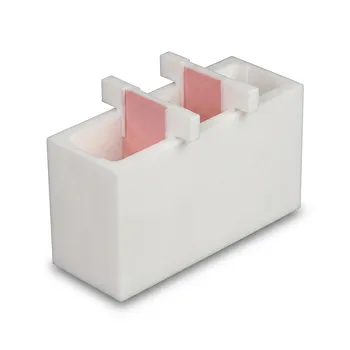
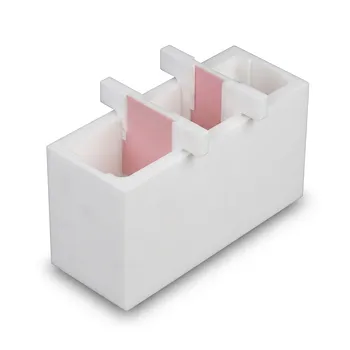
- White PTFE Electrolytic Cell with Movable Slider and Insulated Lid for Fluorine Corrosion Resistance
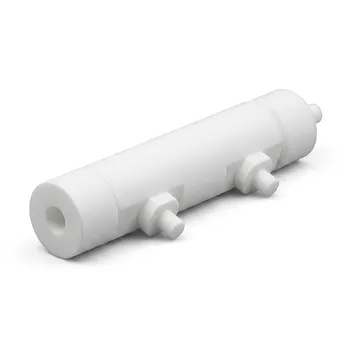
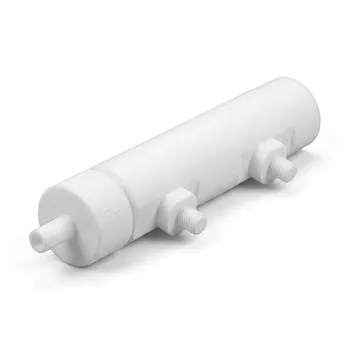
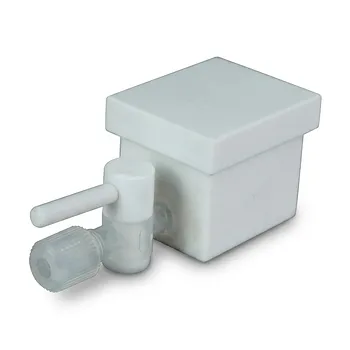
- Custom PTFE Electrolytic Cell Corrosion Resistant Low Background Reaction Vessel with Inlet Outlet Ports
- High Purity Custom PTFE Reaction Cell Electrolytic Tank for Semiconductor and Polysilicon Industrial Applications
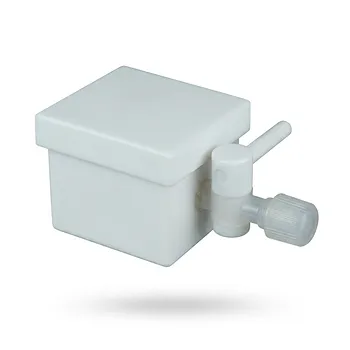
- Square PTFE Electrochemical Cell for Silicon Wafer Processing and Hydrofluoric Acid Resistance in Semiconductor and New Energy Research
- Customizable PFA Square Tray Corrosion Resistant High Temperature Large Petri Dish Electrolytic Cell
People Also Ask
- What makes PTFE an ideal construction material for custom electrochemical cells and electronic analytical instrumentation housings? Discover superior chemical resistance and electrical insulation
- How do custom PTFE electrochemical cells improve the accuracy of stability testing for alkaline catalysts compared to glass cells?
- How does the hydrophobicity of PTFE benefit electrochemical measurements? Enhance Stability and Precision in Your Lab
- How are electrolytic cells utilized in the Hall-Héroult process? Optimizing Purity and Energy Efficiency
- What are the primary components required for the construction of a standard electrolytic cell? Essential Hardware Guide