Ion migration in an electrolytic cell is the physical movement of charged particles driven by an external electric field. When a power source is connected, it creates a potential difference that forces positive cations toward the negative cathode and negative anions toward the positive anode. This directional flow of ions is what allows electricity to pass through the liquid medium, completing the circuit and enabling chemical reactions.
Ion migration acts as the "internal bridge" of an electrolytic cell, ensuring that charge continues to flow between electrodes. By facilitating the transport of species to where they can gain or lose electrons, this process maintains the electrical neutrality required for sustained electrolysis.
The Driving Force of Ion Transport
The External Electric Field
The process begins when an external DC power source applies a voltage across two electrodes submerged in an electrolyte. This creates an electric field within the fluid, which exerts a physical force on every charged particle present.
Charge-Based Attraction
In this field, ions do not move randomly; they follow the law of electrostatic attraction. Cations, which carry a positive charge, are pulled toward the negatively charged electrode, while anions are drawn toward the positive electrode.
Chemical Transformations at the Electrodes
Reduction at the Cathode
Once cations reach the negative cathode, they participate in a reduction reaction. Here, the ions accept electrons from the electrode surface, neutralizing their charge and often depositing as solid material or evolving as gas.
Oxidation at the Anode
Conversely, anions migrate to the positive anode to undergo oxidation. At this interface, the anions release electrons into the electrode, which are then pumped back to the power source to continue the cycle.
Understanding the Trade-offs and Limitations
Ion Mobility and Resistance
While the electric field dictates direction, the speed of migration is limited by the viscosity of the electrolyte and the size of the ions. High internal resistance can lead to heat generation rather than chemical work, reducing the overall efficiency of the cell.
Concentration Polarisation
If ions are consumed at the electrodes faster than they can migrate through the solution, a concentration gradient develops. This depletion can cause the cell voltage to spike or the desired reaction to stall, highlighting the importance of ion transport speed.
Maintaining System Equilibrium
Completing the Internal Circuit
Electricity cannot flow through the electrolyte via free electrons as it does in a copper wire. Instead, the physical movement of ions provides the charge transport necessary to "close" the loop of the electrical circuit.
Preserving Electrical Neutrality
Ion migration ensures that no single part of the solution develops a massive net charge. As electrons are added at one electrode and removed at another, the simultaneous movement of ions keeps the bulk electrolyte electrically neutral.
How to Apply This to Your Project
- If your primary focus is maximizing reaction speed: Increase the voltage or reduce the distance between electrodes to strengthen the electric field driving the ions.
- If your primary focus is energy efficiency: Use an electrolyte with high ion mobility and low viscosity to minimize energy lost to internal resistance.
- If your primary focus is uniform deposition: Ensure consistent ion concentration throughout the cell to prevent localized depletion at the electrode surfaces.
The targeted migration of ions is the fundamental mechanism that transforms electrical energy into predictable chemical change.
Summary Table:
| Aspect | Direction of Movement | Process at Electrode | Role in System |
|---|---|---|---|
| Cations | Toward Negative Cathode | Reduction (Gains Electrons) | Maintains charge balance; facilitates deposition |
| Anions | Toward Positive Anode | Oxidation (Loses Electrons) | Completes internal circuit; enables gas evolution |
| Electric Field | Driving Force | N/A | Exerts physical force to initiate ion transport |
| Electrolyte | Internal Medium | N/A | Provides low-resistance path for physical migration |
Elevate Your Electrochemical Research with KINTEK
Precision in electrolysis starts with high-performance materials that resist corrosion and prevent contamination. KINTEK specializes in manufacturing an exhaustive range of laboratory supplies crafted from premium PTFE and PFA, specifically designed for demanding electrochemical environments.
Whether you need everyday essentials like beakers, reagent bottles, and stirring bars, or complex specialized hardware such as standard or custom electrochemical cells, battery testing fixtures, and hydrothermal synthesis liners, we provide the durability and high-purity trace analysis performance your project requires.
Why choose KINTEK?
- End-to-End Customization: From bespoke laboratory setups to complex non-standard machined parts, our internal CNC fabrication ensures your exact specifications are met.
- Complete Material Focus: Our absolute specialization in high-performance fluoropolymers guarantees unmatched chemical resistance.
- Comprehensive Catalog: We supply everything from tubing and valves to separatory funnels, filters, and high-purity digestion vessels.
Ready to optimize your cell's efficiency and ion transport performance? Contact us today to discuss your custom labware needs!
Related Products
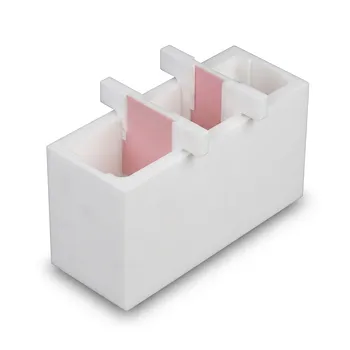
- White PTFE Electrolytic Cell with Movable Slider and Insulated Lid for Fluorine Corrosion Resistance
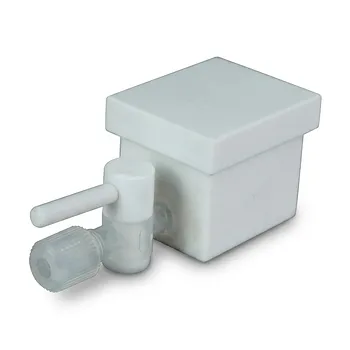
- Custom PTFE Electrolytic Cell Corrosion Resistant Low Background Reaction Vessel with Inlet Outlet Ports
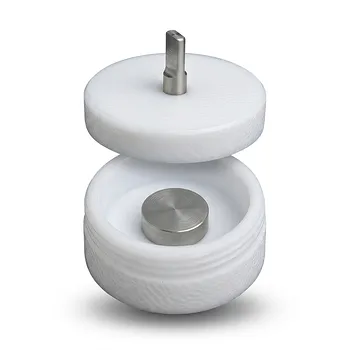
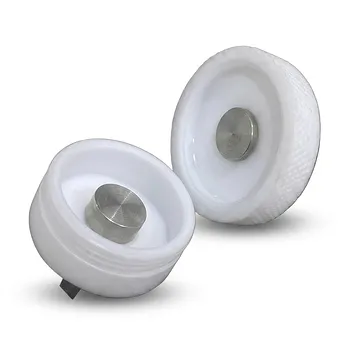
- High Purity Custom PTFE Reaction Cell Electrolytic Tank for Semiconductor and Polysilicon Industrial Applications
- Square PTFE Electrochemical Cell for Silicon Wafer Processing and Hydrofluoric Acid Resistance in Semiconductor and New Energy Research
- Customizable PFA Square Tray Corrosion Resistant High Temperature Large Petri Dish Electrolytic Cell
People Also Ask
- How do custom PTFE electrochemical cells improve the accuracy of stability testing for alkaline catalysts compared to glass cells?
- How does the hydrophobicity of PTFE benefit electrochemical measurements? Enhance Stability and Precision in Your Lab
- How are electrolytic cells utilized in the Hall-Héroult process? Optimizing Purity and Energy Efficiency
- What are the primary components required for the construction of a standard electrolytic cell? Essential Hardware Guide
- How is current efficiency calculated in the context of an electrolytic cell? Formula and Optimization Guide