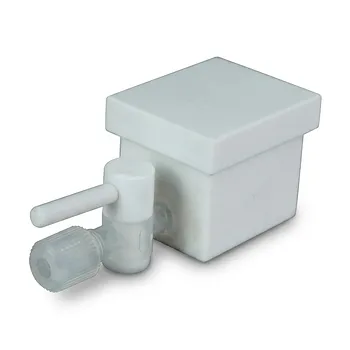
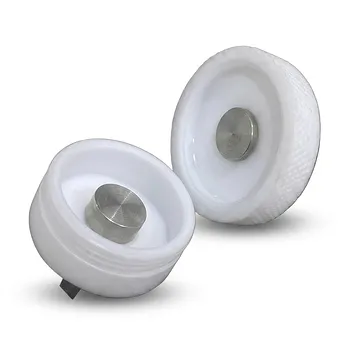
The standard three-electrode electrochemical cell ensures measurement accuracy by decoupling the potential measurement from the current flow. In evaluating $CuWO_4$ (Copper Tungstate) photoanodes, this setup uses a dedicated reference electrode to monitor the potential without drawing current, while a separate counter electrode completes the electrical circuit. This configuration prevents measurement errors caused by the polarization of the auxiliary electrode or voltage drops across the electrolyte, ensuring that the observed data reflects only the $CuWO_4$/electrolyte interface.
A three-electrode cell provides a controlled environment that isolates the working electrode’s behavior from system-wide fluctuations. By separating the potential detection and current circuits, it eliminates interference from ohmic resistance and counter-electrode overpotential, which is critical for quantifying the intrinsic catalytic performance of photoactive materials.
The Mechanics of Potentiostatic Control
The Role of the Reference Electrode
The reference electrode (such as Ag/AgCl) provides a stable, known electrochemical potential that does not change during the experiment. Because the potentiostat ensures that virtually no current flows through this electrode, it remains non-polarized, serving as a "fixed point" against which the $CuWO_4$ potential is measured.
Decoupling Current and Potential Circuits
In a standard cell, the current circuit is established between the working electrode ($CuWO_4$ on FTO) and the counter electrode (typically a platinum wire or plate). Simultaneously, the potential detection circuit operates between the working electrode and the reference electrode, ensuring that the applied bias is accurately maintained specifically at the $CuWO_4$ surface.
Eliminating Counter-Electrode Interference
During the Oxygen Evolution Reaction (OER), significant potential fluctuations can occur at the counter electrode due to gas evolution and overpotential. A three-electrode system ensures these fluctuations do not affect the measurement of the $CuWO_4$ photoanode, as the reference electrode ignores the "auxiliary" side of the circuit.
Enhancing Accuracy in PEC Testing
Compensating for Ohmic Resistance (iR Drop)
Electrolytes like 0.1 M KOH have an inherent ohmic resistance that can cause a voltage drop, leading to "iR drop" errors where the actual potential at the electrode is lower than the applied voltage. The three-electrode configuration minimizes this by placing the reference electrode close to the working electrode, allowing the system to measure the potential more accurately across the interface.
Isolating Interface Charge Transfer
To understand $CuWO_4$, researchers must study interface charge transfer characteristics and carrier separation efficiency. By isolating the working electrode, the cell allows for the precise collection of Electrochemical Impedance Spectroscopy (EIS) Nyquist plots and transient photocurrent data without noise from the counter-reaction.
Ensuring Optical and Chemical Stability
A high-transparency, well-sealed electrolytic cell allows light to reach the $CuWO_4$ surface without obstruction while maintaining a stable electrolyte composition. This stability is vital for observing real-time bubble formation and quantifying the long-term cycling stability of the photoanode under illumination.
Understanding the Trade-offs
Reference Electrode Contamination
While the three-electrode setup is superior for accuracy, the reference electrode can become a source of error if the internal filling solution leaks into the electrolyte. This can change the pH or introduce interfering ions (like chlorides), which might alter the catalytic behavior of the $CuWO_4$ surface.
Positioning and Luggin Capillaries
The physical distance between the reference electrode and the $CuWO_4$ surface matters significantly; if they are too far apart, the uncompensated resistance remains high. Researchers often use a Luggin capillary to bring the sensing point closer to the electrode, but improper placement can shadow the light path or block the surface.
Counter Electrode Sizing
If the counter electrode (platinum) is too small relative to the $CuWO_4$ photoanode, it can become a bottleneck for the current flow. This limitation can lead to "current saturation" where the measured photocurrent is restricted by the counter electrode's surface area rather than the $CuWO_4$ material's actual performance.
How to Apply This to Your Project
Recommendations for Research Goals
- If your primary focus is OER kinetics: Use a three-electrode setup with a Luggin capillary to minimize iR drop, ensuring that overpotential measurements for $CuWO_4$ are not artificially inflated by electrolyte resistance.
- If your primary focus is carrier separation efficiency: Prioritize a cell with a high-transparency quartz window to ensure the $CuWO_4$ surface receives uniform, calibrated illumination during transient photocurrent testing.
- If your primary focus is long-term stability: Ensure the cell is well-sealed and the electrolyte volume is sufficient to prevent concentration changes over hours of continuous photoelectrolysis.
By utilizing a three-electrode configuration, you transform a complex electrochemical environment into a precise laboratory where the specific properties of copper tungstate can be isolated and quantified.
Summary Table:
| Component | Role in CuWO4 PEC Testing | Impact on Accuracy |
|---|---|---|
| Reference Electrode | Monitors potential without current flow | Eliminates polarization and reference drift |
| Counter Electrode | Completes the circuit via auxiliary reaction | Isolates CuWO4 surface from system fluctuations |
| Luggin Capillary | Bridges the gap to the working electrode | Minimizes iR drop and uncompensated resistance |
| Quartz Window | Provides unobstructed light path | Ensures uniform illumination for carrier separation |
| Potentiostat | Controls potential vs. Reference | Maintains precise bias specifically at the interface |
Enhance your photoelectrochemical research with KINTEK’s precision-engineered laboratory solutions. From high-purity PFA electrochemical cells and standard/custom reaction apparatus to PTFE labware like beakers, crucibles, and specialized battery testing fixtures, we provide the tools needed for uncompromising measurement accuracy. Whether you require standard components or bespoke, CNC-machined fluoropolymer parts for complex PEC setups, our end-to-end fabrication ensures chemical resistance and optical clarity for your CuWO4 studies. Contact us today to equip your lab with high-performance laboratory supplies tailored to your exact specifications!
References
- Pietro Ostellari, Francesco Lamberti. Fe(III)‐Mediated Formation of Cu Nanoinclusions and Local Heterojunctions in CuWO<sub>4</sub> Photoanodes. DOI: 10.1002/admi.202500610
This article is also based on technical information from Kintek Knowledge Base .
Related Products
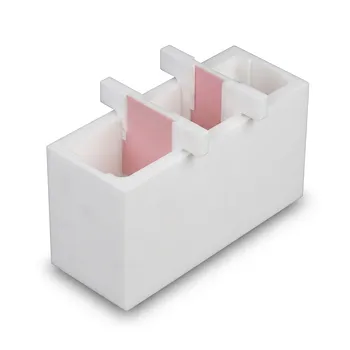
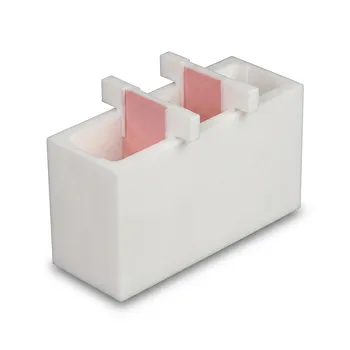
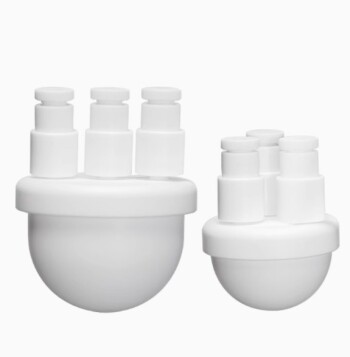
- Corrosion Resistant PTFE Electrochemical Cell for New Energy Research Inert Insulating Customizable Lab Reaction Vessel
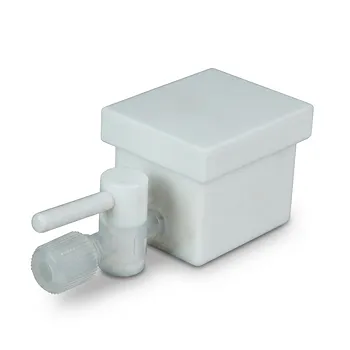
- Square PTFE Electrochemical Cell for Silicon Wafer Processing and Hydrofluoric Acid Resistance in Semiconductor and New Energy Research
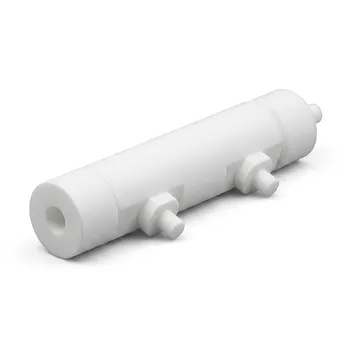
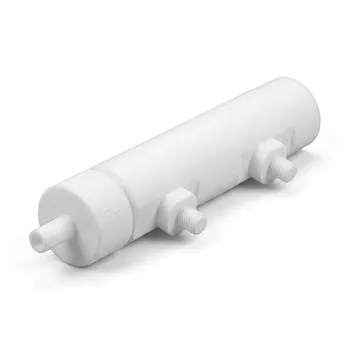
- Custom PTFE Electrolytic Cell Corrosion Resistant Low Background Reaction Vessel with Inlet Outlet Ports
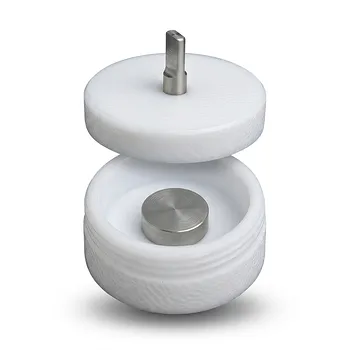
- White PTFE Electrolytic Cell with Movable Slider and Insulated Lid for Fluorine Corrosion Resistance
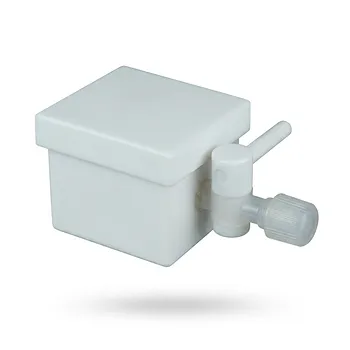
- Custom PTFE Reaction Box Opaque White Square Electrochemical Cell Tank
People Also Ask
- How do custom PTFE electrochemical cells improve the accuracy of stability testing for alkaline catalysts compared to glass cells?
- How does the hydrophobicity of PTFE benefit electrochemical measurements? Enhance Stability and Precision in Your Lab
- What makes PTFE an ideal construction material for custom electrochemical cells and electronic analytical instrumentation housings? Discover superior chemical resistance and electrical insulation
- Why must seawater electrolysis test cells have high corrosion resistance? Protect catalyst stability & data accuracy.
- What are the key steps for structural integrity in molded PTFE lab reaction vessels? Master fine powder processing.