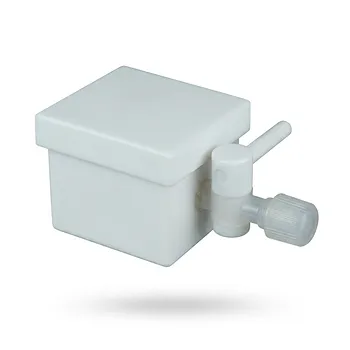
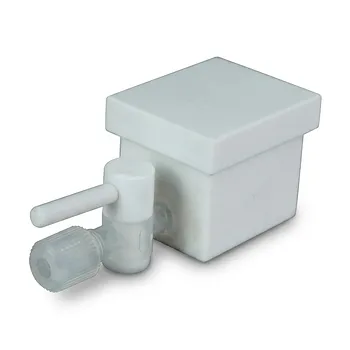
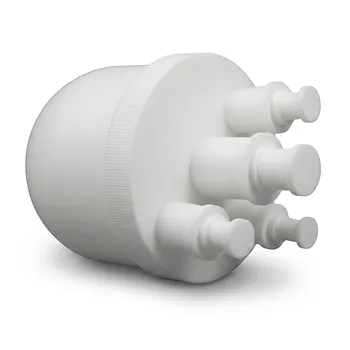
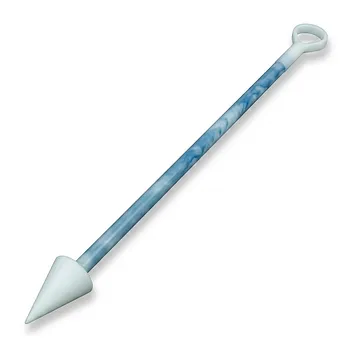
The three-electrode electrochemical test cell ensures data accuracy by isolating the working electrode's potential from the current-carrying circuit. This configuration utilizes a dedicated reference electrode to monitor potential, preventing the interference of counter-electrode polarization from skewing the results. By decoupling these functions, researchers can precisely measure intrinsic material properties like redox currents, overpotential, and specific capacitance without the errors inherent in simpler two-electrode systems.
A three-electrode setup is essential for objective material analysis because it separates the potential detection circuit from the current-flow circuit. This ensures that the measured electrochemical behavior reflects the material's true performance rather than artifacts of the testing environment.
The Mechanics of Potential Control
Decoupling Current and Potential
In a standard three-electrode system, the working electrode (containing the composite material) is connected to two distinct circuits. The first is a high-current circuit between the working and counter electrodes, while the second is a high-impedance sensing circuit between the working and reference electrodes.
Eliminating Counter-Electrode Polarization
As current flows during a test, the counter electrode (often a platinum wire or plate) undergoes polarization, which would normally shift the perceived potential of the entire system. Because the reference electrode (such as Ag/AgCl) carries virtually no current, it maintains a constant, stable potential, allowing for the independent measurement of the working electrode's surface changes.
Minimizing Ohmic Drop (IR Drop)
Voltage drops caused by the resistance of the electrolyte can distort data, especially at high current densities. The three-electrode configuration minimizes this IR drop by placing the reference electrode close to the working electrode, ensuring that the recorded potential is as close to the interface of the material as possible.
Enhancing Data Fidelity for Composites
Accurate Specific Capacitance Measurement
For composite materials like ZnSe or NiS/CoS, distinguishing between different types of energy storage is critical. This setup allows for the precise acquisition of cyclic voltammetry curves and galvanostatic charge-discharge data, which are necessary to calculate specific capacitance and cycling stability accurately.
Identifying Kinetic Characteristics
The precision of this configuration is vital for determining the Tafel slopes and overpotentials of catalysts used in hydrogen or oxygen evolution reactions. By providing a stable environment, researchers can observe the exact potentials at which Faradaic redox reactions occur in complex materials like Bismuth Oxyhalide or high-entropy catalysts.
Observing Physical Real-Time Reactions
Advanced three-electrode cells often feature high-transparency containers that allow for the real-time observation of physical changes, such as bubble formation. This visual data, combined with stable electrochemical readings, provides a comprehensive view of the material’s long-term stability and performance under high current densities.
Understanding the Trade-offs
Laboratory vs. Real-World Performance
While the three-electrode system is superior for fundamental material characterization, it does not represent the "full cell" environment found in commercial batteries or supercapacitors. The data acquired is "idealized," meaning the actual performance in a two-electrode commercial device may be lower due to the combined losses of both electrodes.
Sensitivity to Reference Electrode Health
The accuracy of the entire system is entirely dependent on the stability of the reference electrode. If the reference electrode is contaminated, improperly calibrated, or experiences electrolyte leakage, it will introduce a systemic "offset" into all measurements, leading to false conclusions about the material's redox peaks.
Making the Right Choice for Your Research
Choosing the correct testing parameters depends on your specific stage of material development.
- If your primary focus is intrinsic material properties: Use a three-electrode configuration to isolate the specific capacitance and redox potentials of your composite without counter-electrode interference.
- If your primary focus is kinetic or catalytic studies (OER/HER): Utilize this setup to accurately determine overpotentials and Tafel slopes by minimizing electrolyte resistance and potential shifts.
- If your primary focus is commercial device validation: Supplement your findings with two-electrode testing to understand how your material performs when paired with a real-world counter-electrode in a restricted environment.
By mastering the three-electrode configuration, you transform electrochemical testing from a simple measurement into a high-precision diagnostic tool for material innovation.
Summary Table:
| Component | Role in Three-Electrode System | Impact on Data Accuracy |
|---|---|---|
| Working Electrode | Host for composite material under test | Isolates the specific reaction of interest for analysis. |
| Reference Electrode | Monitors potential without carrying current | Maintains stable potential; eliminates counter-electrode noise. |
| Counter Electrode | Completes the current-carrying circuit | Prevents polarization shifts from affecting potential measurements. |
| Electrolyte Path | Facilitates ion transfer | Proximity to reference electrode minimizes Ohmic (IR) drop errors. |
Elevate Your Electrochemical Research with KINTEK Precision
Achieving uncompromising data accuracy in composite material evaluation requires more than just a method—it requires the right tools. KINTEK specializes in high-performance laboratory supplies crafted from premium PTFE and PFA, ensuring your experiments remain free from contamination and chemical interference.
Whether you need standard electrochemical cells, battery testing fixtures, and electrode accessories, or specialized components like hydrothermal synthesis liners and microwave digestion vessels, our end-to-end custom CNC fabrication can deliver exactly what your lab requires. From everyday essentials like beakers, crucibles, and tubing to complex, bespoke reaction apparatus, KINTEK maintains an absolute focus on high-performance fluoropolymers to support your most sensitive trace analysis.
Ready to optimize your lab setup? Contact us today to discuss how our custom-machined parts and comprehensive laboratory solutions can enhance your material innovation.
References
- A. I. Aparnev, A.A. Shishin. Ce <sub>2</sub> Sn <sub>2</sub> O <sub>7</sub> /CNFs composite as a material for gas sensors and supercapacitors. DOI: 10.15826/chimtech.9052
This article is also based on technical information from Kintek Knowledge Base .
Related Products
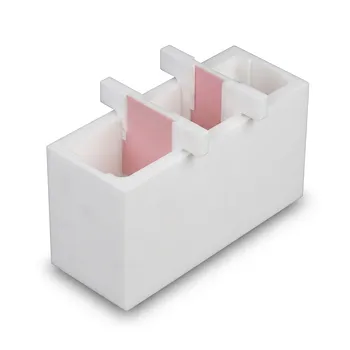
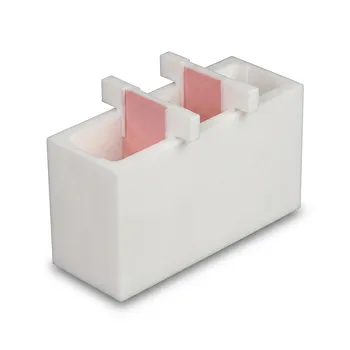
- Corrosion Resistant PTFE Electrochemical Cell for New Energy Research Inert Insulating Customizable Lab Reaction Vessel
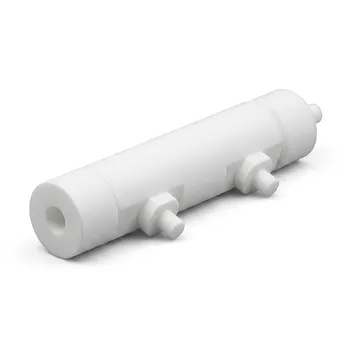
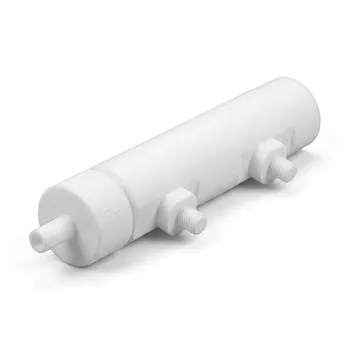
- Custom PTFE Electrolytic Cell Corrosion Resistant Low Background Reaction Vessel with Inlet Outlet Ports
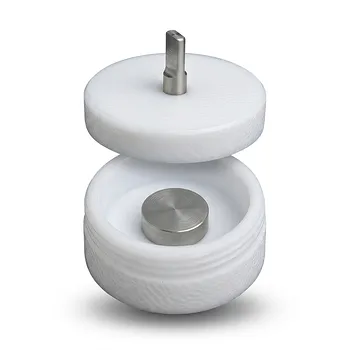
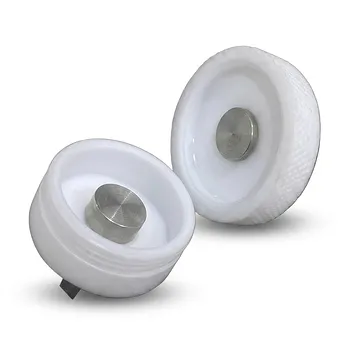
- Acid Resistant PTFE Button Cell Battery Test Fixture Customizable Machining High Purity Electrochemical Testing Clamp
- Custom PTFE Laboratory Apparatus Corrosion Resistant Low Background Reaction Cells Precision CNC Fabrication
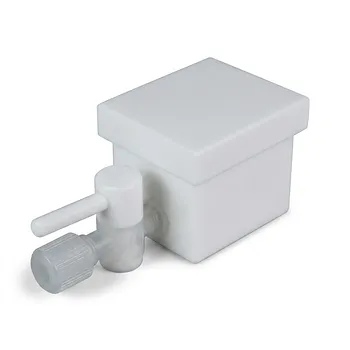
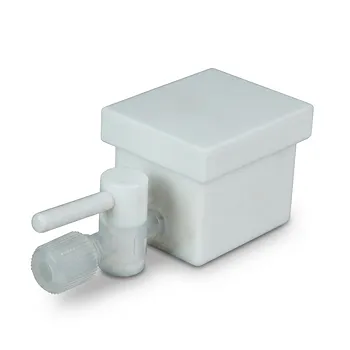
- Custom PTFE Reaction Box Opaque White Square Electrochemical Cell Tank
People Also Ask
- How do custom PTFE electrochemical cells improve the accuracy of stability testing for alkaline catalysts compared to glass cells?
- How does the hydrophobicity of PTFE benefit electrochemical measurements? Enhance Stability and Precision in Your Lab
- What makes PTFE an ideal construction material for custom electrochemical cells and electronic analytical instrumentation housings? Discover superior chemical resistance and electrical insulation
- Why must seawater electrolysis test cells have high corrosion resistance? Protect catalyst stability & data accuracy.
- What are the key steps for structural integrity in molded PTFE lab reaction vessels? Master fine powder processing.