The primary advantage of using a three-electrode testing system for Mn2O3 is the ability to isolate and precisely control the working electrode's potential. By utilizing an independent reference electrode, researchers can eliminate the influence of counter-electrode polarization and internal resistance, ensuring that measurements reflect the intrinsic electrochemical properties of the Mn2O3 material itself.
The three-electrode configuration provides a high-fidelity environment for material characterization by decoupling the potential measurement from the current flow. This setup is essential for obtaining accurate kinetic, thermodynamic, and capacitive data that remains untainted by the limitations of the counter electrode.
Precise Potential Control and Isolation
The Role of the Reference Electrode
A three-electrode system introduces a reference electrode (such as Ag/AgCl or SCE) that maintains a stable, constant potential. This provides a fixed benchmark against which the potential of the Mn2O3 working electrode is measured and controlled with high precision.
Decoupling Current from Potential Measurement
In this configuration, the electronic circuit is split so that virtually no current flows through the reference electrode. This prevents the reference electrode from becoming polarized, ensuring the potential readings remain accurate throughout the experiment.
Isolating Working Electrode Behavior
Because the system monitors the potential difference between the reference and working electrodes specifically, the resulting data is a direct reflection of the Mn2O3 interface. This allows for the study of the material's behavior without the results being obscured by what is happening at the counter electrode.
Eliminating Systemic Interference and Artifacts
Mitigating Counter Electrode Polarization
In a two-electrode system, the counter electrode must handle the entire current load, which often leads to polarization errors that shift the measured potential. The three-electrode setup uses a high-surface-area counter electrode (like a platinum sheet) to carry the current, keeping these shifts away from the measurement of interest.
Minimizing the Influence of iR Drop
The system is designed to minimize and compensate for internal resistance (iR drop) caused by the electrolyte. This ensures that the potential applied by the electrochemical workstation is the actual potential experienced at the surface of the Mn2O3 material.
Ensuring Stability Under High Load
Under high current conditions, such as high-rate discharge testing, the three-electrode system maintains potential stability. This prevents "potential drift," which would otherwise lead to inaccurate calculations of rate performance and cycle life.
Accurate Acquisition of Intrinsic Parameters
Identifying Precise Redox Kinetics
For Mn2O3, identifying the exact positions of redox peaks in cyclic voltammetry (CV) is critical for understanding its chemical transitions. The three-electrode system provides the resolution needed to pinpoint these kinetics without interference from the counter electrode's own redox behavior.
Calculating Specific Capacitance and Energy Density
By providing an accurate potential window, the three-electrode system allows for the precise calculation of specific mass capacitance. This ensures that the energy storage capabilities of Mn2O3 are not underestimated or overestimated due to system-level voltage losses.
Evaluating Cycle Life and Stability
The configuration enables long-term durability testing by ensuring that any degradation observed is strictly occurring at the Mn2O3 working electrode. This allows researchers to distinguish between material failure and system-level instability.
Understanding the Trade-offs
Fundamental Research vs. Device Application
While the three-electrode system is superior for material-level analysis, it does not accurately simulate the performance of a completed commercial device. In a real-world battery or supercapacitor, both electrodes contribute to the total resistance and potential, making a two-electrode setup necessary for final device validation.
Complexity and Cost
A three-electrode setup requires an electrochemical workstation and more complex cell hardware compared to a simple two-electrode multimeter or battery tester. This makes it less suitable for high-throughput screening of completed power cells but indispensable for the initial synthesis and optimization of Mn2O3.
How to Apply This to Your Project
Recommendations for Testing Mn2O3
Depending on your research phase, the choice of testing configuration should align with your specific objectives:
- If your primary focus is fundamental material science: Utilize the three-electrode system to determine the intrinsic redox potentials and kinetic limits of your Mn2O3 samples.
- If your primary focus is optimizing electrode formulations: Use the three-electrode system to measure how different binders or conductive additives affect the specific capacitance of the Mn2O3.
- If your primary focus is commercial device performance: Transition to a two-electrode system to evaluate the total energy density and power output of an Mn2O3-based cell under real-world conditions.
By isolating the working electrode, the three-electrode system transforms Mn2O3 evaluation from a broad estimation of device performance into a precise surgical analysis of material chemistry.
Summary Table:
| Feature | Three-Electrode System | Two-Electrode System |
|---|---|---|
| Primary Purpose | Intrinsic Material Characterization | Full Device Performance Validation |
| Potential Control | High Precision (via Reference Electrode) | Low (Measures Overall Cell Voltage) |
| Polarization | Isolated to Working Electrode | Combined Effects of Both Electrodes |
| Data Accuracy | High Fidelity Kinetic/Thermodynamic Data | Reflects Real-World Internal Resistance |
Elevate your electrochemical research with KINTEK’s high-performance laboratory solutions. Whether you are conducting fundamental Mn2O3 studies or scaling up to device validation, we provide everything from high-purity PTFE/PFA electrochemical cells and battery testing fixtures to precision-machined fluid transfer components. Our end-to-end custom CNC fabrication ensures you receive the exact tools needed for trace analysis and reaction apparatus. Contact us today to discuss how our bespoke fluoropolymer labware and advanced electrode accessories can optimize your lab’s efficiency.
References
- Alisha Dhakal, Sanjay R. Mishra. Urea-driven hydrothermal synthesis of Mn<sub>2</sub>O<sub>3</sub>: electrochemical performance across various electrolytes for supercapacitor applications. DOI: 10.1039/d5ya00040h
This article is also based on technical information from Kintek Knowledge Base .
Related Products
- Custom PTFE Double Headed Lab Spatula Chemical Resistant Non Stick Pharmaceutical Grade Fluoropolymer Sampling Tool
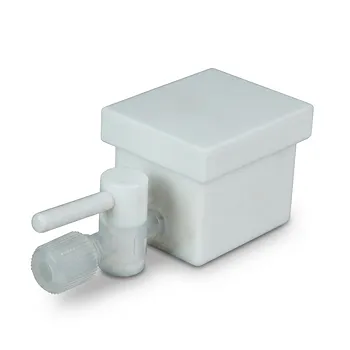
- Custom PTFE Corrosion Resistant Insulating Electrophoresis Reaction Cell with Septum and Valves for Low Background Trace Analysis
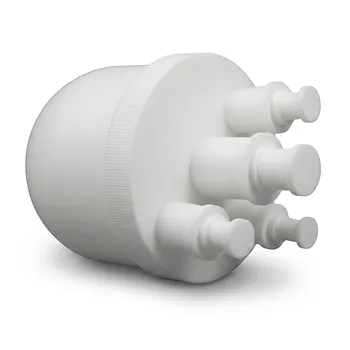
- Laboratory PTFE Three Neck Reaction Flask Corrosion Resistant 2000ml Low Background Fluoropolymer Vessel
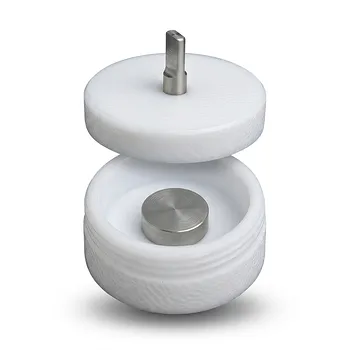
- Acid Resistant PTFE Button Cell Battery Test Fixture Customizable Machining High Purity Electrochemical Testing Clamp
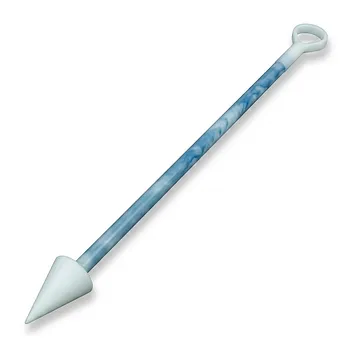
- High Purity Custom PTFE Solid Sampler for Laboratory Extraction and Chemical Analysis Polytetrafluoroethylene Sampling Probe with Customizable Length
People Also Ask
- What advantages do PTFE's surface properties provide for lab tools? Optimize Sample Recovery and Tool Longevity
- What molecular characteristics provide PTFE laboratory tools with ultra-low surface energy and anti-stick properties for fluid transfer? Discover the science behind PTFE's non-stick performance.
- How PTFE Tooling Supports Dry-Electrode Battery Manufacturing: Precision Solutions for Solvent-Free Energy Storage
- What is the operational temperature range for PTFE laboratoryware? Mastering Thermal Limits from -200°C to +260°C
- What are the key properties of PTFE that make it suitable for labware applications? Ensure Lab Integrity with Superior Material