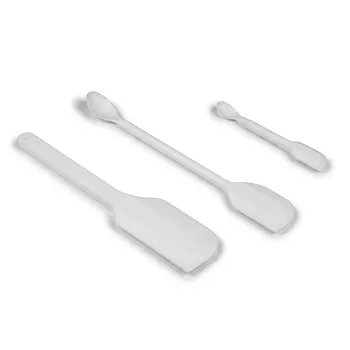
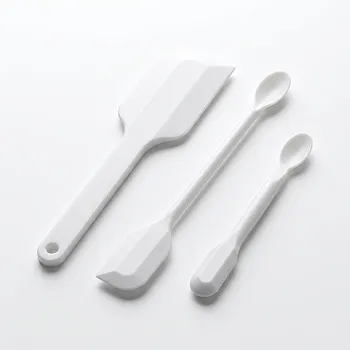
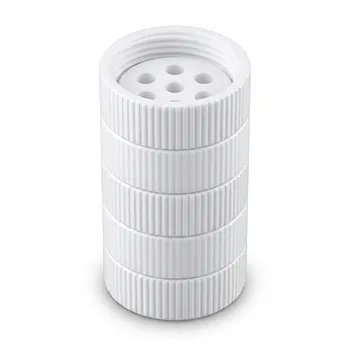
Polytetrafluoroethylene (PTFE) tooling serves as the critical interface in dry-electrode manufacturing by providing a non-stick, chemically inert environment for solvent-free processing. These specialized molds and dies facilitate the high-pressure pressing of active materials while perfectly accommodating the "fibrillation" of PTFE binders. By ensuring easy material release and preventing cross-contamination, PTFE tooling enables the production of high-energy-density cells that exceed 300 Wh/kg in prototype stages.
Core Takeaway: PTFE tooling is the linchpin of solvent-free battery production, offering a low-friction, high-resistance surface that allows for the precise shaping of advanced electrode materials without the risk of sticking, chemical degradation, or electrical shorting.
Enabling the Fibrillation Process
Compatibility with Dry Binders
Dry-electrode manufacturing relies on the "fibrillation" of PTFE binders, where the polymer is stretched into a web-like matrix to hold active materials. PTFE tooling provides a surface that is naturally compatible with these binder properties, ensuring the binder adheres to the electrode material rather than the processing equipment.
High-Pressure Precision
Advanced materials like high-nickel cathodes and silicon anodes require intense pressure to achieve the necessary density. PTFE dies are capable of withstanding these forces while maintaining a smooth interface, which is essential for uniform electrode thickness and long-term cycle stability.
Enhancing Material Release
The exceptionally low coefficient of friction (0.05–0.10) of PTFE ensures that the pressed electrode can be removed from the mold without tearing or surface defects. This "non-stick" performance is vital for maintaining high throughput and reducing manufacturing waste in high-volume environments.
Maintaining Chemical and Thermal Integrity
Preventing Contamination
PTFE is characterized by extreme chemical inertness due to its strong carbon-fluorine bonds. In the context of battery manufacturing, this means the tooling will not react with aggressive electrolytes, organic carbonates, or sensitive active materials, ensuring the purity of the final cell.
Thermal Isolation and Safety
During high-pressure processing or rapid electrochemical testing, heat can build up within the assembly. PTFE acts as a thermal insulator (stable from –200 °C to +260 °C), protecting the surrounding machinery and ensuring that heat-sensitive components do not degrade during the manufacturing cycle.
Electrical Insulation
With a bulk resistivity of approximately 10¹⁸ Ω·cm, PTFE tooling prevents current leakage and electrical shorts between the electrode materials and the metal parts of the press. This high dielectric strength is critical for accurate experimental data and operational safety during the formation process.
Understanding the Trade-offs
Mechanical Deformation (Creep)
While PTFE is chemically robust, it is a relatively soft polymer that can be prone to creep or "cold flow" under sustained high pressure. Over time, PTFE-lined tools may lose their dimensional precision, requiring periodic calibration or replacement compared to hardened steel alternatives.
Thermal Expansion Limits
Although PTFE is stable up to 260 °C, its coefficient of thermal expansion is relatively high. Significant temperature fluctuations during the manufacturing process can cause the tooling to change size slightly, which may impact the strict tolerances required for ultra-thin electrode foils.
Material Cost and Complexity
The production of PTFE involves a complex free-radical polymerization of tetrafluoroethylene (TFE). This makes high-quality PTFE tooling more expensive than standard industrial plastics, necessitating a clear cost-benefit analysis for large-scale production lines.
How to Apply This to Your Project
Making the Right Choice for Your Goal
- If your primary focus is maximizing energy density: Utilize PTFE-lined dies to enable the high-pressure compaction of silicon-heavy anodes, which are otherwise prone to sticking.
- If your primary focus is reducing manufacturing waste: Implement PTFE tooling to exploit its low-friction properties, significantly lowering the rate of electrode tearing during the release phase.
- If your primary focus is testing aggressive new chemistries: Leverage PTFE’s chemical inertness to ensure that experimental electrolytes do not leach ions from the tooling and contaminate your results.
- If your primary focus is long-term pilot line durability: Consider PTFE-reinforced composites for your tooling to mitigate the effects of material creep while maintaining non-stick benefits.
By strategically integrating PTFE tooling into the production line, manufacturers can overcome the physical and chemical hurdles of solvent-free processing to deliver the next generation of high-performance batteries.
Summary Table:
| Key PTFE Property | Benefit for Dry-Electrode Production | Industrial Impact |
|---|---|---|
| Low Friction | Effortless material release without tearing | Increased throughput and reduced waste |
| Chemical Inertness | Resistance to electrolytes and active materials | High-purity cells without contamination |
| Dielectric Strength | High electrical insulation (10¹⁸ Ω·cm) | Prevents shorts during electrode formation |
| Thermal Stability | Operates safely from –200 °C to +260 °C | Consistent performance in high-pressure cycles |
Elevate Your Battery Research with KINTEK Fluoropolymer Expertise
Unlock the full potential of your dry-electrode and solvent-free processes with KINTEK’s precision-engineered solutions. Whether you require everyday basic labware (beakers, crucibles, reagent bottles), high-purity trace analysis instruments, or comprehensive fluid transfer components (tubing, fittings, valves), we provide the material performance your project demands.
Our expertise extends from sample prep and filtration tools (separatory funnels, filters, pipettes) to advanced reaction apparatus like custom electrochemical cells, battery testing fixtures, and electrode accessories. Backed by end-to-end custom CNC fabrication, KINTEK delivers everything from high-volume consumables to complex, bespoke laboratory setups crafted exclusively from high-performance PTFE and PFA.
Ready to optimize your manufacturing line with high-performance fluoropolymers? Contact our engineering team today!
Related Products
- Custom PTFE Scraper Shovel and Sampling Spoon Dual Use Corrosion Resistant Low Background White Fluoropolymer Tool
- Corrosion Resistant PTFE Sampling Cup Custom Fabricated PTFE Sampling Scoop Laboratory Fluoropolymer Sampling Tools
- Custom PTFE Double Headed Lab Spatula Chemical Resistant Non Stick Pharmaceutical Grade Fluoropolymer Sampling Tool
- High Temperature PTFE Solid Sampler Corrosion Resistant White Reusable Biopharmaceutical Sampling Tool
- Custom Food Grade PTFE Scoops Cylindrical Chemical Spatulas Bio Pharmaceutical Non Polluting Material Handling Tools
People Also Ask
- What are the advantages of PTFE shovels over metal shovels? Precision Handling for Sensitive Materials
- What are some specific applications of PTFE shovels in the laboratory? Ensure Sample Purity and Safety
- What are the key properties that make PTFE shovels ideal for laboratory use? Ensure Sample Integrity with Chemically Inert Tools
- What are the advantages of PTFE shovels in terms of chemical resistance? Unmatched Inertness for Handling Corrosives
- How does the durability of PTFE shovels compare to plastic shovels? Discover the Superior Choice for Harsh Conditions