PTFE’s anti-stick behavior comes from a densely fluorinated, highly symmetric molecular surface. Its linear carbon backbone is shielded by fluorine atoms, producing a chemically inert surface with very low surface energy—about 18–19 dyn/cm (mJ/m²)—and an exceptionally low dynamic coefficient of friction of approximately 0.04. As a result, liquids make limited contact with PTFE, spread less readily, and detach with minimal residue during fluid transfer.
Core takeaway: The combination of a continuous fluorine sheath, low polarizability, molecular symmetry, and unbranched chain structure gives PTFE both low liquid adhesion and low mechanical friction. These properties reduce fluid retention, sample loss, and cross-contamination in laboratory tubing, vessels, fittings, and stir bars.
Why PTFE Has Ultra-Low Surface Energy
A continuous fluorine sheath
PTFE consists of a linear carbon backbone surrounded by fluorine atoms. Fluorine’s size allows it to form a dense outer layer that shields the carbon chain from contacting—and reacting strongly with—external molecules.
This fluorinated surface is the primary reason PTFE has such low surface energy and high chemical resistance.
Symmetric carbon–fluorine structure
The carbon–fluorine bonds are strongly polarized, but the highly regular arrangement of those bonds produces little overall permanent dipole at the surface. This limits strong dipole–dipole interactions with contacting liquids.
PTFE is therefore not strongly attracted to polar or nonpolar fluids in the way many conventional polymers are.
Low polarizability and weak dispersion interactions
A PTFE surface presents fluorine rather than an exposed hydrocarbon backbone. This reduces the ability of the surface to develop strong induced interactions with nearby molecules, limiting van der Waals attraction and other adhesion forces.
The result is a low critical surface tension, approximately 18 dyn/cm, which makes many liquids reluctant to wet or spread across PTFE.
No hydrogen-bonding capability
PTFE lacks hydrogen-bond donor and acceptor groups along its exposed surface. This prevents the strong, directional hydrogen-bond interactions that cause water, alcohols, biomolecules, and other compounds to adhere to many glass, metal, or polymer surfaces.
The absence of these bonding sites helps reduce residue formation and sample adsorption.
Why PTFE Also Has Low Friction
A linear, unbranched chain geometry
PTFE’s polymer chains are essentially linear and lack bulky side branches. This geometry reduces steric interference and allows adjacent chains to move past one another relatively smoothly.
That molecular arrangement contributes to PTFE’s exceptionally low dynamic coefficient of friction, reported at approximately 0.04.
Weak surface-to-surface attraction
Low friction is not caused by surface energy alone. PTFE combines a mechanically smooth fluorinated surface with weak intermolecular attraction, so contacting materials have less tendency to grip the surface.
In fluid-transfer components, this can reduce droplet retention and help liquids move through tubing and fittings with less surface drag.
Strong carbon–fluorine bonds
The high strength of the carbon–fluorine framework helps PTFE maintain its fluorinated surface under chemically demanding conditions. The exposed fluorine sheath is therefore not easily displaced by reagents or process fluids.
This supports both the low-adhesion behavior and the material’s exceptionally high chemical inertness.
How These Characteristics Improve Fluid Transfer
Reduced wetting and liquid retention
Because PTFE has low surface energy, liquids generally do not spread strongly across it. Less wetting means fewer residual films and droplets remain on tubing walls, vessel interiors, valves, or fittings.
This is especially valuable when transferring small volumes or high-value reagents.
Better sample recovery
Weak adhesion allows a greater fraction of a sample to leave the container or flow path during pouring, draining, or rinsing. This helps improve recovery in trace analysis, digestion workflows, and other quantitative procedures.
The benefit is greatest when avoiding residual sample loss is more important than maximizing liquid spreading.
Lower cross-contamination risk
A surface that retains less material is easier to rinse and less likely to carry residue into the next process stream. PTFE therefore helps reduce carryover between analytical runs.
Its chemical inertness also reduces the risk that the labware will react with, absorb, or leach substances into the sample.
Compatibility with laboratory fluid-transfer components
These properties make PTFE useful for tubing, fittings, valves, reagent bottles, digestion vessels, stir bars, and trace-analysis containers. The same molecular features support non-wetting, low friction, chemical resistance, and cleanability across these applications.
Understanding the Trade-offs
Low wetting is not always desirable
PTFE’s resistance to wetting can make it difficult to coat, bond, print, or permanently attach other materials to its surface. It can also cause liquids to bead rather than spread uniformly.
For applications requiring controlled spreading or strong adhesion, glass, metal, or a treated polymer may be more suitable.
Low friction does not eliminate fluid resistance
The low coefficient of friction primarily describes solid-to-solid sliding, not the complete pressure drop of a fluid system. Flow resistance also depends on tubing diameter, length, viscosity, temperature, fittings, bends, and surface condition.
PTFE can reduce wall interaction, but it does not make a fluid-transfer system frictionless.
Surface condition still matters
Scratches, contamination, deposits, and manufacturing texture can alter wetting and retention behavior. PTFE’s molecular properties remain intrinsic, but the practical performance of a component depends on how clean and well-finished its surface is.
Chemical inertness has operating limits
PTFE is broadly resistant to chemical attack, but no material is universally compatible under every combination of chemical, temperature, pressure, and exposure time. Compatibility should be verified for concentrated reagents, elevated temperatures, and unusual process conditions.
Applying the Molecular Principles to Laboratory Design
The key distinction is that PTFE’s performance comes from several properties working together rather than from fluorine alone.
- If your primary focus is sample recovery: Choose PTFE contact surfaces to minimize wetting, residue retention, and adsorption during transfer and digestion.
- If your primary focus is low carryover: Use clean, chemically compatible PTFE tubing, fittings, or vessels and validate the rinsing procedure for the specific sample matrix.
- If your primary focus is chemical resistance: Use PTFE where the fluorinated, strongly bonded surface must resist reagent attack and minimize leachables.
- If your primary focus is smooth fluid handling: Take advantage of PTFE’s low surface adhesion, but size the complete flow path based on viscosity, geometry, pressure, and temperature rather than friction coefficient alone.
- If your primary focus is bonding or coating: Treat PTFE’s low surface energy as a limitation and consider surface modification or a different material.
PTFE’s ultra-low-energy, fluorine-shielded surface makes it a strong choice when clean transfer, minimal adhesion, and reliable sample recovery matter most.
Summary Table:
| Characteristic | Description | Benefit |
|---|---|---|
| Continuous Fluorine Sheath | Dense outer layer of fluorine atoms shields carbon backbone | Reduces surface interactions, chemical inertness |
| Symmetric C-F Structure | Highly regular arrangement of carbon-fluorine bonds | Low polarity, minimal dipole interactions |
| Low Polarizability | Weak dispersion forces due to exposed fluorine | Low surface energy (~18 dyn/cm) |
| No H-Bonding Capability | Lacks donor/acceptor groups | Prevents adhesive interactions |
| Linear Chain Geometry | Unbranched polymer chains slide easily | Low friction (coefficient ~0.04) |
| Strong C-F Bonds | High bond strength preserves surface | Durability and chemical resistance |
Upgrade your lab with KINTEK's high-performance PTFE/PFA labware, including tubing, fittings, vessels, and custom-machined parts. Our products are engineered to minimize sample loss and cross-contamination, ensuring accurate results. Contact us today to optimize your fluid transfer processes and enhance your lab's efficiency. Get in touch with our experts and discover the KINTEK advantage!
Related Products
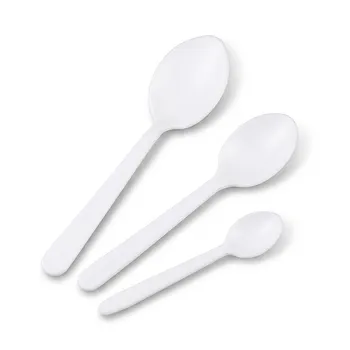
- Corrosion Resistant PTFE Sampling Spoon Spatula High Purity Low Background Food Grade Pharmaceutical Research Laboratory Tool
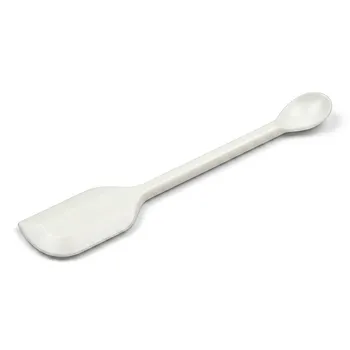
- Custom PTFE Double Head Lab Spatula Scraper Non Stick Corrosion Resistant Chemical Handling Tool
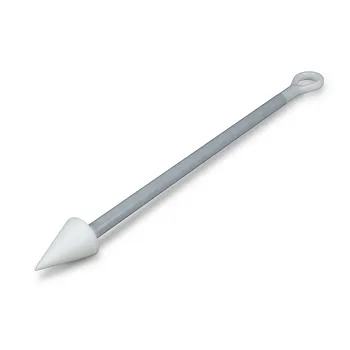
- High Purity PTFE Solid Sampler Stainless Steel Reinforced Handle Pointed Tip Corrosion Resistant Lab Sampling Tool
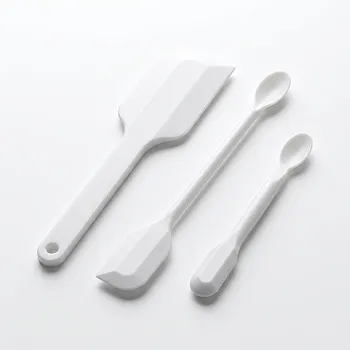
- Custom PTFE Double Headed Lab Spatula Chemical Resistant Non Stick Pharmaceutical Grade Fluoropolymer Sampling Tool
- Corrosion Resistant PTFE Laboratory Material Scoop for Biopharmaceutical Use Non Stick Easy Clean Fluoropolymer Shovel
People Also Ask
- What factors should be considered when selecting a PTFE shovel for laboratory use? Ensure Chemical Inertness & Sample Integrity
- What are the recommended tools for CNC machining Teflon? Achieve Clean, Precise Cuts
- What types of cutting tools are recommended for machining PTFE? Achieve Clean Cuts and Tight Tolerances
- What are key considerations for tool selection when machining Teflon? Maximize Precision and Prevent Deformation
- What tools are used in the CNC machining of PTFE? Achieve Clean, Precise Cuts