The structural integrity of an electrochemical test apparatus is the primary safeguard against experimental artifacts during long-term testing. In the context of 1000-cycle Cyclic Voltammetry (CV) for Co-MoS2, a stable apparatus ensures that changes in overpotential are caused by the morphological evolution of the catalyst itself. Without this stability, data becomes skewed by external variables such as electrolyte evaporation or fluctuating electrical resistance.
Core Takeaway: Structural stability isolates the catalyst's intrinsic performance from the testing environment. It ensures that observed degradation is a result of the Co-MoS2 chemical breakdown rather than mechanical failures like seal leakage or contact resistance shifts.
Eliminating Environmental Artifacts
Preventing Electrolyte Concentration Shifts
Effective hermetic sealing within the apparatus prevents water evaporation during extended cycling. If the cell is not structurally sound, the loss of solvent leads to electrolyte concentration fluctuations, which change the chemical environment.
Maintaining Chemical Potential
A stable volume of electrolyte is required to keep the ionic strength consistent throughout the 1000 cycles. Fluctuations in concentration can artificially shift the electrochemical response, making it impossible to determine the catalyst’s true stability.
Ensuring Electrical and Mechanical Integrity
Constant Contact Resistance
High-quality fixtures and frames ensure that the pressure between electrode leads and the catalyst coating remains uniform. If the apparatus exhibits mechanical creep or loosening, contact resistance will vary, leading to erroneous overpotential readings.
Isolating Morphological Evolution
The goal of long-term CV is to observe how the Co-MoS2 structure changes under stress. Structural stability ensures that the "noise" of the testing rig is removed, allowing researchers to attribute performance decay solely to the catalyst’s physical degradation.
Material Fatigue and Chemical Resistance
Resistance to Mechanical Fatigue
Components such as fixed frames, bolts, and fluid fittings must possess high fatigue resistance. Under the repeated pressure changes of a long-term test, structural materials must resist deformation to maintain the precise geometry of the electrochemical cell.
Preventing Leaching and Contamination
Structural materials must be chemically inert to prevent the leaching of impurities into the electrolyte. If structural components degrade, they can release ions that contaminate the Co-MoS2 surface, leading to "poisoning" that mimics catalyst failure.
Understanding the Trade-offs
Precision vs. System Complexity
Building a highly stable, hermetically sealed environment often requires specialized hardware and more complex assembly procedures. While this increases the initial setup time and cost, it is the only way to generate peer-review-quality data for long-term stability.
Rigidity vs. Modular Flexibility
Very rigid systems might limit the ability to quickly swap different electrode types or cell configurations. However, for a 1000-cycle test, rigidity is a requirement, as modular components with many joints are more prone to seal failure and mechanical shifts over time.
How to Apply This to Your Project
When designing or selecting your electrochemical test environment, prioritize the mechanical factors that directly influence the Co-MoS2 interface.
- If your primary focus is high-accuracy degradation mapping: Invest in heavy-duty, fixed-frame fixtures and high-grade seals to ensure that 100% of the measured shift is due to the catalyst morphology.
- If your primary focus is rapid screening of multiple variants: Use standardized, chemically inert cell bodies that offer repeatable mechanical pressure to keep contact resistance uniform across different samples.
- If your primary focus is identifying contamination sources: Opt for structural materials with proven long-term chemical stability to eliminate the possibility of material leaching during extended immersion.
A stable testing environment transforms "noise" into "knowledge" by ensuring your data reflects the catalyst, not the container.
Summary Table:
| Stability Factor | Impact on Long-Term Results | Importance for Co-MoS2 Research |
|---|---|---|
| Hermetic Sealing | Prevents electrolyte evaporation | Maintains constant ionic strength for 1000+ cycles |
| Mechanical Rigidity | Maintains uniform contact pressure | Eliminates fluctuating electrical resistance/overpotential shifts |
| Chemical Inertness | Prevents material leaching | Ensures catalyst isn't "poisoned" by structural impurities |
| Fatigue Resistance | Avoids cell deformation | Isolates morphological evolution from mechanical failures |
Elevate Your Electrochemical Research Precision with KINTEK
Ensure your long-term stability data reflects your catalyst's true performance, not your equipment's failures. KINTEK specializes in high-performance fluoropolymer (PTFE and PFA) laboratory solutions designed for the most demanding electrochemical environments.
From everyday basic labware like beakers, crucibles, and reagent bottles to advanced custom electrochemical cells, battery testing fixtures, and microwave digestion vessels, we provide the structural stability your research demands. Our end-to-end custom CNC fabrication allows us to deliver everything from complex non-standard machined parts to high-volume orders of tubing, fittings, and filtration tools.
Don't let experimental artifacts compromise your results. Partner with KINTEK for bespoke laboratory setups crafted for absolute chemical resistance and mechanical integrity.
Contact our experts today to build your stable testing environment
References
- Wei Liu, Jiaqi Tang. Hydrothermal Synthesis of Co-MoS<sub>2</sub> as a Bifunctional Catalyst for Overall Water Splitting. DOI: 10.1021/acsomega.4c10747
This article is also based on technical information from Kintek Knowledge Base .
Related Products
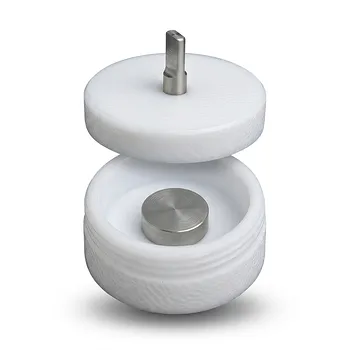
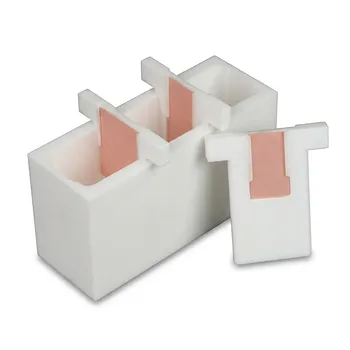
- Acid Resistant PTFE Button Cell Battery Test Fixture Customizable Machining High Purity Electrochemical Testing Clamp
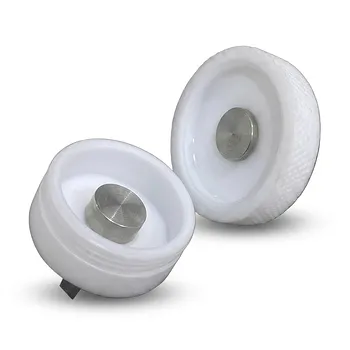
- Corrosion Resistant PTFE Coin Cell Battery Testing Clamps and Acid Proof Custom Fluoropolymer Battery Fixtures
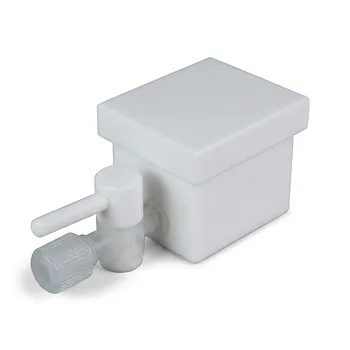
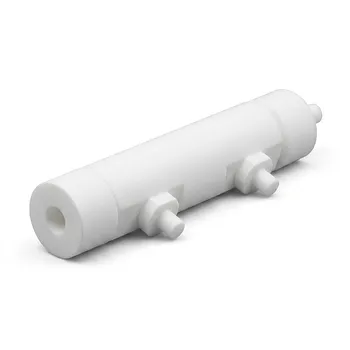
- Custom PTFE Laboratory Apparatus Corrosion Resistant Low Background Reaction Cells Precision CNC Fabrication
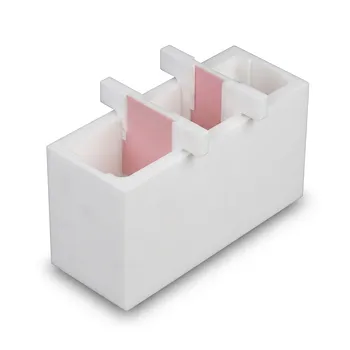
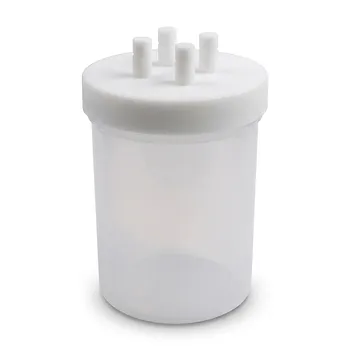
- Corrosion Resistant PTFE Electrochemical Cell for New Energy Research Inert Insulating Customizable Lab Reaction Vessel
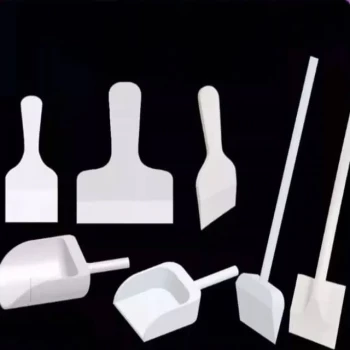
- Custom PTFE Double Head Lab Spatula Scraper Non Stick Corrosion Resistant Chemical Handling Tool
People Also Ask
- How does the chemical inertness of PTFE benefit laboratory-scale battery testing? Ensure high-purity research results.
- In what ways do PTFE battery testing fixtures enhance laboratory throughput and reliability? Maximize Research Efficiency
- Why are customized PTFE testing fixtures required for electrochemical testing and battery research? Boost Data Accuracy
- In what industrial manufacturing contexts are PTFE battery clamps or fixtures utilized? Optimize Battery Production.
- What is the thermal operating range for PTFE battery clamps in electrochemical research? Stability from -200°C to +260°C