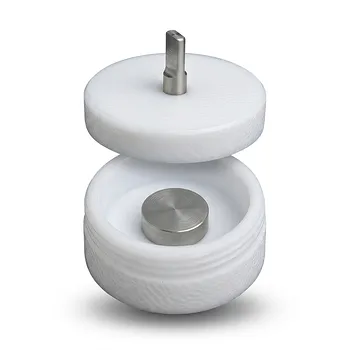
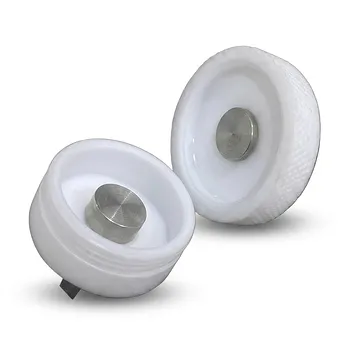
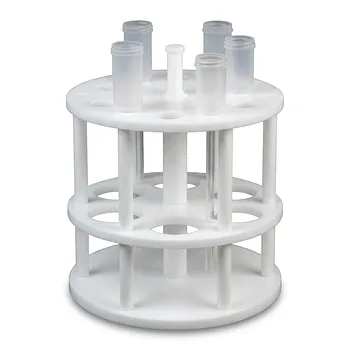
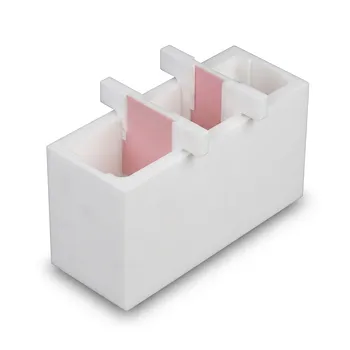
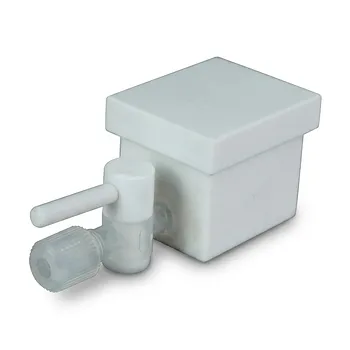
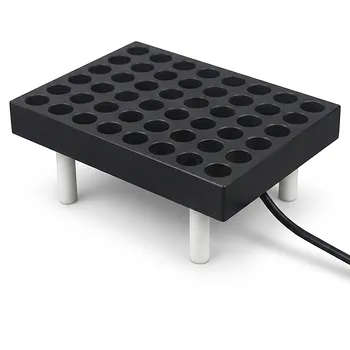
Electrochemical testing fixtures serve as the critical physical bridge between raw composite materials and quantifiable performance data. By establishing a stable, reproducible electrode-electrolyte interface, these fixtures allow researchers to isolate the specific electrochemical contributions of Transition Metal Oxide (TMO) and graphene oxide (GO) components. High-quality fixtures minimize parasitic variables like contact resistance and non-uniform current distribution, ensuring that the measured specific capacitance and cyclic stability reflect the material's true potential rather than experimental error.
Core Takeaway: For TMO and graphene oxide composites, electrochemical fixtures are essential for validating the synergistic relationship between the high theoretical capacity of oxides and the superior conductivity of graphene, providing the precise environment needed to measure long-term stability and charge-discharge kinetics.
Optimizing the Electrode-Electrolyte Interface
Ensuring Uniform Current Distribution
Fixtures are designed to apply consistent pressure across the entire surface of the TMO/GO composite electrode.
This uniformity prevents current crowding, a phenomenon where charge concentrates at specific points, leading to localized degradation and inaccurate capacity readings.
By ensuring an even flow of ions and electrons, researchers can confidently scale their findings from milligram-level lab samples to larger energy storage applications.
Minimizing Contact Resistance
The interface between the composite material and the current collector is a common source of measurement "noise."
High-quality testing fixtures utilize optimized clamping mechanisms to minimize contact resistance, which is vital for assessing the high-rate performance of graphene-based materials.
Reducing this resistance allows the electrochemical workstation to capture the material's intrinsic kinetics without the interference of external resistive losses.
Quantitative Assessment of Performance Metrics
Measuring Charge-Discharge Kinetics via GCD
Galvanostatic Charge-Discharge (GCD) is the primary method for determining how quickly a TMO/GO composite can store and release energy.
Fixtures provide the stable architecture required to perform these tests at varying current densities, which is necessary to evaluate the rate capability of the composite.
This data reveals how well the graphene oxide network supports the slower redox reactions typically associated with Transition Metal Oxides.
Evaluating Long-Term Cyclic Stability
One of the most critical metrics for energy storage is how well a material retains its capacity over thousands of cycles.
Reliable fixtures maintain a hermetic seal and stable mechanical pressure over durations exceeding 10,000 cycles, preventing electrolyte evaporation or electrode delamination.
This enables researchers to accurately document the durability of the composite, particularly how the graphene framework mitigates the structural expansion of TMOs during cycling.
Analyzing Synergistic Effects in Composites
Identifying Charge Transfer Resistance through EIS
Electrochemical Impedance Spectroscopy (EIS) is used to dissect the various resistances within the cell, such as ion diffusion and electron transfer.
Testing fixtures allow for the isolation of these values, helping researchers quantify the synergistic enhancement provided by the TMO/GO core-shell structure.
Lower charge transfer resistance in these tests directly validates the effectiveness of the graphene oxide in improving the electrical connectivity of the metal oxide particles.
Detecting Polarization and Rate Performance
By controlling voltage and current signals with high precision, fixtures help capture subtle polarization changes during high-speed charging.
This allows for a deep dive into the material's rate performance, showing whether the composite can maintain high energy density under the stress of rapid power demands.
These insights are fundamental for developing materials suited for fast-charging supercapacitors or high-power density batteries.
Understanding the Trade-offs and Pitfalls
The Impact of Fixture Selection
Choosing the wrong fixture type, such as using a standard coin cell for a high-viscosity electrolyte, can lead to electrolyte starvation or poor wetting.
While coin cells are convenient for high-throughput screening, they often lack the adjustable pressure found in Swagelok-style or pouch cell configurations, which can skew the results of expansion-heavy TMO materials.
Assembly and Material Constraints
Even the best fixture cannot compensate for poor electrode preparation; air bubbles trapped during assembly can cause massive fluctuations in Electrochemical Impedance Spectroscopy (EIS) data.
Furthermore, using only milligrams of active material can lead to "champion data" that is difficult to replicate at an industrial scale, highlighting the need for rigorous, standardized testing protocols.
Applying Testing Insights to Your Research
How to Apply This to Your Project
To maximize the value of your electrochemical testing, align your fixture selection with your specific research objectives.
- If your primary focus is rapid material screening: Utilize coin-type cells (e.g., CR2032) to evaluate multiple TMO/GO ratios quickly with minimal material consumption.
- If your primary focus is fundamental kinetic analysis: Employ Swagelok-style fixtures or three-electrode cells to achieve superior pressure control and precise reference electrode placement for EIS studies.
- If your primary focus is commercial scalability: Transition to pouch cell configurations to understand how the composite behaves under realistic mechanical stress and electrolyte-to-active-material ratios.
By matching the precision of your testing environment to the complexity of your TMO and graphene oxide composites, you ensure that your energy storage breakthroughs are built on a foundation of verifiable data.
Summary Table:
| Feature | Research Contribution | Primary Metric Controlled |
|---|---|---|
| Pressure Distribution | Prevents current crowding & localized degradation | Scaling Accuracy |
| Interface Clamping | Minimizes contact resistance & measurement noise | Rate Capability (GCD) |
| Hermetic Sealing | Prevents electrolyte loss over >10,000 cycles | Cyclic Stability |
| Architecture Stability | Isolates charge transfer and diffusion kinetics | Impedance (EIS) |
Elevate Your Energy Storage Research with KINTEK
Precise data in TMO and graphene oxide research requires a testing environment that eliminates variables. KINTEK manufactures high-performance laboratory supplies crafted exclusively from PTFE and PFA to provide the chemical inertness and mechanical stability your experiments demand.
From everyday labware like beakers and crucibles to specialized electrochemical cells, battery testing fixtures, and hydrothermal synthesis liners, we offer a comprehensive range of tools designed for high-purity analysis. Backed by end-to-end custom CNC fabrication, KINTEK can deliver everything from complex non-standard machined parts to high-volume orders of fluid transfer components and filtration tools.
Ensure your material breakthroughs are built on verifiable data. Contact our experts today to discuss your custom laboratory setup!
References
- Viraj Pasindu, Imalka Munaweera. Multifunctional transition metal oxide/graphene oxide nanocomposites for catalytic dye degradation, renewable energy, and energy storage applications. DOI: 10.1039/d5ra04806k
This article is also based on technical information from Kintek Knowledge Base .
Related Products
- Acid Resistant PTFE Button Cell Battery Test Fixture Customizable Machining High Purity Electrochemical Testing Clamp
- Corrosion Resistant PTFE Coin Cell Battery Testing Clamps and Acid Proof Custom Fluoropolymer Battery Fixtures
- Custom PFA Microcolumn Racks and PTFE Machined Low Background Corrosion Resistant Laboratory Fixtures
- Corrosion Resistant PTFE Electrochemical Cell for New Energy Research Inert Insulating Customizable Lab Reaction Vessel
- White PTFE Electrolytic Cell with Movable Slider and Insulated Lid for Fluorine Corrosion Resistance
People Also Ask
- How does the chemical inertness of PTFE benefit laboratory-scale battery testing? Ensure high-purity research results.
- In what ways do PTFE battery testing fixtures enhance laboratory throughput and reliability? Maximize Research Efficiency
- In what industrial manufacturing contexts are PTFE battery clamps or fixtures utilized? Optimize Battery Production.
- What is the thermal operating range for PTFE battery clamps in electrochemical research? Stability from -200°C to +260°C
- What are the primary functions and material compositions of PTFE battery clamps? Ensure Precision & Chemical Resistance