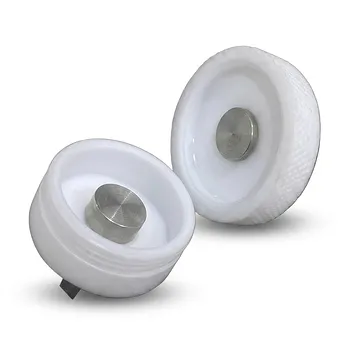
Correct UV test cell selection is the foundational requirement for accurate photocatalytic evaluation because the material of the cell dictates the efficiency of light-matter interaction. Without high UV transparency, the ultraviolet radiation necessary to excite titanium dioxide (TiO₂) is absorbed by the container rather than the catalyst, leading to flawed data and incorrect performance comparisons.
The central takeaway is that utilizing quartz or specialized high-performance polymers ensures maximum UV penetration and uniform light distribution. This standardization is mandatory for calculating precise reaction rate constants and determining the true efficacy of different titanium dioxide crystal phases.
The Role of Light Transmission in Photocatalysis
The Necessity of UV Excitation
Photocatalysis in titanium dioxide is a light-driven process that requires specific energy levels to move electrons across the material's band gap. The test cell acts as the primary gatekeeper, determining the quality and quantity of light that reaches the TiO₂ suspension.
Maximizing Energy Efficiency
High UV transparency ensures that the energy supplied by the light source is not wasted by being absorbed or reflected by the container walls. This efficiency allows photons to interact directly with the catalyst particles, facilitating the generation of the reactive species needed for degradation.
Ensuring Uniform Light Distribution
Uniformity in the light field is critical for repeatable experiments. Standardized test cells allow for an even distribution of UV radiation throughout the suspension, preventing "dead zones" where the catalyst remains unexcited and inactive.
Comparing Crystal Phases: Why Consistency Matters
Anatase vs. Brookite Sensitivity
Different crystal phases, such as anatase and brookite, possess distinct electronic structures and band gap energies. Using a highly transparent quartz cell ensures that neither phase is "starved" of light, allowing their inherent catalytic properties to be the only variable measured.
Calculating Accurate Rate Constants
The reaction rate constant is the primary metric for evaluating a catalyst’s performance. If the test cell material fluctuates in transparency, the resulting rate constants will reflect the limitations of the container rather than the kinetic potential of the titanium dioxide phases.
Eliminating External Variables
In scientific evaluation, the goal is to isolate the performance of the material itself. Consistent cell selection removes the "container effect" as a variable, providing a level playing field for comparing experimental results across different laboratories or study sessions.
Understanding the Trade-offs
Quartz vs. Specialized Polymers
Quartz is the gold standard for UV transparency but is inherently fragile and can be cost-prohibitive for high-throughput testing. Specialized polymers offer a more durable, shatter-proof alternative, though they may face long-term degradation issues under intense UV exposure.
Maintenance and Contamination Risks
Even the best UV test cell can lose its effectiveness if not properly maintained. Residual films or scratches on the surface of the quartz can scatter light, leading to inconsistent excitation and reduced accuracy in performance benchmarks.
How to Apply This to Your Evaluation
When selecting a UV test cell for evaluating titanium dioxide, your choice should align with the specific requirements of your experimental design:
- If your primary focus is Maximum Precision: Use high-purity quartz cells to ensure the highest possible UV transmission and the most accurate determination of reaction kinetics.
- If your primary focus is High-Throughput Screening: Consider specialized high-performance polymers that offer high UV transparency while providing better durability for frequent handling.
- If your primary focus is Comparative Phase Analysis: Ensure that every phase (e.g., anatase, brookite) is tested in the exact same cell model to eliminate light-intensity variables between runs.
By prioritizing the transparency and consistency of your UV test cells, you ensure that your photocatalytic data is a true reflection of your catalyst's chemical potential.
Summary Table:
| Material Option | UV Transparency | Durability | Recommended Application |
|---|---|---|---|
| High-Purity Quartz | Extremely High | Low (Fragile) | Maximum precision & kinetic studies |
| Specialized Polymers | High | High (Shatter-proof) | High-throughput screening & routine testing |
| Standard Glass/Plastic | Low (Absorbs UV) | Variable | Not recommended for photocatalysis |
Elevate Your Photocatalytic Research with KINTEK Precision
Don’t let subpar labware compromise your experimental accuracy. KINTEK specializes in high-performance fluoropolymer solutions designed to meet the rigorous demands of advanced material science. Whether you need everyday basic labware like PTFE beakers, measuring cylinders, and reagent bottles, or specialized high-purity trace analysis instruments, we ensure maximum chemical resistance and minimal interference.
From comprehensive fluid transfer components (tubing, valves) and sample prep tools (filters, pipettes) to advanced reaction apparatus like custom electrochemical cells and microwave digestion vessels, our end-to-end custom CNC fabrication delivers everything from bespoke laboratory setups to high-volume orders.
Ensure your titanium dioxide evaluations are flawless with KINTEK’s PFA and PTFE expertise.
Contact our specialists today to optimize your lab setup!
References
- Luke T. Coward, Oksana Love. Insights into Successful Hydrothermal Synthesis of Brookite TiO <sub>2</sub> Particles: From Micro to Nano. DOI: 10.1021/acsomega.5c06112
This article is also based on technical information from Kintek Knowledge Base .
Related Products
- Acid Resistant PTFE Button Cell Battery Test Fixture Customizable Machining High Purity Electrochemical Testing Clamp
- Flame Retardant Electrophoresis Cell Corrosion Resistant PTFE Evaporating Dish Customizable White Hydrolysis Cell
- Custom PTFE Corrosion Resistant Insulating Electrophoresis Reaction Cell with Septum and Valves for Low Background Trace Analysis
- Corrosion Resistant PTFE Coin Cell Battery Testing Clamps and Acid Proof Custom Fluoropolymer Battery Fixtures
- Custom Machined PTFE Conical Sample Cell Corrosion Resistant Triangular Fluoropolymer Container for Trace Analysis
People Also Ask
- How does the chemical inertness of PTFE benefit laboratory-scale battery testing? Ensure high-purity research results.
- In what ways do PTFE battery testing fixtures enhance laboratory throughput and reliability? Maximize Research Efficiency
- In what industrial manufacturing contexts are PTFE battery clamps or fixtures utilized? Optimize Battery Production.
- What is the thermal operating range for PTFE battery clamps in electrochemical research? Stability from -200°C to +260°C
- What are the primary functions and material compositions of PTFE battery clamps? Ensure Precision & Chemical Resistance