The H-type two-compartment diffusion cell serves as a precision tool for quantifying how effectively a membrane acts as a barrier. It operates by clamping a membrane between a methanol-rich source chamber and a water-filled receiving chamber, creating a controlled concentration gradient. Methanol molecules are forced to permeate through the membrane material, simulating the fuel crossover phenomenon observed in fuel cells. By tracking the rising methanol concentration in the receiving chamber over time, researchers can calculate the membrane's permeability coefficient and overall efficiency.
The H-type cell isolates diffusion as the sole transport mechanism to measure a membrane's ability to block methanol. By simulating the electrochemical environment of a fuel cell, it provides a quantitative metric for evaluating the performance and suitability of composite membranes like PVdF.
The Structural Architecture of the H-Type Cell
The Source and Receiving Compartments
The device is composed of two distinct glass or plastic chambers, often referred to as the source and receiving compartments. The source chamber is filled with a specific concentration of methanol solution, while the receiving chamber is filled with deionized water.
The Membrane Interface
The proton exchange membrane (PEM) or composite membrane is physically clamped at the junction between these two chambers. This configuration ensures that the liquids remain isolated, forcing any molecular movement between the chambers to occur strictly through the membrane's internal structure.
The Physics of Diffusion and Crossover
Driven by Concentration Gradients
The mechanism relies on a concentration gradient, which is the primary driving force for molecular movement. Because the methanol concentration is high in the source and zero in the receiving chamber, methanol molecules naturally migrate toward the water-filled side.
Simulating Real-World Fuel Cell Conditions
This setup is designed to mimic the crossover phenomenon found in Direct Methanol Fuel Cells (DMFCs). In these cells, methanol often leaks from the anode to the cathode, which significantly reduces the device's electrical efficiency and performance.
Measurement and Quantitative Analysis
Time-Dependent Sampling
To evaluate the membrane, researchers analyze the change in methanol concentration within the receiving chamber at regular intervals. This is typically done using analytical methods like gas chromatography or refractive index measurements to see how much methanol has "leaked" through.
Evaluating Membrane Blocking Capability
By plotting the concentration increase against time, the permeability of the composite membrane (such as PVdF) can be calculated. A lower rate of concentration change indicates a superior ability to block methanol, which is a key requirement for high-performance fuel cell materials.
Critical Considerations and Potential Pitfalls
Maintaining Seal Integrity
One of the most common issues is a poor seal at the clamping point, which allows methanol to bypass the membrane entirely. This leakage will result in artificially high permeability readings, leading to incorrect conclusions about the membrane's quality.
Concentration Boundary Layers
Without proper agitation, a boundary layer of stagnant liquid can form at the membrane surface, slowing down the diffusion process. Most H-type cells require constant stirring in both compartments to ensure the measured rate reflects the membrane's properties rather than liquid resistance.
How to Apply This to Your Research
When utilizing an H-type cell to evaluate your materials, ensure your testing parameters align with your specific performance goals.
- If your primary focus is Direct Methanol Fuel Cell (DMFC) efficiency: Prioritize membranes that demonstrate the lowest methanol permeability while maintaining high proton conductivity.
- If your primary focus is membrane durability: Monitor how permeability rates change after the membrane has been exposed to the methanol solution for extended periods or varying temperatures.
Mastering the H-type diffusion cell allows for the rigorous selection of composite membranes that perfectly balance fuel isolation with electrochemical performance.
Summary Table:
| Feature | Description |
|---|---|
| Mechanism | Diffusion driven by a concentration gradient between two chambers |
| Chambers | Methanol-rich source chamber and deionized water receiving chamber |
| Application | Simulating methanol crossover in Direct Methanol Fuel Cells (DMFCs) |
| Key Metric | Methanol permeability coefficient calculated via time-dependent sampling |
| Critical Factor | Continuous stirring to prevent boundary layers and ensure seal integrity |
Accelerate your material research with KINTEK’s precision-engineered laboratory solutions. We manufacture virtually all imaginable lab supplies crafted from high-performance PTFE and PFA, ranging from essential basic labware like beakers, crucibles, and reagent bottles to advanced reaction apparatus such as standard or custom electrochemical cells and battery testing fixtures. Whether you need high-purity trace analysis instruments, fluid transfer components (tubing, valves, fittings), or bespoke CNC-machined parts tailored to your specific experimental setup, KINTEK delivers unmatched durability and chemical resistance. Contact us today to discuss your custom project or high-volume needs and experience the KINTEK difference in fluoropolymer excellence!
References
- Pengtao Lei, Zhenkun Jiang. Promoting Proton Conductivity and Methanol‐Resistance of <scp>PVdF</scp>‐Based <scp>PEM</scp> Membrane by Incorporating Dispersive <scp>CNT</scp> Dotted With α‐Zr(<scp>HPO<sub>4</sub></scp>)<sub>2</sub>∙<scp>H<sub>2</sub>O</scp>. DOI: 10.1002/app.57083
This article is also based on technical information from Kintek Knowledge Base .
Related Products
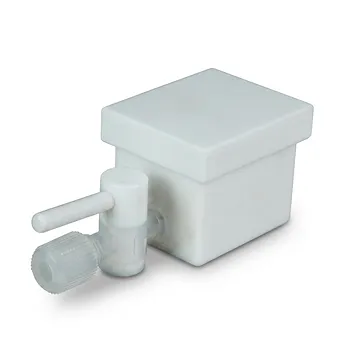
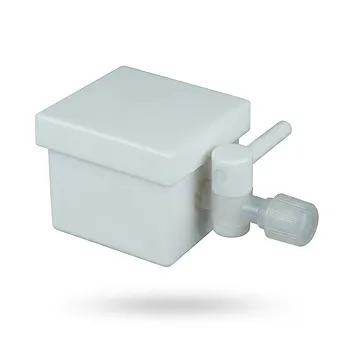
- Custom PTFE Corrosion Resistant Insulating Electrophoresis Reaction Cell with Septum and Valves for Low Background Trace Analysis
- Flame Retardant Electrophoresis Cell Corrosion Resistant PTFE Evaporating Dish Customizable White Hydrolysis Cell
People Also Ask
- What industries benefit most from custom PTFE parts? Solve Extreme Environment Challenges
- What industries use custom PTFE parts and for what purposes? Solve Critical Challenges with High-Performance Materials
- What design considerations are important for custom PTFE parts? Design for Performance & Reliability
- What advantages do custom PTFE parts offer for industrial efficiency? Boost Uptime & Cut Costs
- What are the main advantages of using PTFE for custom parts? Solve Complex Engineering Challenges