The standard three-electrode electrochemical system is the gold standard for characterizing advanced energy materials like NiS/CoS electrodes. It achieves accuracy by decoupling the current-carrying circuit from the potential-measuring circuit. This isolation ensures that the potential of the NiS/CoS electrode is measured against a stable reference without interference from electrolyte resistance or counter-electrode polarization. Consequently, researchers can precisely determine redox peak positions and pseudocapacitive properties essential for evaluating performance.
The core advantage of a three-electrode system lies in its ability to isolate the working electrode's behavior from the rest of the cell. By separating current flow and potential measurement, the system eliminates the "Ohmic drop" and polarization errors that would otherwise distort the data.
Decoupling the Current and Potential Circuits
Eliminating the Ohmic (iR) Drop
In a two-electrode setup, the voltage drop caused by electrolyte resistance (the iR drop) is bundled into the measurement. The three-electrode system routes the current through a circuit between the working electrode (WE) and the counter electrode (CE). Because almost no current flows through the reference electrode (RE), the potential detection circuit remains free from voltage drop interference.
Preventing Counter-Electrode Interference
The three-electrode configuration ensures that the polarization effects occurring at the counter electrode do not influence the recorded potential of the NiS/CoS material. This allows for the acquisition of accurate data regarding specific capacitance and charging-discharging efficiency. Without this separation, the measurement would reflect the combined behavior of both electrodes rather than the specific performance of the NiS/CoS catalyst.
Optimizing Measurement for NiS/CoS Materials
Precision in Redox Peak Detection
NiS/CoS electrodes are prized for their pseudocapacitive characteristics, which appear as specific peaks in cyclic voltammetry (CV). The three-electrode system allows for the precise measurement of these redox peak positions in alkaline electrolytes. This level of detail is critical for understanding the kinetics and reaction mechanisms of the Ni-Co-CHH active materials.
Environmental and Structural Stability
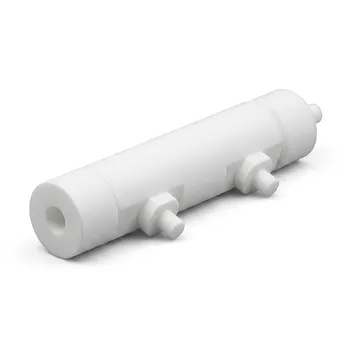
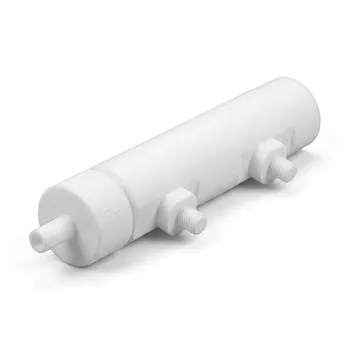
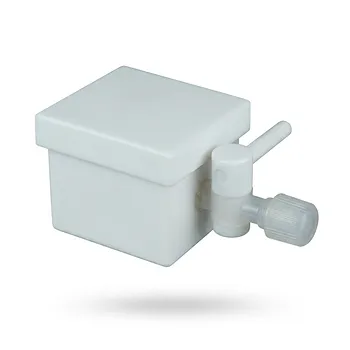
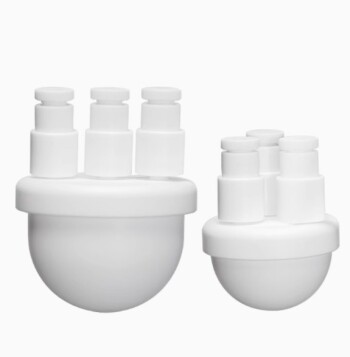
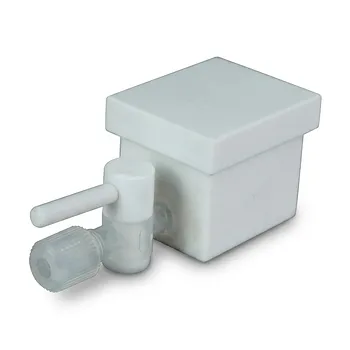
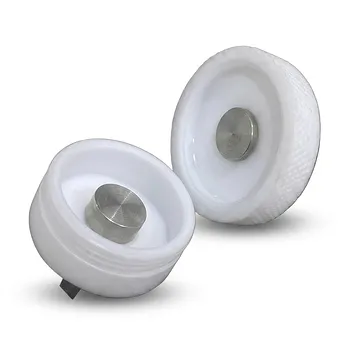
Accuracy is further supported by the physical design of the electrochemical cell, often fabricated from corrosion-resistant fluoropolymers. These cells fix the relative positions of the electrodes to ensure a uniform current distribution. Consistent electrode spacing and controlled fluid channels prevent environmental interference from masking weak electrochemical signals.
Understanding the Trade-offs
The Challenge of Reference Electrode Selection
While the three-electrode system is superior for accuracy, the choice of the reference electrode must match the electrolyte. For NiS/CoS testing in alkaline environments, a mercury/mercuric oxide (Hg/HgO) electrode is typically required to ensure stability. Using an incompatible reference, like a standard hydrogen electrode in a high-pH solution without proper isolation, can introduce significant drift.
Complexity and Calibration Needs
This system is significantly more complex to set up than a two-electrode cell and requires specialized hardware like a potentiostat. Furthermore, the reference electrode itself must be regularly maintained and calibrated. If the RE fails or drifts, the entire data set for the NiS/CoS electrode becomes unreliable, potentially leading to incorrect conclusions about its efficiency.
How to Apply This to Your Evaluation
Making the Right Choice for Your Goal
- If your primary focus is determining intrinsic material kinetics: Use a three-electrode setup with a Luggin capillary to place the reference electrode as close as possible to the NiS/CoS surface, further minimizing residual resistance.
- If your primary focus is evaluating oxygen evolution reaction (OER) activity: Ensure you use a platinum mesh counter electrode with a significantly larger surface area than the working electrode to prevent the counter electrode from becoming the rate-limiting step.
- If your primary focus is practical device performance: Supplement your three-electrode findings with a two-electrode "full-cell" test to understand how the NiS/CoS electrode performs under real-world power-demand conditions.
By isolating the working electrode's potential from the complexities of the overall cell environment, the three-electrode system provides the definitive data needed to advance NiS/CoS electrode technology.
Summary Table:
| Component | Role in Three-Electrode System | Impact on Testing Accuracy |
|---|---|---|
| Working Electrode (WE) | Hosts the NiS/CoS sample | Isolates intrinsic material kinetics and redox behavior. |
| Reference Electrode (RE) | Maintains constant potential | Eliminates Ohmic (iR) drop by separating the sensing circuit. |
| Counter Electrode (CE) | Completes the current circuit | Prevents CE polarization from distorting WE potential data. |
| Potentiostat | Controls potential/current | Decouples measurement and power circuits for stable data. |
| Fluoropolymer Cell | Structural housing | Ensures uniform current distribution and corrosion resistance. |
Elevate Your Electrochemical Research with KINTEK Precision
Achieving the gold standard in NiS/CoS electrode characterization requires more than just a method—it requires high-performance hardware. KINTEK specializes in manufacturing a comprehensive range of laboratory supplies crafted from premium PTFE and PFA, specifically designed to withstand the harsh alkaline environments of electrochemical testing.
Whether you need:
- Standard Labware: High-purity beakers, measuring cylinders, and reagent bottles.
- Advanced Apparatus: Standard or custom electrochemical cells, battery testing fixtures, and electrode accessories.
- Fluid & Sample Prep: PFA tubing, fittings, filtration tools, and high-purity digestion tubes.
- Custom Fabrication: Bespoke non-standard machined parts via our end-to-end CNC services.
Our exclusive focus on fluoropolymer materials ensures your experiments remain free from contamination and environmental interference. Contact us today to discuss your specific requirements and see how KINTEK’s bespoke laboratory setups can enhance your research accuracy.
References
- Vidhya Selvanathan, Tiong Sieh Kiong. Chemical Bath Deposition of Pollen Grain‐Like NiS/CoS Heterostructure for Supercapattery With High Areal Capacity. DOI: 10.1155/er/8895957
This article is also based on technical information from Kintek Knowledge Base .
Related Products
- Corrosion Resistant PTFE Electrochemical Cell for New Energy Research Inert Insulating Customizable Lab Reaction Vessel
- Square PTFE Electrochemical Cell for Silicon Wafer Processing and Hydrofluoric Acid Resistance in Semiconductor and New Energy Research
- Custom PTFE Electrolytic Cell Corrosion Resistant Low Background Reaction Vessel with Inlet Outlet Ports
- White PTFE Electrolytic Cell with Movable Slider and Insulated Lid for Fluorine Corrosion Resistance
- Custom PTFE Reaction Box Opaque White Square Electrochemical Cell Tank
People Also Ask
- How do custom PTFE electrochemical cells improve the accuracy of stability testing for alkaline catalysts compared to glass cells?
- How does the hydrophobicity of PTFE benefit electrochemical measurements? Enhance Stability and Precision in Your Lab
- What makes PTFE an ideal construction material for custom electrochemical cells and electronic analytical instrumentation housings? Discover superior chemical resistance and electrical insulation
- Why must seawater electrolysis test cells have high corrosion resistance? Protect catalyst stability & data accuracy.
- What are the key steps for structural integrity in molded PTFE lab reaction vessels? Master fine powder processing.