High-precision electrochemical cells provide the controlled environment required to isolate and measure the performance of seawater electrolysis catalysts. By integrating a standardized three-electrode system, these cells allow researchers to monitor the working electrode potential with high accuracy, which is essential for distinguishing between the Oxygen Evolution Reaction (OER) and the competitive Chlorine Oxidation Reaction (ClOR) in complex electrolytes.
Core Takeaway: High-precision electrochemical cells are the fundamental hardware required to transform raw catalyst activity into scientifically valid data by ensuring structural stability, eliminating electrode interference, and managing the harsh chemical environment of seawater.
The Structural Foundation of Data Integrity
Material Selection for Corrosive Environments
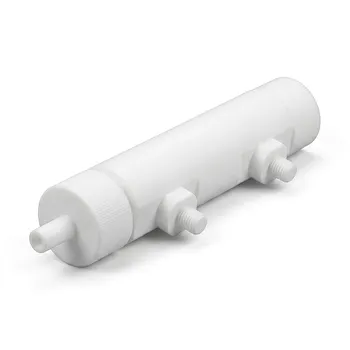
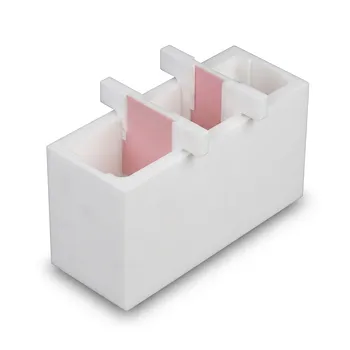
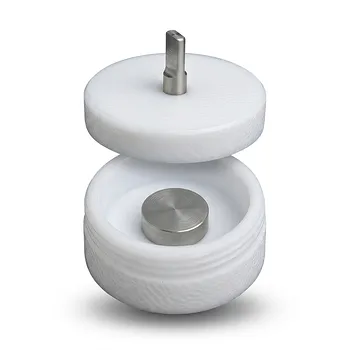
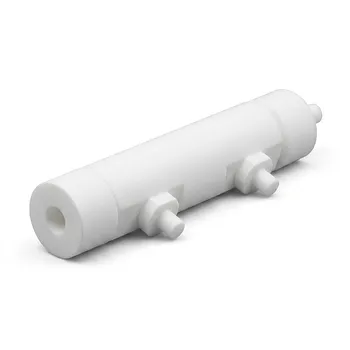
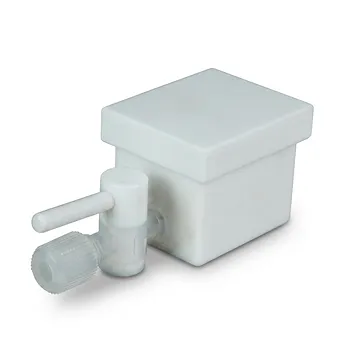
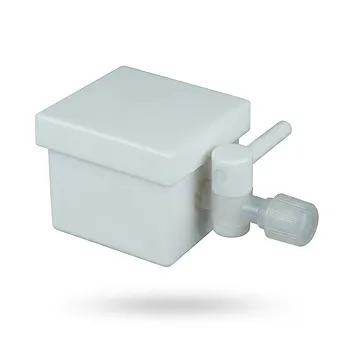
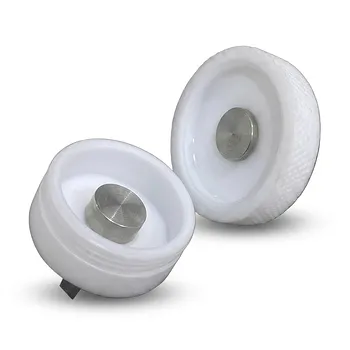
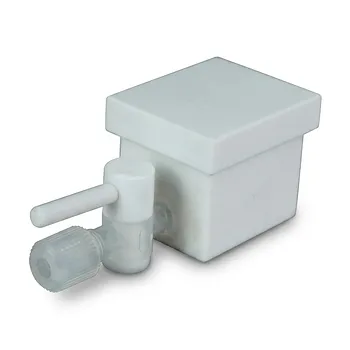
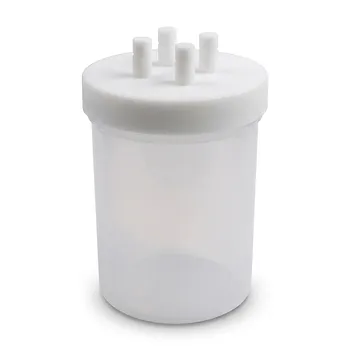
Precision cells are typically fabricated from high-insulation, corrosion-resistant fluoropolymers like PTFE or PFA. These materials prevent the cell itself from reacting with the electrolyte or leaking, which is critical when testing in aggressive simulated seawater containing high concentrations of KOH and NaCl.
Geometry and Signal Clarity
The design of a high-performance cell ensures that the relative positions of the working, counter, and reference electrodes are fixed. This structural stability maintains a uniform current distribution and minimizes environmental interference, allowing the system to capture even the weakest electrochemical signals accurately.
Triple-Phase Interface Management
Advanced chambers are designed to establish stable gas-solid-liquid triple-phase interfaces, particularly when using gas diffusion electrodes. Precision seals and chamber designs prevent gas bypassing or electrolyte leakage, ensuring that measurements like Faradaic efficiency reflect the intrinsic performance of the catalyst layer.
The Role of the Three-Electrode Configuration
Isolating the Working Electrode
The three-electrode system—comprising the Working Electrode (WE), Counter Electrode (CE), and Reference Electrode (RE)—is the core platform for evaluation. By separating the roles of the electrodes, the system eliminates interference from counter electrode polarization, allowing for the precise measurement of potential changes at the catalyst surface.
Identifying Key Kinetic Parameters
This setup is indispensable for determining critical catalyst benchmarks such as onset potential, half-wave potential, and current density. Without the isolation provided by the reference electrode, it would be impossible to accurately assess the catalyst's specific activity in a complex seawater matrix.
Precise iR Compensation
High-precision cells feature engineered fluid chambers that maintain a highly consistent electrolyte environment between the electrodes. This consistency allows for the accurate subtraction of compensated voltage (iR compensation), which is necessary to reveal the true intrinsic activity of the electrocatalytic materials.
Addressing Seawater-Specific Challenges
OER vs. ClOR Selectivity
In seawater electrolysis, the competition between oxygen evolution and chlorine evolution is a primary hurdle. High-precision systems allow researchers to evaluate catalyst selectivity and chlorine corrosion resistance by providing the stability needed for long-term cycling in the presence of chloride ions.
Mitigation of Concentration Polarization
Efficient stirring or flow systems within the cell help remove O2 and H2 bubbles that can shield active sites on catalysts like NiFe-LDH. By preventing bubble accumulation and managing local ion concentration, these systems ensure the assessment reflects the catalyst’s actual kinetics rather than mass-transport limitations.
Electrolyte Dosing and Consistency
Precision dosing systems integrated with the cells ensure that the ratios of simulated seawater components remain exact. This prevents fluctuations in the chemical environment from skewing the results of cyclic voltammetry or charge-discharge curves.
Understanding the Trade-offs
While high-precision cells are necessary for scientific validation, they involve significant hardware complexity and higher costs compared to standard laboratory glassware. The use of specialized fluoropolymers and precision-machined components increases the initial investment and requires more rigorous maintenance to ensure seals remain airtight. Furthermore, the high sensitivity of these systems means that minor setup errors, such as improper electrode spacing or bubbles trapped in the reference electrode bridge, can lead to disproportionately large errors in data interpretation.
Applying Precision to Your Research Goals
How to Select Your Setup Based on Objectives
The choice of cell configuration depends heavily on the specific performance metrics you need to validate.
- If your primary focus is intrinsic catalyst kinetics: Use a high-precision cell with fixed electrode geometry to ensure accurate iR compensation and minimal mass-transport interference.
- If your primary focus is selectivity (OER vs. ClOR): Prioritize a cell with a stable reference electrode bridge and robust seals to allow for long-term testing in chloride-rich environments.
- If your primary focus is industrial scalability: Utilize a cell with integrated flow or stirring systems to simulate real-world bubble dynamics and local ion concentration changes.
By matching the precision of your electrochemical cell to the complexity of the seawater environment, you ensure that your catalyst evaluations are both reproducible and scientifically definitive.
Summary Table:
| Component/Feature | Function & Benefit | Role in Seawater Electrolysis |
|---|---|---|
| Fluoropolymer Body (PTFE/PFA) | Exceptional corrosion resistance | Prevents cell degradation in aggressive KOH and NaCl electrolytes. |
| Three-Electrode Setup | Potential isolation & precise control | Accurately distinguishes between OER and ClOR kinetic pathways. |
| Fixed Geometry | Uniform current distribution | Minimizes signal interference and ensures accurate iR compensation. |
| Integrated Flow/Stirring | Active bubble management | Removes O2/H2 bubbles to reveal intrinsic catalyst kinetics. |
| Precision Seals | Triple-phase interface stability | Prevents leakage, ensuring accurate Faradaic efficiency data. |
Optimize Your Electrochemical Research with KINTEK Precision
Elevate your seawater electrolysis and catalyst evaluation with KINTEK’s high-performance fluoropolymer solutions. We specialize in providing the durable, high-purity hardware required for the most demanding laboratory environments. From everyday basic labware like beakers, measuring cylinders, crucibles, and reagent bottles to specialized centrifuge tubes and high-purity trace analysis instruments, our products are designed for excellence.
Our comprehensive range includes:
- Fluid Transfer: Tubing, fittings, and valves for seamless electrolyte management.
- Sample Prep: Separatory funnels, burettes, filters, and precision tweezers.
- Advanced Apparatus: Standard and custom electrochemical cells, battery testing fixtures, electrode accessories, and microwave digestion vessels.
- General Consumables: High-quality stirring bars, O-rings, gaskets, and seal tapes.
Backed by end-to-end custom CNC fabrication, KINTEK delivers everything from high-volume consumables to complex, non-standard machined parts tailored to your specific research goals. We maintain an exclusive focus on high-performance PTFE and PFA to ensure your setup is chemically inert and scientifically definitive.
Ready to upgrade your lab setup? Contact us today to discuss your custom requirements!
References
- Peng‐Jun Deng, Panagiotis Tsiakaras. Strategies for Designing Anti‐Chlorine Corrosion Catalysts in Seawater Splitting. DOI: 10.1002/aenm.202405749
This article is also based on technical information from Kintek Knowledge Base .
Related Products
- High Purity Custom PTFE Reaction Cell Electrolytic Tank for Semiconductor and Polysilicon Industrial Applications
- Corrosion Resistant PTFE Electrochemical Cell for New Energy Research Inert Insulating Customizable Lab Reaction Vessel
- Acid Resistant PTFE Button Cell Battery Test Fixture Customizable Machining High Purity Electrochemical Testing Clamp
- Square PTFE Electrochemical Cell for Silicon Wafer Processing and Hydrofluoric Acid Resistance in Semiconductor and New Energy Research
- Custom PTFE Electrolytic Cell Corrosion Resistant Low Background Reaction Vessel with Inlet Outlet Ports
People Also Ask
- Why is PTFE ideal for high-purity applications? Ensuring Absolute Chemical and Biological Inertness
- What functional advantages do PTFE reactors provide over glass? Achieve Superior Purity and Safety in Synthesis
- What are the primary fabrication methods for capillary-based and monolithic PTFE reactors? Expert Production Insights
- Why are PP or PTFE reactors preferred over glass in tribocatalysis? Maximize Charge Separation & Catalytic Efficiency
- How does the hydrophobicity of PTFE benefit electrochemical measurements? Enhance Stability and Precision in Your Lab