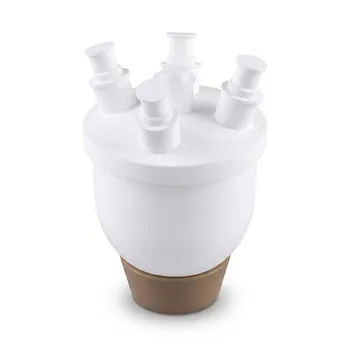
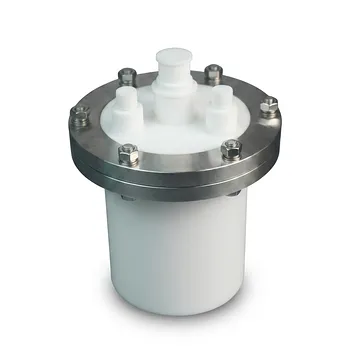
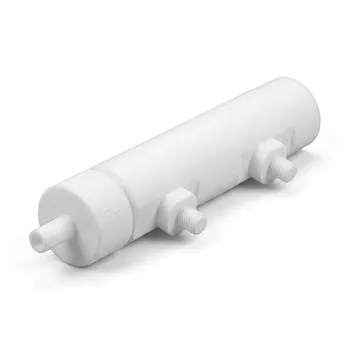
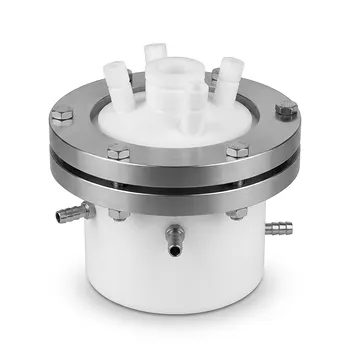
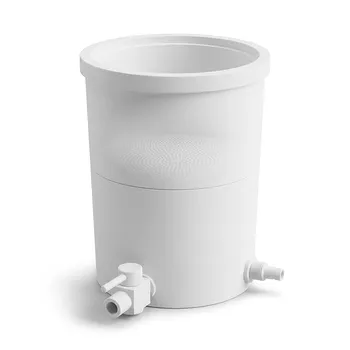
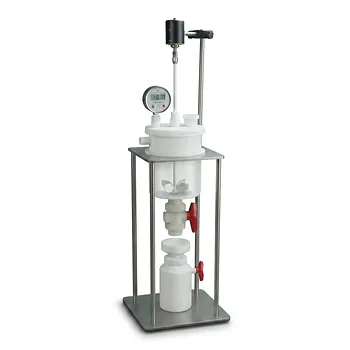
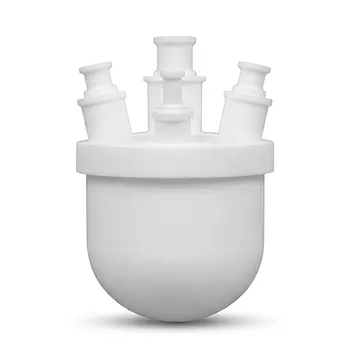
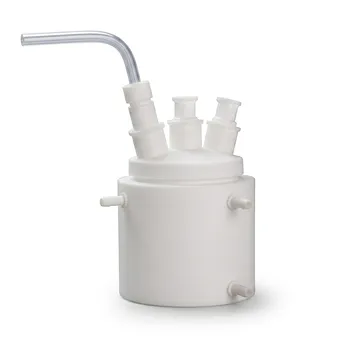
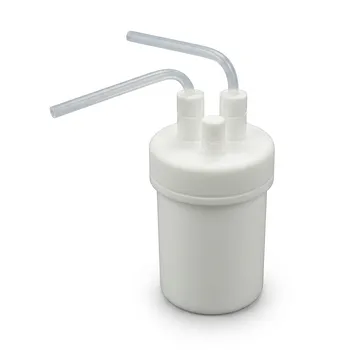
PTFE reactors and components provide a nearly universal shield against chemical erosion and contamination, outperforming glass in environments involving hydrofluoric acid, strong bases, and high-purity trace analysis. While glass remains a staple for visual monitoring, PTFE (polytetrafluoroethylene) eliminates the risks of silicate leaching and brittle fracture, ensuring the integrity of complex organic syntheses and electrochemical tests.
Core Takeaway: PTFE is the definitive choice for chemical synthesis when absolute inertness and purity are required, specifically because it avoids the elemental leaching and fragility inherent in traditional glassware.
Superior Chemical Resistance and Inertness
Handling Aggressive Reagents
PTFE offers near-universal chemical resistance, allowing it to withstand erosion from most strong acids, strong bases, and organic solvents. This makes it indispensable for reactions involving hydrofluoric acid, which would rapidly etch and degrade borosilicate glass instruments.
Stability in Organic Synthesis
In the presence of strong polar solvents like DCM or THF and active catalysts, PTFE components maintain absolute chemical inertness. This stability prevents the material from interfering with the reaction pathway or introducing unwanted byproducts into the system.
Maximizing Purity and Yield
Eliminating Elemental Leaching
Standard glassware can leach silicon hydroxyl groups or metal ions into a reaction, which is catastrophic for high-purity synthesis. PTFE features extremely low leaching levels, ensuring that synthesized products remain free from inorganic impurities and that experimental data remains reliable.
Non-Stick Surface for Higher Recovery
The inherent anti-stick properties of PTFE significantly reduce the adhesion of residual high-value synthetic products to the vessel walls. This not only simplifies the cleaning process but also minimizes the loss of expensive raw materials, improving the overall efficiency of the synthesis.
Structural Durability and Operational Safety
Impact and Pressure Resilience
Unlike glass, which is prone to shattering under stress, virgin PTFE tends to deform rather than break when subjected to load or high centrifugal forces. This makes PTFE components significantly safer for use in high-speed applications or environments where mechanical impact is a risk.
Thermal Stability and Sealing
PTFE is stable during rapid temperature fluctuations and can cool quickly without the risk of thermal cracking. Furthermore, its soft, compliant nature allows it to form superior seals in equipment like stopcocks and gaskets, effectively filling minor gaps that rigid glass cannot.
Advantages in Microchannel Reactors
Custom PTFE parts enable the safe handling of air-sensitive intermediates and aggressive reagents in microchannel setups without the need for inert-atmosphere gloveboxes. The material's molding capability also allows for the creation of complex shapes, such as integrated magnetic stirrers and flexible tubing.
Understanding the Trade-offs
Visual Monitoring Constraints
The most significant drawback of PTFE is its opacity compared to clear borosilicate glass. This prevents researchers from visually monitoring phase changes, color shifts, or the formation of precipitates during the reaction process.
Thermal Conductivity and "Creep"
PTFE has lower thermal conductivity than glass, which can lead to slower heat transfer in temperature-sensitive reactions. Additionally, the material is subject to mechanical creep (cold flow) under sustained pressure, which may require periodic maintenance or re-tightening of joints to prevent leaks.
How to Apply This to Your Project
Choosing the Right Material for Your Goal
- If your primary focus is high-purity trace analysis: Utilize PTFE or PFA beakers and reagent bottles to eliminate the risk of silicate or metal ion contamination.
- If your primary focus is handling hydrofluoric acid or strong bases: Replace all glass components with PTFE to prevent hazardous vessel erosion and ensure long-term equipment durability.
- If your primary focus is maximizing product recovery of expensive materials: Leverage the non-stick surface of PTFE reactors to reduce residual adhesion and simplify the cleaning of high-value compounds.
- If your primary focus is mechanical safety in centrifuges or high-pressure rigs: Opt for PTFE components that deform under stress rather than shattering, reducing the risk of laboratory accidents.
By strategically replacing glass with PTFE in these specific contexts, you can ensure both the safety of your laboratory environment and the uncompromising purity of your chemical yields.
Summary Table:
| Feature | PTFE (Fluoropolymer) Advantage | Traditional Glass Limitation |
|---|---|---|
| Chemical Resistance | Immune to HF and strong bases; near-universal | Eroded by HF and strong alkaline solutions |
| Material Purity | Zero silicate leaching; ideal for trace analysis | Potential leaching of metal ions and silica |
| Durability | Shatter-proof; deforms under stress/impact | Brittle and prone to catastrophic fracture |
| Product Recovery | Non-stick surface ensures maximum yield | Residue often adheres to vessel walls |
| Sealing Ability | Compliant material creates airtight seals | Rigid; requires greased joints or gaskets |
Optimize Your Synthesis with High-Performance Fluoropolymer Solutions
Don't let contamination or equipment failure compromise your research. KINTEK specializes in the absolute focus on high-performance materials like PTFE and PFA to provide the durability and purity your lab demands. From everyday basic labware like beakers, crucibles, and reagent bottles to advanced reaction apparatus such as electrochemical cells, hydrothermal synthesis liners, and microwave digestion vessels, we offer the industry's most comprehensive range of fluoropolymer supplies.
Whether you need standard consumables (tubing, fittings, stir bars) or bespoke laboratory setups via our end-to-end custom CNC fabrication, KINTEK is equipped to deliver everything from complex non-standard machined parts to high-volume orders. Ensure the uncompromising integrity of your yields today.
Contact KINTEK to discuss your custom project
References
- Onur Cem Altunoluk, Oğuz Özbek. Potentiometric Sensors of Heavy Metals in Environmental Samples Using Different Materials. DOI: 10.1002/slct.202503752
This article is also based on technical information from Kintek Knowledge Base .
Related Products
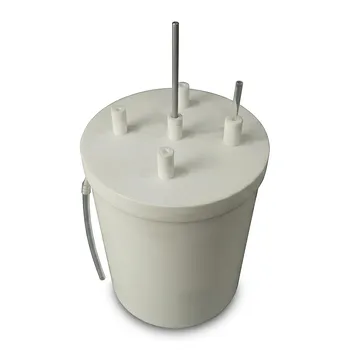
- PTFE 10L Reaction Vessel with Stirring Paddle Customizable Corrosion Resistant High Temperature Reactor for Biopharmaceutical and Chemical Processing
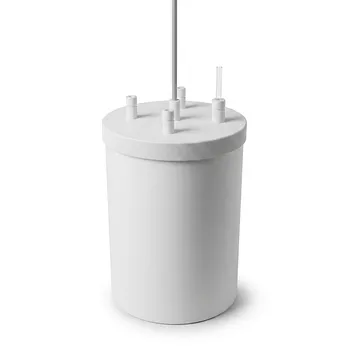
- High Purity PTFE Reaction Vessel Polyfluortetraethylene Cylindrical Tank Petrochemical Reaction Container
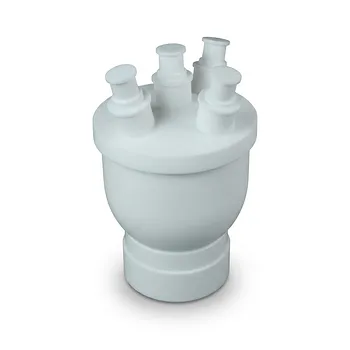
- Customizable Polytetrafluoroethylene PTFE Reactor and Corrosion Resistant Teflon Flask
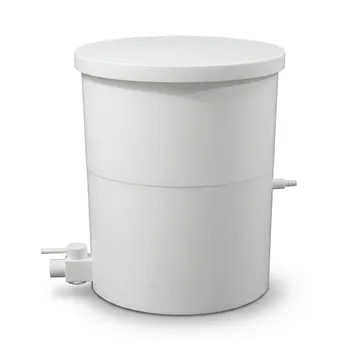
- Large Scale PTFE Double Layer Reaction Tank with Integrated Filter Plate High Purity Polytetrafluoroethylene Chemical Vessel 25L
- High Performance Customizable PTFE Reaction Vessel and Corrosion Resistant Polytetrafluoroethylene Flask for Chemical Laboratory Use
People Also Ask
- Why are high-purity PTFE or PFA reaction vessels recommended for the synthesis of PANI-TiC hybrid materials? - Guide
- What reaction vessel and fluid handling considerations are necessary for living cationic polymerization of fluorinated monomers involving Lewis acid catalysts? Key design and safety tips
- Ion Activation Reaction Vessel Requirements: Why PTFE is Critical for Membrane Performance
- Why are fluoroplastic (PTFE) reaction vessels recommended for Methylene Blue (MB) adsorption kinetic experiments?
- Why is a PTFE reaction vessel required for Ti3C2Tx MXene synthesis? Ensure Safe HF Etching & High Purity