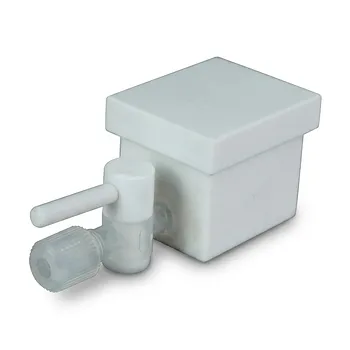
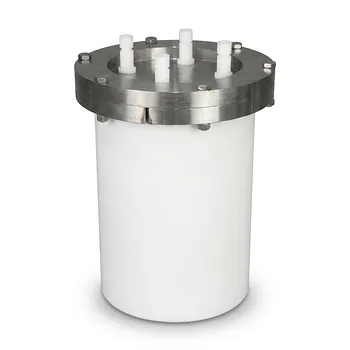
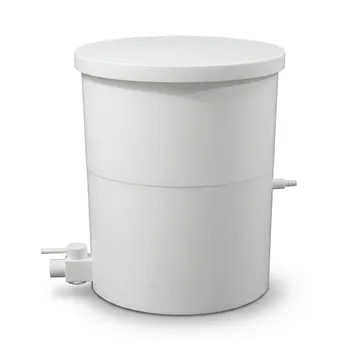
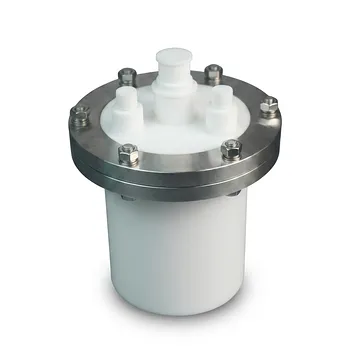
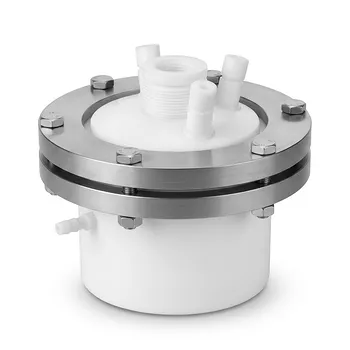
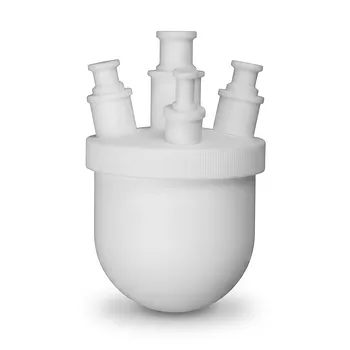
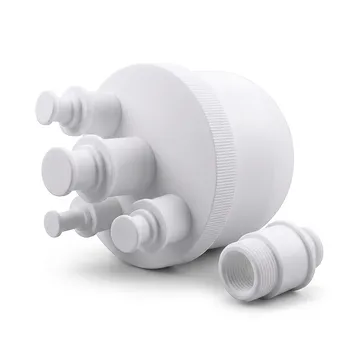
For living cationic polymerization of fluorinated monomers, use a rigorously dry, inert, temperature-controlled, chemically resistant system—preferably with PTFE or PFA wetted components. The vessel and transfer path must tolerate fluorinated solvents and highly reactive Lewis acids, while preventing moisture, surface contamination, catalyst loss, and monomer-feed errors. A practical setup includes a fluoropolymer-lined or fluoropolymer vessel, compatible seals and fittings, inert-gas protection, controlled low-temperature operation, and precise liquid or gas dosing.
The reactor is part of the polymerization chemistry. Inert, low-moisture-contact materials and accurate fluid handling are essential because Lewis acid catalysts can be deactivated by trace water or reactive surfaces, while fluorinated media may attack unsuitable materials or dissolve the growing polymer poorly.
Design the Reaction Vessel Around Chemical Compatibility
Use chemically resistant wetted surfaces
PTFE and PFA are strong choices for the reactor, dip tubes, valves, seals, bottles, and transfer fittings that contact the reaction mixture. They provide broad resistance to aggressive fluorinated solvents and alkylaluminum halide catalysts, reducing the risk of corrosion, leaching, swelling, or contamination.
Glass and metal should not be assumed to be universally suitable. Their compatibility depends on the specific solvent, Lewis acid, temperature, surface treatment, and exposure time; untreated surfaces may introduce moisture or participate in unwanted reactions.
Minimize exposed reactive surfaces
The design should limit unnecessary wetted-area-to-volume ratio, dead legs, crevices, and inaccessible internal surfaces. These features can retain catalyst, monomer, or solvent and make cleaning and reproducible charging more difficult.
A smooth, simple internal geometry also helps prevent localized polymer deposition and improves consistency between batches.
Select seals and fittings as carefully as the vessel
A chemically resistant vessel can still fail through an incompatible gasket, valve seat, O-ring, or tubing section. All wetted elastomers and plastics should be evaluated against the fluorinated solvent, Lewis acid, monomer, temperature, and expected contact time.
Where possible, use PTFE/PFA transfer paths and fittings or other materials specifically demonstrated to be compatible with the complete chemical system rather than with the solvent alone.
Control Moisture and Atmospheric Contamination
Treat water exclusion as a reaction requirement
Living cationic polymerization is highly sensitive to protonic impurities. Trace water or alcohol can consume or deactivate the Lewis acid catalyst and can alter the concentration of active chain ends, causing poor conversion control or broader molecular-weight distributions.
The vessel, feed lines, reagent bottles, and fittings therefore need to be dry before charging. Fluoropolymer materials have low moisture uptake, but no apparatus should be described as completely moisture-free without validated drying and handling procedures.
Use an inert, closed system
The reactor should support an inert-gas atmosphere and minimize repeated exposure to ambient air. The headspace, catalyst line, monomer line, and sampling points should be arranged so that charging and sampling do not require opening the system.
Pressure relief and vent handling must also be considered, particularly when using volatile fluorinated solvents or gaseous monomers. These provisions should be designed for the actual pressure and chemical hazards of the process.
Avoid contamination from preparation hardware
Reagent preparation and temporary storage can undermine an otherwise suitable reactor. Use compatible, dry bottles, tubes, syringes, cannulas, and transfer fittings so that catalyst solutions and monomer feeds do not contact moisture-retaining or chemically reactive materials before entering the vessel.
Match the Solvent and Mixing System to the Polymer
Maintain polymer solubility
Fluorinated polymers may be poorly soluble in conventional organic solvents. HCFCs, HFCs, and HFEs can provide more suitable reaction media because they better solvate fluorinated chains and help keep the growing polymer dissolved.
The vessel should therefore accommodate the selected fluorinated medium without swelling, extraction, or degradation of its wetted materials.
Provide adequate but controlled mixing
Mixing must keep the catalyst, monomer, solvent, and growing polymer compositionally uniform. It should also prevent local high concentrations during catalyst or monomer addition, which can produce nonuniform initiation or uncontrolled propagation.
For low-temperature operation and viscous or polymer-rich mixtures, the impeller, vessel geometry, and mixing speed should be selected together. Excessive agitation may introduce heat, gas entrainment, or unnecessary mechanical stress.
Distinguish liquid and gaseous monomer handling
If the monomer is liquid under the reaction conditions, use a calibrated, chemically compatible liquid-feed path with minimal dead volume. The feed system should support reproducible rates and prevent backflow into the monomer reservoir.
If the monomer is gaseous, the reactor needs controlled headspace delivery and adequate gas–liquid mass transfer. Stirrer and baffle design become important because agitation must provide sufficient interfacial area without applying shear that destabilizes an emulsion or dispersion.
Build in Precise Temperature Control
Operate at the required low temperature
Living cationic polymerization of fluorinated monomers commonly requires 0 °C or below to control propagation and suppress side reactions. The reactor should have efficient thermal contact, a reliable temperature sensor near the reaction mass, and insulation or a jacket suitable for the operating range.
Temperature control should include the feed lines and catalyst reservoir where practical. A cold reactor with warm feed lines can still create local rate changes during addition.
Manage heat from addition and polymerization
Monomer and catalyst additions can create localized exotherms even when the bulk reactor is cold. Feed rates, concentration, mixing, and thermal capacity should be coordinated so that the reaction temperature remains within the intended window.
Temperature excursions can affect chain-end survival, catalyst activity, conversion kinetics, and molecular-weight control.
Ensure the apparatus remains mechanically stable when cold
Some seals, tubing, and fittings become brittle, stiff, or less compliant at low temperature. The selected materials must retain sealing performance and dimensional stability throughout cooling, reaction, and warming cycles.
Design Fluid Handling for Reproducible Polymerization
Separate and protect catalyst and monomer feeds
The catalyst and monomer should be stored and transferred in a way that prevents premature contact, moisture ingress, and uncontrolled addition. Dedicated lines or isolated feed ports can reduce cross-contamination and simplify flushing.
For highly reactive alkylaluminum halides, the transfer system must be compatible with the reagent and operated using procedures appropriate for moisture-sensitive Lewis acids.
Use low-dead-volume transfer paths
Dead volume can retain active catalyst or monomer and cause delayed addition during later stages. This is especially problematic for block-copolymer synthesis, where feed timing and composition determine block sequence and molecular-weight progression.
Short, drainable, chemically compatible paths improve material balance and make cleaning or replacement more predictable.
Calibrate dosing and verify delivery
Living polymerization depends on accurate ratios among initiator, Lewis acid, monomer, and any moderating Lewis base. Dosing systems should therefore be calibrated for the actual viscosity, temperature, density, and volatility of the reagents.
The design should also allow confirmation that material has entered the reactor rather than remaining in a line, filter, valve cavity, or reservoir.
Moderate propagation with a Lewis base when required
A Lewis base such as 1,4-dioxane may be used to moderate propagation and stabilize carbocationic intermediates. If included, it must be delivered with the same moisture and compatibility controls as the other reagents.
Its concentration and addition method should be reproducible because changes in Lewis base level can alter propagation kinetics and catalyst behavior.
Consider Monitoring and Scale-Up Requirements
Provide representative sampling
Sampling ports should withdraw material from a well-mixed region without exposing the reactor to ambient moisture. The sample path must be compatible with the fluorinated solvent, catalyst residues, and polymer concentration.
Sampling should not create a significant pressure, composition, or catalyst imbalance in a small-scale reaction.
Account for pressure and volatility
Fluorinated solvents and monomers can be volatile, and some monomers may be gaseous at the operating temperature. The vessel, valves, tubing, and relief strategy must be rated for the expected pressure and temperature envelope.
A closed system is valuable for moisture exclusion, but it must not be treated as pressure-safe without appropriate engineering review.
Validate materials with the complete chemical mixture
Compatibility testing should use the actual solvent, catalyst, monomer, Lewis base, temperature, and exposure time. A material that is stable in a fluorinated solvent alone may behave differently when exposed to a concentrated Lewis acid or polymerizing mixture.
Inspect for swelling, embrittlement, discoloration, surface roughening, leaks, and extractables before relying on the system for controlled synthesis.
Understanding the Trade-offs
Fluoropolymer components improve inertness but complicate fabrication
PTFE and PFA reduce chemical compatibility concerns, but they can be more difficult to machine, seal, reinforce, or integrate with standard laboratory hardware. Mechanical design is particularly important where pressure, vacuum, repeated thermal cycling, or agitation is involved.
A fluoropolymer-only design is not automatically superior if it compromises structural integrity or temperature measurement.
Glass may offer visibility but not universal chemical protection
Glass reactors provide visual access and are common in laboratory polymerization, but they may be unsuitable for a particular Lewis acid, surface condition, or fluorinated medium. Compatibility must be established for the exact chemistry rather than inferred from general laboratory practice.
Where visual observation is essential, a compatible fluoropolymer-lined or otherwise engineered system may offer a better compromise than untreated glass.
Excessive inertness does not replace process control
Using PTFE or PFA cannot compensate for wet reagents, inaccurate dosing, poor temperature control, or inadequate mixing. Material selection protects the chemistry; it does not itself create living behavior.
Excessive agitation can be as harmful as insufficient agitation
Insufficient mixing causes concentration gradients and poor gas–liquid transfer. Excessive mixing can generate heat, entrain gas, damage emulsions, or complicate scale-up, so agitation must be optimized for the reactor geometry and polymerization mode.
How to Apply This to Your Project
The correct design depends on whether the process uses liquid or gaseous monomer, homogeneous solution or emulsion conditions, and the specific Lewis acid/solvent combination.
- If your primary focus is moisture-sensitive living-chain control: Use a closed, inert, rigorously dried reactor with PTFE/PFA wetted surfaces, compatible seals, and isolated catalyst and monomer feeds.
- If your primary focus is solvent and catalyst compatibility: Validate every wetted material against the complete fluorinated solvent–Lewis acid system, not against individual components in isolation.
- If your primary focus is molecular-weight and block-sequence precision: Prioritize calibrated low-dead-volume dosing, strong mixing, stable low-temperature control, and reliable sampling.
- If your primary focus is gaseous-monomer or emulsion processing: Engineer headspace delivery, gas–liquid mass transfer, impeller and baffle geometry, and agitation limits together.
- If your primary focus is scale-up: Evaluate heat removal, pressure containment, seal performance, feed-line holdup, and cleaning validation before increasing batch size.
A well-designed inert fluoropolymer fluid-handling system preserves catalyst activity, feed accuracy, and temperature control—the three foundations of reproducible living cationic polymerization.
Summary Table:
| Aspect | Key Considerations |
|---|---|
| Chemical Compatibility | Use PTFE/PFA wetted parts; validate all materials with the complete reaction mixture. |
| Moisture Control | Rigorously dry vessel and lines; use inert, closed system. |
| Temperature Control | Maintain low temps (0°C or below) with efficient cooling and monitoring. |
| Mixing | Provide uniform composition without excessive shear; consider monomer state. |
| Fluid Handling | Use low-dead-volume calibrated dosing; separate catalyst and monomer feeds. |
| Monitoring & Scale-up | Ensure sampling and pressure ratings; validate materials and cleaning. |
Optimize your polymerization setup with KINTEK's high-purity PTFE and PFA labware and custom fluid handling components. From reactors and transfer lines to fittings and valves, our products ensure chemical resistance, moisture exclusion, and precise dosing. Contact us today to discuss your needs and elevate your research. Contact KINTEK
Related Products
- High Purity PTFE Corrosion Resistant Reaction Vessel with Luer Fittings and Caps for Trace Analysis
- PTFE 10L Reaction Vessel with Stirring Paddle Customizable Corrosion Resistant High Temperature Reactor for Biopharmaceutical and Chemical Processing
- High Purity PTFE Reaction Vessel Polyfluortetraethylene Cylindrical Tank Petrochemical Reaction Container
- High Purity PTFE Reaction Vessel with Electric Stirring System and Customizable 5L Tank including Buchner Funnel Filtration Assembly
- High Performance Customizable PTFE Reaction Vessel and Corrosion Resistant Polytetrafluoroethylene Flask for Chemical Laboratory Use
People Also Ask
- Why is a PTFE reaction vessel required for Ti3C2Tx MXene synthesis? Ensure Safe HF Etching & High Purity
- Why is a high-quality PTFE reaction vessel required for the etching preparation of Ti3C2Tx MXene? Ensure Pure Synthesis.
- Why are high-purity PTFE or PFA reaction vessels recommended for the synthesis of PANI-TiC hybrid materials? - Guide
- How do perfluorinated solvent environments influence the selection of reaction vessels and fluid handling components in nonaqueous emulsion polymerizations? Choose fluoropolymer materials.
- Why are fluoroplastic (PTFE) reaction vessels recommended for Methylene Blue (MB) adsorption kinetic experiments?