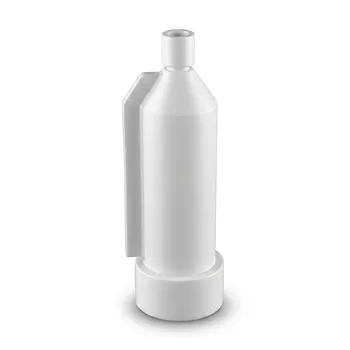
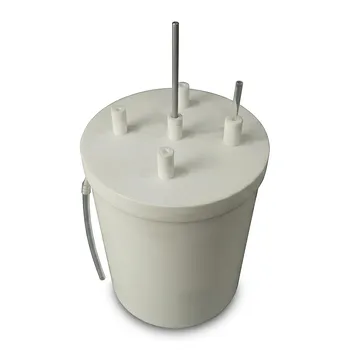
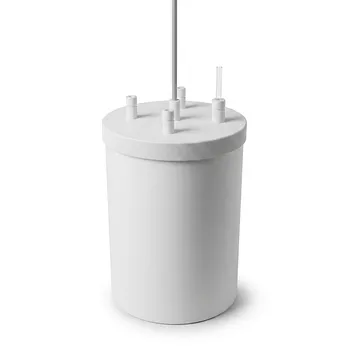
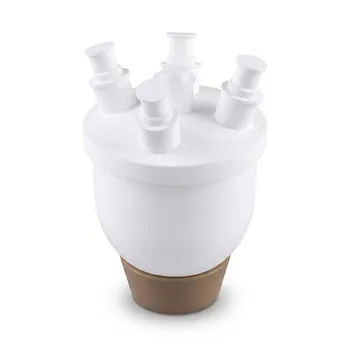
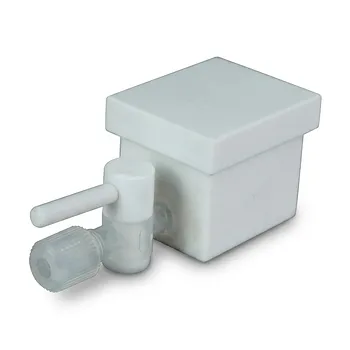
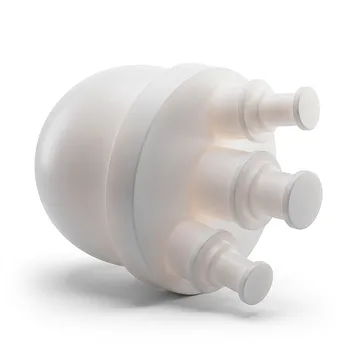
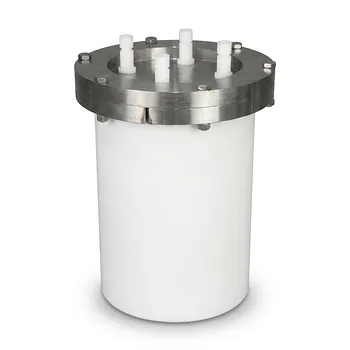
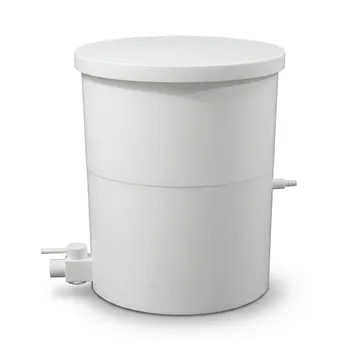
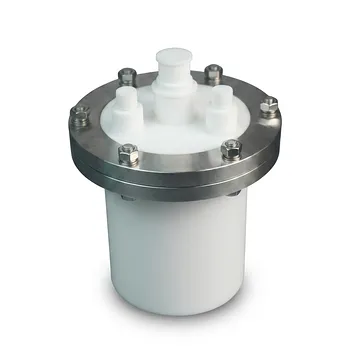
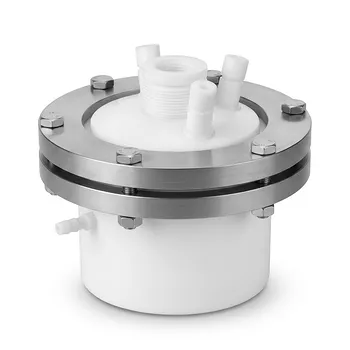
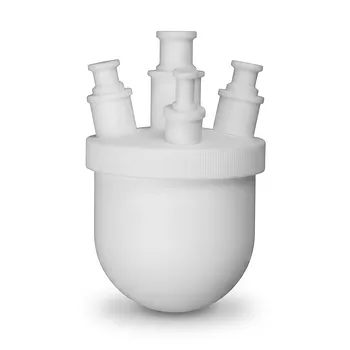
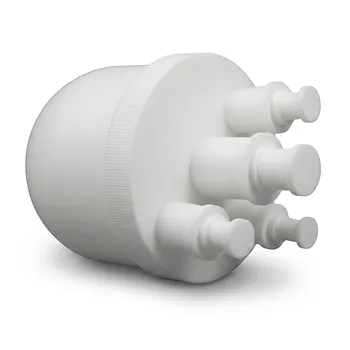
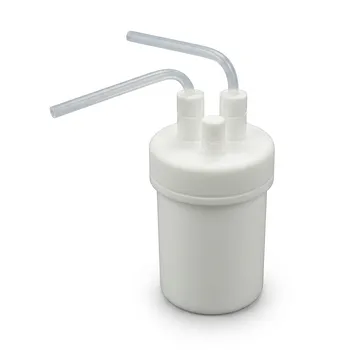
High-purity PTFE and PFA reaction vessels are the industry standard for PANI-TiC synthesis because they withstand the aggressive chemical environment required to form the hybrid material. These fluoropolymers provide total resistance to the strong acids and oxidizing agents used in the process, ensuring that no trace metals or impurities leach into the sample, which would otherwise degrade the material's performance and structural integrity.
Core Takeaway: The use of PTFE or PFA is a technical necessity to prevent "background contamination" and product loss, ensuring that the synthesized PANI-TiC hybrid maintains the precise chemical purity required for accurate characterization and functional stability.
Managing Aggressive Chemical Environments
The synthesis of Polyaniline-Titanium Carbide (PANI-TiC) hybrids is a chemically demanding process. It requires a combination of reagents that would compromise standard laboratory glassware or lower-grade plastics.
Resistance to Strong Acids and Oxidants
The reaction typically involves 1 M hydrochloric acid and perchloric acid, which are highly corrosive. Additionally, the presence of ammonium persulfate—a powerful oxidizing agent—creates a reactive environment that can easily degrade less stable materials.
Exceptional Chemical Inertness
High-purity PTFE (Polytetrafluoroethylene) and PFA (Perfluoroalkoxy) are virtually non-reactive. They maintain their structural integrity even when exposed to the prolonged acidic and oxidative stress required for the polymerization of aniline onto TiC particles.
Safeguarding Material Purity
In advanced material synthesis, the vessel itself can become a source of error. PTFE and PFA are chosen specifically to eliminate the risk of "leaching."
Eliminating Metal Ion Contamination
Standard glass containers can leach silicon or aluminum ions into the reaction mixture. In contrast, high-purity fluoropolymers have extremely low leaching rates, ensuring that no unintended metal ions interfere with the nucleation or growth of the PANI-TiC structure.
Integrity of Structural Characterization
The deep need for purity is driven by the requirements of structural characterization. Even trace amounts of background contamination from the vessel walls can lead to inaccurate spectroscopic or microscopic data, potentially masking the true properties of the hybrid material.
Optimizing Product Yield and Recovery
Beyond chemical resistance, the physical properties of PTFE and PFA offer significant advantages for the practical handling of nanomaterials and hybrids.
Non-stick Surface Properties
PTFE and PFA possess low surface energy, which results in exceptional non-stick behavior. This prevents fine PANI-TiC particles from adhering to the vessel walls during the polymerization process.
Maximizing Hybrid Recovery
By minimizing surface adsorption, researchers can achieve a nearly complete recovery of the final hybrid product. This reduces material loss and ensures that the final yield reflects the intended stoichiometry of the synthesis.
Understanding the Trade-offs
While PTFE and PFA are superior in terms of chemical resistance, they are not without limitations that a technical advisor must acknowledge.
Thermal and Mechanical Limits
PTFE is a soft material that can undergo "cold flow" or deformation under high pressure. Additionally, while these materials handle heat well, they have lower maximum operating temperatures (typically around 250°C to 260°C) compared to specialized quartz or ceramic vessels.
Cost and Material Maintenance
High-purity PFA and PTFE are significantly more expensive than standard borosilicate glass. They also require specific cleaning protocols to ensure that no residues from previous experiments remain trapped in the polymer matrix, which could cause cross-contamination.
How to Apply This to Your Project
Choosing the right vessel depends on your specific research goals and the sensitivity of your application.
- If your primary focus is high-precision characterization: Always use high-purity PFA vessels, as they offer the lowest possible leaching rates and superior transparency for monitoring the reaction.
- If your primary focus is high-yield production: PTFE is often sufficient and more cost-effective for larger batches, provided the non-stick properties are maintained through proper cleaning.
- If your primary focus is hydrothermal synthesis: Ensure you use a PTFE or PFA liner within a stainless steel autoclave to protect the metal body from acid corrosion while maintaining the necessary pressure.
Selecting high-purity fluoropolymer vessels is the most effective way to ensure the reproducibility and chemical excellence of your PANI-TiC hybrid materials.
Summary Table:
| Feature | Advantage for PANI-TiC Synthesis |
|---|---|
| Chemical Inertness | Withstands corrosive HCl, perchloric acid, and oxidants without degradation. |
| Ultra-Low Leaching | Prevents trace metal (Si/Al) contamination for accurate structural analysis. |
| Non-stick Surface | Low surface energy prevents particle adhesion, maximizing hybrid material recovery. |
| Thermal Stability | Maintains integrity during polymerization processes up to 260°C. |
Elevate Your Material Synthesis with KINTEK’s Precision Fluoropolymers
Ensure the integrity of your PANI-TiC hybrids and advanced material research with KINTEK’s high-performance solutions. We specialize exclusively in high-performance fluoropolymers, providing the ultimate barrier against chemical corrosion and sample contamination.
From everyday basic labware like PFA beakers, crucibles, and digestion tubes to complex custom CNC-fabricated reaction apparatus, KINTEK delivers everything you need for a sterile, non-reactive environment. Our range includes:
- High-Purity Labware: Reagent bottles, filters, and high-volume PFA/PTFE vessels.
- Fluid Transfer: Precision tubing, fittings, and valves for aggressive chemicals.
- Advanced Apparatus: Custom electrochemical cells, hydrothermal synthesis liners, and microwave digestion vessels.
Whether you require standard consumables or bespoke, non-standard machined parts, our end-to-end fabrication ensures absolute quality. Contact us today to discuss your project requirements and secure the high-performance tools your lab deserves!
References
- Amina Bekhoukh, Abdelghani Benyoucef. Efficient removal of Congo red dye using a PANI/TiC nanocomposite: synthesis, characterization, isotherms, kinetics, and optical property. DOI: 10.1007/s00289-025-06041-6
This article is also based on technical information from Kintek Knowledge Base .
Related Products
- High Purity PTFE Corrosion Resistant Reaction Vessel with Luer Fittings and Caps for Trace Analysis
- PTFE 10L Reaction Vessel with Stirring Paddle Customizable Corrosion Resistant High Temperature Reactor for Biopharmaceutical and Chemical Processing
- High Purity PTFE Reaction Vessel Polyfluortetraethylene Cylindrical Tank Petrochemical Reaction Container
- High Purity PTFE Reaction Vessel with Electric Stirring System and Customizable 5L Tank including Buchner Funnel Filtration Assembly
- High Performance Customizable PTFE Reaction Vessel and Corrosion Resistant Polytetrafluoroethylene Flask for Chemical Laboratory Use
People Also Ask
- Why is a PTFE reaction vessel required for Ti3C2Tx MXene synthesis? Ensure Safe HF Etching & High Purity
- What reaction vessel and fluid handling considerations are necessary for living cationic polymerization of fluorinated monomers involving Lewis acid catalysts? Key design and safety tips
- Why are fluoroplastic (PTFE) reaction vessels recommended for Methylene Blue (MB) adsorption kinetic experiments?
- Ion Activation Reaction Vessel Requirements: Why PTFE is Critical for Membrane Performance
- What are the key steps for structural integrity in molded PTFE lab reaction vessels? Master fine powder processing.