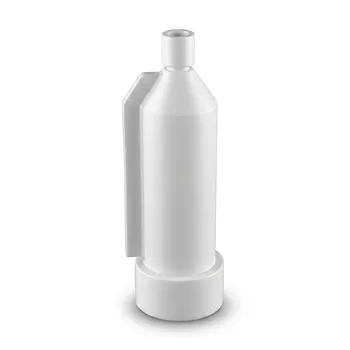
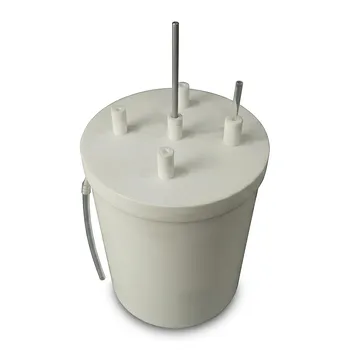
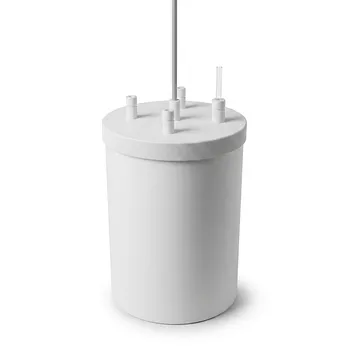
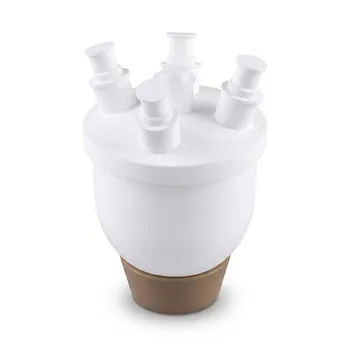
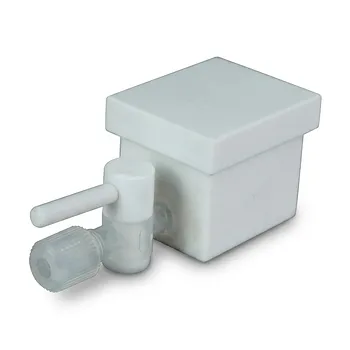
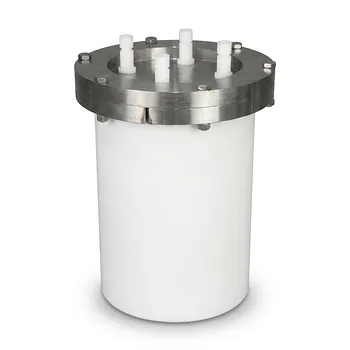
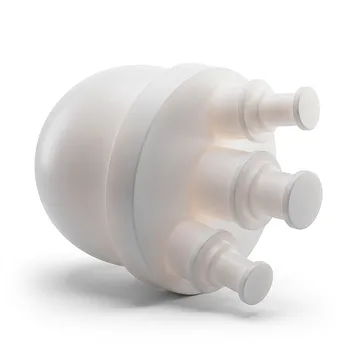
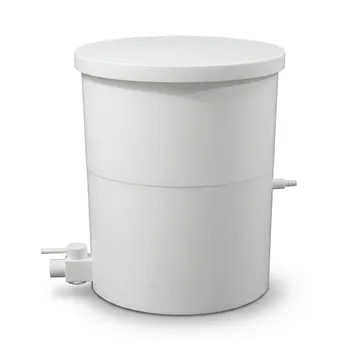
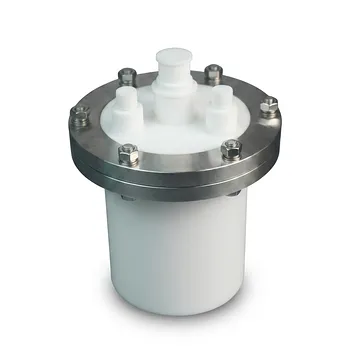
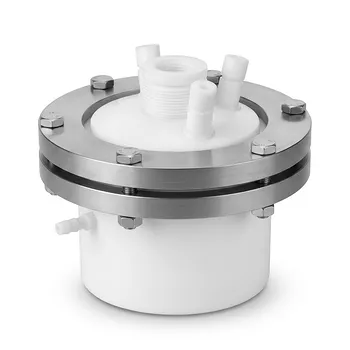
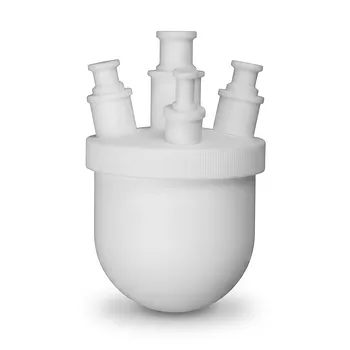
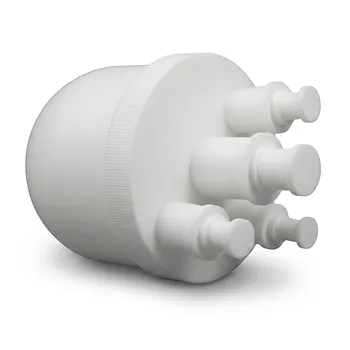
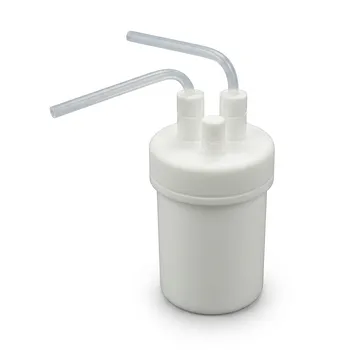
The requirement for high-quality Polytetrafluoroethylene (PTFE) in $Ti_3C_2T_x$ MXene synthesis is driven by the extreme corrosivity of the etchant. The process uses a combination of lithium fluoride (LiF) and hydrochloric acid (HCl) to selectively remove aluminum layers from the MAX phase, creating a chemical environment that would rapidly dissolve glass or metallic containers. PTFE is the only common laboratory material that provides the necessary chemical inertness to withstand this reaction while preventing the introduction of impurities.
Core Takeaway: High-quality PTFE is essential because it maintains structural integrity against in-situ generated hydrofluoric acid (HF), ensuring a contamination-free environment that preserves the high purity and functional properties of the resulting MXene flakes.
The Aggressive Chemistry of MXene Etching
The Generation of In-Situ Hydrofluoric Acid
The preparation of $Ti_3C_2T_x$ typically involves mixing lithium fluoride (LiF) with high-concentration hydrochloric acid (HCl, often 9 M). This reaction generates hydrofluoric acid (HF) directly within the vessel, a substance notorious for its ability to etch glass and attack most metals.
Selective Removal of the Aluminum Layer
The primary goal of the etching process is to dissolve the atomic layers of aluminum from the $Ti_3AlC_2$ MAX phase. Because the chemical potential required to break these Al-C bonds is so high, the etchant must remain at peak concentration and potency throughout the reaction.
Long-Duration Thermal Stress
Etching often occurs at elevated temperatures, such as 60 °C, for periods lasting up to 48 hours. This combination of heat and prolonged exposure increases the kinetic energy of the acid molecules, making the chemical environment even more destructive to standard laboratory equipment.
Ensuring Material Purity and Structural Integrity
Prevention of Impurity Leaching
High-quality PTFE is essentially chemically inert, meaning it does not react with the etchant or the MXene precursors. Using lower-quality plastics or glass would result in the leaching of silicon, boron, or metallic ions into the solution, which fundamentally alters the electronic and catalytic properties of the MXene.
Maintaining a Stable Reaction Environment
Because PTFE does not degrade during the process, the volume and concentration of the etchant remain constant. This stability is critical for achieving reproducible results, especially when the MXene is intended for sensitive applications like photocatalysis or energy storage.
Equipment and Personnel Safety
Beyond material purity, the use of PTFE is a critical safety measure. A vessel failure during an HF-based etching process would release highly toxic and corrosive vapors and liquids, posing a severe risk to both the laboratory infrastructure and the researchers.
Understanding the Trade-offs and Pitfalls
The Risk of Low-Grade PTFE
Not all PTFE is equal; low-quality or "recycled" PTFE can contain fillers or micropores. These imperfections can trap residual chemicals from previous experiments or allow the etchant to seep into the vessel wall, leading to cross-contamination between batches.
Physical Limitations and Cold Flow
While PTFE is chemically superior, it is a relatively soft polymer subject to "cold flow" or deformation under pressure. Over time, PTFE liners can warp, particularly if used in high-pressure hydrothermal autoclaves, which may eventually compromise the seal of the reaction vessel.
Thermal Conductivity Issues
PTFE is an excellent insulator, which can make precise temperature control difficult. Researchers must account for the lag in heat transfer through the thick PTFE walls to ensure the internal reaction temperature matches the setpoint of the heating mantle or oil bath.
How to Apply This to Your Project
Recommendations for Material Selection
- If your primary focus is maximum material purity: Use only high-grade virgin PTFE (unpigmented) to eliminate the risk of leaching trace heavy metals or fillers into your MXene sample.
- If your primary focus is experimental reproducibility: Dedicate specific PTFE vessels to MXene synthesis only, and implement a rigorous acid-wash protocol between uses to remove any trapped fluoride ions.
- If your primary focus is safety and longevity: Regularly inspect the interior walls of the vessel for pitting or discoloration, and replace any liners that show signs of significant physical wear or deformation.
By prioritizing high-quality PTFE reaction vessels, you ensure that the complex chemical transformation of the MAX phase remains controlled, safe, and free from the contaminants that could undermine your research.
Summary Table:
| Feature | Importance in MXene Etching |
|---|---|
| Chemical Inertness | Resists in-situ generated HF acid and high-concentration HCl (9M). |
| Material Purity | Prevents leaching of silicon, boron, or metal ions into the MXene flakes. |
| Thermal Stability | Maintains integrity during long-duration etching at elevated temperatures (60°C+). |
| Safety | Provides a robust barrier against highly toxic and corrosive vapors. |
| Consistency | Ensures reproducible results for sensitive electronic and catalytic applications. |
Secure Your Synthesis with KINTEK’s High-Performance Fluoropolymers
Don't let low-grade materials compromise your MXene research. KINTEK specializes in high-performance PTFE and PFA laboratory supplies designed for the most aggressive chemical environments. From everyday basic labware like beakers, crucibles, and reagent bottles to advanced apparatus like hydrothermal synthesis liners, microwave digestion vessels, and custom electrochemical cells, we provide the purity and durability your lab demands.
Why Choose KINTEK?
- Precision Fabrication: End-to-end custom CNC fabrication for complex, non-standard parts.
- Comprehensive Range: Everything from fluid transfer components (tubing, valves) to sample prep tools (filters, pipettes, tweezers).
- Material Focus: Exclusive and absolute focus on high-performance fluoropolymers to prevent cross-contamination.
Achieve absolute purity in your next experiment—contact us today to discuss your custom lab requirements!
References
- Fei Cao, Yixi Xie. A Novel Electrochemical Sensor Based on Ti3C2Tx MXene/Mesoporous Hollow Carbon Sphere Hybrid to Detect Bisphenol A. DOI: 10.3390/molecules30193992
This article is also based on technical information from Kintek Knowledge Base .
Related Products
- High Purity PTFE Corrosion Resistant Reaction Vessel with Luer Fittings and Caps for Trace Analysis
- PTFE 10L Reaction Vessel with Stirring Paddle Customizable Corrosion Resistant High Temperature Reactor for Biopharmaceutical and Chemical Processing
- High Purity PTFE Reaction Vessel Polyfluortetraethylene Cylindrical Tank Petrochemical Reaction Container
- High Purity PTFE Reaction Vessel with Electric Stirring System and Customizable 5L Tank including Buchner Funnel Filtration Assembly
- High Performance Customizable PTFE Reaction Vessel and Corrosion Resistant Polytetrafluoroethylene Flask for Chemical Laboratory Use
People Also Ask
- Why is a PTFE reaction vessel required for Ti3C2Tx MXene synthesis? Ensure Safe HF Etching & High Purity
- Why are high-purity PTFE or PFA reaction vessels recommended for the synthesis of PANI-TiC hybrid materials? - Guide
- What reaction vessel and fluid handling considerations are necessary for living cationic polymerization of fluorinated monomers involving Lewis acid catalysts? Key design and safety tips
- How do perfluorinated solvent environments influence the selection of reaction vessels and fluid handling components in nonaqueous emulsion polymerizations? Choose fluoropolymer materials.
- Why are fluoroplastic (PTFE) reaction vessels recommended for Methylene Blue (MB) adsorption kinetic experiments?