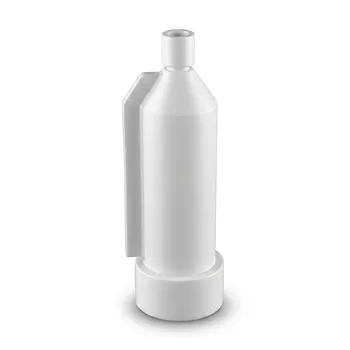
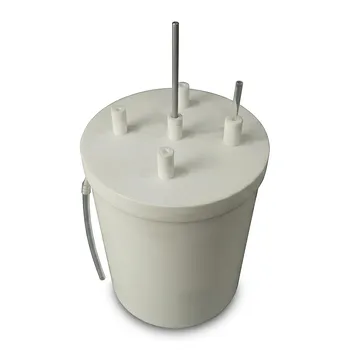
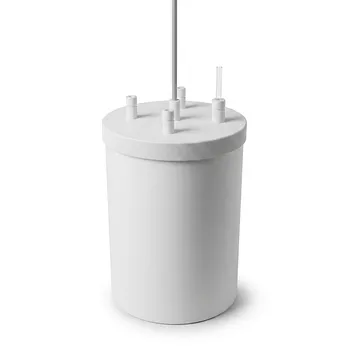
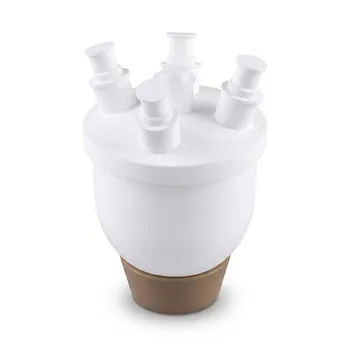
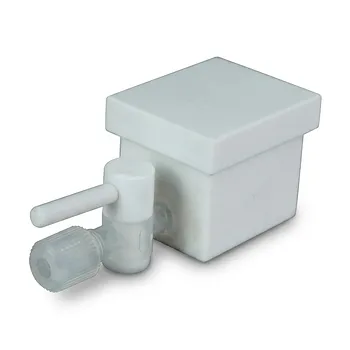
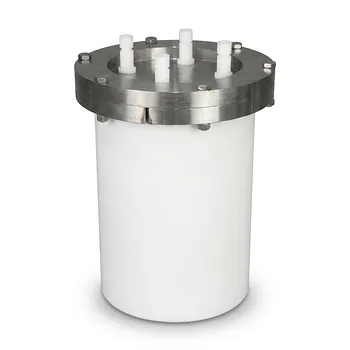
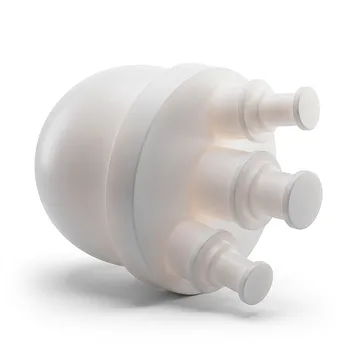
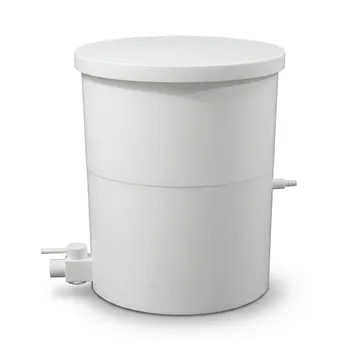
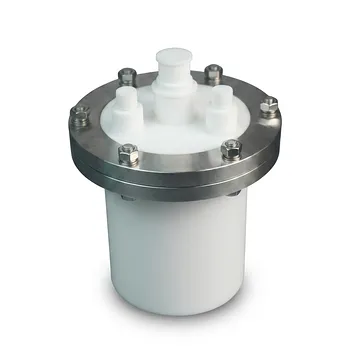
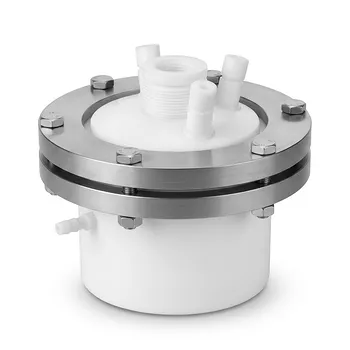
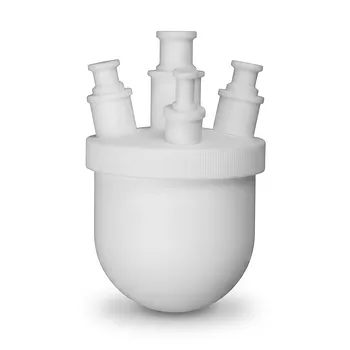
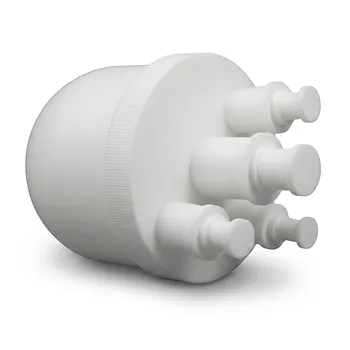
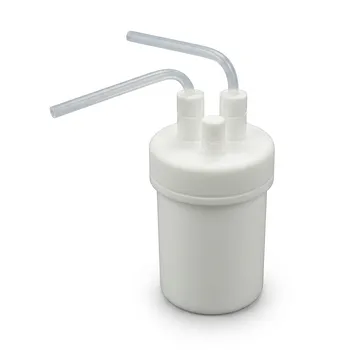
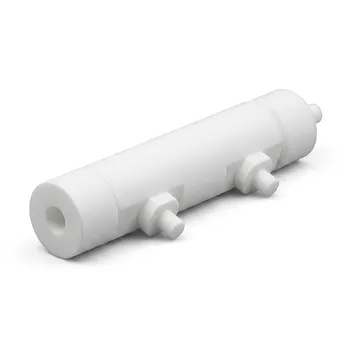
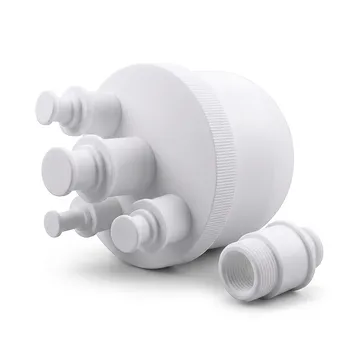
Fluoroplastic (PTFE) reaction vessels are the preferred choice for Methylene Blue (MB) adsorption experiments because they eliminate background interference caused by the container itself. These materials possess exceptionally low surface energy and high chemical inertia, which prevents the MB molecules from sticking to the vessel walls. Consequently, any observed decrease in MB concentration can be attributed solely to the adsorbent being studied, ensuring the integrity of the kinetic data.
Using PTFE ensures that the experimental results reflect the true performance of the adsorbent. By minimizing "wall adsorption," researchers can produce high-fidelity kinetic models that are not skewed by the loss of pollutants to the container surface.
The Critical Role of Surface Energy in Kinetics
Preventing Unintended Adsorption
In adsorption studies, the goal is to measure how much of a pollutant, like Methylene Blue, is removed by a specific catalyst or material. Standard glass or low-grade plastic containers often have active surface sites that attract MB molecules. PTFE (Polytetrafluoroethylene) creates a non-stick environment that ensures the target pollutant remains in the solution until it interacts with the intended adsorbent.
Improving Kinetic Model Accuracy
Kinetic experiments rely on precise measurements of concentration changes over time to fit models like pseudo-first-order or pseudo-second-order equations. If the container walls adsorb even a small percentage of the MB, the calculated rate constants and adsorption capacities will be artificially inflated. Using PTFE removes this variable, leading to mathematically sound and reproducible results.
Maintaining Chemical and Sample Integrity
Eliminating Leaching and Contamination
PTFE is renowned for its high-purity nature, meaning it does not release metal ions or organic impurities into the reaction mixture. In sensitive experiments, the leaching of ions from lower-quality materials could potentially "poison" the catalyst or alter the chemical behavior of the Methylene Blue. This level of purity is essential for maintaining a controlled chemical environment.
Resistance to Harsh Experimental Conditions
Adsorption experiments sometimes require pH adjustments using strong acids or bases to study the effect of surface charge. Fluoropolymers are virtually unaffected by these corrosive agents, whereas glass can be etched by certain bases and some plastics may degrade. The chemical inertia of PTFE allows for a wide range of experimental conditions without the risk of vessel degradation.
Understanding the Trade-offs
Physical and Economic Considerations
While PTFE is technically superior for these experiments, it is significantly more expensive than standard laboratory glassware or disposable plastics. This higher cost can be a factor for high-throughput labs or undergraduate teaching environments. Additionally, PTFE is an opaque or semi-translucent material, which can make visual monitoring of the reaction more difficult compared to clear glass.
Maintenance and Surface Care
PTFE is a relatively soft material and can be easily scratched if cleaned with abrasive tools. Scratches increase the surface area and provide microscopic "pockets" where MB molecules or contaminants could potentially become trapped. Proper maintenance requires gentle cleaning protocols to preserve the low surface energy characteristics over the long term.
Applying This to Your Research
Making the Right Choice for Your Goal
To achieve the best results in your adsorption studies, consider the specific requirements of your protocol:
- If your primary focus is high-precision kinetic modeling: Use PTFE or PFA vessels exclusively to ensure that every change in concentration is due to the adsorbent.
- If your primary focus is exploring pH extremes or corrosive additives: Choose PTFE for its unrivaled chemical resistance to prevent vessel degradation or leaching.
- If your primary focus is routine screening or high-volume testing: Consider pre-treating glassware with a silanizing agent or running blank "container-only" controls if PTFE is cost-prohibitive.
The transition to fluoroplastic vessels represents a move toward the highest standards of analytical rigor in environmental chemistry.
Summary Table:
| Feature | PTFE/PFA Performance | Benefit for MB Kinetics |
|---|---|---|
| Surface Energy | Exceptionally Low | Prevents MB molecules from sticking to vessel walls. |
| Chemical Inertia | High | Resists harsh pH adjustments (acids/bases) without degradation. |
| Purity Level | Trace-Metal Free | Eliminates leaching that could poison catalysts or alter results. |
| Data Accuracy | High | Ensures concentration changes are due to the adsorbent only. |
| Maintenance | Non-stick Surface | Easy to clean, though sensitive to abrasive scratching. |
Precision Research Starts with High-Performance Fluoropolymers
Don't let "wall adsorption" compromise your kinetic models. KINTEK specializes in manufacturing high-purity laboratory supplies crafted exclusively from PTFE and PFA to ensure your experimental integrity.
From everyday basic labware like beakers, measuring cylinders, crucibles, and reagent bottles to specialized sample prep tools, filtration components, and high-purity fluid transfer parts (tubing, valves, fittings), we provide the non-stick, chemically inert environment your research demands.
For advanced applications, KINTEK offers custom CNC fabrication for complex setups, including:
- Reaction Apparatus: Microwave digestion vessels, microchannel reactors, and hydrothermal synthesis liners.
- Specialized Fixtures: Electrochemical cells, battery testing fixtures, and electrode accessories.
- General Consumables: Stirring bars, O-rings, gaskets, and high-performance seals.
Whether you need high-volume standard orders or bespoke, non-standard machined parts, KINTEK is your partner for absolute performance in fluoropolymer materials.
Contact KINTEK today to discuss your custom laboratory needs!
References
- Ting Cheng, Gang Chen. Synthesis of Fly Ash Magnetic GlassMicrosphere@BiVO<sub>4</sub> and Its Hybrid Actionof Visible-Light Photocatalysisand Adsorption Process. DOI: 10.15244/pjoes/127918
This article is also based on technical information from Kintek Knowledge Base .
Related Products
- High Purity PTFE Corrosion Resistant Reaction Vessel with Luer Fittings and Caps for Trace Analysis
- PTFE 10L Reaction Vessel with Stirring Paddle Customizable Corrosion Resistant High Temperature Reactor for Biopharmaceutical and Chemical Processing
- High Purity PTFE Reaction Vessel Polyfluortetraethylene Cylindrical Tank Petrochemical Reaction Container
- High Purity PTFE Reaction Vessel with Electric Stirring System and Customizable 5L Tank including Buchner Funnel Filtration Assembly
- High Performance Customizable PTFE Reaction Vessel and Corrosion Resistant Polytetrafluoroethylene Flask for Chemical Laboratory Use
People Also Ask
- Why is a PTFE reaction vessel required for Ti3C2Tx MXene synthesis? Ensure Safe HF Etching & High Purity
- Why are high-purity PTFE or PFA reaction vessels recommended for the synthesis of PANI-TiC hybrid materials? - Guide
- What reaction vessel and fluid handling considerations are necessary for living cationic polymerization of fluorinated monomers involving Lewis acid catalysts? Key design and safety tips
- Ion Activation Reaction Vessel Requirements: Why PTFE is Critical for Membrane Performance
- What are the key steps for structural integrity in molded PTFE lab reaction vessels? Master fine powder processing.