Design precision is the fundamental determinant of data reproducibility in electrochemical research. High-precision cells eliminate mechanical and chemical variables by maintaining constant electrode spacing, uniform electrolyte distribution, and airtight sealing. Without this precision, localized current variations and atmospheric contamination introduce "noise" that can lead to false conclusions regarding material performance and stability.
The reliability of battery testing hinges on the cell’s ability to provide a perfectly standardized physical environment. High-precision manufacturing ensures that observed data reflects the inherent properties of the active materials rather than fluctuations or flaws in the testing hardware.
Maintaining Geometric and Physical Stability
Constant Electrode Spacing and Uniform Distribution
Precision machining ensures that the distance between the working, counter, and reference electrodes remains fixed throughout an experiment. Fixed electrode spacing is critical because even minor variations can alter the resistance and current distribution within the cell. This stability allows for the accurate recording of electrochemical characteristics like cyclic voltammetry and charge-discharge curves.
Managing Mechanical Pressure and Contact Resistance
High-precision designs, such as Swagelok-style or specialized coin cells, incorporate mechanisms to apply consistent mechanical pressure to the electrode stack. This pressure is essential to minimize contact resistance between the active materials and current collectors. Proper pressure management also facilitates the stable formation of the Solid Electrolyte Interphase (SEI), which is a prerequisite for reliable long-term cycling data.
Chemical and Environmental Protection
Superior Chemical Resistance via Fluoropolymers
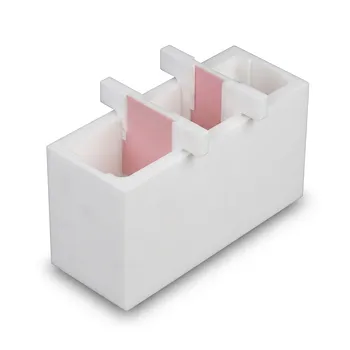
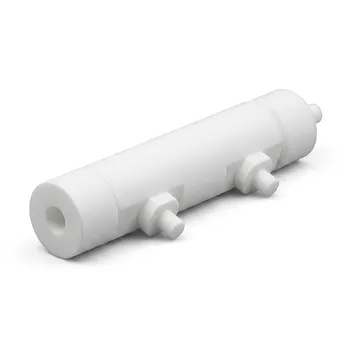
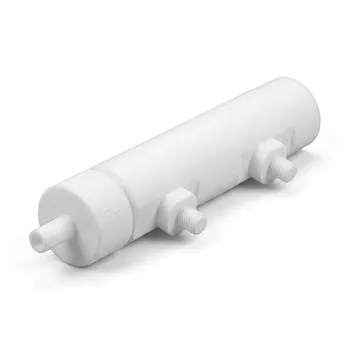
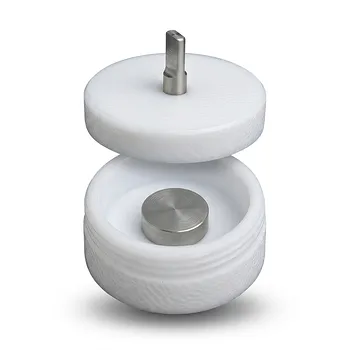
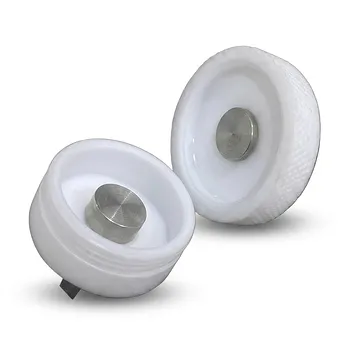
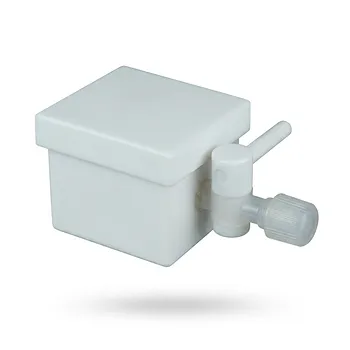
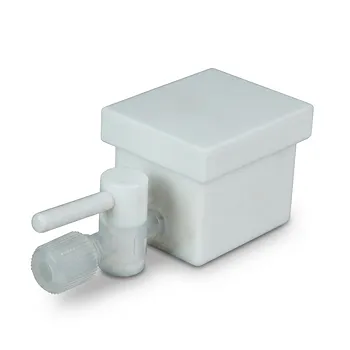
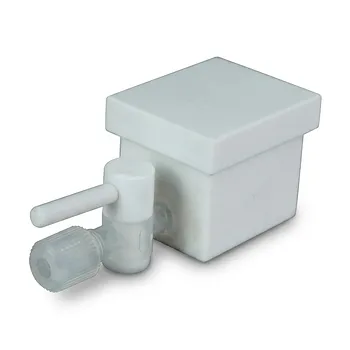
Utilizing precision-machined PTFE (Polytetrafluoroethylene) or PFA (Perfluoroalkoxy) for cell fixtures provides excellent electrical insulation and resistance to corrosive electrolytes. These high-performance polymers prevent the cell hardware from reacting with the chemistry being studied. By remaining chemically inert, these materials ensure that the recorded signals originate solely from the intended electrochemical reactions.
High-Precision Sealing and Atmospheric Isolation
Advanced sealing structures, often utilizing O-rings or compression fittings, prevent electrolyte leakage and the ingress of oxygen or moisture. This is vital for oxygen-sensitive materials like lithium-metal anodes, where even trace atmospheric contamination can cause catastrophic cell failure or skewed results. A robust seal allows researchers to handle internal pressures during cycling without compromising the integrity of the controlled environment.
Impact on Electrical Signal Integrity
Minimizing Ohmic Drop and Current Inconsistency
Precision design optimizes the physical path of ions and electrons, effectively reducing Ohmic drop (internal resistance). This ensures that the measured potential accurately reflects the interface kinetics rather than losses within the bulk electrolyte or at the contacts. Uniform current distribution prevents "hot spots" on the electrode surface, leading to more representative performance data.
Isolating Weak Signals from External Interference
High-precision battery testing fixtures are designed to isolate weak electrochemical signals from external electromagnetic interference. By providing a stable physical contact and using high-insulation materials, the cell serves as a critical hardware foundation for sensitive tests. This isolation is particularly important for Electrochemical Impedance Spectroscopy (EIS), where precision is required to distinguish between different resistance components.
Understanding Design Trade-offs and Pitfalls
Complexity vs. Versatility
While high-precision, specialized cells offer superior data, they often come with increased complexity in assembly and cleaning. Standardized designs may not accommodate non-standard electrode sizes or thicknesses, potentially leading to uneven pressure if not carefully adjusted. Researchers must balance the need for extreme precision with the practical requirements of their specific experimental setup.
The Risk of Overtightening and Deformation
In pursuit of a perfect seal or low contact resistance, there is a risk of over-compressing cell components. Excessive mechanical stress can deform PTFE components or crush delicate separators, leading to internal short circuits. Precision design must include "stops" or torque specifications to ensure consistency across different researchers and trials.
Making the Right Choice for Your Research Goal
To ensure the reliability of your data, you must align your cell design with your specific experimental objectives.
- If your primary focus is long-term cycle life: Prioritize cells with high-precision sealing structures and PTFE components to prevent electrolyte evaporation and corrosion over months of testing.
- If your primary focus is fundamental kinetic studies (CV/EIS): Choose a cell that guarantees fixed electrode spacing and minimal Ohmic drop to ensure the accuracy of potential and current measurements.
- If your primary focus is air-sensitive material discovery: Invest in high-precision compression fittings or Swagelok-style designs that offer validated atmospheric isolation for lithium or sodium-based chemistries.
Ultimately, the precision of the electrochemical cell transforms a volatile chemical reaction into a repeatable scientific measurement.
Summary Table:
| Precision Feature | Impact on Research Performance | Key Scientific Benefit |
|---|---|---|
| Fixed Spacing | Eliminates resistance and current fluctuations | Consistent CV & charge-discharge curves |
| Airtight Sealing | Prevents O2/moisture ingress and leakage | Essential for air-sensitive lithium/sodium research |
| Pressure Management | Minimizes contact resistance at interfaces | Stable SEI formation and long-term cycling |
| Fluoropolymer Body | Provides absolute chemical inertness (PTFE/PFA) | Zero contamination from corrosive electrolytes |
| Ohmic Optimization | Reduces internal potential drops | Accurate kinetic data and high-fidelity EIS |
Elevate Your Research Precision with KINTEK
In the world of electrochemistry, the quality of your data is only as good as the hardware that contains it. KINTEK specializes in the engineering and manufacture of high-performance laboratory supplies crafted exclusively from PTFE and PFA.
From everyday basic labware like beakers, crucibles, and high-purity reagent bottles to advanced research tools including custom electrochemical cells, battery testing fixtures, and microwave digestion vessels, we provide the precision you need. Our end-to-end custom CNC fabrication allows us to deliver everything from complex non-standard machined parts to high-volume orders of essential consumables like O-rings, gaskets, and fluid transfer components.
Ready to eliminate mechanical variables from your experiments? Contact our experts today to discuss your custom laboratory setup and ensure your next breakthrough is backed by absolute hardware reliability.
References
- Elhoucine Elmaataouy, Mouad Dahbi. Effect of Fluorine Doping on the Electrochemistry and Structural Stability of Single‐Particle LiNiO<sub>2</sub>. DOI: 10.1002/cssc.202500300
This article is also based on technical information from Kintek Knowledge Base .
Related Products
- Corrosion Resistant PTFE Electrochemical Cell for New Energy Research Inert Insulating Customizable Lab Reaction Vessel
- Square PTFE Electrochemical Cell for Silicon Wafer Processing and Hydrofluoric Acid Resistance in Semiconductor and New Energy Research
- White PTFE Electrolytic Cell with Movable Slider and Insulated Lid for Fluorine Corrosion Resistance
- Custom PTFE Reaction Box Opaque White Square Electrochemical Cell Tank
- Custom PTFE Electrolytic Cell Corrosion Resistant Low Background Reaction Vessel with Inlet Outlet Ports
People Also Ask
- How do custom PTFE electrochemical cells improve the accuracy of stability testing for alkaline catalysts compared to glass cells?
- How does the hydrophobicity of PTFE benefit electrochemical measurements? Enhance Stability and Precision in Your Lab
- What makes PTFE an ideal construction material for custom electrochemical cells and electronic analytical instrumentation housings? Discover superior chemical resistance and electrical insulation
- Why must seawater electrolysis test cells have high corrosion resistance? Protect catalyst stability & data accuracy.
- What are the key steps for structural integrity in molded PTFE lab reaction vessels? Master fine powder processing.