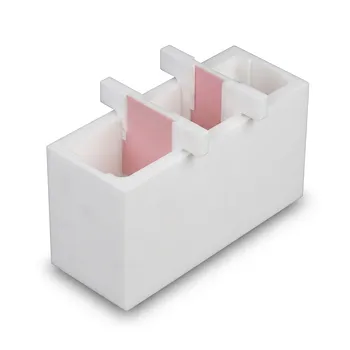
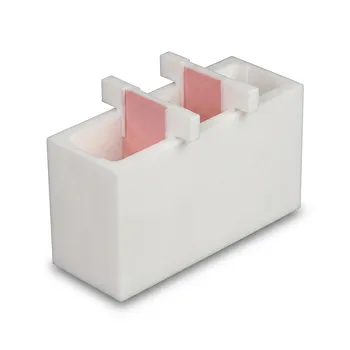
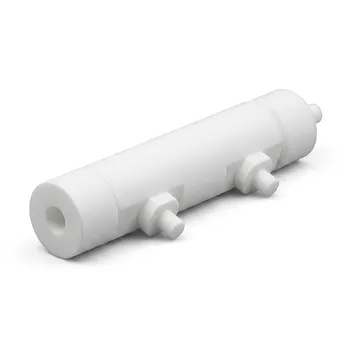
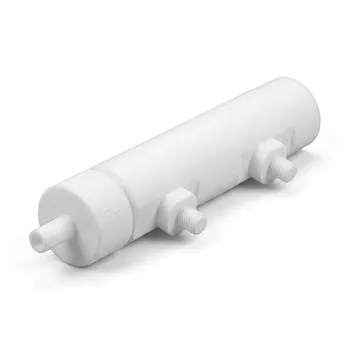
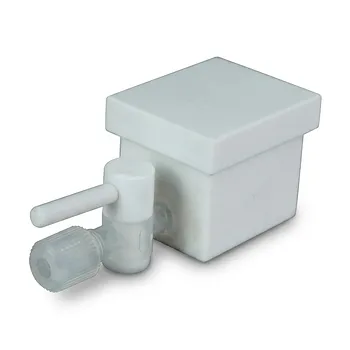
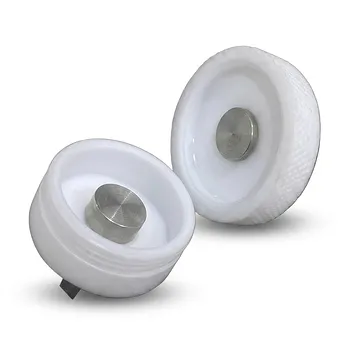
The three-electrode electrochemical system ensures accuracy by isolating the potential control of the ZnSe/rGO electrode from the current-carrying circuit. This configuration utilizes a dedicated reference electrode (such as Ag/AgCl) to maintain a stable baseline, while a counter electrode (such as platinum wire) manages the current flow. By decoupling these functions, the system eliminates errors caused by electrode polarization and resistance, allowing for the precise measurement of redox peaks and charge-discharge characteristics in electrolytes like 3 M KOH.
The core advantage of a three-electrode system is its ability to provide a "pure" measurement of the working electrode's behavior. By separating the potential detection circuit from the current-carrying circuit, it prevents hardware-induced voltage shifts from being misinterpreted as the electrochemical properties of the ZnSe/rGO composite.
Decoupling Potential and Current Circuits
The Role of the Reference Electrode
In a standard two-electrode setup, the potential of the counter electrode shifts as current flows, which corrupts the measurement of the working electrode. The three-electrode system introduces a reference electrode (like Ag/AgCl or Saturated Calomel) that draws virtually no current. This ensures the reference potential remains constant, providing a fixed "ruler" against which the ZnSe/rGO electrode's potential is measured.
The Role of the Counter Electrode
The counter electrode (typically platinum wire or plate) serves as the other half of the current loop. Its sole purpose is to facilitate the flow of electrons to or from the working electrode. Because the potential is measured against the reference electrode rather than the counter electrode, any polarization occurring at the platinum surface does not affect the data collected from the ZnSe/rGO sample.
Precise Control of Redox Kinetics
For ZnSe/rGO composites, accuracy is vital for identifying specific Faradaic redox reactions. The three-electrode configuration allows researchers to capture the exact positions of cyclic voltammetry (CV) peaks. This precision is necessary to distinguish between pseudocapacitive contributions and bulk diffusion processes within the composite structure.
Neutralizing Measurement Interference
Minimizing Ohmic Drop (IR Drop)
When current flows through an electrolyte, the resistance of the liquid creates a voltage drop, known as the IR drop. The three-electrode system minimizes this interference by measuring potential through a high-impedance circuit between the working and reference electrodes. This ensures that the recorded voltage is as close as possible to the actual potential at the electrode-electrolyte interface.
Ensuring Uniform Current Distribution
Advanced electrochemical cells are designed to maintain fixed relative positions between the three electrodes. This geometric stability ensures that the current density across the ZnSe/rGO surface is uniform. Without this consistency, weak signals—such as those from early-stage degradation or subtle phase changes—might be lost in the noise.
Electrolyte Stability and Composition
Testing ZnSe/rGO often requires specific alkaline environments, such as 3 M KOH, to facilitate ion transport. The three-electrode cell is typically housed in a well-sealed, high-transparency container. This design prevents the electrolyte from reacting with the atmosphere (e.g., carbonation) and allows for the real-time observation of bubble formation, which is critical for assessing the stability of the composite.
Understanding the Trade-offs
System Complexity vs. Measurement Integrity
While the three-electrode system is the gold standard for material characterization, it is more complex to set up than a two-electrode cell. It requires a potentiostat capable of managing three channels and careful placement of the reference electrode (often using a Luggin capillary). However, for research-grade data, these complexities are a necessary trade-off to avoid the massive errors inherent in two-electrode testing.
Counter Electrode Sizing Requirements
The counter electrode must have a significantly larger surface area than the working electrode to ensure it does not limit the current. If the platinum wire is too small, it can become the bottleneck of the system, leading to erratic results. Researchers must balance the size of the ZnSe/rGO coating with the capacity of the counter electrode to maintain a stable testing environment.
Applying This Configuration to Your Research
Recommended Setup for ZnSe/rGO Testing
To achieve the highest level of accuracy when evaluating composite electrodes, consider the following technical priorities:
- If your primary focus is precise redox peak identification: Use a high-quality Ag/AgCl reference electrode and ensure the reference tip is placed as close to the ZnSe/rGO surface as possible to minimize residual IR drop.
- If your primary focus is high-rate cycling stability: Prioritize a large-area platinum plate counter electrode to handle high current densities without inducing system-level fluctuations.
- If your primary focus is characterizing weak electrochemical signals: Use a cell body made of corrosion-resistant fluoropolymers to ensure high insulation and eliminate environmental interference.
By strictly isolating the potential measurement from the current load, the three-electrode system provides the objective clarity needed to push the boundaries of ZnSe/rGO composite performance.
Summary Table:
| Component | Primary Function | Benefit for ZnSe/rGO Testing |
|---|---|---|
| Working Electrode | Holds the ZnSe/rGO sample | Allows direct analysis of material-specific redox kinetics. |
| Reference Electrode | Maintains stable baseline potential | Eliminates hardware-induced voltage shifts for pure data. |
| Counter Electrode | Manages the current flow loop | Prevents polarization from affecting the working electrode. |
| 3 M KOH Electrolyte | Facilitates ion transport | Supports necessary Faradaic reactions for the composite. |
| Fluoropolymer Cell | Provides chemical resistance | Ensures high insulation and prevents electrolyte contamination. |
Elevate Your Electrochemical Research with KINTEK
Precision in ZnSe/rGO characterization demands high-performance equipment. KINTEK specializes in manufacturing a comprehensive range of laboratory supplies crafted from premium PTFE and PFA, ensuring your testing environment is contamination-free and chemically resistant.
From everyday basic labware—like beakers, crucibles, and reagent bottles—to advanced reaction apparatus including standard or custom electrochemical cells, battery testing fixtures, and electrode accessories, we provide the tools you need for absolute accuracy. Our end-to-end custom CNC fabrication allows us to deliver everything from high-volume consumables to complex, bespoke laboratory setups tailored to your specific research requirements.
Ready to optimize your lab's performance? Contact us today to discover how our fluoropolymer expertise can support your next breakthrough.
References
- Sana Ullah Asif, Farooq Ahmad. Design of Ni-modified ZnSe nanostructures embedded in rGO for efficient supercapacitor electrodes. DOI: 10.1039/d5ra05161d
This article is also based on technical information from Kintek Knowledge Base .
Related Products
- Corrosion Resistant PTFE Electrochemical Cell for New Energy Research Inert Insulating Customizable Lab Reaction Vessel
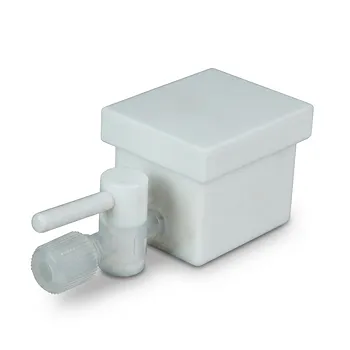
- Square PTFE Electrochemical Cell for Silicon Wafer Processing and Hydrofluoric Acid Resistance in Semiconductor and New Energy Research
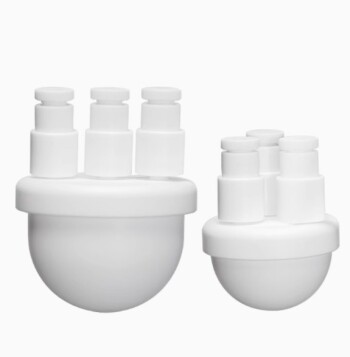
- Custom PTFE Electrolytic Cell Corrosion Resistant Low Background Reaction Vessel with Inlet Outlet Ports
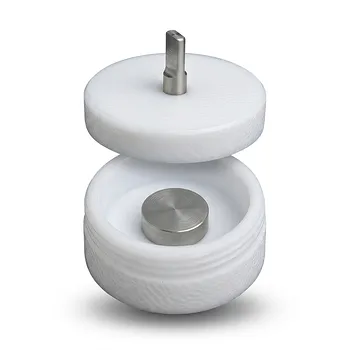
- White PTFE Electrolytic Cell with Movable Slider and Insulated Lid for Fluorine Corrosion Resistance
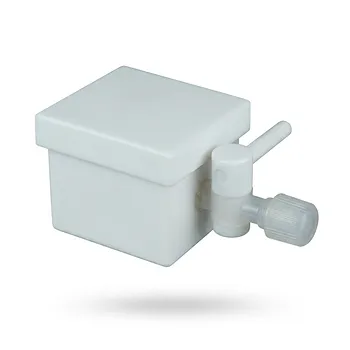
- Custom PTFE Reaction Box Opaque White Square Electrochemical Cell Tank
People Also Ask
- How do custom PTFE electrochemical cells improve the accuracy of stability testing for alkaline catalysts compared to glass cells?
- How does the hydrophobicity of PTFE benefit electrochemical measurements? Enhance Stability and Precision in Your Lab
- What makes PTFE an ideal construction material for custom electrochemical cells and electronic analytical instrumentation housings? Discover superior chemical resistance and electrical insulation
- Why must seawater electrolysis test cells have high corrosion resistance? Protect catalyst stability & data accuracy.
- What are the key steps for structural integrity in molded PTFE lab reaction vessels? Master fine powder processing.