High-precision electrochemical reaction cells are essential because they provide the stable, three-electrode environment required to maintain a consistent deposition potential. This rigorous control allows researchers to regulate the nucleation rate, film thickness, and the resulting bandgap properties of Copper Bismuth Oxide ($CuBi_2O_4$) thin films, ensuring the semiconductor performs as intended.
The core takeaway is that high-precision cells eliminate environmental variables, allowing for the exact replication of electrical conditions. Without this stability, the resulting $CuBi_2O_4$ films would lack the structural and electronic uniformity needed for functional applications.
Precision Control of Electrochemical Potential
Maintaining Potential Consistency
The primary role of a high-precision cell is to provide a stable three-electrode system, typically involving a Silver/Silver Chloride (Ag/AgCl) reference electrode. This configuration ensures that the deposition potential—often set at specific values like -1.5 V—remains highly consistent throughout the cycling process.
Regulating Semiconductor Bandgap
The electronic properties of $CuBi_2O_4$, specifically its bandgap, are highly sensitive to the conditions under which it is formed. Precise potential control allows for the fine-tuning of these properties, which is critical for the material’s efficiency in solar energy or photo-electrochemical applications.
Managing Nucleation and Growth
By stabilizing the electrical environment, these cells regulate the nucleation rate of the oxide on the substrate. This prevents haphazard crystal growth, ensuring the film thickness is predictable and the final product is a high-quality semiconductor rather than a non-functional coating.
Morphology and Microstructural Integrity
Controlling Particle Size
High-precision cells allow for the manipulation of current intensity and distribution within the electrolyte. This level of control guides copper and bismuth ions to reduce in a specific manner, effectively regulating the particle size and the final deposition morphology of the nanoparticles.
Achieving Structural Uniformity
For applications requiring complex structures, such as 3D morphologies, a controlled electric field is mandatory. Precision cells ensure that the current density is uniform across the entire substrate, such as ITO glass, preventing "edge effects" where the film might be thicker or structurally different at the boundaries.
Synchronizing Co-deposition
$CuBi_2O_4$ synthesis involves the simultaneous reduction of different metallic species which may have different redox potentials. High-precision cells facilitate the synchronous reduction of these ions by providing the exact potential window needed to deposit both elements in the correct stoichiometric ratio.
Engineering the Reaction Environment
Optimizing Fluid Dynamics
Advanced custom cells can manage fluid dynamics at the cathode surface, which is vital for maintaining a constant supply of ions to the substrate. This prevents the depletion of ions in the boundary layer, which could otherwise lead to uneven growth or unwanted side reactions.
Integration of External Fields
High-precision designs often allow for the integration of external physical fields, such as ultrasonic or magnetic fields. These interfaces are necessary for specific composite processes that aim to optimize the microstructure and composition distribution of the alloy or oxide.
Minimizing Measurement Errors
A well-designed cell ensures that the electrolyte medium maintains full and consistent contact with the electrode surface. This eliminates errors in current density calculations caused by inconsistent electrode spacing or poor contact, which are common failures in standard, low-precision setups.
Understanding the Trade-offs
Sensitivity to Electrode Placement
Even with a high-precision cell, the physical spacing between the working, reference, and counter electrodes is critical. Minor deviations in placement can lead to IR drop (voltage loss), which may shift the actual potential at the substrate and alter the film’s properties despite the equipment's precision.
Maintenance and Calibration Complexity
High-precision systems require frequent calibration and maintenance of the reference electrodes to remain accurate. Contamination of the Ag/AgCl reference or degradation of the platinum counter electrode can introduce drift into the system, nullifying the benefits of the high-precision housing.
Cost and Experimental Rigidity
Custom or high-precision cells are significantly more expensive and may be designed for specific substrate sizes. This lack of flexibility means that scaling an experiment or changing substrate geometry often requires entirely new cell components or expensive modifications.
How to Apply This to Your Project
When selecting or designing an electrochemical cell for $CuBi_2O_4$ deposition, your choice should align with your specific material requirements.
- If your primary focus is optical performance: Prioritize a cell with a high-stability reference electrode to ensure the bandgap remains within the target range.
- If your primary focus is large-area uniformity: Invest in a cell design that emphasizes uniform current distribution and precise inter-electrode spacing to avoid edge effects.
- If your primary focus is complex nanostructures: Utilize a custom cell that allows for the control of fluid dynamics or the integration of external fields to guide crystal growth.
Successful electrochemical deposition depends entirely on the ability to turn a chaotic chemical environment into a predictable, high-precision manufacturing stage.
Summary Table:
| Key Requirement | Impact on CuBi2O4 | Benefit to Research |
|---|---|---|
| 3-Electrode Stability | Constant -1.5V deposition potential | Regulated bandgap and electronic properties |
| Current Uniformity | Uniform current density across substrate | Prevents edge effects and structural defects |
| Fluid Dynamics | Controlled ion supply at cathode surface | Predictable nucleation and growth rates |
| Custom Integration | Synchronous ion reduction (Cu & Bi) | Precise stoichiometric ratio in thin films |
Maximize Precision in Your Electrochemical Research with KINTEK
Successful $CuBi_2O_4$ deposition depends on transforming a chaotic chemical environment into a predictable, high-precision manufacturing stage. KINTEK is your premier partner in this pursuit, offering an exhaustive range of high-performance laboratory supplies crafted exclusively from PTFE and PFA to ensure absolute purity and chemical resistance.
Whether your project requires:
- Standard Labware: High-quality beakers, measuring cylinders, crucibles, reagent/wash bottles, and centrifuge tubes.
- Fluid & Filtration: Precision tubing, fittings, valves, separatory funnels, and filters.
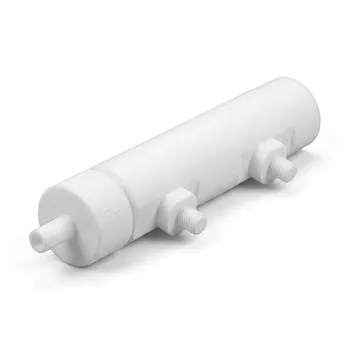
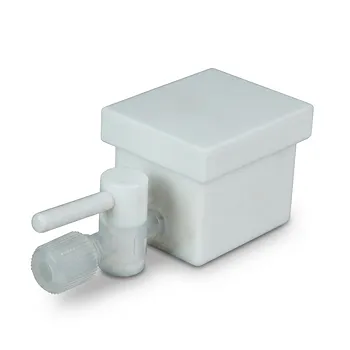
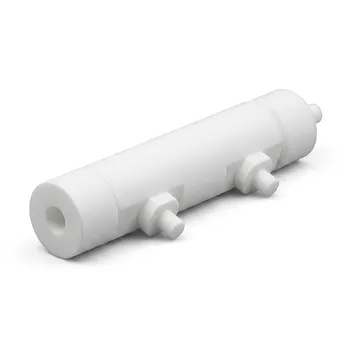
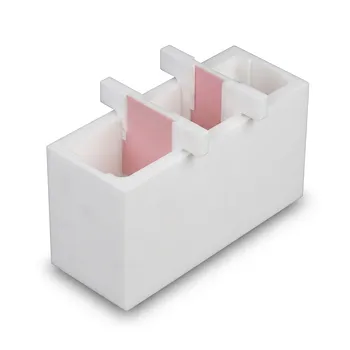
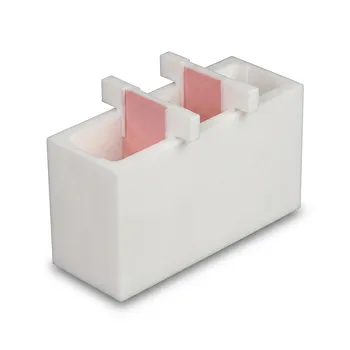
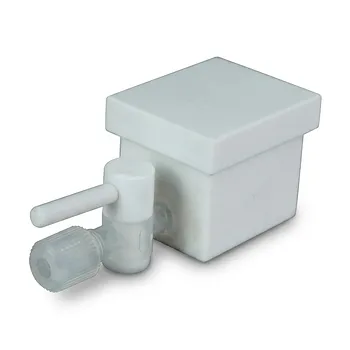
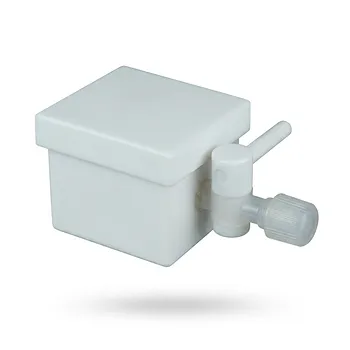
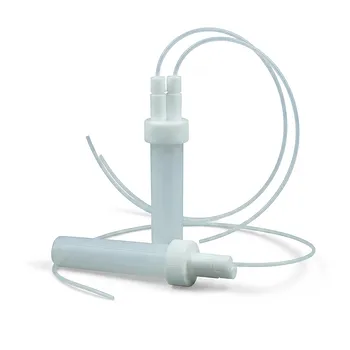
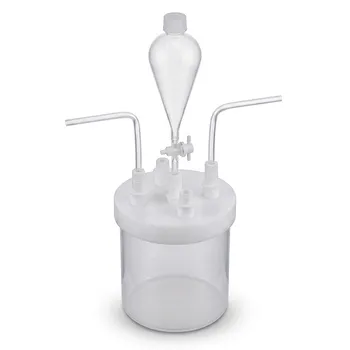
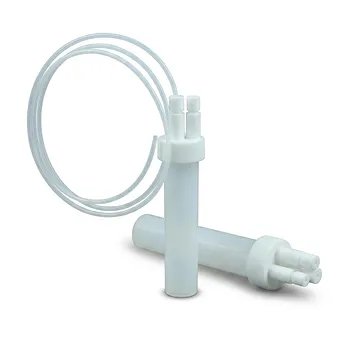
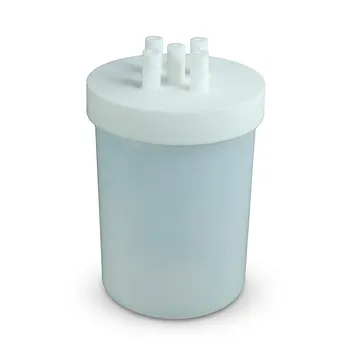
- Advanced Reaction Apparatus: Custom-designed electrochemical cells, battery testing fixtures, and electrode accessories.
- Bespoke Fabrication: End-to-end custom CNC machining for non-standard parts and complex laboratory setups.
From high-purity trace analysis to high-volume industrial orders, KINTEK delivers the durability and precision required for advanced semiconductor synthesis. Contact us today to discuss your specific requirements and see how our fluoropolymer expertise can elevate your laboratory outcomes!
References
- Saifullahi Shehu Imam. Copper bismuth oxide (CuBi2O4): Synthesis, properties and potential applications. DOI: 10.61186/jcc.7.1.1
This article is also based on technical information from Kintek Knowledge Base .
Related Products
- High Purity Custom PTFE Reaction Cell Electrolytic Tank for Semiconductor and Polysilicon Industrial Applications
- Custom PTFE Corrosion Resistant Insulating Electrophoresis Reaction Cell with Septum and Valves for Low Background Trace Analysis
- Custom PTFE Reaction Box Opaque White Square Electrochemical Cell Tank
- Custom PTFE Electrolytic Cell Corrosion Resistant Low Background Reaction Vessel with Inlet Outlet Ports
- Corrosion Resistant PTFE Electrochemical Cell for New Energy Research Inert Insulating Customizable Lab Reaction Vessel
People Also Ask
- Why is PTFE ideal for high-purity applications? Ensuring Absolute Chemical and Biological Inertness
- What functional advantages do PTFE reactors provide over glass? Achieve Superior Purity and Safety in Synthesis
- What are the primary fabrication methods for capillary-based and monolithic PTFE reactors? Expert Production Insights
- How does the hydrophobicity of PTFE benefit electrochemical measurements? Enhance Stability and Precision in Your Lab
- What makes PTFE an ideal construction material for custom electrochemical cells and electronic analytical instrumentation housings? Discover superior chemical resistance and electrical insulation