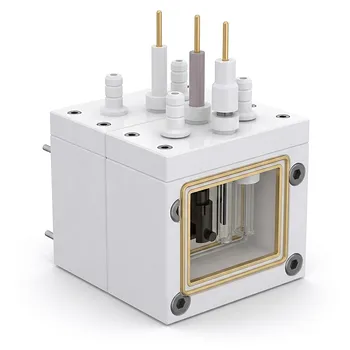
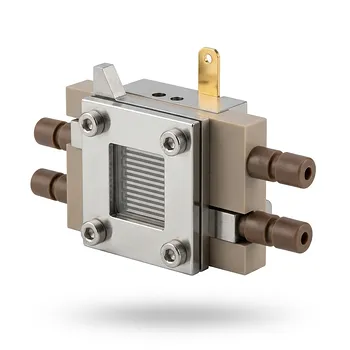
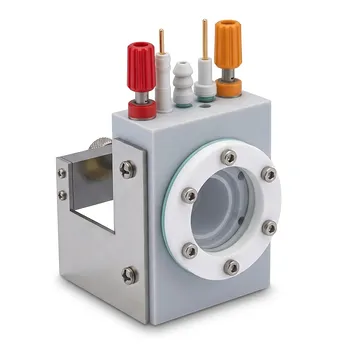
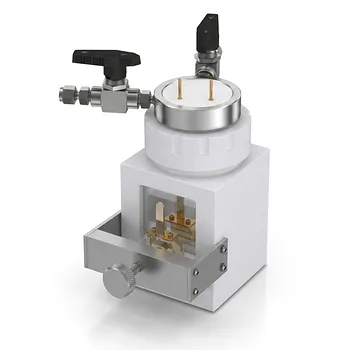
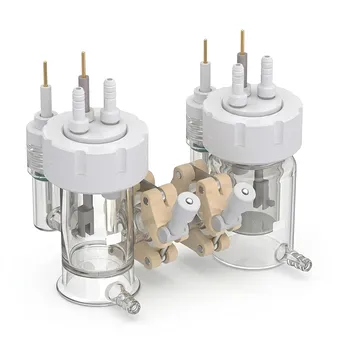
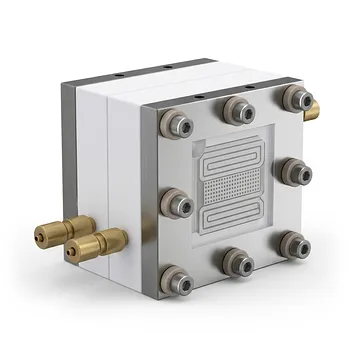
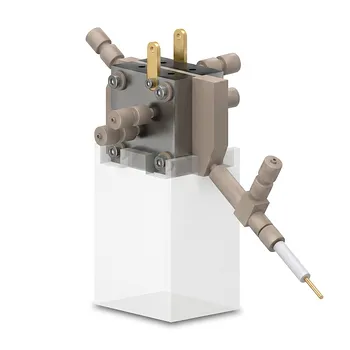
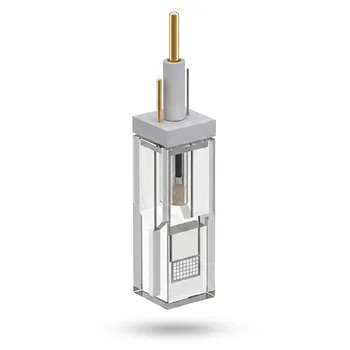
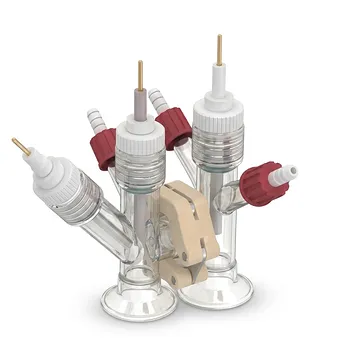
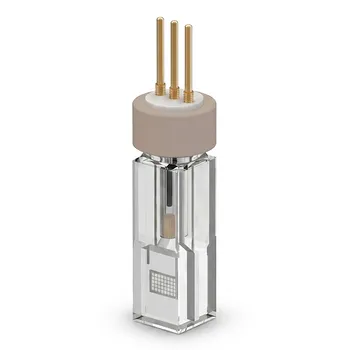
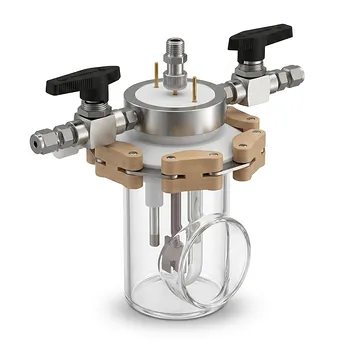
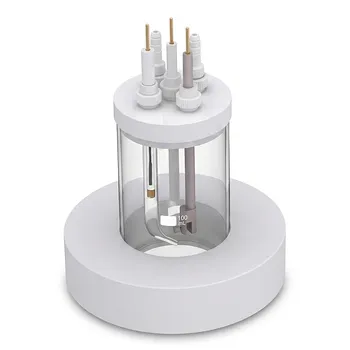
For electrofluorination and aggressive fluorinated intermediates, material compatibility is a safety-critical design decision—not merely a vessel-selection preference. High-purity PTFE and PFA are generally preferred for wetted reaction surfaces, electrochemical cell bodies, transfer lines, fittings, and liners because they resist anhydrous HF, acyl fluorides, strong acids, and many fluorinated intermediates while minimizing metallic contamination. The design must also address heat removal, gas isolation, pressure or vacuum service, sealing, electrode compatibility, and the limits of fluoropolymers under elemental fluorine or plasma exposure.
The central principle is to keep aggressive fluorinating media away from glass, ordinary metals, and vulnerable elastomers. Use qualified fluoropolymer components wherever practical, then engineer the cell around thermal control, leak prevention, gas segregation, electrical isolation, and validated compatibility for the exact reagent, temperature, pressure, and exposure time.
Why Conventional Apparatus Often Fails
Glass is vulnerable to HF-containing systems
Anhydrous HF and related fluorinating media can attack conventional glass surfaces. This can cause equipment degradation, leakage, loss of mechanical integrity, and contamination of the reaction stream.
Glass should not be assumed compatible simply because it is chemically resistant to many strong acids. HF compatibility must be assessed specifically, including concentration, temperature, exposure duration, and physical stress.
Metals can corrode and contaminate the process
Strong acids, HF, acyl fluorides, and reactive fluorinated intermediates can corrode ordinary metallic vessels, fittings, electrodes, and valve components. Corrosion may release trace metal ions that alter electrochemical behavior or contaminate sensitive products.
Metal components should therefore be minimized in wetted areas. Where electrodes or structural metal parts are unavoidable, their exact alloy, surface condition, polarization environment, and compatibility with the process must be evaluated rather than relying on a generic “corrosion-resistant” designation.
Elastomer seals may be the weak link
Conventional elastomers can swell, embrittle, permeate aggressive fluorinated gases, or lose sealing force. A chemically resistant vessel can still fail if it uses incompatible O-rings, valve seats, diaphragms, or septa.
Seal selection must consider chemical exposure, temperature, pressure cycling, vacuum service, compression set, and permeation. Fluoropolymer-based sealing elements are often preferable, but compatibility should be confirmed for the complete operating envelope.
Selecting Wetted Materials
Use high-purity PTFE for chemically demanding components
PTFE is suitable for many wetted components exposed to anhydrous HF, strong acids, acyl fluorides, and aggressive fluorinated intermediates. It is commonly used for cell bodies, liners, tubing, fittings, valves, gaskets, and transfer components.
Its major advantages are high chemical inertness, low extractables, and low risk of metallic contamination. However, PTFE has relatively low stiffness and can deform under load or at elevated temperature, so mechanical support and pressure limits must be designed explicitly.
Use PFA where fabrication and visibility matter
PFA provides broad chemical resistance comparable to PTFE while offering better melt-processability and the ability to produce more complex or transparent components. It can be useful for reaction vessels, tubing, liners, and custom cell components where fabrication precision or visual observation is important.
PFA is not automatically superior in every application. Its mechanical performance, permeability, temperature rating, and resistance to the exact fluorinating environment still require qualification.
Keep purity requirements explicit
High-purity fluoropolymers are important when trace metals, ionic leachables, or particulate contamination can affect product quality or electrochemical performance. The specification should address resin grade, manufacturing history, cleaning procedure, surface finish, and any additives or fillers.
Avoid filled PTFE or composite materials in wetted zones unless the filler and binder are demonstrably compatible. Fillers can introduce metals, carbon, ceramics, or other contaminants that undermine the purpose of the fluoropolymer construction.
Designing the Electrochemical Cell
Separate the reaction zones and gases
Custom ECF cells should provide deliberate separation between the electrolyte, gas space, electrodes, and any product or off-gas streams. Gas-separation skirts, barriers, or compartmentalized cell geometries can reduce cross-contamination and help prevent uncontrolled mixing of reactive gases.
Dedicated HF and gas inlets and outlets should be positioned to avoid stagnant zones, liquid carryover, and direct impingement on vulnerable seals or electrical feedthroughs.
Control temperature directly
Electrofluorination and related reactions can generate substantial heat. The cell should incorporate a cooling jacket, external heat exchanger, or another controlled thermal-management system appropriate to the scale and reaction rate.
Temperature control is important for more than reaction selectivity. It also limits fluoropolymer creep, reduces vapor pressure and permeation, protects seals, and helps prevent localized hot spots near electrodes or gas inlets.
Design for electrical isolation
The cell must prevent unintended current paths through fittings, support structures, cooling circuits, or external metal hardware. Use electrically insulating fluoropolymer supports and carefully designed feedthroughs where compatible with the voltage, current, and thermal requirements.
Electrode placement should provide uniform current distribution while avoiding close contact with the cell wall. Localized current density can create hot spots, uneven fluorination, gas evolution, or accelerated attack on nearby materials.
Provide cleanable, inspectable geometry
Avoid unnecessary crevices, dead legs, threaded cavities, and inaccessible pockets. These areas can retain HF, fluorinated residues, or conductive deposits and may release them during subsequent operations.
The cell should support controlled draining, flushing, drying, and inspection. Components exposed to aggressive media should be replaceable without requiring extensive disassembly of the entire containment system.
Designing Fluid Transfer and Containment
Use fluoropolymer tubing and fittings
PTFE or PFA tubing, fittings, valves, and liners are appropriate starting points for transferring HF-containing electrolytes, acyl fluorides, and other aggressive fluorinated streams. Tubing should be selected for the actual pressure, temperature, bend radius, and permeation requirements.
Connections should minimize the number of joints. Each additional fitting is a potential leak path, especially during thermal cycling or vacuum operation.
Account for permeation and mechanical behavior
Chemical resistance does not mean zero permeation. Fluorinated gases and small molecules can diffuse through some polymer components, particularly under pressure or elevated temperature.
For hazardous gas service, use the minimum practical polymer wall thickness and consider secondary containment, monitored enclosures, double containment, or compatible barrier layers. Do not use polymer tubing as a substitute for a complete engineered containment system.
Engineer for pressure and vacuum conditions
PTFE and PFA may deform, creep, or collapse under mechanical load even when they remain chemically intact. Pressure-rated hardware, external supports, controlled clamp loads, and suitable wall geometries are essential.
Vacuum service also requires attention to outgassing, permeation, buckling, and seal compression. A component that performs well at atmospheric pressure may not be suitable for repeated evacuation or pressurization.
Electrodes, Feedthroughs, and Ancillary Materials
Treat electrode selection as a separate compatibility problem
The cell body may be fluoropolymer while the electrodes are made from another material. Electrode compatibility depends on potential, current density, electrolyte composition, temperature, gas evolution, and the possibility of passivation or dissolution.
The electrode material must be evaluated for both chemical stability and electrochemical stability. Corrosion products can contaminate the product and may change the cell voltage, current distribution, or reaction pathway.
Protect electrical feedthroughs
Feedthroughs are frequent failure points because they combine electrical insulation, chemical containment, thermal gradients, and mechanical stress. Their wetted insulation, compression seals, and conductor interfaces must be compatible with HF and fluorinated species.
Avoid creating exposed crevices around conductors. Feedthroughs should be mechanically supported and arranged so that any leakage is directed toward a controlled secondary containment area rather than electrical equipment.
Do not overlook ancillary equipment
Storage vessels, pumps, filters, sampling devices, syringes, quench systems, and waste containers must be reviewed as part of the same materials-compatibility analysis. A compatible reactor connected to an incompatible sampling line is still an unsafe system.
For small-scale liquid additions, high-precision syringes and compatible septa may be used where appropriate, but the septum material must be qualified for the specific reagent and exposure time.
Understanding the Trade-offs
Fluoropolymers resist chemicals but have mechanical limits
PTFE and PFA offer strong chemical resistance, but they are not mechanically equivalent to glass-lined steel or structural metals. Creep, deformation, thermal expansion, low stiffness, and pressure limitations can become important during scale-up.
Use external supports, protective housings, restrained connections, and conservative pressure and temperature limits. Chemical inertness must be balanced with mechanical integrity.
“Fluoropolymer” is not a universal compatibility guarantee
Elemental fluorine, fluorinated plasmas, hot reactive gases, and high-energy radiation can attack materials that are stable in liquid HF or ordinary fluorinated solvents. Fully fluorinated backbones improve resistance, but the exact chemistry and exposure conditions remain decisive.
Compatibility testing should use the actual reagent mixture, temperature, pressure, concentration, and exposure duration. Supplier data alone may not cover the combined effects of electrochemical potential, gas flow, heat, and mechanical stress.
Avoid assuming all high-performance plastics behave alike
PTFE, PFA, other fluoropolymers, elastomers, filled grades, adhesives, and composite laminates can have substantially different permeability, strength, purity, and temperature performance.
Every wetted and sealing material should be listed individually in a materials-of-construction register. The register should include the manufacturer, grade, contact conditions, compatibility basis, and inspection or replacement interval.
Design for failure containment, not only resistance
No material selection eliminates the need for secondary containment, leak detection, ventilation, compatible scrubbing, emergency isolation, and controlled waste handling. A robust system assumes that a fitting, seal, tube, or feedthrough may eventually fail.
The containment strategy should prevent personnel exposure and protect adjacent equipment if the primary boundary is breached.
Making the Right Choice for Your Goal
Select the apparatus as an integrated chemical, thermal, electrical, mechanical, and containment system rather than as a collection of individually compatible parts.
- If your primary focus is chemical resistance: Use high-purity PTFE or PFA for wetted vessels, cell bodies, liners, tubing, fittings, and valves, and verify every seal and ancillary component against the exact fluorinating chemistry.
- If your primary focus is electrochemical performance: Design for uniform current distribution, controlled electrode spacing, electrical isolation, low contamination, and reliable temperature control.
- If your primary focus is process safety: Include gas segregation, dedicated HF and off-gas connections, secondary containment, leak detection, compatible scrubbing, and conservative pressure and temperature limits.
- If your primary focus is scale-up: Requalify fluoropolymer mechanical strength, creep, permeation, heat removal, connection integrity, and cleanability at the intended scale.
- If your primary focus is product purity: Specify high-purity, additive-free wetted materials, minimize exposed metals, control cleaning procedures, and monitor for ionic or particulate contamination.
The safest selection is a fully qualified system in which chemical compatibility, electrochemical behavior, thermal control, mechanical integrity, and containment have all been validated together.
Summary Table:
| Consideration | Critical Factors | Preferred Materials/Design |
|---|---|---|
| Chemical Resistance | Resistance to HF, acids, fluorinated intermediates | High-purity PTFE, PFA for wetted parts |
| Mechanical Integrity | Creep, deformation under load/temperature | Support structures, proper wall thickness |
| Temperature Control | Heat removal, avoid hot spots | Cooling jackets, heat exchangers |
| Gas Isolation | Prevent cross-contamination | Compartmentalized cells, gas-separation skirts |
| Electrical Isolation | Avoid unintended current paths | Insulating fluoropolymer supports |
| Sealing | Permeation, compression set, chemical compatibility | Fluoropolymer-based seals, qualified elastomers |
| Purity | Trace metals, leachables | High-purity, additive-free materials |
| Scale-up | Mechanical strength, permeation at scale | Conservative limits, requalification |
Secure Your Electrofluorination Process with High-Purity PTFE/PFA Solutions
At KINTEK, we specialize in manufacturing laboratory supplies exclusively from high-performance fluoropolymers (PTFE and PFA). Our products are designed to meet the rigorous demands of handling aggressive fluorinated intermediates and electrochemical applications. From custom electrochemical cells and microwave digestion vessels to comprehensive fluid transfer components, our end-to-end CNC machining capabilities ensure precise, reliable, and safe equipment. Contact us today to discuss your specific requirements and benefit from our expertise in high-purity, corrosion-resistant solutions. Get in touch with our specialists now and enhance the safety and efficiency of your lab operations!
Related Products
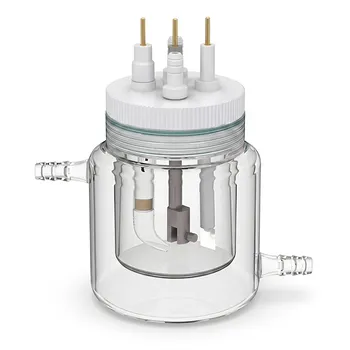
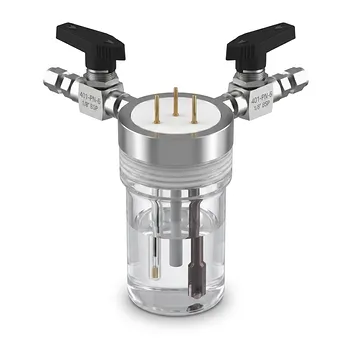
- Sealed Glass Electrochemical Cell with Jacketed Temperature Control and Chemical Resistant PTFE Lid
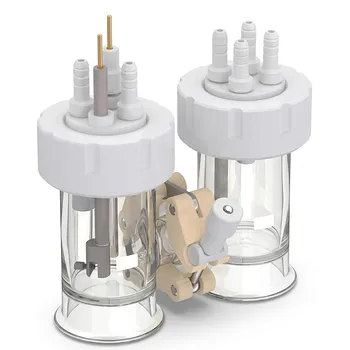
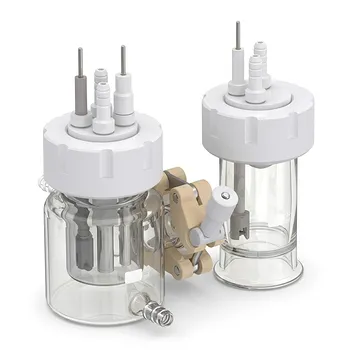
- H Type Replaceable Membrane Electrochemical Cell for Three Electrode System Jacketed Single Layer Gas Purging
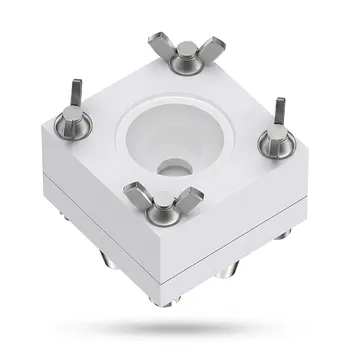
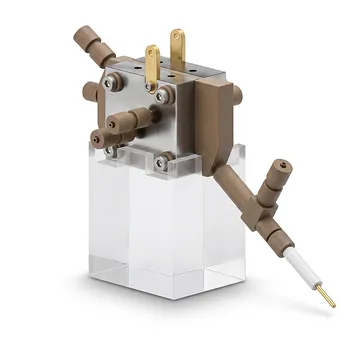
- PTFE Flat Plate Working Electrode Electrochemical Cell for Sheet Samples Corrosion Testing and SEM Sample Preparation
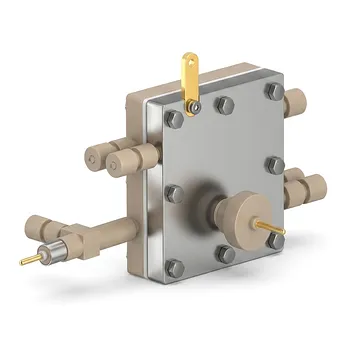
- High Performance Membrane Electrode Assembly Gas Diffusion Electrochemical Cell for CO2 Reduction and Energy Research
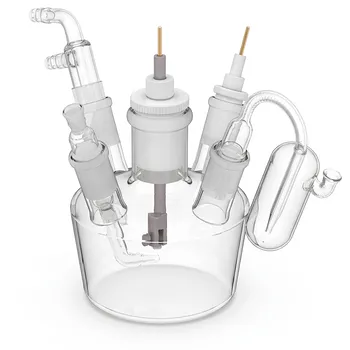
- Straight Five Port Hermetic Electrochemical Cell with Internal Plug In Design and PTFE Lid
People Also Ask
- Why are high-performance fluoropolymers like PTFE and PFA preferred for electrochemical cells and sensitive analytical instrumentation? Achieve Reliable, Contamination-Free Measurements
- What parameters govern the electrochemical decomposition of perfluorooctanoic acid (PFOA) in aqueous solutions, and why are custom PTFE electrochemical cells preferred? Key factors include anode material, current density, electrolyte, and cell design.
- How is cyclic voltammetry performed on fluoropolymer-modified electrodes within electrochemical cells, and what factors affect energy bandgap calculations?
- What makes PTFE an ideal construction material for custom electrochemical cells and electronic analytical instrumentation housings? Discover superior chemical resistance and electrical insulation
- How are electrochemical cell systems utilized to evaluate the anodic degradation and defluorination of persistent perfluorinated compounds like PFOA? Discover key methods and metrics.