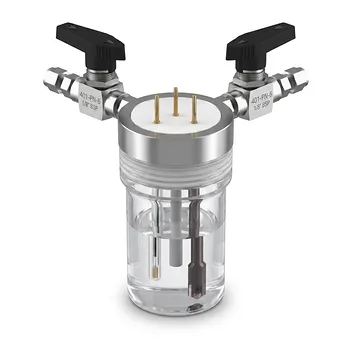
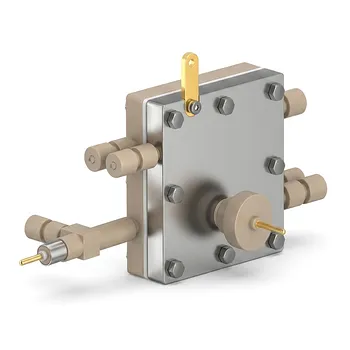
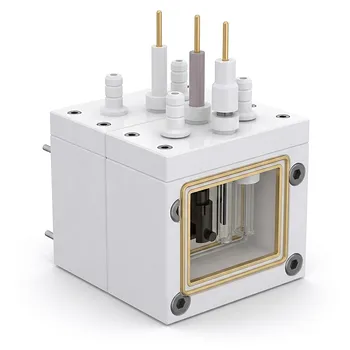
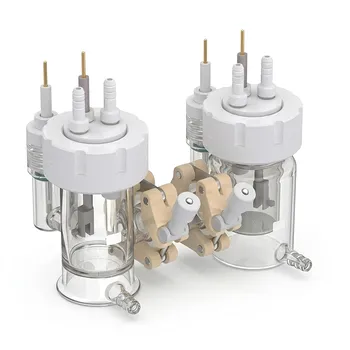
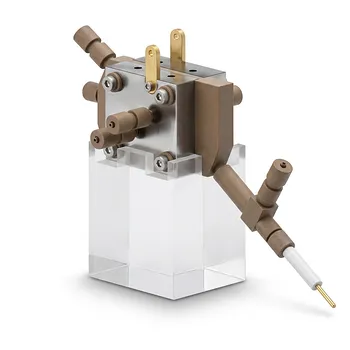
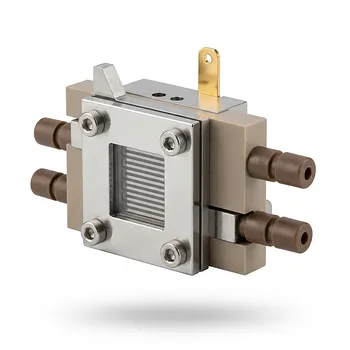
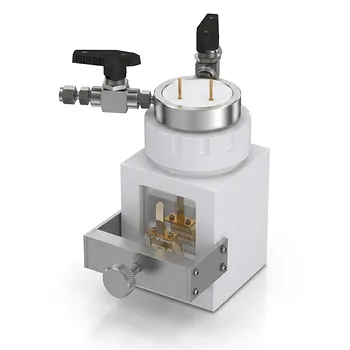
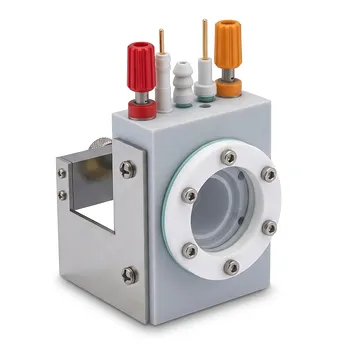
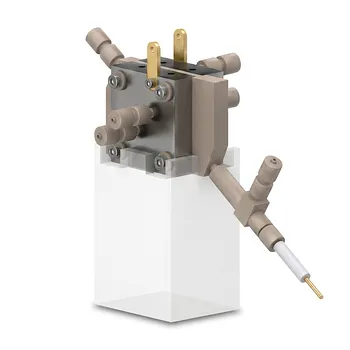
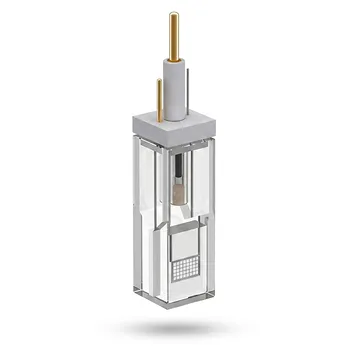
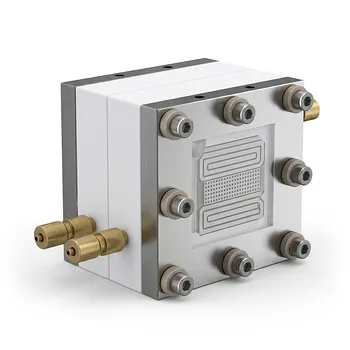
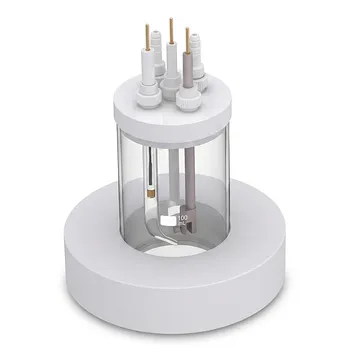
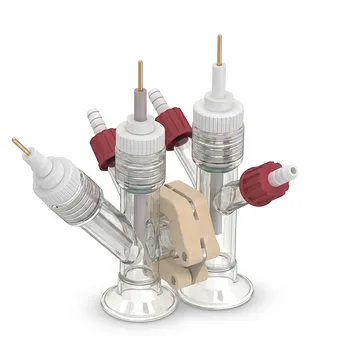
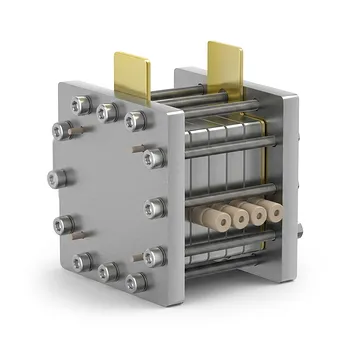
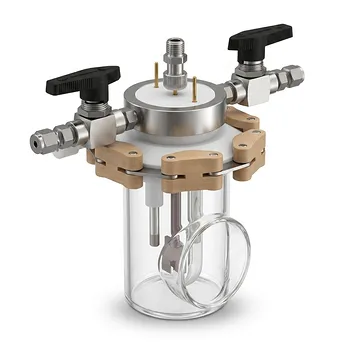
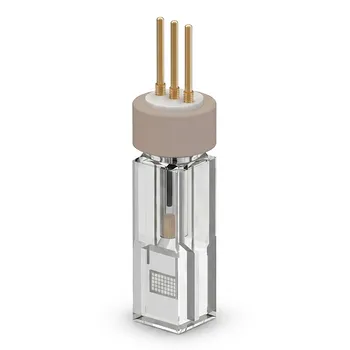
PTFE and PFA are preferred because they protect both the chemistry and the measurement. Their exceptional chemical inertness withstands strong acids, bases, solvents, ionic liquids, and other aggressive electrolytes, while their high electrical resistivity prevents leakage currents and stray interference. Their high purity and low adsorption also reduce contamination, catalyst poisoning, and sample carryover—conditions that are essential for reliable electrochemical and trace analytical results.
The central advantage of PTFE and PFA is material neutrality: they remain chemically stable, electrically insulating, and minimally interactive with samples, electrodes, and analytes across demanding operating conditions.
Why Electrochemical and Analytical Systems Need Specialized Materials
The material can affect the measurement
In electrochemical cells, the housing, seals, tubing, and fittings are part of the experimental environment. If those components release ions, absorb analytes, or conduct unwanted current, the measured result may no longer represent the behavior of the electrode or catalyst alone.
PTFE and PFA minimize these interactions, helping the system preserve the intended chemical and electrical conditions.
Trace measurements magnify small errors
Sensitive analytical instruments often measure very small currents, concentrations, or changes in composition. A minor contaminant or leakage path that would be irrelevant in a conventional process can create a significant error in trace analysis.
High-purity fluoropolymers help reduce these background effects and improve measurement confidence.
Chemical Inertness Protects the Experimental Environment
Resistance to aggressive electrolytes
Electrochemical processes may use strong alkaline electrolytes such as potassium hydroxide, acidic solutions, buffer systems, ionic liquids, or deep eutectic solvents. PTFE and PFA maintain their chemical integrity in many of these demanding environments.
This makes them suitable for cell bodies, liners, tubing, valves, fittings, gaskets, and seals.
Reduced risk of leached contaminants
Traditional metals and some general-purpose plastics can release ions or organic compounds into the electrolyte. In catalyst studies, trace metal contamination may poison the catalyst or alter its apparent activity.
High-purity PTFE and PFA reduce the likelihood that the apparatus will introduce impurities, helping experimental results reflect the intrinsic chemistry being studied.
Compatibility with complex solvent systems
Electrosynthesis and other advanced electrochemical processes may involve strong polar organic solvents or chemically active electrolytes. Materials that swell, corrode, or degrade can compromise seals and change the cell geometry.
The chemical resistance of PTFE and PFA supports more stable operation over extended experiments.
Electrical Insulation Improves Signal Integrity
High volume resistivity limits current leakage
PTFE and PFA have extremely high volume resistivity—reported in the reference material as exceeding 10¹⁸ Ω·cm. This makes them effective electrical insulators in cell bodies, sensor mounts, and fluid-handling components.
The result is better isolation between electrodes, sensors, conductive fluids, and surrounding hardware.
Dielectric strength helps prevent breakdown
Their high dielectric strength, approximately 19.7 kV/mm according to the reference material, provides strong resistance to electrical breakdown. This is valuable wherever components must maintain insulation under applied voltage or in close proximity to conductive electrolytes.
Lower interference supports accurate measurements
Electrical leakage and stray current can distort electrochemical signals, particularly when measuring low-level currents or subtle changes in electrode behavior. Fluoropolymer components help reduce these unwanted paths and preserve signal stability.
Purity and Low Adsorption Reduce Experimental Bias
Low surface interaction limits sample loss
PTFE and PFA have non-stick, low-adsorption surfaces. This reduces the tendency of molecules to adhere to cell walls, tubing, fittings, or other non-reactive surfaces.
For analytical work, that can improve recovery and reduce the difference between the actual sample concentration and the measured concentration.
Lower carryover reduces cross-contamination
Residual analytes can remain on equipment surfaces and contaminate subsequent runs. The low-adsorption behavior of PTFE and PFA helps reduce this carryover risk, which is especially important when different samples are analyzed sequentially.
Cleaner catalyst testing
In electrochemical reduction and electrosynthesis, contamination from the apparatus can be mistaken for catalytic activity or can suppress the activity of the catalyst. High-purity fluoropolymers provide a comparatively clean reaction environment.
Thermal and Design Flexibility Support Custom Cells
Stability across demanding temperatures
Electrochemical systems may operate at elevated temperatures, including hydrothermal and specialized synthesis conditions. PTFE and PFA offer thermal stability that helps liners, seals, tubing, and reaction vessels retain their function under these conditions.
Temperature capability must still be checked against the specific grade, load, pressure, and chemical environment.
Suitable for non-standard geometries
PTFE and PFA components can be used in custom apparatus, including electrode accessories, microchannel reactors, hydrothermal liners, and specialized cell fixtures. This is useful when commercial glassware or standard plastic components cannot provide the necessary geometry or isolation.
Practical separation of functions
A fluoropolymer component can provide structural support, fluid containment, electrical isolation, and chemical cleanliness at the same time. That combination simplifies the design of sensitive experimental systems.
Understanding the Trade-offs
PTFE and PFA are not interchangeable in every design
Both materials provide strong chemical resistance and electrical insulation, but the preferred choice depends on the component and manufacturing method. PTFE is widely used for machined parts and seals, while PFA is often selected when melt-processable fabrication or more complex formed components are advantageous.
The correct choice should be based on temperature, pressure, chemical exposure, tolerances, and fabrication requirements.
Mechanical design still matters
Fluoropolymers are not selected solely by their chemical compatibility. Sealing force, dimensional tolerances, mechanical loading, thermal expansion, and long-term deformation must also be considered.
A chemically resistant material can still produce an unreliable cell if the seal design or mechanical support is inadequate.
Electrical insulation can require deliberate grounding design
The insulating behavior that protects the signal can also prevent unintended grounding. Electrochemical systems therefore require intentional electrode connections, shielding, grounding, and cable routing.
The fluoropolymer prevents unwanted electrical paths; it does not replace sound electrical design.
Purity must be specified, not assumed
Not every fluoropolymer component has the same cleanliness level. Fillers, processing residues, surface treatments, lubricants, or unsuitable manufacturing practices can introduce contamination.
For trace analysis and catalyst research, the material grade, cleanliness, and manufacturing history should be part of the specification.
Making the Right Choice for Your Goal
The best material decision begins with the dominant source of risk in the system.
- If your primary focus is chemical compatibility: Use high-purity PTFE or PFA for wetted components exposed to aggressive acids, bases, solvents, ionic liquids, or deep eutectic solvents, after verifying application-specific compatibility.
- If your primary focus is electrical signal integrity: Use fluoropolymer components to isolate electrodes, sensors, cell bodies, and fluid fittings from leakage currents and stray electrical interference.
- If your primary focus is trace analysis: Prioritize high-purity, low-adsorption components to reduce leaching, sample carryover, and analyte loss.
- If your primary focus is custom apparatus design: Consider the required geometry and fabrication method, then select PTFE or PFA based on machining, forming, sealing, temperature, and dimensional requirements.
When the experiment demands chemical neutrality, electrical isolation, and low contamination simultaneously, PTFE and PFA provide one of the most reliable material platforms available.
Summary Table:
| Property | PTFE/PFA Benefit | Impact on Measurements |
|---|---|---|
| Chemical Inertness | Resists acids, bases, solvents, and electrolytes | Prevents contamination and material degradation |
| High Volume Resistivity | >10¹⁸ Ω·cm | Minimizes leakage currents and signal interference |
| Dielectric Strength | ~19.7 kV/mm | Prevents electrical breakdown |
| Low Adsorption | Non-stick surface | Reduces sample loss and carryover |
| High Purity | Minimal leachable contaminants | Avoids catalyst poisoning and trace impurities |
Ensure your electrochemical and analytical systems perform at their best with high-purity PTFE and PFA components. At KINTEK, we specialize in custom-machined fluoropolymer parts—from cell bodies and liners to tubing and fittings—designed to meet your exact specifications. Our materials provide the chemical neutrality, electrical insulation, and ultra-low contamination your sensitive experiments demand. Contact us today to discuss your custom requirements and discover how our solutions can enhance your research reliability.
Related Products
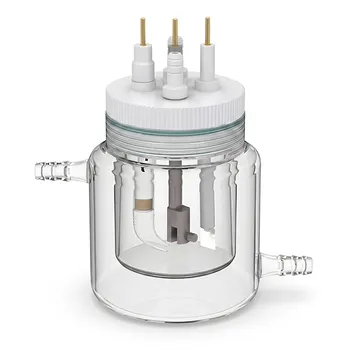
- Sealed Glass Electrochemical Cell with Jacketed Temperature Control and Chemical Resistant PTFE Lid
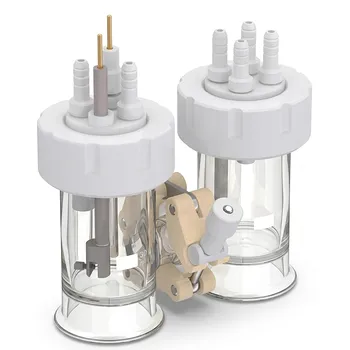
- H Type Replaceable Membrane Electrochemical Cell for Three Electrode System Jacketed Single Layer Gas Purging
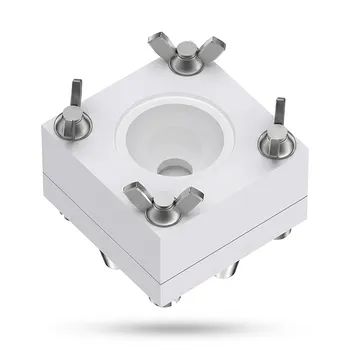
- PTFE Flat Plate Working Electrode Electrochemical Cell for Sheet Samples Corrosion Testing and SEM Sample Preparation
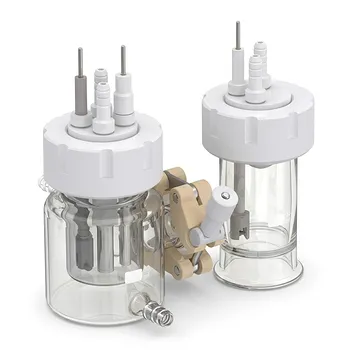
- H Type Replaceable Membrane Electrochemical Cell with Sampling Port for Gas Liquid Phase Reactions
- Straight Five Port Hermetic Electrochemical Cell with Internal Plug In Design and PTFE Lid
People Also Ask
- What makes PTFE an ideal construction material for custom electrochemical cells and electronic analytical instrumentation housings? Discover superior chemical resistance and electrical insulation
- What material properties allow fluoropolymers to withstand extreme heat and corrosion? Discover how PTFE and PFA ensure inertness, stability, and purity for demanding lab applications.
- How should temperature-related seal performance issues be troubleshooted? A Step-by-Step Guide to Thermal Failure
- What are the common pitfalls in high-temperature and low-temperature scenarios for seals? Avoid Costly Seal Failures