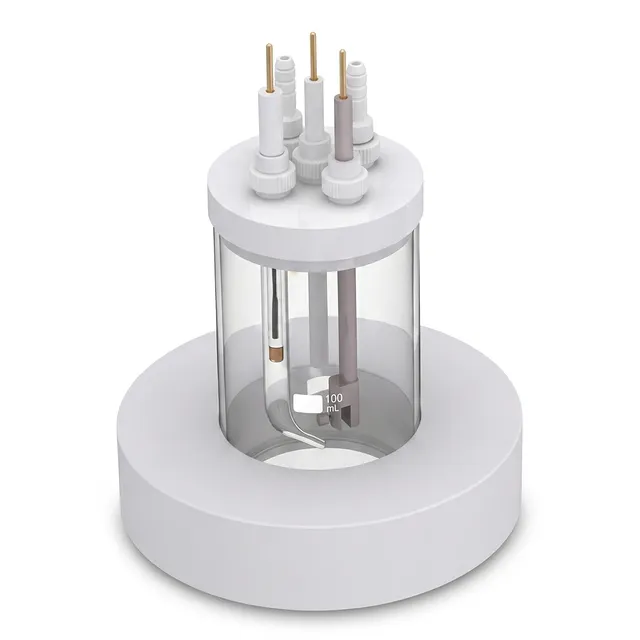
Standard & Customized Electrochemical Cells
All Quartz Mini Photoelectrochemical Cell Open System for Spectroscopy and Electrochemistry
Item Number : PL-DJ13
Price varies based on specs and customizations
- Optical Transmittance
- ≥ 95%
- Fabrication Method
- All-Quartz Thermal Fusion Welding (Glue-Free)
- Lid & Base Material
- High-Purity Polytetrafluoroethylene (PTFE)

Shipping:
Contact us to get shipping details Enjoy On-time Dispatch Guarantee.
Why Choose Us
Easy ordering process, quality products, and dedicated support for your business success.
Product Overview
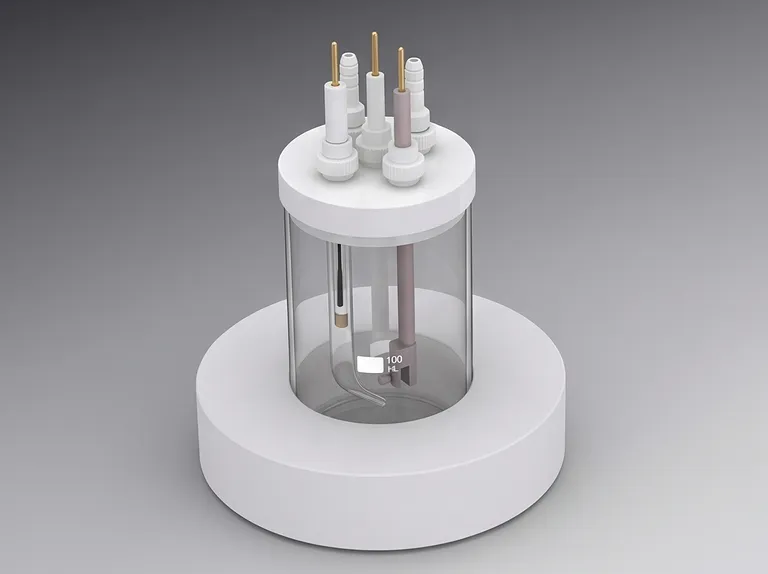
This high-purity optical reaction system is meticulously engineered to meet the demanding requirements of modern photoelectrochemical (PEC) research and analytical spectroscopy. By utilizing a specialized thermal fusion welding process, the entire all-quartz body of this vessel is constructed without the use of adhesives, epoxies, or glues. This design eliminates the risk of organic contamination or structural failure when exposed to aggressive organic solvents, strong acids, or highly alkaline electrolytes. The result is a robust, chemically inert reaction environment that ensures absolute sample purity and reproducible analytical data across long-term experimental cycles.
Designed primarily for light-driven electrochemical studies, this reactor represents an ideal solution for photoelectrocatalysis, solar energy conversion testing, semiconductor characterization, and in-situ spectroelectrochemical measurements. Its open-system architecture provides researchers with unprecedented ease of access for rapid electrolyte exchange, real-time pH monitoring, and effortless electrode positioning. This flexibility makes it indispensable for academic research centers, material science laboratories, and industrial R&D facilities focused on green hydrogen production, carbon dioxide reduction, and next-generation photovoltaic materials.
Operational reliability is at the core of this system's design. Featuring optical-grade quartz windows that deliver exceptional light transmission of over 95%, the cell maximizes photon utilization efficiency during light-driven reactions. A custom-engineered protective base crafted from premium fluoropolymer prevents physical damage and micro-scratches to the delicate optical bottom during stirring and handling. By combining optical precision with heavy-duty laboratory durability, this system guarantees consistent and reliable performance even under the most demanding experimental conditions.
Key Features
- Adhesive-Free Thermal Fusion Welding: The entire quartz cell body is fabricated using advanced high-temperature quartz-to-quartz fusion welding. This glue-free construction ensures zero chemical leaching and exceptional resistance to thermal shock, enabling safe usage with aggressive organic solvents and corrosive chemicals.
- Superior Optical Transmittance (>95%): Engineered with premium optical-grade quartz windows, the cell guarantees a light transmittance of over 95%. This high transparency spans the ultraviolet, visible, and near-infrared spectral regions, minimizing excitation beam distortion and light reflection losses.
- Chemically Inert PTFE Lid: The reaction cell is equipped with a precision-machined polytetrafluoroethylene (PTFE) lid. The lid offers near-universal chemical resistance, prevents evaporation of volatile solvents, and is pre-configured with dedicated ports to ensure stable, repeatable placement of multiple electrodes.
- Integrated Anti-Scratch PTFE Base: To protect the delicate optical window at the bottom of the cell, the assembly features a protective PTFE bottom sleeve. This base acts as a cushion, preventing micro-abrasions, scratches, and cracking when the cell is placed on laboratory benches, magnetic stirrers, or optical stages.
- Versatile Open System Design: The open-top configuration provides researchers with direct access to the reaction volume. This simplifies the injection of sacrificial reagents, allows for fast solution swapping, and accommodates auxiliary probes such as temperature sensors or pH meters without disrupting the primary electrodes.
- Gas Purging Compatibility: The system is designed to support optional gas inlet and outlet purging configurations. This allows for quick deaeration of the electrolyte, facilitating anaerobic testing, nitrogen purging, or precise collection and monitoring of gaseous reaction products like hydrogen or carbon dioxide.
- Universal Electrode Compatibility: The cell lid features pre-sized ports optimized for standard laboratory electrodes. While electrodes are purchased separately, the system is fully compatible with standard silver/silver chloride reference electrodes, platinum wire counter electrodes, and various disk-type working electrodes.
Applications
| Application | Description | Key Benefit |
|---|---|---|
| Photoelectrocatalytic Water Splitting | Direct irradiation of semiconductor photoanodes to split water molecules into hydrogen and oxygen under bias potential. | Glue-free design and >95% light transmission maximize photon absorption and prevent organic background contamination. |
| Carbon Dioxide Photo-Reduction | Evaluating the photocatalytic efficiency of catalysts in reducing dissolved carbon dioxide into valuable chemical feedstocks. | Compatible with gas purging assemblies for precise control over dissolved carbon dioxide concentrations and headspace gas sampling. |
| Dye-Sensitized Solar Cell Testing | Characterizing the light-to-electricity conversion efficiency, open-circuit voltage, and short-circuit current of photoactive dyes. | Excellent optical clarity ensures uniform light delivery to the working electrode, yielding highly precise quantum efficiency measurements. |
| In-Situ Spectroelectrochemistry | Real-time monitoring of UV-Vis absorbance or fluorescence changes in electroactive species during potential sweeps. | High-purity quartz windows provide a clear, distortion-free optical path with negligible background absorbance across a wide spectral range. |
| Semiconductor Bandgap Analysis | Determining flat-band potentials, photocurrent onset potentials, and majority carrier types of thin-film semiconductors. | Open-system configuration permits rapid swapping of customized working electrodes (gold, platinum, or glassy carbon) for high-throughput screening. |
| Electrochemical Kinetic Studies | Measuring cyclic voltammetry, linear sweep voltammetry, and electrochemical impedance spectroscopy of photoactive molecules. | Stable, chemical-resistant PTFE lid maintains rigid electrode positioning, ensuring highly reproducible spatial geometry and current responses. |
Technical Specifications
This comprehensive specification table details the physical, material, and operational parameters of the PL-DJ13 reaction system.
| Parameter Category | Specification Details | Technical Values & Materials |
|---|---|---|
| Product Identification | Model Identifier | PL-DJ13 |
| Body Construction | Fabrication Method | All-Quartz Thermal Fusion Welding (100% Glue-Free) |
| Optical Characteristics | Light Transmittance | ≥ 95% (across UV-Vis-NIR spectrum) |
| Structural Configuration | Reactor Type | Open System / Open Top Architecture |
| Lid Specifications | Material | High-Purity Virgin Polytetrafluoroethylene (PTFE) |
| Protective Base | Material & Function | PTFE Protective Sleeve (Anti-scratch / Bottom optical window protector) |
| Gas Management | Purging Capabilities | Compatible with optional gas inlet/outlet assemblies |
| Electrode Sizing (Standard) | Reference Electrode Port | Optimized for ∅ 3.8 mm Silver/Silver Chloride (Ag/AgCl) electrode |
| Electrode Sizing (Standard) | Counter Electrode Port | Optimized for ∅ 0.5 mm Platinum (Pt) wire electrode |
| Electrode Sizing (Standard) | Working Electrode Port | Optimized for ∅ 3.0 mm Glassy Carbon (GC) electrode |
| Electrode Sizing (Optional) | Replaceable Working Electrodes | Compatible with ∅ 3.0 mm Gold (Au) disk, Platinum (Pt) disk, or custom variants |
| Procurement Note | Electrode Inclusions | Electrodes are not included and must be purchased separately |
Why Choose This Product
- Uncompromising Chemical Purity: By avoiding all adhesives and structural epoxies, this system eliminates the common failure point of organic solvent degradation. Researchers can run long-duration experiments with absolute confidence that no chemical contaminants are leaching from the cell body into their analytical samples.
- Maximum Light Utilization Efficiency: The optical windows deliver a guaranteed light transmittance of over 95%. This minimizes optical scattering, reflection, and absorption losses, providing your photoactive samples with maximum excitation intensity for highly accurate quantum yield calculations.
- Enhanced Equipment Longevity: Quartz glass is inherently fragile and expensive to replace. The addition of a specialized, custom-machined PTFE protective base significantly shields the cell's bottom optical window from physical impacts, benchtop scratches, and thermal stress, dramatically increasing the operational lifespan of the unit.
- Advanced Customization Support: Leveraging our extensive in-house CNC machining capabilities for high-performance fluoropolymers, we can fully customize the PTFE lid, protective base, and cell port diameters to accommodate non-standard electrodes, gas fittings, or analytical probes tailored to your specific research parameters.
- Rigorous B2B Quality Standards: Each cell undergoes comprehensive optical inspection and leak-testing before dispatch, ensuring flawless weld lines and compliance with international laboratory standards. This premium build quality positions the system as a sound, high-return investment for high-impact scientific research.
Contact KINTEK today to discuss your technical specifications or request a custom-tailored quotation for your photoelectrochemical research laboratory.
Trusted by Industry Leaders

REQUEST A QUOTE
Our professional team will reply to you within one business day. Please feel free to contact us!
Related Products
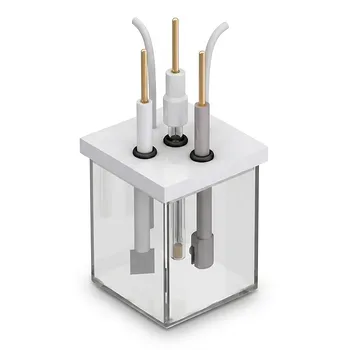
High Transparency Quartz Square Photoelectrochemical Cell with Monolithic Ground Construction and PTFE Lid
Optimize your spectroelectrochemical research with this high transparency quartz square photoelectrochemical cell featuring a monolithic ground body with ninety-five percent light transmittance and a customizable chemical resistant PTFE lid designed for demanding open system B2B laboratory testing applications
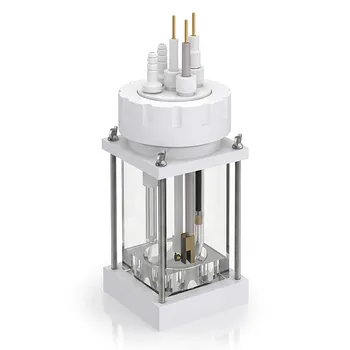
High Transparency All Quartz Square Photoelectrochemical Cell with PTFE Lid
Optimize your laboratory research with this premium all-quartz square photoelectrochemical cell, engineered with ninety-five percent light transmittance, integrated monolithic polishing, an adjustable PTFE cover, and exceptional resistance to high-temperature thermal sterilization processes.
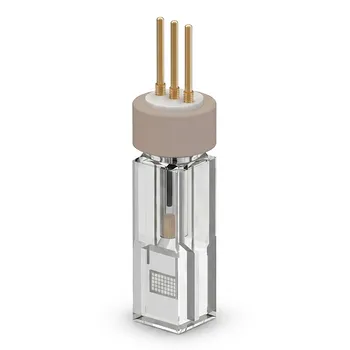
Quartz Thin Layer Spectroelectrochemical Cell Integrated Spectrophotometric Analysis Hermetic Electrochemical Cell
This professional quartz thin-layer spectroelectrochemical cell features an integrated adhesive-free design, exceptional optical transmittance, and an absolute hermetic sealing system, delivering unparalleled precision and reliability for advanced analytical spectroscopy and electrochemical laboratory research applications.
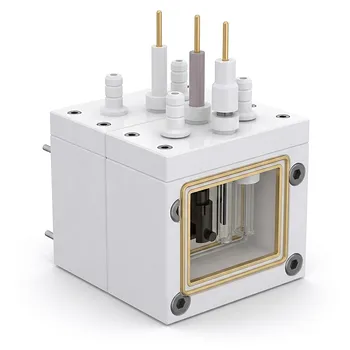
All PTFE Exchangeable Membrane Electrochemical Cell Dual Chamber Three Electrode Photoelectrochemical Cell for Laboratory Trace Analysis
Optimize your laboratory testing with this premium all PTFE exchangeable membrane electrochemical cell featuring a dual chamber design, precise electrode alignment, and customizable volumes from 30ml to 500ml for demanding research, impedance spectroscopy, and corrosion analysis.
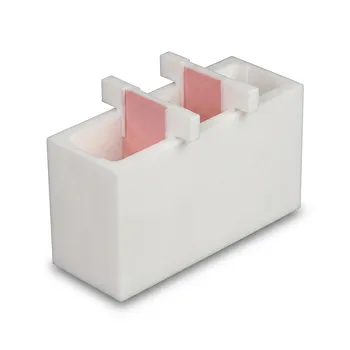
Square PTFE Electrochemical Cell for Silicon Wafer Processing and Hydrofluoric Acid Resistance in Semiconductor and New Energy Research
This high-purity PTFE square electrochemical cell offers exceptional hydrofluoric acid resistance for silicon wafer processing in semiconductor and new energy sectors, featuring fully customizable dimensions and rigorous bespoke engineering to meet specific demanding laboratory research and industrial production requirements.
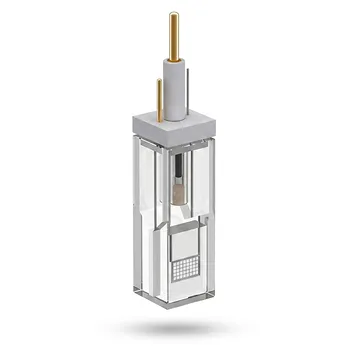
Optically Transparent Thin Layer Spectroelectrochemical Cell for In Situ UV Vis NIR Spectroscopic Analysis
Perform highly precise in-situ UV-Vis and NIR spectroelectrochemical analysis with this optically transparent thin-layer cell featuring high-purity quartz construction, a chemically inert PTFE cap, and precision integrated electrodes designed to deliver rapid, uniform sample electrolysis for advanced laboratory research applications.
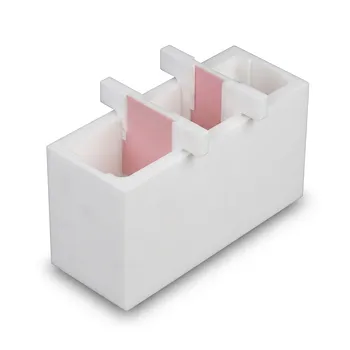
Corrosion Resistant PTFE Electrochemical Cell for New Energy Research Inert Insulating Customizable Lab Reaction Vessel
Professional PTFE electrochemical cell designed for new energy research featuring exceptional chemical inertness and corrosion resistance. Available in 400ml and 1000ml capacities with full customization for advanced battery testing and high-purity trace analysis delivering reliable industrial performance and extreme durability.
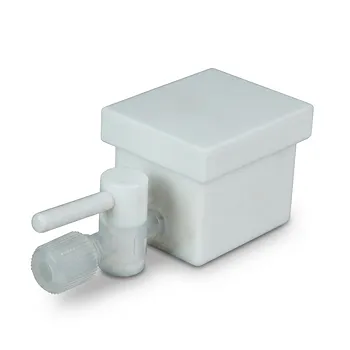
Custom PTFE Corrosion Resistant Insulating Electrophoresis Reaction Cell with Septum and Valves for Low Background Trace Analysis
Optimize trace analysis with our custom PTFE corrosion-resistant reaction cells. Featuring insulating electrophoresis designs with integrated septums and valves, these high-purity systems ensure low background and zero metal precipitation for demanding industrial laboratory and chemical research applications today.
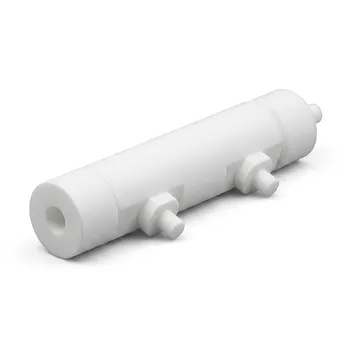
Custom PTFE Electrolytic Cell Corrosion Resistant Low Background Reaction Vessel with Inlet Outlet Ports
Discover professional high-purity custom PTFE electrolytic cells designed for precision electrochemical analysis. Featuring extreme corrosion resistance and low background interference, these reaction vessels offer customizable inlet/outlet ports for seamless integration into demanding industrial or laboratory fluid systems.
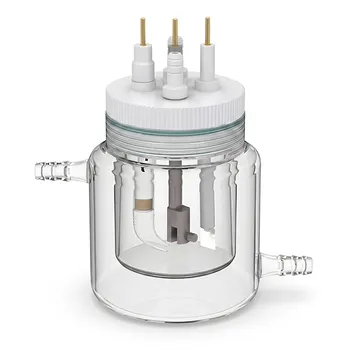
Sealed Glass Electrochemical Cell with Jacketed Temperature Control and Chemical Resistant PTFE Lid
Optimize your analytical research with our premium five port sealed electrochemical cell featuring a chemical resistant polytetrafluoroethylene lid and jacketed temperature control. Engineered for precise three electrode systems, this robust vessel delivers outstanding reliability for critical laboratory research applications.
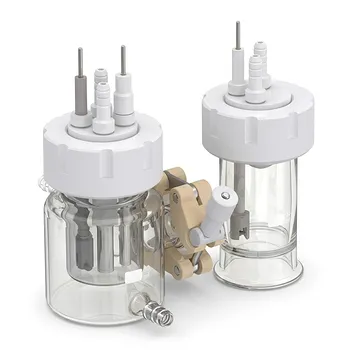
H Type Replaceable Membrane Electrochemical Cell with Sampling Port for Gas Liquid Phase Reactions
This premium H-type electrochemical cell with a replaceable membrane and sampling port features high-purity borosilicate glass, robust PTFE rotation plugs, and efficient dual-chamber separation for advanced electrocatalysis, nitrogen reduction, and carbon dioxide reduction applications.
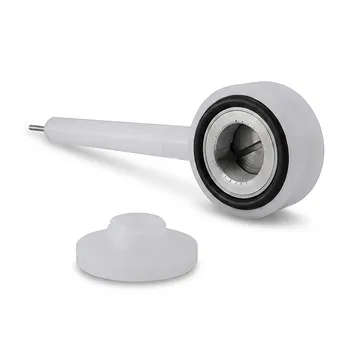
PVDF Sample Support Body for Corrosion Testing and Electrochemical Analysis
High-performance PVDF sample support body precisely controls working electrode reaction area for accurate corrosion testing and electrochemical analysis. Built for superior chemical resistance and long-term reliability, ideal for critical laboratory applications. Explore custom configurations to meet your specific experimental requirements.
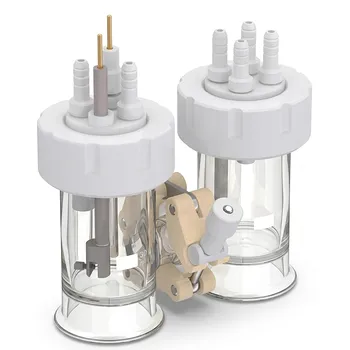
H Type Replaceable Membrane Electrochemical Cell for Three Electrode System Jacketed Single Layer Gas Purging
Optimize your electrochemical research with our premium H-type replaceable membrane cell designed for versatile three-electrode systems featuring high borosilicate glass, reliable PTFE seals, customizable jacketed configurations, and advanced sub-surface gas purge designs for precision laboratory analysis.

White PTFE Electrolytic Cell with Movable Slider and Insulated Lid for Fluorine Corrosion Resistance
Engineered for extreme chemical resistance this customizable PTFE electrolytic cell features a movable slider and superior insulation ideal for fluorine rich environments ensuring high purity results in semiconductor and electrochemical research applications and advanced manufacturing.
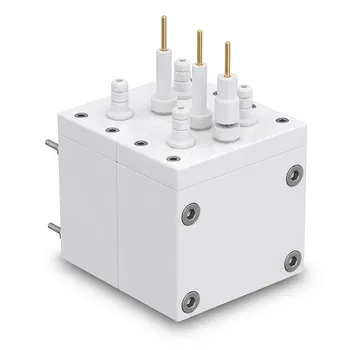
All PTFE H Type Replaceable Membrane Electrolytic Cell for High Purity Divided Electrochemical Analysis
Optimize electrochemical research with this all PTFE H type replaceable membrane electrolytic cell. Engineered for advanced three electrode testing, this chemically inert system provides excellent gas tightness and minimal ohmic resistance drop for accurate quantitative catalytic reaction analysis.
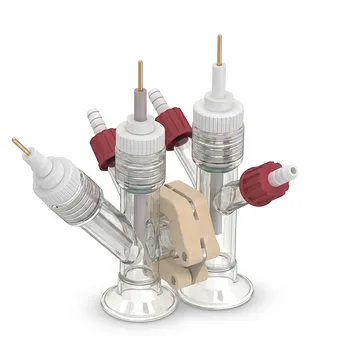
Replaceable Membrane H Type Electrochemical Cell for Three Electrode Experiments with High Borosilicate Glass and PTFE Sealing Components
Optimize your electrochemical research with our premium H-type cell featuring a replaceable membrane design, high borosilicate glass construction, and leak-free PTFE seals. The system is ideal for precise three-electrode testing under strictly controlled inert or reactive gas purge environments.
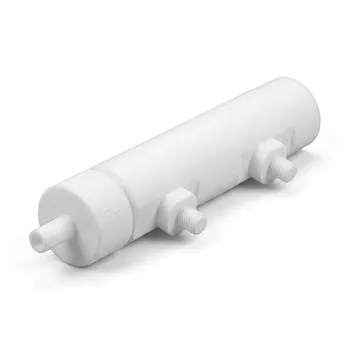
High Purity Custom PTFE Reaction Cell Electrolytic Tank for Semiconductor and Polysilicon Industrial Applications
Discover custom PTFE reaction cells and electrolytic tanks designed for semiconductor and polysilicon manufacturing. These corrosion-resistant units ensure high purity in trace analysis and chemical processing, offering unmatched durability and thermal stability for demanding laboratory and industrial applications.
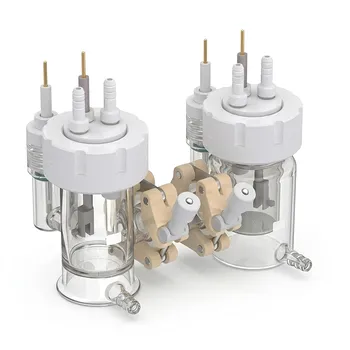
Replaceable Membrane H Type Electrochemical Cell Jacketed Split Electrolysis Cell for Laboratory Research
This high performance replaceable membrane H type electrochemical cell features an integrated Luggin capillary, advanced PTFE rotating seals, and double jacketed water bath options to ensure maximum precision, stability, and gas tight consistency in demanding laboratory research applications.
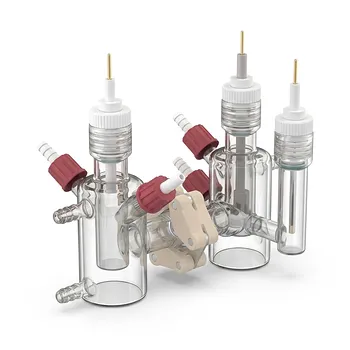
Replaceable Membrane H Type Electrochemical Cell for Three Electrode Gas Aeration Experiments
Achieve precise electrochemical measurements with this premium replaceable membrane H-type cell, designed with an integrated Luggin capillary to minimize IR drop during advanced three-electrode testing and highly controlled gas-purged laboratory analysis.
Acid Resistant PTFE Button Cell Battery Test Fixture Customizable Machining High Purity Electrochemical Testing Clamp
High-purity PTFE button cell testing fixtures provide exceptional acid resistance and electrical insulation for precise electrochemical analysis. These customizable clamps eliminate stray currents and prevent electrolyte corrosion during rigorous battery research and development processes in demanding labs.