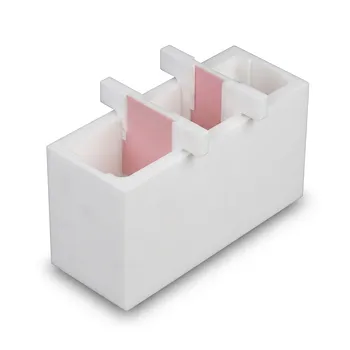
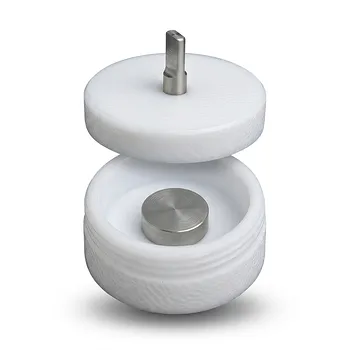
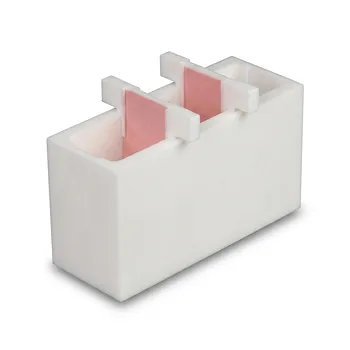
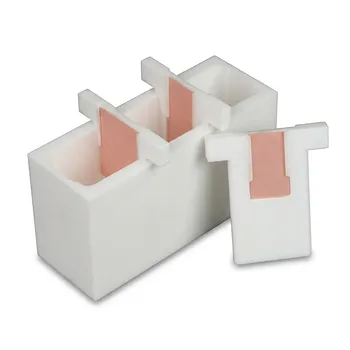
The specialized design of an electrochemical test cell is the fundamental requirement for accurately quantifying the OER and HER performance of Co-MoS2. A dedicated cell provides a rigid spatial arrangement for the three-electrode system, ensuring that distances between the working, reference, and counter electrodes remain constant. This precision is vital for minimizing solution resistance (Rs) and ensuring uniform current distribution, which allows for the collection of reliable kinetic data like Linear Sweep Voltammetry (LSV) and overpotential measurements.
A specialized electrochemical cell standardizes the physical and chemical environment of a test, ensuring that the resulting data reflects the intrinsic activity of the Co-MoS2 catalyst rather than experimental noise or setup inconsistencies.
Achieving Kinetic Precision through Spatial Control
Minimizing Solution Resistance
A specialized cell fixes the distance between the reference electrode and the working electrode (Co-MoS2). This stability is critical because even minor fluctuations in distance can change the measured solution resistance (Rs), leading to inaccurate iR-compensated overpotentials.
Ensuring Uniform Current Distribution
The internal geometry of a specialized cell is designed to provide a symmetric electric field. This ensures that the current density across the Co-MoS2 surface is uniform, preventing localized "hot spots" that would skew the interpreted kinetic current densities and Tafel slopes.
Standardizing the Three-Electrode System
Specialized fixtures provide stable mechanical support and a strictly sealed environment. This setup ensures that the spatial arrangement meets electrochemical standards, facilitating repeatable and comparable results across different testing sessions.
Material Integrity and Catalyst Protection
Eliminating Silicate Poisoning
Conventional glass cells can slowly dissolve in the strong alkaline electrolytes (like 1.0 M KOH) used for OER. This dissolution releases silicates that can poison the active sites of catalysts; using specialized cells made of PTFE or PFA eliminates this risk and protects the Co-MoS2 surface.
Resistance to Corrosive Electrolytes
Co-MoS2 testing often requires harsh acidic or alkaline environments to evaluate HER and OER performance. Specialized cells constructed from high-performance fluoropolymers can withstand these conditions without degrading, ensuring the electrolyte remains pure.
Prevention of Electrolyte Evaporation
Precision-designed sealing structures prevent the evaporation of the electrolyte during long experiments. Maintaining a constant electrolyte concentration is essential for the accuracy of long-cycle tests and Electrochemical Impedance Spectroscopy (EIS).
Managing Gas Evolution and Mass Transport
Preventing Bubble Shielding
OER and HER reactions generate oxygen and hydrogen gas, which can form bubbles on the Co-MoS2 surface. Specialized cell designs facilitate the efficient escape of bubbles, preventing them from shielding active sites and causing abnormal increases in overpotential.
Maintaining Three-Phase Interfaces
Integrated gas diffusion components allow for precise control over gas saturation (such as nitrogen or oxygen) within the electrolyte. This maintains a stable three-phase interface, which is necessary to obtain accurate kinetic data and maintain the reliability of the reaction environment.
Product Separation in H-Type Cells
For high-accuracy testing, a specialized H-type cell uses a membrane to separate the anode and cathode chambers. This prevents the oxygen generated at the anode from interfering with the cathode reduction or re-oxidizing products, which is critical for measuring Faradaic efficiency.
Understanding the Trade-offs and Pitfalls
Complexity and Cost
Specialized cells, particularly those custom-machined from PTFE or incorporating exchange membranes, carry a higher initial cost than standard glassware. Furthermore, their assembly and cleaning protocols are often more rigorous, requiring more time from the researcher.
Material Compatibility Limits
While PTFE is excellent for chemical resistance, it is a poor thermal conductor. If a test requires high-temperature OER evaluation, specialized cell designs must account for thermal lag to ensure the internal electrolyte temperature matches the external setpoint.
Geometry-Induced Mass Transport Limits
A cell designed specifically for spatial stability might inadvertently restrict electrolyte flow if the volume is too small. If the cell is not properly sized for the electrode, mass transport limitations may occur, masking the true kinetic performance of the Co-MoS2 catalyst at high current densities.
How to Apply This to Your Project
Recommendations Based on Research Goals
- If your primary focus is obtaining precise kinetic parameters: Use a specialized cell with a fixed Lugin capillary to minimize and stabilize solution resistance during LSV and Tafel measurements.
- If your primary focus is long-term durability (>1000 hours): Prioritize a cell body made of PTFE or PFA to prevent electrolyte contamination and ensure the structural integrity of the cell in corrosive media.
- If your primary focus is determining Faradaic efficiency: Utilize a customized H-type cell with an ion-exchange membrane to prevent gas crossover and the re-oxidation of reaction products.
- If your primary focus is high-current density OER: Ensure the cell design features an angled electrode holder or optimized flow path to facilitate the immediate removal of gas bubbles from the Co-MoS2 surface.
By selecting a cell design that mirrors the specific requirements of your electrochemical reaction, you ensure that your findings on Co-MoS2 are both scientifically rigorous and reproducible.
Summary Table:
| Key Feature | Benefit for Co-MoS2 Testing | Recommended Solution |
|---|---|---|
| Spatial Stability | Minimizes solution resistance (Rs) and ensures uniform current distribution | Fixed three-electrode geometry |
| Material Purity | Prevents silicate poisoning and electrolyte contamination | High-purity PTFE or PFA cell bodies |
| Gas Management | Prevents bubble shielding and facilitates Faradaic efficiency | H-type cells with gas diffusion components |
| Chemical Resistance | Withstands harsh alkaline (KOH) and acidic environments | Fluoropolymer-based construction |
Precision Electrochemical Solutions by KINTEK
Accurate OER and HER evaluation of Co-MoS2 catalysts demands an uncompromising environment. KINTEK specializes in manufacturing virtually all imaginable laboratory supplies crafted from high-performance PTFE and PFA to ensure your research remains free from contamination and experimental noise.
From everyday basic labware (beakers, measuring cylinders, crucibles, reagent bottles) to advanced reaction apparatus like custom electrochemical cells, battery testing fixtures, and hydrothermal synthesis liners, we provide the structural integrity your experiments require. Backed by end-to-end custom CNC fabrication, KINTEK delivers everything from complex non-standard machined parts to high-volume consumables like stirring bars and gaskets.
Elevate your catalyst research with bespoke, high-performance fluoropolymer apparatus. Contact KINTEK today to discuss your project requirements!
References
- Wei Liu, Jiaqi Tang. Hydrothermal Synthesis of Co-MoS<sub>2</sub> as a Bifunctional Catalyst for Overall Water Splitting. DOI: 10.1021/acsomega.4c10747
This article is also based on technical information from Kintek Knowledge Base .
Related Products
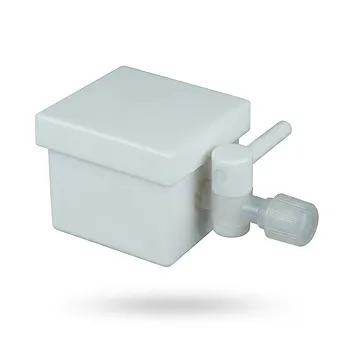
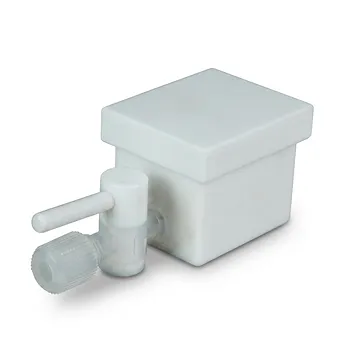
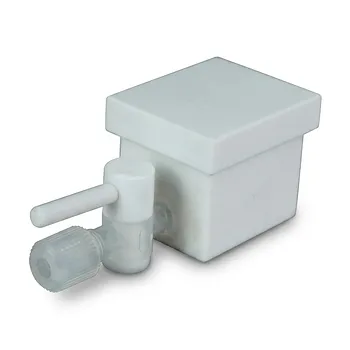
- Corrosion Resistant PTFE Electrochemical Cell for New Energy Research Inert Insulating Customizable Lab Reaction Vessel
- Acid Resistant PTFE Button Cell Battery Test Fixture Customizable Machining High Purity Electrochemical Testing Clamp
- Square PTFE Electrochemical Cell for Silicon Wafer Processing and Hydrofluoric Acid Resistance in Semiconductor and New Energy Research
- White PTFE Electrolytic Cell with Movable Slider and Insulated Lid for Fluorine Corrosion Resistance
- Custom PTFE Reaction Box Opaque White Square Electrochemical Cell Tank
People Also Ask
- What parameters govern the electrochemical decomposition of perfluorooctanoic acid (PFOA) in aqueous solutions, and why are custom PTFE electrochemical cells preferred? Key factors include anode material, current density, electrolyte, and cell design.
- How do custom PTFE electrochemical cells improve the accuracy of stability testing for alkaline catalysts compared to glass cells?
- How does the hydrophobicity of PTFE benefit electrochemical measurements? Enhance Stability and Precision in Your Lab
- What makes PTFE an ideal construction material for custom electrochemical cells and electronic analytical instrumentation housings? Discover superior chemical resistance and electrical insulation
- Why must seawater electrolysis test cells have high corrosion resistance? Protect catalyst stability & data accuracy.