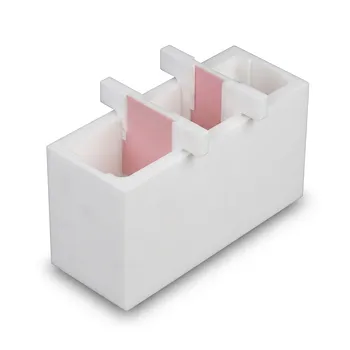
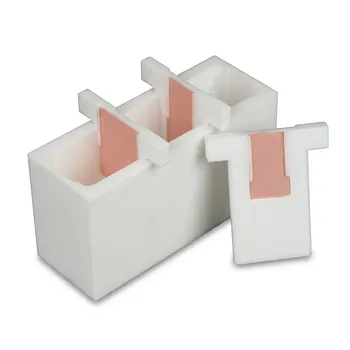
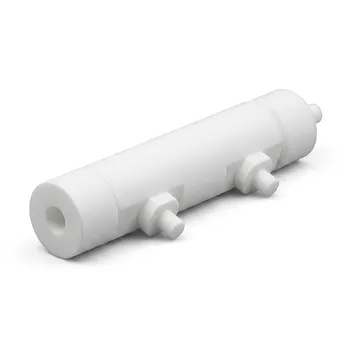
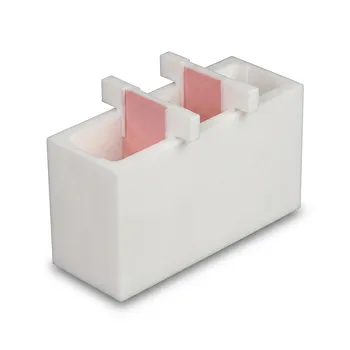
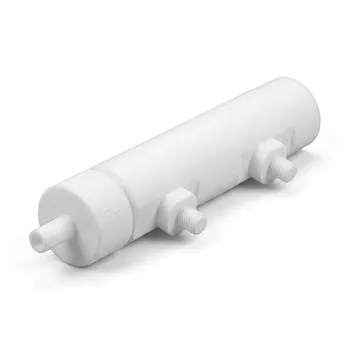
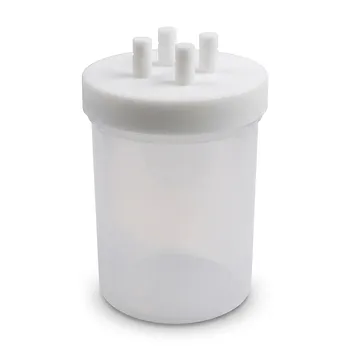
The integrity of Oxygen Evolution Reaction (OER) data depends entirely on the chemical purity of the testing environment. Using high-purity KOH electrolytes combined with electrochemical cells made from PTFE (Polytetrafluoroethylene) or PFA (Perfluoroalkoxy) prevents the leaching of metal impurities—such as silicon and aluminum—that occurs when using standard glassware. This isolation ensures that the measured overpotential and current density reflect the catalyst's intrinsic properties rather than background contamination or vessel degradation.
To obtain accurate and repeatable OER performance metrics, researchers must eliminate extrinsic ion interference. High-purity electrolytes and chemically inert PTFE/PFA hardware prevent vessel corrosion and catalyst poisoning, ensuring the recorded data is a true representation of the catalyst's activity.
The Vulnerability of Alkaline OER Experiments
Extreme Sensitivity to Trace Impurities
The Oxygen Evolution Reaction is exceptionally sensitive to trace surface impurities that can alter the reaction kinetics at the atomic level. Even minute amounts of foreign ions can occupy active sites on catalysts like nickel sulfide or Ni-Fe spinels, leading to false readings of catalytic activity.
The Risks of Standard Glassware
Strongly alkaline electrolytes, such as 1.0 M KOH, are highly corrosive and cause silicon and aluminum leaching from standard laboratory glassware. This leaching not only degrades the container over time but also introduces metal ions into the electrolyte that interfere with the assessment of the catalyst’s true performance.
Maintaining a Clean Electrochemical Environment
High-purity KOH is required to eliminate the introduction of external impurity ions from the reagent itself. When paired with a corrosion-resistant cell, it creates a clean testing environment necessary for the accuracy and repeatability of overpotential and current density data.
The Role of Fluoropolymer Engineering
Exceptional Chemical Inertness
Fluoropolymers like PTFE and PFA possess superior chemical resistance to strong bases and oxidative environments. These materials do not react with or dissolve in 1.0 M KOH, ensuring that no unwanted chemical species are introduced into the reaction during testing.
Prevention of Catalyst Poisoning
By using inert materials for all components contacting the electrolyte—including O-rings, gaskets, and tubing—researchers prevent catalyst poisoning. This allows for the accurate observation of atomic-level transformation mechanisms on the catalyst surface without interference from leached vessel materials.
Structural Integrity and Gas-Tightness
Beyond chemical purity, PTFE and PFA provide the structural integrity and gas-tightness required for sophisticated electrochemical setups. This is particularly important when collecting and analyzing reaction products or performing long-term electrolysis under high-pressure conditions.
Understanding the Trade-offs
Material Cost and Accessibility
High-purity PTFE and PFA components are significantly more expensive than standard borosilicate glassware. For many labs, transitioning to an all-fluoropolymer setup requires a higher initial capital investment in specialized laboratory consumables and custom-machined cells.
Mechanical and Thermal Limitations
While chemically inert, fluoropolymers are softer than glass and prone to mechanical creep or deformation under high torque or extreme temperatures. Researchers must carefully design seals and connections to ensure they remain leak-proof during long-term experiments.
Cleaning Complexity
Ensuring the absolute purity of PTFE/PFA surfaces requires rigorous cleaning protocols, as these materials can sometimes harbor residual organic contaminants from the manufacturing process. Unlike glass, they cannot be cleaned with "piranha" solution or other highly aggressive oxidizing acids that might degrade the polymer structure over time.
How to Apply This to Your Project
To ensure the highest quality data in your OER or alkaline electrochemical research, your choice of materials should align with your specific experimental objectives.
- If your primary focus is fundamental kinetic studies: Use exclusively high-purity PFA or PTFE cells and ultrapure KOH to ensure that overpotential measurements are not skewed by trace iron or silicon contamination.
- If your primary focus is long-term stability testing: Prioritize fluoropolymer components for all fluid transfer parts and O-rings to prevent the gradual poisoning of the catalyst surface over hundreds of hours of operation.
- If your primary focus is product analysis (e.g., gas chromatography): Utilize PFA tubing and sealed fluoropolymer reactors to maintain the gas-tightness necessary for accurate Faraday efficiency calculations.
By prioritizing chemical inertness and electrolyte purity, you move from merely observing a reaction to truly understanding the catalyst's intrinsic behavior.
Summary Table:
| Feature | Standard Glassware | PTFE/PFA Fluoropolymers |
|---|---|---|
| Alkaline Resistance | Poor (Leaches Si, Al) | Excellent (Chemically Inert) |
| Contamination Risk | High (Catalyst poisoning) | Minimal (No metal leaching) |
| Data Accuracy | Low (Skewed results) | High (Intrinsic activity) |
| Durability in 1M KOH | Degradation over time | Superior Longevity |
| Best Application | Neutral pH experiments | Alkaline OER & Fundamental Kinetics |
Ensure Unmatched Purity in Your OER Experiments with KINTEK
Don't let trace impurities compromise your research integrity. KINTEK specializes in high-performance fluoropolymer laboratory supplies designed to withstand the most corrosive alkaline environments. From everyday basic labware like beakers, measuring cylinders, and reagent bottles to advanced derivative apparatus such as custom electrochemical cells, battery testing fixtures, and microwave digestion vessels, we manufacture virtually every laboratory essential from premium PTFE and PFA.
Whether you need standard consumables (O-rings, gaskets, stirring bars) or complex, bespoke CNC-machined components tailored to your specific OER setup, KINTEK delivers the chemical inertness and precision your data demands.
Ready to eliminate catalyst poisoning and achieve superior accuracy?
Contact KINTEK Experts Today — Your partner for high-volume orders and custom-engineered fluoropolymer solutions.
References
- Neelakandan M. Santhosh, Uroš Cvelbar. Advancing Oxygen Evolution Catalysis with Dual-Phase Nickel Sulfide Nanostructures. DOI: 10.1021/acs.energyfuels.4c05182
This article is also based on technical information from Kintek Knowledge Base .
Related Products
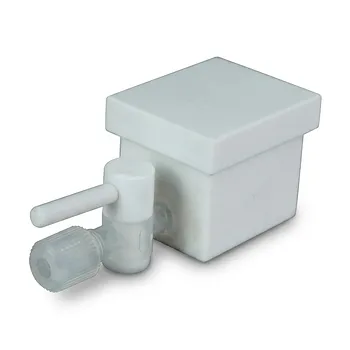
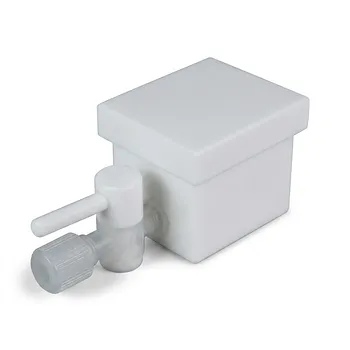
- Corrosion Resistant PTFE Electrochemical Cell for New Energy Research Inert Insulating Customizable Lab Reaction Vessel
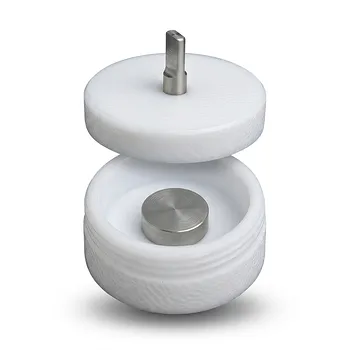
- White PTFE Electrolytic Cell with Movable Slider and Insulated Lid for Fluorine Corrosion Resistance
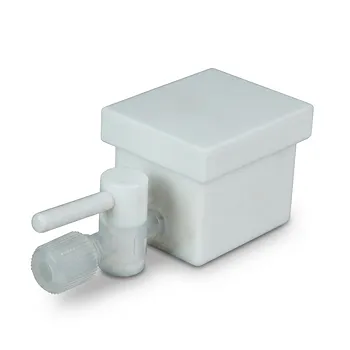
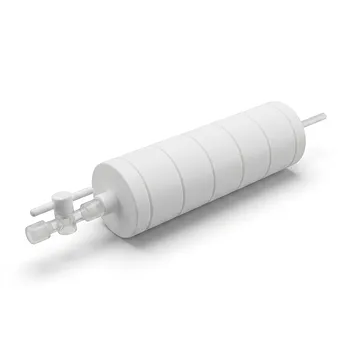
- Custom PTFE Electrolytic Cell Corrosion Resistant Low Background Reaction Vessel with Inlet Outlet Ports
- Square PTFE Electrochemical Cell for Silicon Wafer Processing and Hydrofluoric Acid Resistance in Semiconductor and New Energy Research
- High Purity Custom PTFE Reaction Cell Electrolytic Tank for Semiconductor and Polysilicon Industrial Applications
People Also Ask
- How do custom PTFE electrochemical cells improve the accuracy of stability testing for alkaline catalysts compared to glass cells?
- How does the hydrophobicity of PTFE benefit electrochemical measurements? Enhance Stability and Precision in Your Lab
- What makes PTFE an ideal construction material for custom electrochemical cells and electronic analytical instrumentation housings? Discover superior chemical resistance and electrical insulation
- Why must seawater electrolysis test cells have high corrosion resistance? Protect catalyst stability & data accuracy.
- What are the key steps for structural integrity in molded PTFE lab reaction vessels? Master fine powder processing.