The configuration of a three-electrode electrochemical cell is the primary factor in lowering detection limits. By isolating the potential measurement from the current-carrying circuit, this setup ensures high sensitivity and minimizes background noise, enabling the detection of trace heavy metals at the nanomolar level.
A three-electrode cell provides the precise potential control necessary to distinguish minute Faraday signals from background interference. This configuration is essential for techniques like Anodic Stripping Voltammetry (ASV), where even slight potential drifts or resistance issues can obscure trace metal signals.
The Mechanics of Precision Potential Control
Decoupling Current and Potential
In a three-electrode system, the Reference Electrode (RE) provides a stable baseline for measuring the potential of the Working Electrode (WE). Because no significant current flows through the RE, its potential remains constant, allowing for exact control over the electrochemical reactions occurring at the WE surface.
Eliminating Counter Electrode Polarization
The Counter Electrode (CE) handles the current required to balance the reaction at the WE. In a two-electrode setup, polarization at the counter electrode would shift the total cell potential; the three-electrode design physically isolates these effects, ensuring the measured data reflects only the target metal ions.
Maintaining a Constant Electrolytic Environment
This configuration allows for the independent monitoring of charge transfer rates. By removing the interference of counter-electrode behavior, researchers can accurately determine specific capacitance and impedance, which are vital for characterizing the electrode's interaction with heavy metal ions.
Enhancing Signal-to-Noise Ratio
Minimizing Internal Resistance and iR Drop
The physical geometry and electrode spacing in a three-electrode cell are optimized to reduce ohmic drop (iR drop). Minimizing this internal solution resistance is critical for obtaining accurate overpotential and Tafel slope data, which directly impacts the clarity of the signal at low concentrations.
Suppressing Background Charging Current
When used with pulse techniques like Differential Pulse Voltammetry (DPV), the three-electrode setup helps eliminate background charging current. This allows the system to focus almost exclusively on the faradaic current produced by the reduction or oxidation of heavy metal ions, significantly lowering the limit of detection (LOD).
Preventing Ion Loss Through Material Selection
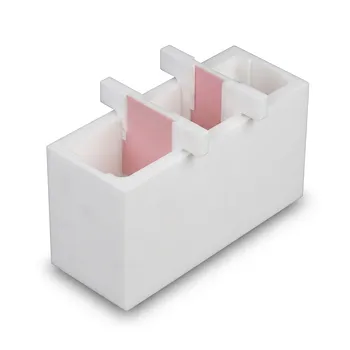
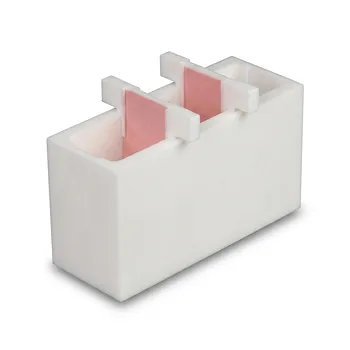
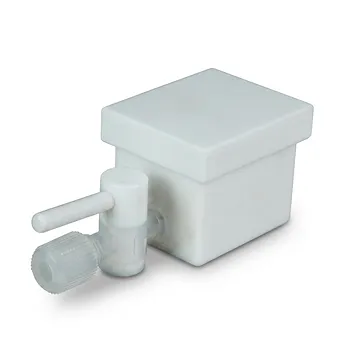
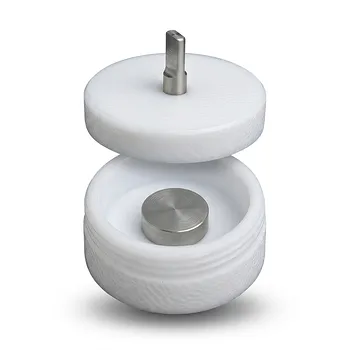
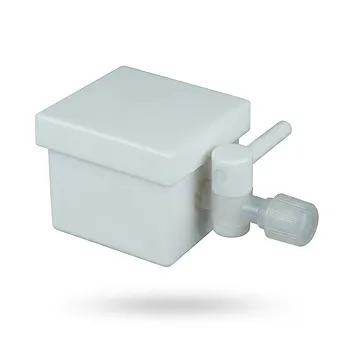
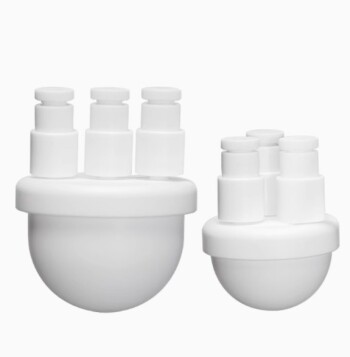
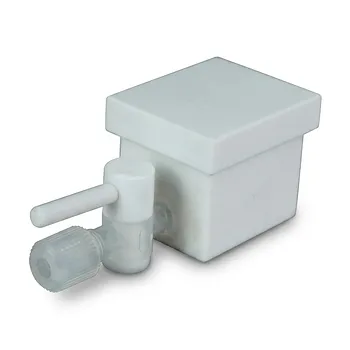
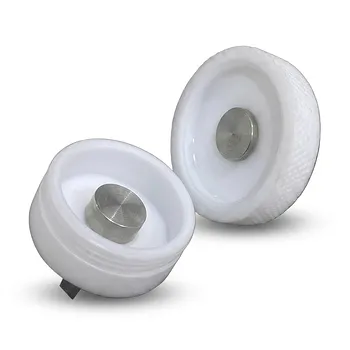
The use of chemically inert materials, such as Polytetrafluoroethylene (PTFE), for the cell body is a crucial configuration choice. PTFE prevents the physical adsorption of trace metal ions onto the internal walls of the vessel, ensuring that the full concentration of the sample reaches the electrode surface for analysis.
Advanced Configurations for Trace Analysis
The Role of Transfer Cell Designs
In complex scenarios, a transfer cell configuration allows the electrode to be modified in one solution and then moved to an aqueous buffer for the metal enrichment phase. This prevents organic solvents or monomers from creating background interference during the detection of ions like Lead(II) and Cadmium(II).
In-Situ Flow Cells and Byproduct Removal
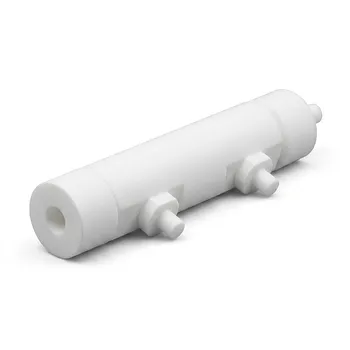
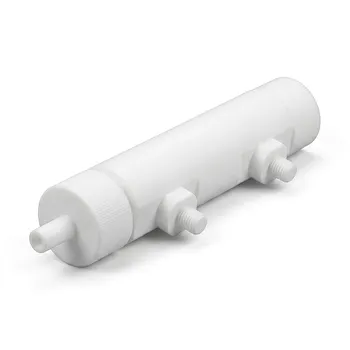
For high-precision monitoring, electrochemical flow cells use a constant electrolyte flow to flush away radiation-induced byproducts or contaminants. This structural design maintains a pristine interface at the working electrode, further sharpening the sensitivity of the detection.
Navigating Configuration Trade-offs
Complexity versus Stability
While a three-electrode system offers superior precision, it requires more complex instrumentation (a potentiostat) and more rigorous maintenance than a two-electrode setup. The stability of the reference electrode must be constantly verified, as any leakage or drift will compromise the entire dataset.
Volume and Concentration Constraints
Smaller cell volumes can enhance sensitivity by increasing the relative concentration of ions near the electrode, but they also increase the risk of iR drop if the electrodes are too close. Balancing cell geometry with the conductivity of the electrolyte is a necessary technical compromise.
Optimizing Your Setup for Trace Metal Detection
How to Apply This to Your Project
Achieving the lowest possible detection limit requires aligning your cell configuration with your specific analytical goals and sample environment.
- If your primary focus is maximum sensitivity for Pb or Cd: Use a three-electrode PTFE cell in conjunction with Anodic Stripping Voltammetry to prevent ion adsorption and minimize background noise.
- If your primary focus is analyzing ions in organic solvents: Implement a transfer cell design to enrich the metal ions in a clean aqueous buffer, isolating the detection step from organic interference.
- If your primary focus is long-term stability and reproducibility: Prioritize a high-quality Reference Electrode and optimize electrode spacing to minimize iR drop and potential drift.
By decoupling potential control from current flow, the three-electrode configuration transforms electrochemical analysis from a general measurement into a high-precision tool for nanomolar trace detection.
Summary Table:
| Feature | Function | Benefit for Trace Analysis |
|---|---|---|
| Reference Electrode | Constant baseline potential | Ensures precise potential control; prevents signal drift |
| Counter Electrode | Current load isolation | Eliminates polarization interference at the Working Electrode |
| PTFE Cell Body | High chemical inertness | Prevents ion loss through adsorption on vessel walls |
| Decoupled Circuit | Separates potential/current | Maximizes Signal-to-Noise ratio for nanomolar detection |
Optimize Your Electrochemical Precision with KINTEK
Elevate your trace analysis to the nanomolar level with laboratory solutions engineered for extreme sensitivity. At KINTEK, we specialize in high-performance fluoropolymer materials, offering everything from everyday basic labware like PTFE/PFA beakers, crucibles, and reagent bottles to advanced standard or custom electrochemical cells, battery testing fixtures, and hydrothermal synthesis liners.
Our end-to-end custom CNC fabrication allows us to deliver complex non-standard machined parts, microchannel reactors, and high-volume consumables—including stirring bars, O-rings, and gaskets—tailored to your specific research requirements. Don't let material interference or system noise compromise your detection limits.
Ready to build a high-precision lab environment? Contact us today to discuss your bespoke laboratory setup!
References
- Afef Dhaffouli, Houcine Barhoumi. Design of a High-Performance Electrochemical Sensor Using ZnO@SiO<sub>2</sub>-n-propyl-NH<sub>2</sub>-benzotheura-AuNPs for the Selective and Sensitive Detection of Lead Ions in Environmental Samples. DOI: 10.1149/1945-7111/ade47f
This article is also based on technical information from Kintek Knowledge Base .
Related Products
- Corrosion Resistant PTFE Electrochemical Cell for New Energy Research Inert Insulating Customizable Lab Reaction Vessel
- Square PTFE Electrochemical Cell for Silicon Wafer Processing and Hydrofluoric Acid Resistance in Semiconductor and New Energy Research
- Custom PTFE Electrolytic Cell Corrosion Resistant Low Background Reaction Vessel with Inlet Outlet Ports
- White PTFE Electrolytic Cell with Movable Slider and Insulated Lid for Fluorine Corrosion Resistance
- Custom PTFE Reaction Box Opaque White Square Electrochemical Cell Tank
People Also Ask
- What parameters govern the electrochemical decomposition of perfluorooctanoic acid (PFOA) in aqueous solutions, and why are custom PTFE electrochemical cells preferred? Key factors include anode material, current density, electrolyte, and cell design.
- How do custom PTFE electrochemical cells improve the accuracy of stability testing for alkaline catalysts compared to glass cells?
- How does the hydrophobicity of PTFE benefit electrochemical measurements? Enhance Stability and Precision in Your Lab
- What makes PTFE an ideal construction material for custom electrochemical cells and electronic analytical instrumentation housings? Discover superior chemical resistance and electrical insulation
- Why must seawater electrolysis test cells have high corrosion resistance? Protect catalyst stability & data accuracy.