High-precision electrochemical cells and cathode substrates function as the environmental architect and the physical foundation, respectively, for nanoparticle growth. These components work in tandem to transform dissolved copper ions into solid nanostructures by precisely managing the movement of charge and the location of chemical reduction. By controlling current distribution and providing specific reduction sites, they allow researchers to dictate the final size, shape, and performance of copper nanoparticles.
Core Takeaway: The electrochemical cell provides the stable, interference-free environment required for precise potential control, while the cathode substrate acts as the template where copper ions are reduced into specific morphologies.
The Role of High-Precision Electrochemical Cells
Providing a Stable Reaction Environment
High-precision cells are designed to maintain a constant chemical environment by sealing the electrolyte from external contaminants. This stability is vital for maintaining consistent electrolyte concentration and temperature during the deposition process.
Enabling Precise Potential and Current Control
These cells typically utilize a three-electrode system—comprising a working electrode, a reference electrode (like Ag/AgCl), and a counter electrode (such as platinum). This configuration allows for the application of exact reduction potentials, ensuring that copper ions are reduced at specific rates to achieve desired particle sizes.
Ensuring Uniform Electric Field Distribution
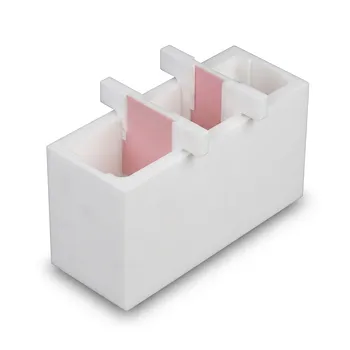
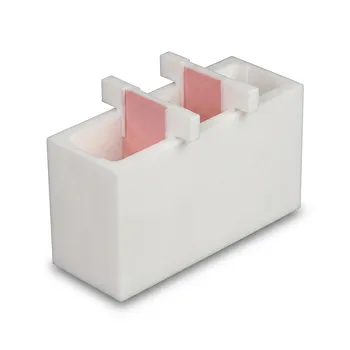
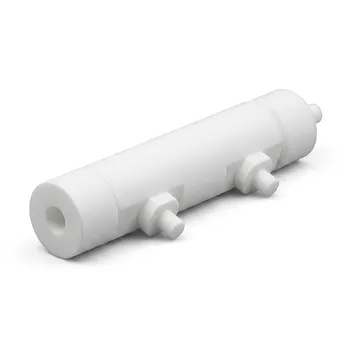
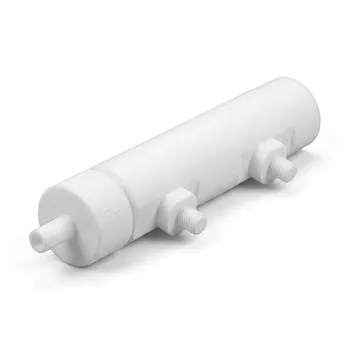
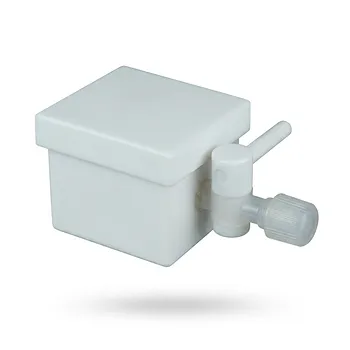
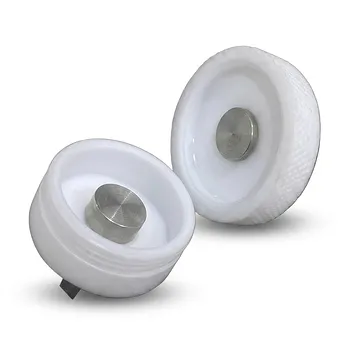
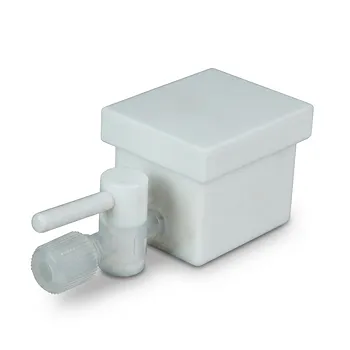
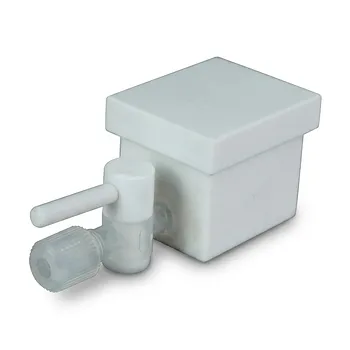
Customized cells often use high-insulation materials like fluoropolymers to fix the relative positions of the electrodes. This structural rigidity ensures a uniform electric field, which prevents localized over-deposition and leads to a more homogenous nanoparticle distribution across the substrate.
Shielding Weak Signals from Interference
In high-precision applications, such as detecting trace impurities at the ppb (parts per billion) level, the cell minimizes environmental noise. This high signal-to-noise ratio is critical for monitoring the weak currents associated with the early stages of nanoparticle nucleation.
The Role of the Cathode Substrate
Providing Sites for Chemical Reduction
The cathode substrate serves as the working electrode where the actual reduction of copper ions occurs. It provides the necessary surface electrons that convert copper ions in the solution into solid metal atoms.
Influencing Nucleation and Growth
The physical and chemical properties of the substrate, such as its surface energy and conductivity, dictate the nucleation rate. Substrates like ITO glass, nickel foam, or glassy carbon (GCE) can be selected to promote specific growth patterns, such as 3D starfruit-like structures or nanowires.
Determining Structural Stability and Morphology
The substrate acts as the mechanical support for the resulting copper film or particles. By regulating the current density at the substrate interface, the morphology can be shifted from simple spheres to complex hierarchical matrices, which are essential for applications like lithium-sulfur batteries or energy storage.
Understanding the Trade-offs
Precision vs. Scalability
While high-precision cells offer unparalleled control over nanoparticle morphology, they are often limited in volume and throughput. Small-scale laboratory cells ensure uniformity but may not easily translate to industrial-scale production where maintaining a perfectly uniform electric field is more challenging.
Substrate Compatibility and Resistance
Not all substrates are compatible with every electrolyte; some may undergo corrosion or passivation at the required reduction potentials. Additionally, substrates with high internal resistance can cause non-uniform current distribution, leading to inconsistent particle sizes across the surface.
Environmental Sensitivity
High-precision systems are extremely sensitive to minor fluctuations in temperature or electrode spacing. Even a slight misalignment in a three-electrode setup can shift the deposition potential, potentially resulting in the formation of copper oxides instead of pure copper nanoparticles.
Applying These Components to Your Project
Recommendations Based on Research Goals
To achieve the best results in your electrochemical deposition, select your hardware based on your specific target outcome.
- If your primary focus is size uniformity: Use a high-precision cell with fixed electrode geometries and a three-electrode system to maintain a perfectly consistent reduction potential.
- If your primary focus is complex morphology: Select a specialized substrate like nickel foam or MXene-coated glass to provide the 3D architecture necessary for advanced structural growth.
- If your primary focus is trace detection: Prioritize a sealed, fluoropolymer-based cell that offers maximum insulation and protection against external electronic noise.
The synergy between a stable, high-precision cell environment and a carefully selected cathode substrate is the fundamental requirement for mastering the architecture of copper nanoparticles.
Summary Table:
| Component | Primary Role | Key Benefit |
|---|---|---|
| High-Precision Cell | Environmental Architect | Maintains stable potential and uniform electric fields for size control. |
| Cathode Substrate | Physical Foundation | Provides reduction sites and dictates nucleation patterns and morphology. |
| 3-Electrode System | Potential Regulator | Ensures precise chemical reduction, preventing unwanted oxide formation. |
| Fluoropolymer Body | Signal Shielding | Minimizes interference and contamination, crucial for trace analysis. |
Elevate Your Research with Precision-Engineered Laboratory Solutions
At KINTEK, we understand that the success of your electrochemical deposition depends on the precision of your tools. We specialize in manufacturing high-performance laboratory supplies crafted from premium PTFE and PFA, ensuring unparalleled chemical resistance and thermal stability for your most sensitive applications.
Whether you require standard labware (beakers, crucibles, and reagent bottles) or advanced reaction apparatus like custom electrochemical cells, battery testing fixtures, and hydrothermal synthesis liners, our end-to-end custom CNC fabrication is ready to deliver. From high-volume consumables like stirring bars and O-rings to complex, non-standard machined parts, we provide everything needed for high-purity trace analysis and fluid transfer.
Ready to master the architecture of your nanoparticles?
Contact KINTEK today to discuss your custom project requirements or to request a quote on our extensive range of fluoropolymer laboratory solutions. Let us provide the stability and precision your innovation demands.
References
- Paulo José Duarte Rodrigues, Marco Aurélio Zezzi Arruda. Hydrothermal Synthesis Methods for Copper Nanoparticles: A Mini-Review. DOI: 10.30744/brjac.2179-3425.rv-132-2024
This article is also based on technical information from Kintek Knowledge Base .
Related Products
- Corrosion Resistant PTFE Electrochemical Cell for New Energy Research Inert Insulating Customizable Lab Reaction Vessel
- Square PTFE Electrochemical Cell for Silicon Wafer Processing and Hydrofluoric Acid Resistance in Semiconductor and New Energy Research
- White PTFE Electrolytic Cell with Movable Slider and Insulated Lid for Fluorine Corrosion Resistance
- Custom PTFE Electrolytic Cell Corrosion Resistant Low Background Reaction Vessel with Inlet Outlet Ports
- High Purity Custom PTFE Reaction Cell Electrolytic Tank for Semiconductor and Polysilicon Industrial Applications
People Also Ask
- How do custom PTFE electrochemical cells improve the accuracy of stability testing for alkaline catalysts compared to glass cells?
- How does the hydrophobicity of PTFE benefit electrochemical measurements? Enhance Stability and Precision in Your Lab
- What makes PTFE an ideal construction material for custom electrochemical cells and electronic analytical instrumentation housings? Discover superior chemical resistance and electrical insulation
- Why must seawater electrolysis test cells have high corrosion resistance? Protect catalyst stability & data accuracy.
- What are the key steps for structural integrity in molded PTFE lab reaction vessels? Master fine powder processing.