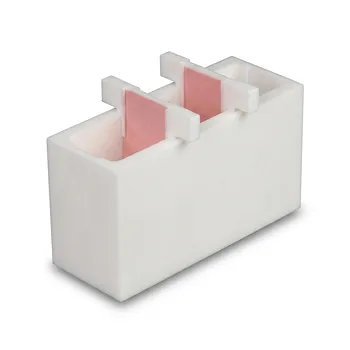
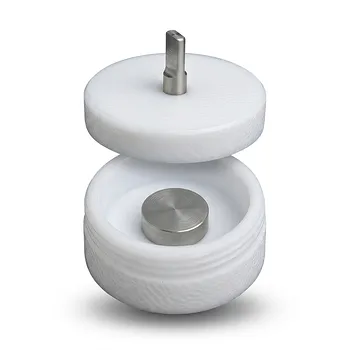
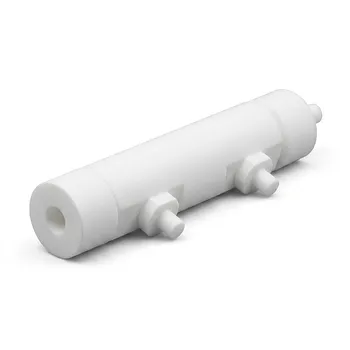
Designing an effective electrochemical cell for NiFe-LDH testing requires a configuration that withstands highly alkaline environments while maintaining rigorous sealing and precise electrode positioning. The cell must be constructed from corrosion-resistant materials like PTFE or high-purity glass and provide secure interfaces for a standard three-electrode system, typically utilizing an Hg/HgO reference electrode and a platinum or carbon counter electrode to ensure stable ion mass transfer.
Accurate performance data for NiFe-LDH depends on a cell design that eliminates chemical interference and maintains physical stability. By prioritizing alkaline-resistant materials and fixed electrode geometries, researchers ensure that the measured electrochemical signals reflect the catalyst's true kinetic activity rather than system-induced noise or resistance.
Material Compatibility and Chemical Resistance
Resistance to Alkaline Corrosion
NiFe-LDH catalysts are almost exclusively tested in highly alkaline electrolytes, such as 1.0 M KOH. The cell body must be made of materials that do not leach or degrade in these conditions.
While high-purity glass is common, PTFE (Teflon) or PFA are preferred for long-term stability. These fluoropolymers prevent the leaching of silicon or other impurities that could poison the catalyst surface.
Maintaining Electrolyte Concentration
Excellent sealing is mandatory to prevent the evaporation of the solvent over long test cycles. If the seal is compromised, the concentration of the electrolyte shifts, leading to inconsistent conductivity and unreliable overpotential measurements.
Optimization of the Three-Electrode Configuration
Precise Spatial Arrangement
The cell must provide a fixed spatial arrangement for the working, reference, and counter electrodes. This stability ensures a uniform electric field distribution across the catalyst surface.
Fixed positioning also minimizes variations in uncompensated resistance ($R_u$). Even slight shifts in the distance between the working electrode and the reference electrode tip can lead to significant data discrepancies.
Standardized Electrode Interfaces
The cell lid or body must feature multiple standard interfaces to securely house the Hg/HgO reference electrode and the counter electrode (typically a platinum wire or carbon rod). These ports must be airtight to maintain a controlled environment, especially if the system requires inert gas purging.
Reduction of Electrochemical Background Noise
Utilizing ultra-high-purity materials like PFA for the cell body reduces the electrochemical background noise. This is particularly important for sensitive trace detections or when measuring low-current densities at the onset of the oxygen evolution reaction (OER).
Specialized Requirements for Advanced Testing
Managing Gas Evolution and Fluid Dynamics
NiFe-LDH performance testing involves the Oxygen Evolution Reaction (OER), which generates significant gas bubbles. The internal geometry of the cell must allow these bubbles to detach easily from the electrode surface.
If bubbles are trapped, they block the active sites of the catalyst and increase the local resistance. The design should ensure that fluid dynamics remain stable and do not interfere with ion mass transfer.
Integration of Optical Windows for In-Situ Analysis
For advanced studies like in-situ Raman spectroscopy, the cell must include a high-transparency window, such as quartz. The optical path must be engineered so that the laser can focus on the NiFe-LDH surface without interference from gas bubbles or electrolyte turbidity.
Understanding the Trade-offs
Glass vs. Fluoropolymers
While glass cells allow for easy visual monitoring of the catalyst and bubble formation, they are susceptible to "glass etching" in hot or highly concentrated KOH. PTFE and PFA offer superior chemical blankness but are opaque, making it harder to observe the physical state of the electrodes during a run.
Sealing vs. Pressure Management
Rigid sealing is necessary to protect oxygen-sensitive materials or maintain gas concentrations. However, because OER produces oxygen gas, the cell must be designed to vent produced gases without compromising the internal environment or allowing electrolyte leakage.
How to Apply This to Your Project
Evaluating the design of your electrochemical cell should be dictated by your specific testing environment and data requirements.
- If your primary focus is standard OER activity screening: Use a high-purity PTFE cell with a three-electrode setup to ensure maximum chemical resistance and repeatable electrode spacing.
- If your primary focus is investigating reaction mechanisms: Opt for a customized cell with a quartz window for in-situ spectroscopy, ensuring the optical path is clear of bubble interference.
- If your primary focus is long-term durability or industrial simulation: Prioritize a cell with robust compression fittings and PFA components to minimize background noise and prevent electrolyte evaporation over hundreds of hours.
The integrity of your NiFe-LDH data is only as reliable as the environment in which it is measured.
Summary Table:
| Design Feature | Requirement for NiFe-LDH | Key Benefit |
|---|---|---|
| Body Material | PTFE or PFA (High-purity Fluoropolymer) | Prevents alkaline corrosion and silicon leaching |
| Electrode Setup | Three-electrode (Hg/HgO Reference) | Ensures stable potential and ion mass transfer |
| Sealing System | Airtight compression fittings | Prevents electrolyte evaporation and concentration shifts |
| Geometry | Fixed spatial electrode positioning | Minimizes uncompensated resistance ($R_u$) and noise |
| Gas Management | Efficient bubble detachment design | Prevents active site blocking during OER reactions |
Elevate Your NiFe-LDH Research with KINTEK
Precision in electrochemical testing begins with high-performance materials. KINTEK specializes in manufacturing a comprehensive range of laboratory supplies crafted exclusively from PTFE and PFA to ensure maximum chemical resistance in highly alkaline environments.
Whether you need standard labware—like beakers, digestion tubes, and reagent bottles—or custom-engineered electrochemical cells, battery testing fixtures, and hydrothermal synthesis liners, our end-to-end CNC fabrication delivers exactly what your research demands. From high-purity trace analysis instruments to complex, non-standard machined parts, we provide the durability and chemical blankness required for reliable OER kinetic data.
Ready to optimize your experimental setup? Contact KINTEK today to discuss your custom project or high-volume labware needs.
References
- Xin Li, Fufa Wu. NiFe-LDH as a bifunctional electrocatalyst for efficient water and seawater electrolysis: enhanced oxygen evolution and hydrogen evolution reactions. DOI: 10.1039/d5na00350d
This article is also based on technical information from Kintek Knowledge Base .
Related Products
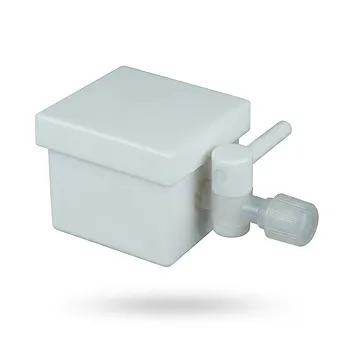
- Square PTFE Electrochemical Cell for Silicon Wafer Processing and Hydrofluoric Acid Resistance in Semiconductor and New Energy Research
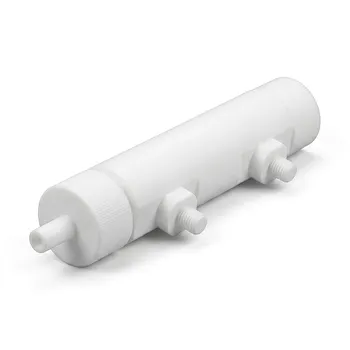
- Corrosion Resistant PTFE Electrochemical Cell for New Energy Research Inert Insulating Customizable Lab Reaction Vessel
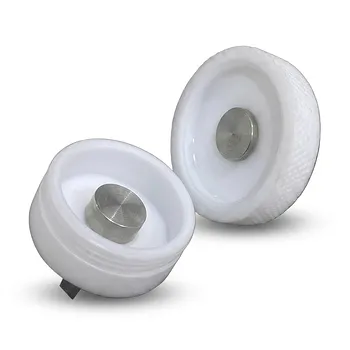
- Acid Resistant PTFE Button Cell Battery Test Fixture Customizable Machining High Purity Electrochemical Testing Clamp
- White PTFE Electrolytic Cell with Movable Slider and Insulated Lid for Fluorine Corrosion Resistance
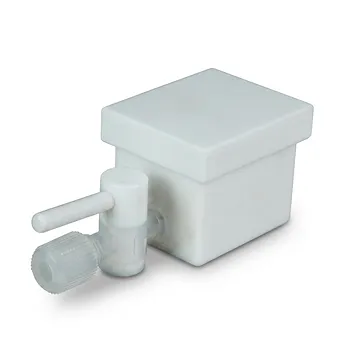
- Custom PTFE Reaction Box Opaque White Square Electrochemical Cell Tank
People Also Ask
- What makes PTFE an ideal construction material for custom electrochemical cells and electronic analytical instrumentation housings? Discover superior chemical resistance and electrical insulation
- What parameters govern the electrochemical decomposition of perfluorooctanoic acid (PFOA) in aqueous solutions, and why are custom PTFE electrochemical cells preferred? Key factors include anode material, current density, electrolyte, and cell design.
- How do custom PTFE electrochemical cells improve the accuracy of stability testing for alkaline catalysts compared to glass cells?
- How does the hydrophobicity of PTFE benefit electrochemical measurements? Enhance Stability and Precision in Your Lab
- Why must seawater electrolysis test cells have high corrosion resistance? Protect catalyst stability & data accuracy.