The electroactive β-phase can improve lithium-ion transport by creating a highly polar, fluorine-rich interface that influences how Li⁺ ions move through the separator. In PVDF and related copolymers, this polarization supports more efficient ion migration, promotes more uniform lithium deposition, and can reduce dendrite formation at copper and lithium electrodes. Custom electrochemical cells are necessary because separator performance depends on subtle ionic, interfacial, and impedance effects that can be distorted by leakage, contamination, evaporation, corrosion, or stray currents.
The β-phase affects both transport and electrode stability, while a custom sealed cell protects the measurement from artifacts. The membrane and its interfaces must be evaluated in a chemically inert, electrically insulated, geometrically controlled environment so that measured conductivity, impedance, and cycling behavior reflect the separator rather than the test fixture.
How the β-Phase Changes Separator Behavior
Ferroelectric Polarization Supports Li⁺ Migration
The β-phase of PVDF has a strongly polarized molecular structure. Its aligned dipoles and fluorine-rich surfaces create an electronegative interface that can influence the local distribution and movement of lithium ions within the electrolyte-filled membrane.
This does not mean the polymer itself becomes a conventional lithium-ion conductor. Instead, the polar polymer matrix can improve ion transport through its pores and absorbed electrolyte by modifying local ion interactions and reducing transport resistance.
Porosity Provides the Physical Transport Path
Lithium ions primarily travel through electrolyte held in the separator’s interconnected pores. A useful fluoropolymer separator therefore combines high porosity, fine pore connectivity, and strong electrolyte absorption and retention.
The β-phase contributes interfacial polarity, while the porous structure provides continuous liquid pathways. These functions are complementary: polarity affects the ion environment, and pore architecture determines whether ions can move efficiently across the membrane.
Uniform Deposition Reduces Localized Growth
A separator that supports more even ionic flux can help reduce concentration gradients near the electrode surface. More uniform Li⁺ delivery makes lithium deposition less concentrated at isolated locations.
This can promote more uniform layer-by-layer lithium deposition on copper and lithium anodes. By limiting the conditions that favor localized growth, the membrane may suppress dendrite formation and reduce the risk of internal short circuits.
Improved Transport Can Benefit Rate Capability
Lower effective ion-transport resistance allows the cell to sustain higher current densities with less polarization. This can improve apparent rate capability, provided that the electrodes, electrolyte, and cell design do not become the limiting factors.
The same transport benefits can also support longer cycling by reducing repeated interfacial stress and nonuniform deposition. The result is a system-level improvement, not an isolated property of the polymer phase alone.
Why Custom Cells Are Needed for Reliable Evaluation
Separator Measurements Are Interface-Sensitive
Separator performance is commonly assessed through half-cell charge-discharge testing, electrochemical impedance spectroscopy, ionic-conductivity measurements, and long-term cycling. Each method is sensitive to electrode spacing, pressure, wetting, sealing, and contact geometry.
A small change in these conditions can alter the apparent resistance or interfacial stability. Custom cells allow the test configuration to match the membrane dimensions, electrode arrangement, electrolyte volume, and intended operating conditions.
Sealing Prevents Measurement Drift
A hermetically sealed cell limits electrolyte evaporation and reduces exposure to external moisture, oxygen, and contaminants. This is especially important during elevated-temperature testing or long-term cycling.
If electrolyte composition changes during the experiment, the measured ionic conductivity and impedance may reflect solvent loss rather than the intrinsic behavior of the separator. Sealing preserves the electrochemical environment throughout the test.
Inert Materials Prevent Chemical Interference
PTFE and PFA are useful cell-body and fixture materials because they resist chemical attack from many battery electrolytes. Their stability reduces the risk that the vessel will corrode, leach contaminants, or participate in unwanted side reactions.
This matters when the objective is to isolate the contribution of the PVDF-based membrane. A reactive or poorly compatible fixture can introduce additional impedance or alter the electrolyte, making the result difficult to interpret.
Electrical Insulation Reduces Stray Currents
Fluoropolymer cell components also provide strong electrical insulation. This helps prevent unintended current paths through the cell body, fittings, or surrounding hardware.
Reduced stray-current interference improves signal quality during impedance and charge-discharge measurements. The resulting data are more likely to represent the membrane-electrode system rather than the measurement apparatus.
Precise Geometry Improves Reproducibility
Custom machining allows the cell to maintain controlled electrode spacing, membrane compression, sealing pressure, and electrode alignment. These parameters directly affect current distribution and measured resistance.
High-precision CNC fabrication is particularly valuable when the membrane has a non-standard size, thickness, or electrode layout. Reproducing the same geometry across tests makes comparisons between β-phase materials, control membranes, and different electrolytes more defensible.
What the Cell Must Reveal
Intrinsic Ionic Conductivity
A suitable test cell should distinguish the separator’s ionic resistance from contact resistance, electrolyte resistance, and fixture-related artifacts. This often requires a controlled geometry and a stable, well-defined electrode arrangement.
Without that control, a low or high measured resistance may be incorrectly attributed to the β-phase when it actually results from poor wetting, changing electrolyte volume, or inconsistent contact.
Interfacial Stability
The separator affects more than bulk ion transport. Its interaction with lithium, copper, the electrolyte, and the electrode-electrolyte interphase influences deposition behavior and cycling stability.
Custom cells preserve these interfaces by maintaining consistent pressure, alignment, and electrolyte containment. This makes it easier to determine whether improved cycling results from the membrane or from uncontrolled assembly differences.
Dendrite Suppression
Dendrite suppression should be evaluated under controlled current density, electrolyte conditions, separator thickness, and electrode surface area. A cell that changes these factors between experiments can create apparent improvements that are not caused by the membrane.
A repeatable custom configuration supports more meaningful comparisons of lithium deposition morphology and short-circuit behavior.
Impedance and Rate Response
Impedance testing requires stable electrical contacts and a known current path. Poor insulation, corrosion, or shifting electrode spacing can create additional features in the impedance spectrum or obscure genuine membrane behavior.
Custom PTFE or PFA fixtures help maintain a clean electrical environment and stable geometry, allowing changes in bulk resistance and interfacial impedance to be tracked more reliably.
Understanding the Trade-Offs
Polarity Does Not Replace Membrane Design
A highly polar β-phase can support favorable ion interactions, but it cannot compensate for inadequate pore connectivity, poor electrolyte wetting, excessive thickness, or insufficient mechanical strength.
Separator performance is therefore governed by the combined effects of phase composition, porosity, pore structure, electrolyte uptake, mechanical integrity, and chemical stability.
Faster Transport Can Increase Complexity
Greater electrolyte uptake may improve ion transfer, but excessive uptake can weaken dimensional stability or alter the separator’s mechanical resistance to dendrite penetration. The optimal balance depends on the electrolyte and cell operating conditions.
Measurements should therefore report transport and mechanical behavior together rather than treating conductivity as the only performance metric.
Custom Cells Add Cost and Method Development
A custom cell requires design, machining, cleaning, sealing validation, and compatibility testing. It may also make comparisons with standard literature cells less direct if dimensions, pressure, or electrode arrangements differ.
That cost is justified when standard hardware introduces leakage, contamination, corrosion, poor fit, or uncontrolled geometry. The cell design should be documented in enough detail for results to remain reproducible.
Fluoropolymer Compatibility Is Broad, Not Absolute
PTFE and PFA are chemically inert across many demanding conditions, but compatibility should still be verified for the specific electrolyte, temperature, pressure, and exposure duration. Seals, metal current collectors, adhesives, and tubing can remain the actual sources of contamination even when the main cell body is fluoropolymer.
The complete assembly, rather than one material in isolation, determines whether the experiment is chemically clean.
How to Apply This to Your Project
The correct evaluation strategy depends on whether the priority is transport, lithium-metal stability, or measurement reliability.
- If your primary focus is lithium-ion transport: Characterize the β-phase together with porosity, electrolyte uptake, thickness, and impedance-derived resistance under a sealed, controlled cell geometry.
- If your primary focus is dendrite suppression: Use consistent lithium or copper electrode surfaces, current density, separator compression, and cycling conditions so that deposition uniformity can be attributed meaningfully to the membrane.
- If your primary focus is long-term cycling: Use chemically inert PTFE or PFA components, verify electrolyte containment over time, and monitor changes in impedance alongside capacity retention.
- If your primary focus is reproducible research data: Specify electrode spacing, sealing method, pressure, electrolyte volume, temperature, and fixture materials, then replicate the complete custom-cell configuration across measurements.
The β-phase can improve separator performance by coupling electroactive polarity with electrolyte-filled transport pathways, while a purpose-built inert cell ensures those improvements are measured rather than confounded by the test environment.
Summary Table:
| Factor | Role of β-Phase | Measurement Challenge | Custom Cell Solution |
|---|---|---|---|
| Ion Transport | Polar interface enhances Li+ migration | Contact resistance, wetting variations | Controlled geometry, sealed environment |
| Interfacial Stability | Uniform deposition reduces dendrites | Contamination, evaporation | Inert PTFE/PFA materials |
| Reproducibility | Consistent performance evaluation | Fixture geometry variations | Precision machining, standardized assembly |
| Long-term Cycling | Transport stability, reduced degradation | Electrolyte loss, stray currents | Hermetic sealing, electrical insulation |
Optimize your fluoropolymer separator research with custom electrochemical cells. Our PTFE/PFA solutions ensure accurate, reproducible measurements. Contact us today to discuss your setup!
Related Products
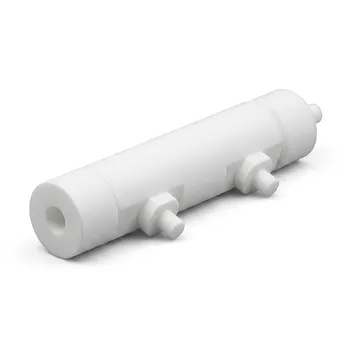
- Custom PTFE Electrolytic Cell Corrosion Resistant Low Background Reaction Vessel with Inlet Outlet Ports
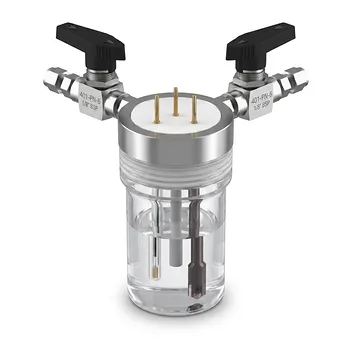
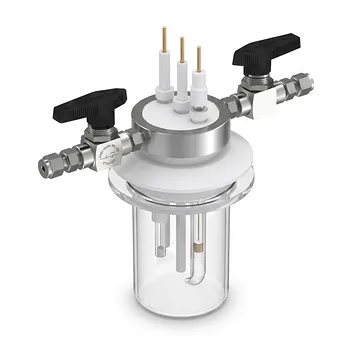
- Straight Five Port Hermetic Electrochemical Cell with Internal Plug In Design and PTFE Lid
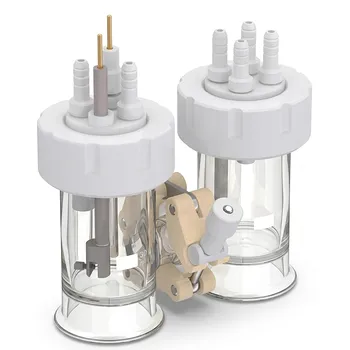
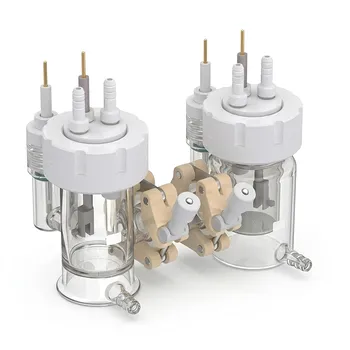
- H Type Replaceable Membrane Electrochemical Cell for Three Electrode System Jacketed Single Layer Gas Purging
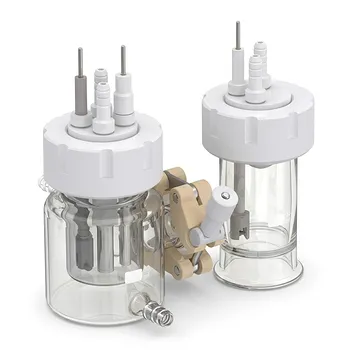
- H Type Replaceable Membrane Electrochemical Cell with Sampling Port for Gas Liquid Phase Reactions
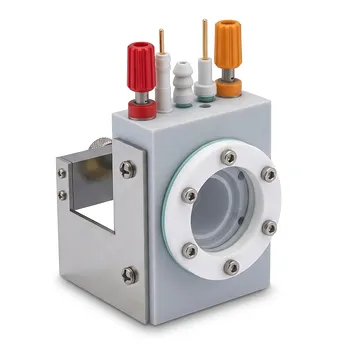
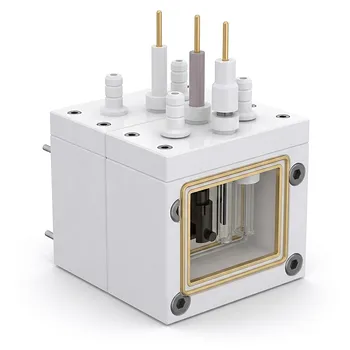
- Visualized Gas Solid Electrochemical Cell with Quartz Window and Solid Electrolyte for Liquid Product Synthesis
People Also Ask
- Why are high-purity PTFE or PFA reaction vessels recommended for the synthesis of PANI-TiC hybrid materials? - Guide
- Why is a PTFE reaction vessel required for Ti3C2Tx MXene synthesis? Ensure Safe HF Etching & High Purity
- What reaction vessel and fluid handling considerations are necessary for living cationic polymerization of fluorinated monomers involving Lewis acid catalysts? Key design and safety tips
- Why is a high-quality PTFE reaction vessel required for the etching preparation of Ti3C2Tx MXene? Ensure Pure Synthesis.
- Ion Activation Reaction Vessel Requirements: Why PTFE is Critical for Membrane Performance