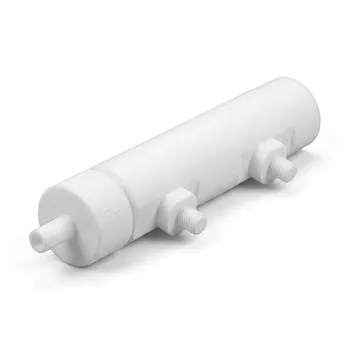
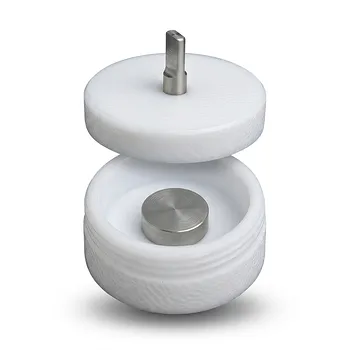
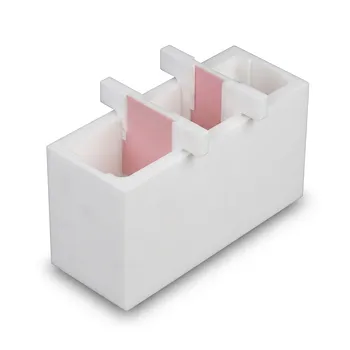
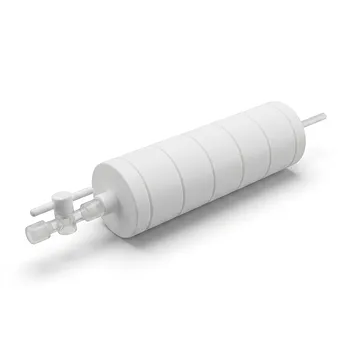
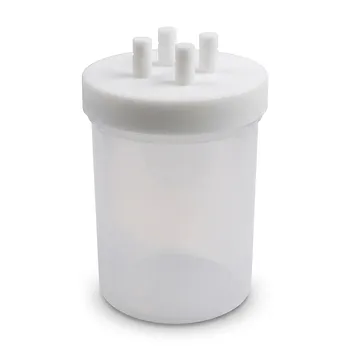
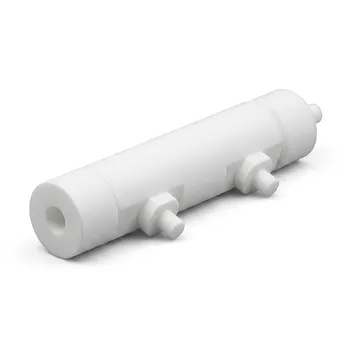
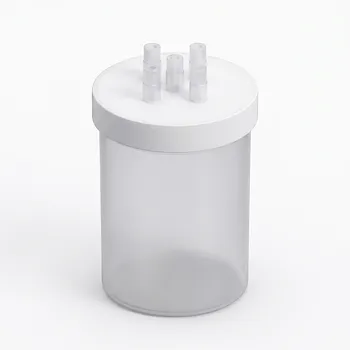
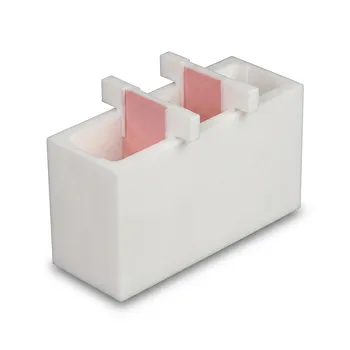
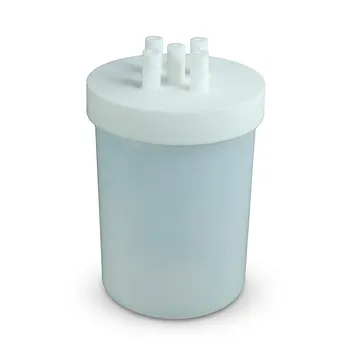
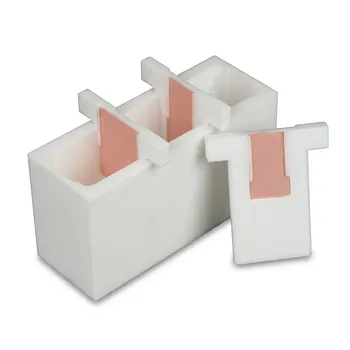
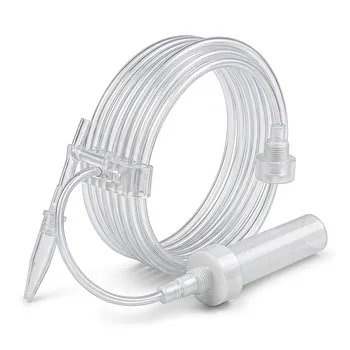
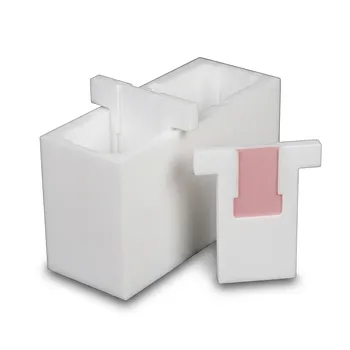
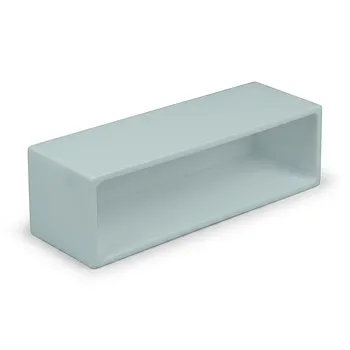
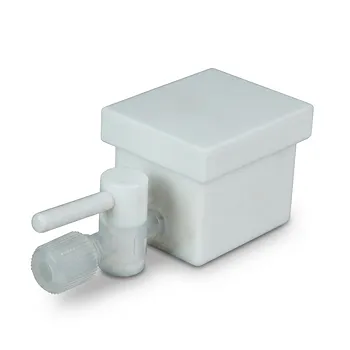
High-purity PTFE and PFA electrochemical cells provide the essential chemical inertia and high-resistance environment needed to isolate the electronic properties of $Pb_2Ti_2O_{5.4}F_{1.2}$ (PTOF). By eliminating metallic leaching and preventing the adsorption of trace ions, these materials ensure that Mott-Schottky measurements reflect the true flat-band potential ($E_{fb}$) of the semiconductor. This precision is critical for constructing accurate energy band diagrams and understanding the charge-transfer capabilities of mesoporous oxyhalides.
Core Takeaway: The use of high-purity fluoropolymers like PTFE and PFA is mandatory for PTOF analysis because they prevent electrolyte contamination and surface poisoning. This chemical neutrality ensures that the measured electrochemical signals originate solely from the semiconductor-electrolyte interface, rather than from leached impurities or container degradation.
Eliminating Chemical and Metallic Interference
Preventing Trace Metal Leaching
Standard glass or lower-grade plastic containers can release trace metallic impurities, such as iron or nickel, into the electrolyte. In high-sensitivity electrochemical tests, these ions can deposit onto the working electrode, altering the reaction kinetics and poisoning the catalyst surface. High-purity PTFE and PFA have extremely low leaching rates, ensuring that the PTOF surface remains uncontaminated during long-duration measurements.
Inhibiting Ion Adsorption
The internal walls of a PTFE cell are highly resistant to the physical adsorption of trace metal ions. This property is vital when analyzing materials like PTOF, as it ensures that the concentration of ions in the electrolyte remains stable. By preventing ion loss to the container walls, researchers maintain a consistent environment for accurate Anodic Stripping Voltammetry (ASV) and other analytical techniques.
Maintaining Interface Integrity for Band Analysis
Ensuring Accurate Mott-Schottky Data
To determine energy band positions, researchers rely on Mott-Schottky curves to find the flat-band potential ($E_{fb}$). Any chemical interaction between the cell and the electrolyte can introduce "noise" or background signals that shift these curves. PTFE cells provide the chemical inertia required to ensure that the capacitance data reflects only the PTOF electrode interface, allowing for the reliable construction of semiconductor energy band diagrams.
Resilience Against Fluoride-Rich Environments
Since PTOF is an oxyhalide containing fluorine, it may be used in or generate environments that are corrosive to standard laboratory glassware. Fluoropolymers like PFA are not susceptible to corrosion from fluorides or strong mineral acids. This resistance prevents the container from degrading and introducing silicate or borate impurities into the sensitive electrochemical system.
Performance Under High Electrical Stress
Stability Under High DC Bias
Electrochemical characterization often involves applying high DC bias, which creates extremely high ion concentrations near the electrode surface. PTFE and PFA exhibit high dielectric properties and can withstand strong electric fields without breaking down. This stability ensures that any observed changes in conductivity or steric hindrance are intrinsic to the PTOF material and not an artifact of the cell’s material failure.
Reliability in Complex Electrolytes
PTOF research often requires the use of strong acidic, alkaline, or complex organic electrolytes to probe band edges. PFA and PTFE offer a wide range of chemical tolerances, maintaining their structural and chemical integrity across the entire pH scale. This versatility allows for comparative studies across different media without changing the cell setup, which minimizes experimental variables.
Understanding the Trade-offs
Thermal and Structural Limitations
While PTFE and PFA are chemically superior, they are softer than glass and can be prone to "cold flow" or deformation under heavy mechanical stress. Users must ensure that CNC-machined components are properly supported to maintain their dimensions over time. Additionally, while these materials handle moderate heat well, they have lower thermal conductivity than metal or glass, which can lead to slower temperature stabilization during heated experiments.
Cost and Transparency Challenges
High-purity fluoropolymers are significantly more expensive than standard labware and require specialized high-precision machining for complex structures. Furthermore, these materials are typically opaque or translucent, making it difficult to visually inspect the electrode alignment or check for bubbles during a test. Researchers must rely on precise assembly and potentially use PFA (which is more translucent than PTFE) if visual monitoring is required.
Applying Material Selection to Your Research
How to Apply This to Your Project
To achieve the most accurate energy band measurements for PTOF or similar oxyhalides, your experimental setup should be tailored to your specific analytical goals.
- If your primary focus is determining precise flat-band potentials: Utilize a high-purity PTFE cell to ensure zero background interference from metallic leachable ions during Mott-Schottky analysis.
- If your primary focus is testing in fluoride-containing electrolytes: Prioritize PFA or PTFE over glass to prevent container etching and the resulting contamination of the PTOF electrode interface.
- If your primary focus is high-sensitivity trace metal detection: Select a PTFE reaction vessel to minimize the adsorption of ions onto the cell walls, ensuring the accuracy of your current signals.
- If your primary focus is long-term stability under high bias: Choose CNC-machined PFA components for their superior dielectric strength and resistance to high-concentration ionic environments.
By utilizing high-purity fluoropolymer cells, you eliminate the "hidden variables" of container chemistry, ensuring your data reflects the true electronic nature of the PTOF semiconductor.
Summary Table:
| Key Property | Impact on PTOF Measurement |
|---|---|
| High-Purity PTFE/PFA | Prevents trace metal leaching (Fe, Ni) and electrode poisoning. |
| Low Surface Adsorption | Maintains stable ion concentration for high-sensitivity ASV signals. |
| Fluoride Resistance | Protects cell integrity against etching from fluoride-rich oxyhalides. |
| Dielectric Stability | Ensures reliable Mott-Schottky data even under high DC bias levels. |
Elevate Your Electrochemical Research with KINTEK Precision
Precise energy band analysis for materials like PTOF requires an environment completely free from trace contamination. At KINTEK, we specialize in manufacturing high-performance fluoropolymer labware designed specifically for sensitive trace analysis and corrosive electrochemical environments.
From everyday basics like PTFE beakers, crucibles, and reagent bottles to advanced custom-machined electrochemical cells, hydrothermal synthesis liners, and microwave digestion vessels, our products are crafted from premium fluoropolymers. Whether you need standard PFA tubing and fittings or bespoke CNC-machined reactors and battery testing fixtures, KINTEK provides the absolute chemical neutrality your semiconductor research demands.
Don't let container leaching compromise your Mott-Schottky results. Contact KINTEK today to discuss your custom laboratory setup and ensure absolute purity in every measurement.
References
- Hiroto Ueki, Kazuhiko Maeda. Mesoporous Oxyhalide Aggregates Exhibiting Improved Photocatalytic Activity for Visible-Light H<sub>2</sub> Evolution and CO<sub>2</sub> Reduction. DOI: 10.1021/acscatal.5c02229
This article is also based on technical information from Kintek Knowledge Base .
Related Products
- High Purity Custom PTFE Reaction Cell Electrolytic Tank for Semiconductor and Polysilicon Industrial Applications
- Acid Resistant PTFE Button Cell Battery Test Fixture Customizable Machining High Purity Electrochemical Testing Clamp
- High Purity PFA Crucible and Corrosion Resistant PTFE Beaker for Trace Analysis and Custom Laboratory Applications
- Corrosion Resistant PTFE Electrochemical Cell for New Energy Research Inert Insulating Customizable Lab Reaction Vessel
- PTFE Corrosion Resistant Filter with PFA Valve Connections and Integrated Sieve Plate
People Also Ask
- Why is PTFE ideal for high-purity applications? Ensuring Absolute Chemical and Biological Inertness
- What functional advantages do PTFE reactors provide over glass? Achieve Superior Purity and Safety in Synthesis
- What are the primary fabrication methods for capillary-based and monolithic PTFE reactors? Expert Production Insights
- How does the hydrophobicity of PTFE benefit electrochemical measurements? Enhance Stability and Precision in Your Lab
- What makes PTFE an ideal construction material for custom electrochemical cells and electronic analytical instrumentation housings? Discover superior chemical resistance and electrical insulation