The H-type electrochemical cell is the gold standard for coupled electrolysis because it provides a physical barrier that prevents the cross-mixing of anodic and cathodic products. In experiments coupling hydroxymethylfurfural (HMF) oxidation with $CO_2$ reduction, this design ensures that oxidation products like FDCA and reduction products like CO or formate remain isolated, preventing parasitic re-oxidation or interference.
The primary advantage of an H-type cell is its ability to physically isolate the anode and cathode environments using an ion-exchange membrane. This separation is essential for preventing the re-oxidation of cathodic products at the anode and for ensuring the accuracy of Faradaic efficiency (FE) measurements.
Preventing Product Cross-Contamination and Re-oxidation
Avoiding the Anodic Re-oxidation of Cathodic Products
In $CO_2$ reduction, the cathode generates products such as carbon monoxide (CO) or formic acid. Without physical isolation, these species can diffuse to the anode, where the high potential causes them to re-oxidize back into $CO_2$.
The H-type cell uses a proton exchange membrane (PEM) or ion-exchange membrane to block this diffusion. This ensures that the energy expended to reduce $CO_2$ is not wasted by a circular reaction pathway at the anode.
Protecting Cathodic Reduction from Oxygen Interference
Oxygen ($O_2$) is a common byproduct of anodic reactions. If $O_2$ reaches the cathode, it can be preferentially reduced over $CO_2$, significantly lowering the selectivity of the desired reaction.
By isolating the anode chamber, the H-type cell prevents $O_2$ from migrating to the cathode. This protection maintains a high concentration of the desired reactants at the electrode surface and prevents secondary reactions that degrade performance.
Enhancing Analytical Precision and Selectivity
Ensuring Accurate Faradaic Efficiency Calculations
For researchers, the ability to calculate a precise Faradaic efficiency (FE) is critical. If products are lost to re-oxidation or if unwanted species are reduced at the cathode, the resulting data will be skewed and unreliable.
The dual-chamber design allows for quantitative product analysis by keeping the gas and liquid phases of each compartment distinct. This allows for the "classified collection" of products, which is necessary for a definitive mass balance.
Independent Gas Introduction and Stirring
Coupled electrolysis often requires different saturation environments, such as a $CO_2$-saturated catholyte and a specifically buffered anolyte for HMF oxidation. The H-type cell allows for independent gas purging in each chamber.
Furthermore, independent stirring or circulation can be applied to each half-cell. This optimizes mass transfer for the specific catalyst and substrate present in that compartment without affecting the other.
Flexible Experimental Environments
Optimized Electrolyte Selection for Each Half-Reaction
HMF oxidation and $CO_2$ reduction may require different pH levels or electrolyte compositions to achieve peak efficiency. The H-type cell allows the use of different electrolyte environments in the two half-cells.
An ion-exchange membrane maintains the electrical circuit via ion migration (like protons or hydroxides) while preventing the bulk mixing of the chemicals. This flexibility allows researchers to tailor the local environment to the specific needs of each electrocatalyst.
Spatial Layout for Complex Instrumentation
The physical separation provides a spacious layout for inserting reference electrodes, gas outlets, and sampling ports. This reduces the risk of electrical shorting or physical crowding that can occur in single-compartment cells.
Understanding the Trade-offs
Internal Resistance and Mass Transfer
The primary downside of the H-type cell is its relatively high internal resistance. The distance between electrodes and the presence of a membrane increase the voltage required to drive the reaction compared to a zero-gap flow cell.
Limitations in Scaling
H-type cells are primarily diagnostic and screening tools. Because they rely on diffusion through a liquid volume rather than a continuous flow, they are not suitable for high-current-density industrial applications where mass transfer limitations become a bottleneck.
How to Apply This to Your Project
Making the Right Choice for Your Goal
- If your primary focus is fundamental catalyst screening: The H-type cell is ideal as it provides the cleanest data for determining intrinsic activity and Faradaic efficiency.
- If your primary focus is accurate product quantification: Use a dual-chamber H-cell with a high-quality ion-exchange membrane to ensure no cross-over of liquid-phase products like formate or FDCA.
- If your primary focus is optimizing reaction selectivity: Utilize the independent chambers to test different electrolyte pH levels for the anode and cathode separately.
- If your primary focus is industrial throughput: Consider moving toward a flow-cell configuration once the basic kinetics have been established in the H-type cell.
The H-type cell remains an indispensable tool for establishing a rigorous baseline of performance in complex, multi-product electrochemical systems.
Summary Table:
| Feature | Advantage in Coupled Electrolysis | Research Impact |
|---|---|---|
| Ion-Exchange Membrane | Physical isolation of anode and cathode chambers | Prevents parasitic re-oxidation of products like formate or CO |
| Dual-Chamber Design | Separate gas/liquid environments for each electrode | Enables accurate Faradaic efficiency (FE) measurements |
| Independent Purging | Custom saturation (e.g., CO2-saturated vs. Ar-purged) | Optimizes reaction selectivity and catalyst performance |
| Spatial Flexibility | Dedicated ports for reference electrodes and sensors | Simplifies complex diagnostic and screening setups |
| pH Control | Allows different electrolytes in each half-cell | Provides ideal local environments for specific catalysts |
Elevate Your Electrochemical Precision with KINTEK
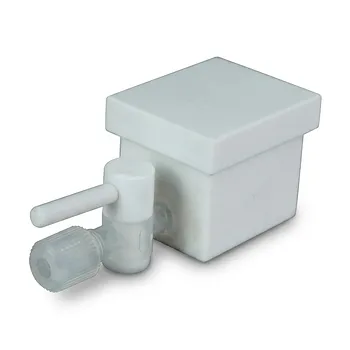
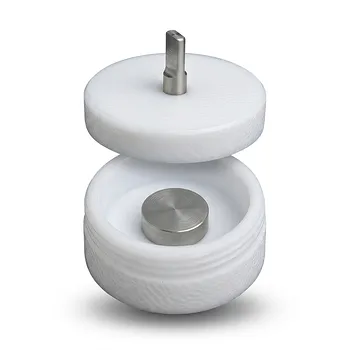
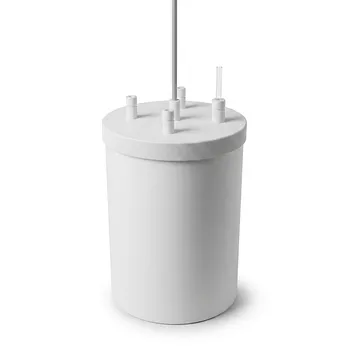
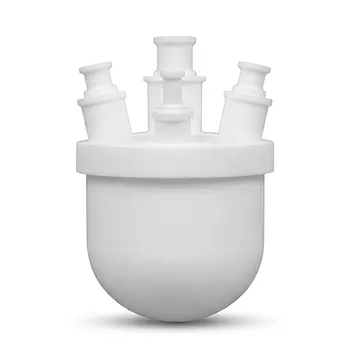
Optimizing HMF oxidation and $CO_2$ reduction requires more than just a good catalyst—it demands a high-performance environment. KINTEK specializes in manufacturing premium laboratory supplies crafted from PTFE and PFA, ensuring your electrochemical cells are chemically inert and free from contamination.
From high-purity trace analysis instruments and cleaning tanks to custom-machined H-type cells, standard electrochemical reaction vessels, and battery testing fixtures, we provide the tools needed for rigorous analytical precision. Whether you require everyday basic labware (beakers, reagent bottles, and tubing) or complex, bespoke CNC-fabricated components tailored to your specific fluid transfer or reaction needs, KINTEK maintains an exclusive focus on high-performance fluoropolymers to protect your experimental integrity.
Ready to upgrade your lab setup? Contact KINTEK today to discuss our custom fabrication services and discover how our fluoropolymer expertise can drive your research forward.
References
- Juntao Zhang, Guangfu Liao. Dual Co Sites in n─n Type Heterojunction Enable Selective Electrochemical Co‐Valorization of HMF and CO <sub>2</sub>. DOI: 10.1002/anie.202511448
This article is also based on technical information from Kintek Knowledge Base .
Related Products
- High Purity Custom PTFE Reaction Cell Electrolytic Tank for Semiconductor and Polysilicon Industrial Applications
- Corrosion Resistant PTFE Electrochemical Cell for New Energy Research Inert Insulating Customizable Lab Reaction Vessel
- Custom PTFE Electrolytic Cell Corrosion Resistant Low Background Reaction Vessel with Inlet Outlet Ports
- Custom PTFE Corrosion Resistant Insulating Electrophoresis Reaction Cell with Septum and Valves for Low Background Trace Analysis
- Custom PTFE Reaction Box Opaque White Square Electrochemical Cell Tank
People Also Ask
- Why is PTFE ideal for high-purity applications? Ensuring Absolute Chemical and Biological Inertness
- What functional advantages do PTFE reactors provide over glass? Achieve Superior Purity and Safety in Synthesis
- What are the primary fabrication methods for capillary-based and monolithic PTFE reactors? Expert Production Insights
- Why are PP or PTFE reactors preferred over glass in tribocatalysis? Maximize Charge Separation & Catalytic Efficiency
- How does the hydrophobicity of PTFE benefit electrochemical measurements? Enhance Stability and Precision in Your Lab