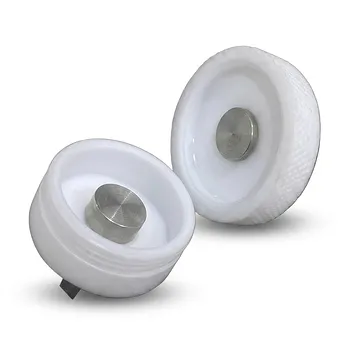
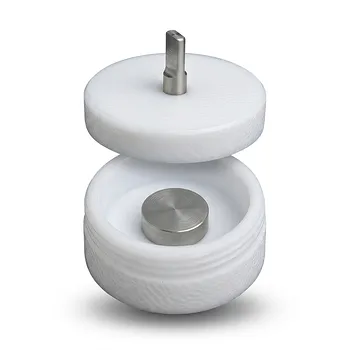
The influence of 2032-type coin cell fixtures on Lithium-Oxygen (Li-O2) battery results is fundamental, as they dictate the efficiency of oxygen transport and the stability of internal electrical contacts. These housings determine how effectively oxygen reaches the cathode catalyst to facilitate discharge and charge, while simultaneously maintaining the mechanical pressure necessary to minimize internal resistance and ensure data reproducibility.
Core Takeaway: 2032-type fixtures act as the controlled environment that translates material properties into measurable performance; they must balance unhindered oxygen diffusion with precise mechanical compression to yield accurate capacity and cycling data.
Enabling Gas Diffusion and Catalyst Interaction
Lithium-oxygen batteries are "open" systems that require a constant supply of oxygen to function. The housing design is the primary factor in how well this gas interacts with the solid-state components.
The Role of Meshed Cathode Cases
Standard coin cells are fully sealed, but Li-O2 tests require meshed CR2032 cases with a sieve-like structure on the cathode side. This specific architecture allows oxygen to diffuse into the cell from the testing chamber or ambient environment.
Facilitating ORR and OER Reactions
Without a precisely engineered mesh, the oxygen reduction reaction (ORR) and oxygen evolution reaction (OER) cannot occur efficiently. The housing ensures the catalyst-loaded carbon paper is exposed to real gas-diffusion conditions, which is necessary for evaluating the performance of new catalyst materials.
Mechanical Pressure and Electrical Integrity
Beyond gas transport, the internal components of the 2032 fixture—such as wave springs and spacers—exert physical force on the battery stack. This pressure is a critical variable in electrochemical measurements.
Minimizing Ohmic Resistance
High-quality stainless steel spacers and wave springs provide uniform pressure across the electrodes. This tight interfacial contact minimizes additional ohmic resistance, ensuring that the measured voltage drops are due to the chemistry, not poor physical contact.
Ensuring Stable Interfacial Contact
Li-O2 batteries involve the formation and decomposition of solid discharge products like $Li_2O_2$. The constant mechanical stress provided by the fixture keeps the composite electrolyte and electrodes in contact despite the volume changes that occur during cycling.
Environmental Isolation and Repeatability
While the cathode must be open to oxygen, the rest of the cell requires a high degree of protection to ensure the validity of the experiment.
Protecting the Lithium Anode
The 2032 housing provides a precise mechanical seal to encapsulate the sensitive lithium anode and electrolyte. This prevents the loss of volatile electrolyte components and protects the anode from uncontrolled contamination, which is vital for long-term cycling stability.
Eliminating External Variables
By using a standardized 2032 module, researchers can eliminate interference from external physical variables. This standardization ensures that evaluations of membrane performance or dendrite suppression are both repeatable and scientifically valid.
Understanding the Trade-offs and Pitfalls
While 2032-type fixtures are industry standards, they introduce specific limitations that can skew results if not properly managed.
The Problem of Uneven Pressure
If the sealing machine is not calibrated or if the wave spring is misaligned, it can create non-uniform pressure distributions. This leads to localized current crowding, which can cause premature cell failure or the growth of lithium dendrites that do not reflect the material's true properties.
Dead Volume and Oxygen Flooding
The internal "dead volume" within a coin cell can trap moisture or lead to "flooding" if the electrolyte volume is not precisely controlled. Excessive electrolyte can block the pores of the meshed housing, significantly hindering oxygen mass transport and artificially lowering the measured specific capacity.
How to Optimize Your Li-O2 Testing Strategy
To achieve the most accurate results, your choice of fixture components should align with your specific experimental objectives.
- If your primary focus is catalyst activity (ORR/OER): Prioritize meshed housings with high hole density to ensure that oxygen diffusion is never the rate-limiting factor in your measurements.
- If your primary focus is cycle life and CCD: Use high-tension wave springs and precision-ground stainless steel spacers to maintain the most consistent interfacial pressure possible over hundreds of hours.
- If your primary focus is electrolyte or membrane stability: Ensure a perfect hermetic seal on the anode side of the 2032 casing to prevent atmospheric contamination from interfering with your Coulombic efficiency data.
The 2032-type fixture is not merely a container, but a precision instrument that defines the physical boundaries of your electrochemical system.
Summary Table:
| Component/Factor | Role in Li-O2 Testing | Impact on Experimental Results |
|---|---|---|
| Meshed Cathode Case | Enables oxygen transport (ORR/OER) | Determines capacity and catalyst performance evaluation. |
| Wave Springs & Spacers | Provides uniform mechanical pressure | Minimizes ohmic resistance and maintains interfacial contact. |
| Hermetic Sealing | Protects Lithium anode and electrolyte | Prevents contamination and ensures long-term cycling stability. |
| Internal Volume | Manages gas space and electrolyte | Prevents "flooding" and ensures efficient oxygen mass transport. |
Precision Engineering for Your Next-Gen Battery Research
Elevate your electrochemical analysis with KINTEK, your premier partner for high-performance fluoropolymer labware and battery testing solutions. We specialize in providing the critical components needed for rigorous Lithium-Oxygen testing, ensuring your 2032-type fixtures deliver the mechanical integrity and gas diffusion efficiency your research demands.
From everyday basic labware like PFA beakers, measuring cylinders, and reagent bottles to advanced battery testing fixtures, electrochemical cells, and hydrothermal synthesis liners, KINTEK manufactures virtually every laboratory supply imaginable from high-grade PTFE and PFA.
Why choose KINTEK?
- Custom Fabrication: Our end-to-end CNC machining delivers everything from complex non-standard parts to bespoke laboratory setups.
- High-Purity Materials: Absolute focus on high-performance fluoropolymers for trace analysis and chemical resistance.
- Comprehensive Range: We supply everything from fluid transfer components (tubing, valves) to sample prep tools (filters, pipettes, tweezers) and general consumables (O-rings, gaskets, septa).
Ensure your battery data is repeatable and scientifically valid with the industry’s most reliable materials.
Contact KINTEK today to discuss your custom lab requirements!
References
- Yajun Zhao, Xiaojing Li. MOF-derived Co catalysts modified with RuO2 for durable Li-O2 batteries. DOI: 10.1038/s41598-025-11449-1
This article is also based on technical information from Kintek Knowledge Base .
Related Products
- Corrosion Resistant PTFE Coin Cell Battery Testing Clamps and Acid Proof Custom Fluoropolymer Battery Fixtures
- Acid Resistant PTFE Button Cell Battery Test Fixture Customizable Machining High Purity Electrochemical Testing Clamp
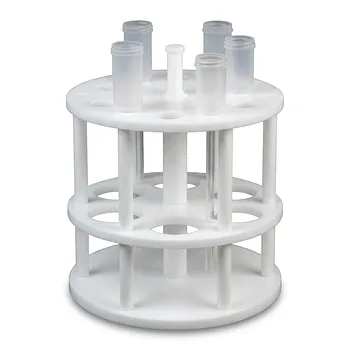
- Custom PFA Microcolumn Racks and PTFE Machined Low Background Corrosion Resistant Laboratory Fixtures
People Also Ask
- What is the thermal operating range for PTFE battery clamps in electrochemical research? Stability from -200°C to +260°C
- What are the primary functions and material compositions of PTFE battery clamps? Ensure Precision & Chemical Resistance
- How do coin cell testing fixtures evaluate ZIF-derived LCO cycling stability? Ensure Battery Research Precision
- What are the electrical insulation and signal integrity advantages of using PTFE battery clamps? Ensure Data Accuracy
- How does the chemical inertness of PTFE benefit laboratory-scale battery testing? Ensure high-purity research results.