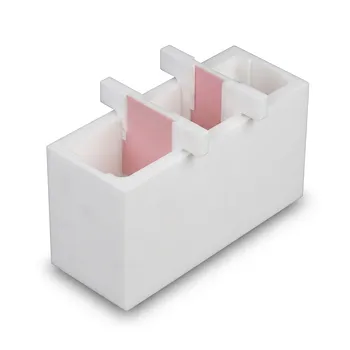
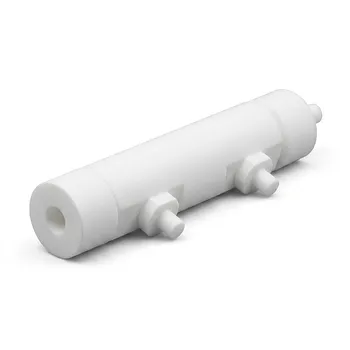
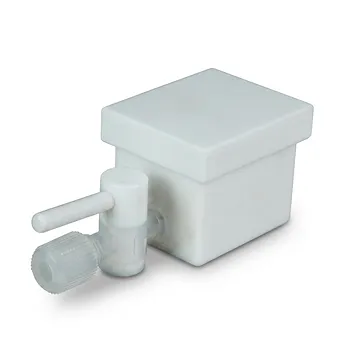
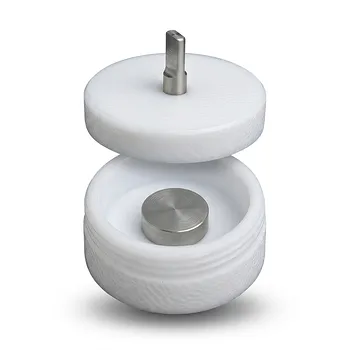
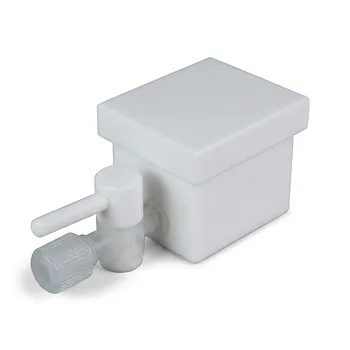
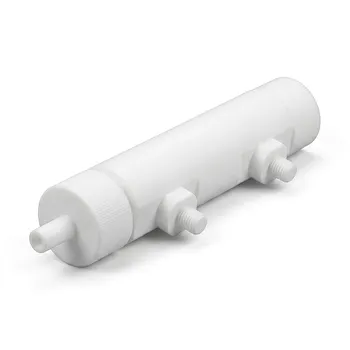
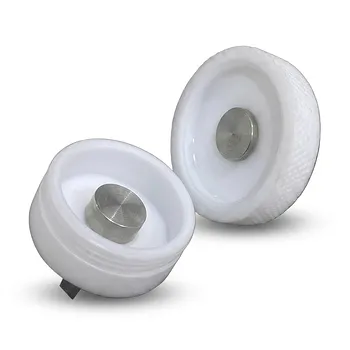
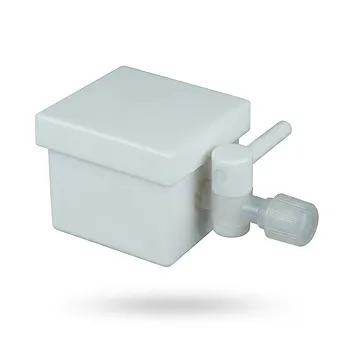
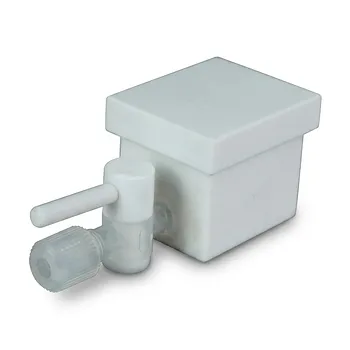
The two-electrode electrochemical test cell serves as the bridge between material synthesis and practical device application. By simulating the actual configuration of a commercial supercapacitor, this setup allows researchers to measure critical parameters like specific capacitance, coulombic efficiency, and internal resistance (IR drop). This realistic environment is essential for validating how modifications, such as thioacetamide doping, translate into improved charge transport kinetics and overall energy storage capacity.
A two-electrode test cell provides the most accurate reflection of a material’s real-world potential by evaluating it within a complete device circuit. While three-electrode setups probe individual material properties, the two-electrode configuration measures the collective performance and efficiency necessary for commercial viability.
Simulating Real-World Operating Environments
Realistic Device Configuration
Unlike a three-electrode setup that uses a reference electrode to isolate a single material, the two-electrode configuration mimics the assembly of a functional supercapacitor. This ensures that the interaction between the positive and negative electrodes, the separator, and the electrolyte is captured accurately.
Validating Doping Enhancements
Researchers use this cell to perform galvanostatic charge-discharge (GCD) analysis, which is the industry standard for determining performance. This analysis directly quantifies how chemical modifications, such as doping nanomaterials, enhance the rate at which ions move through the electrode structure.
Quantifying Energy Losses
The two-electrode cell is uniquely suited to measuring the IR drop, which represents the immediate voltage loss when current starts to flow. By analyzing this drop, scientists can determine if doping has successfully lowered the material's internal resistance, leading to higher power delivery.
Optimizing Accuracy Through Fixture Design
Minimizing Equivalent Series Resistance (ESR)
High-performance test fixtures are engineered to provide low-impedance electrical connections between the current collectors and the doped electrodes. Minimizing ESR is critical because any parasitic resistance from the test cell itself would mask the true performance of the nanomaterials.
Ensuring Uniform Current Distribution
Specialized fixtures apply stable contact pressure across the entire surface of the electrode. This mechanical support ensures that the current is distributed evenly, preventing "hot spots" that could lead to inaccurate gravimetric capacitance readings.
Preventing Electrolyte Evaporation
The precision design of modern test cells includes hermetic sealing to prevent electrolyte evaporation during long-term cycling. Maintaining a constant electrolyte volume is vital for ensuring the reproducibility of data and the accuracy of long-term stability tests.
Understanding the Trade-offs
Device vs. Material Focus
The primary trade-off of the two-electrode system is that it measures the entire cell's performance, which can sometimes obscure the specific electrochemical behavior of a single electrode. If one electrode performs significantly worse than the other, the two-electrode test will reflect the "weakest link" rather than the potential of the superior material.
Complexity in Kinetic Analysis
While excellent for assessing power and energy density, two-electrode cells make it harder to calculate the absolute potential of each electrode. Researchers often need to complement these tests with three-electrode studies to understand the fundamental redox mechanisms of a new doped nanomaterial.
Sensitivity to Mass Loading
Measurements in a two-electrode cell are highly sensitive to the mass balance between the two electrodes. If the active material is not distributed perfectly, the resulting data may underrepresent the material's true gravimetric performance.
How to Apply This to Your Project
When utilizing a two-electrode test cell for doped nanomaterials, your choice of methodology should align with your ultimate research goal:
- If your primary focus is commercial viability: Prioritize two-electrode GCD testing at varying current densities to determine the material’s rate capability in a real-world form factor.
- If your primary focus is understanding doping mechanisms: Use a three-electrode setup first to isolate the material's redox potential before moving to a two-electrode cell for device-level validation.
- If your primary focus is high-power performance: Invest in high-precision fixtures with low ESR to ensure that the measured internal resistance reflects the material's properties rather than the test hardware's limitations.
By selecting the appropriate cell configuration and hardware, you ensure that your performance data is both scientifically rigorous and practically relevant.
Summary Table:
| Feature | Benefit for Supercapacitor Testing | Key Metrics Measured |
|---|---|---|
| Realistic Configuration | Mimics commercial device assembly and interactions | Collective device performance |
| GCD Analysis | Validates doping effects on ion transport kinetics | Specific capacitance & efficiency |
| IR Drop Measurement | Quantifies energy losses and internal resistance | Power delivery & material ESR |
| Low-Impedance Fixtures | Minimizes parasitic resistance from hardware | Accurate material resistance |
| Hermetic Sealing | Prevents electrolyte evaporation during cycling | Long-term stability & reproducibility |
Elevate Your Electrochemical Research with KINTEK
Precision in material science starts with the right equipment. KINTEK provides an exhaustive range of high-performance laboratory supplies crafted exclusively from PTFE and PFA to ensure chemical inertness and zero contamination in your most sensitive tests.
Whether you need everyday basic labware like beakers, crucibles, and reagent bottles, or specialized components for fluid transfer and sample preparation—including high-purity tubing, filters, and pipettes—we have you covered. For researchers focusing on energy storage, we offer advanced reaction apparatus, custom electrochemical cells, battery testing fixtures, and microwave digestion vessels designed to withstand rigorous testing environments.
Our end-to-end custom CNC fabrication allows us to deliver everything from complex, non-standard machined parts to high-volume orders tailored to your specific project needs. Trust KINTEK to provide the durability and precision your doped nanomaterial research deserves.
Ready to optimize your lab setup? Contact us today to discuss your custom requirements!
References
- Anand Gaspar, M. Sathish. Thioacetamide-Doped Zinc Nitrate Hexahydrate Nanostructures: Hydrothermal Synthesis and Characterization. DOI: 10.14233/ajchem.2025.34344
This article is also based on technical information from Kintek Knowledge Base .
Related Products
- Corrosion Resistant PTFE Electrochemical Cell for New Energy Research Inert Insulating Customizable Lab Reaction Vessel
- Custom PTFE Reaction Box Opaque White Square Electrochemical Cell Tank
- Custom PTFE Electrolytic Cell Corrosion Resistant Low Background Reaction Vessel with Inlet Outlet Ports
- Custom PTFE Corrosion Resistant Insulating Electrophoresis Reaction Cell with Septum and Valves for Low Background Trace Analysis
- Acid Resistant PTFE Button Cell Battery Test Fixture Customizable Machining High Purity Electrochemical Testing Clamp
People Also Ask
- What parameters govern the electrochemical decomposition of perfluorooctanoic acid (PFOA) in aqueous solutions, and why are custom PTFE electrochemical cells preferred? Key factors include anode material, current density, electrolyte, and cell design.
- How do custom PTFE electrochemical cells improve the accuracy of stability testing for alkaline catalysts compared to glass cells?
- How does the hydrophobicity of PTFE benefit electrochemical measurements? Enhance Stability and Precision in Your Lab
- What makes PTFE an ideal construction material for custom electrochemical cells and electronic analytical instrumentation housings? Discover superior chemical resistance and electrical insulation
- Why must seawater electrolysis test cells have high corrosion resistance? Protect catalyst stability & data accuracy.