The configuration of a three-electrode testing cell for hydrogen storage relies on isolating the working electrode's potential to ensure precise measurement. This setup consists of a working electrode (the storage material), a platinum auxiliary electrode to complete the circuit, and a reference electrode (such as Ag/AgCl) to provide a stable potential benchmark. By separating the current-carrying path from the potential-sensing path, the system eliminates interference from electrode polarization, allowing for the accurate characterization of hydrogen evolution and storage capacities.
The core advantage of a three-electrode configuration is its ability to provide an unbiased window into the electrochemical behavior of a specific material. By decoupling the working electrode from the counter electrode's influence, researchers can measure true thermodynamic and kinetic data essential for optimizing hydrogen storage performance.
The Architecture of the Three-Electrode System
The Working Electrode (WE)
The working electrode is the heart of the test, containing the active hydrogen storage material, such as metal-organic frameworks or composite oxides. This material is typically loaded onto a conductive substrate, like nickel mesh, which provides high surface area and excellent electrical contact.
The Auxiliary or Counter Electrode (CE)
The auxiliary electrode, often a platinum (Pt) plate, wire, or mesh, serves as the second terminal to complete the electrical circuit. Its primary role is to support the current flow required by the working electrode without limiting the system's overall reaction rate.
The Reference Electrode (RE)
The reference electrode (commonly Ag/AgCl, Saturated Calomel, or Mercuric Oxide) maintains a constant, known chemical potential. Because negligible current flows through this electrode, it provides a stable "ground truth" against which the working electrode's potential is measured and controlled.
The Role of the Electrolyte and Environment
Selecting the Electrolytic Medium
For hydrogen storage evaluations, a 2 M KOH alkaline electrolyte is frequently used to facilitate the hydrogen evolution and absorption reactions. The choice of electrolyte is critical, as it must support ion transport while remaining chemically compatible with the storage material.
Cell Material Integrity
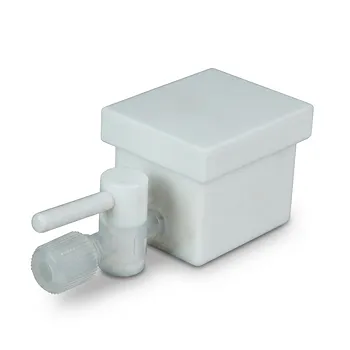
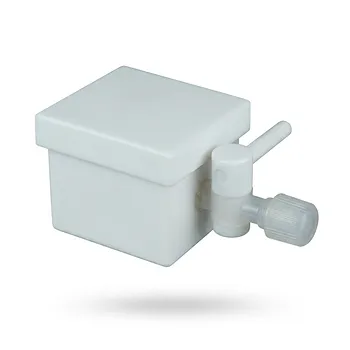
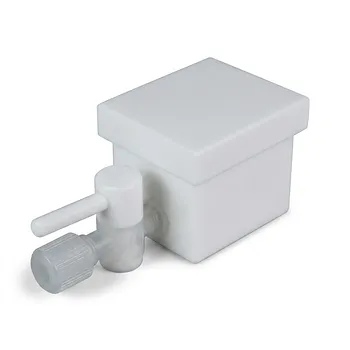
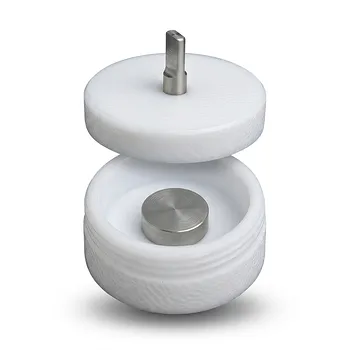
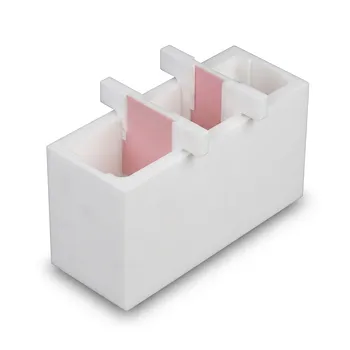
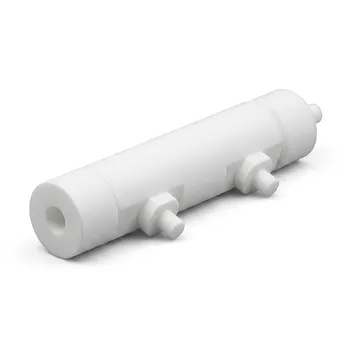
The testing vessel itself is often constructed from high-purity quartz or corrosion-resistant polymers like PTFE (Teflon). These materials ensure that the cell can withstand aggressive acidic or alkaline environments without introducing contaminants that could skew the results.
Precision Control via Potentiostat
An electrochemical workstation (potentiostat) manages the interface between these three electrodes. It dynamically adjusts the voltage between the WE and RE to match the user's settings while measuring the resulting current flowing between the WE and CE.
Understanding the Trade-offs and Challenges
Reference Electrode Compatibility
A common pitfall is using a reference electrode that is chemically incompatible with the electrolyte. For instance, while Ag/AgCl is versatile, using it in certain high-pH or high-temperature environments without a salt bridge can lead to potential drift or contamination of the cell with chloride ions.
Internal Resistance (iR Drop)
Even with a three-electrode setup, the physical distance between the reference electrode and the working electrode can introduce internal resistance (iR drop). If the reference electrode is placed too far away, the measured potential will include a voltage drop caused by the electrolyte’s resistance, leading to inaccurate kinetic data.
Counter Electrode Polarization
While the three-electrode setup minimizes the impact of counter electrode polarization on your measurements, the CE must still have a significantly larger surface area than the working electrode. If the CE is too small, it may become the rate-limiting factor of the experiment, potentially causing the system to reach its voltage compliance limit.
How to Apply This to Your Research
Implementing the Correct Configuration
- If your primary focus is maximum measurement accuracy: Utilize a Luggin capillary to place the reference electrode tip as close to the working electrode as possible to minimize iR drop.
- If your primary focus is testing in extreme pH levels: Ensure your reference electrode is specifically rated for that environment, such as using a Mercuric Oxide (Hg/HgO) electrode for highly alkaline (KOH) solutions.
- If your primary focus is long-term stability testing: Use a platinum mesh for the counter electrode to provide a massive surface area, ensuring that the counter reaction never restricts the study of your storage material.
By carefully balancing electrode selection and cell geometry, you can transform a standard electrochemical test into a definitive evaluation of hydrogen storage potential.
Summary Table:
| Component | Role | Recommended Materials |
|---|---|---|
| Working Electrode (WE) | Hosts the hydrogen storage material | Storage material on nickel mesh or conductive substrate |
| Counter Electrode (CE) | Completes the circuit for current flow | Platinum (Pt) plate, wire, or mesh (large surface area) |
| Reference Electrode (RE) | Provides stable potential benchmark | Ag/AgCl, Hg/HgO (alkaline), or Saturated Calomel |
| Electrolyte | Facilitates ion transport | 2 M KOH (alkaline) or specific acidic media |
| Cell Vessel | Contains the reaction environment | High-purity PTFE, PFA, or Quartz for corrosion resistance |
Achieve Unmatched Precision in Electrochemical Research with KINTEK
Precise hydrogen storage evaluation demands more than just a standard setup—it requires high-performance materials that resist corrosion and eliminate contamination. KINTEK specializes in manufacturing virtually all imaginable laboratory supplies crafted from PTFE and PFA, ensuring your testing environment remains inert and reliable.
From everyday basic labware like beakers, crucibles, and reagent bottles to advanced standard or custom electrochemical cells, battery testing fixtures, and electrode accessories, we provide the tools necessary for high-accuracy research. Our expertise extends to high-purity trace analysis instruments, sample prep tools, and comprehensive fluid transfer components (tubing, fittings, valves).
Why choose KINTEK?
- Custom Fabrication: Backed by end-to-end custom CNC fabrication, we deliver everything from complex non-standard machined parts to bespoke laboratory setups.
- Material Focus: An exclusive focus on high-performance fluoropolymers for maximum chemical resistance.
- Scalability: We maintain high-volume orders without compromising on precision.
Ready to optimize your lab’s hydrogen storage testing? Contact KINTEK today to discuss your custom project or explore our extensive catalog of high-performance labware.
References
- Maryam Ghiyasiyan-Arani. Effect of different alcoholic solvents on the structural and electrochemical characteristics of NH4V4O10/carbon sphere composites for hydrogen storage application. DOI: 10.1007/s13201-025-02496-0
This article is also based on technical information from Kintek Knowledge Base .
Related Products
- Custom PTFE Corrosion Resistant Insulating Electrophoresis Reaction Cell with Septum and Valves for Low Background Trace Analysis
- Flame Retardant Electrophoresis Cell Corrosion Resistant PTFE Evaporating Dish Customizable White Hydrolysis Cell
- Custom PTFE Laboratory Apparatus Corrosion Resistant Low Background Reaction Cells Precision CNC Fabrication
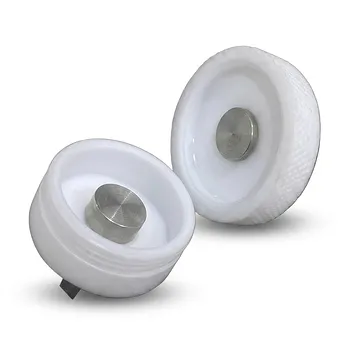
- Acid Resistant PTFE Button Cell Battery Test Fixture Customizable Machining High Purity Electrochemical Testing Clamp
- White PTFE Electrolytic Cell with Movable Slider and Insulated Lid for Fluorine Corrosion Resistance
People Also Ask
- What industries benefit most from custom PTFE parts? Solve Extreme Environment Challenges
- What industries use custom PTFE parts and for what purposes? Solve Critical Challenges with High-Performance Materials
- What design considerations are important for custom PTFE parts? Design for Performance & Reliability
- What advantages do custom PTFE parts offer for industrial efficiency? Boost Uptime & Cut Costs
- What are the key properties of Teflon (PTFE) used in custom parts? | Achieve Peak Performance