The integrity of supercapacitor research depends on the physical interface. High-performance electrochemical testing fixtures act as the bridge between material chemistry and electrical measurement by providing uniform mechanical pressure and low-impedance connections. By minimizing parasitic resistance and ensuring a sealed environment, these fixtures isolate the material's intrinsic properties from experimental "noise," allowing for precise evaluation of energy density, power characteristics, and cycle life.
High-performance fixtures ensure that the measured electrochemical performance reflects the true capabilities of the active material rather than the limitations of the testing environment. By stabilizing the physical and chemical conditions of the test, they provide the accuracy necessary for valid material characterization.
Minimizing Parasitic Impedance for Data Accuracy
The Critical Role of ESR Reduction
High-performance fixtures are engineered to minimize Equivalent Series Resistance (ESR) by ensuring low-impedance electrical connections between the current collectors and electrodes. This is essential for capturing the true rate characteristics of a material, particularly under high current densities where even minor resistance can lead to significant voltage drops.
Ensuring Uniform Current Distribution
Precise mechanical design allows for uniform current distribution across the electrode surface during Galvanostatic Charge-Discharge (GCD) testing. Without this uniformity, measurements of gravimetric capacitance and internal resistance (IR drop) become unreliable, as localized current bottlenecks can skew the resulting data.
Enhancing Electrical Contact Stability
By providing stable contact pressure, these fixtures prevent fluctuations in electrical contact during the expansion and contraction of materials during cycling. This stability is vital for identifying the precise charge transport kinetics and the impact of specific material modifications, such as chemical doping.
Creating a Stable and Inert Testing Environment
Preventing Electrolyte Loss and Contamination
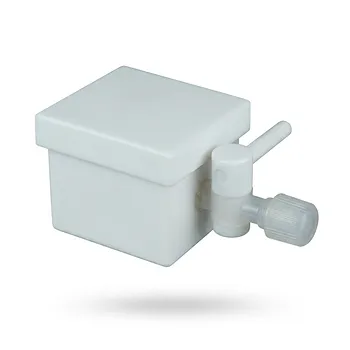
Advanced fixtures, such as Swagelok-type modules, utilize high-precision seals to create an airtight environment. This prevents electrolyte evaporation and protects the system from atmospheric interference, which is critical for maintaining the chemical balance required for long-term cycle life testing.
Utilizing Chemically Inert Materials
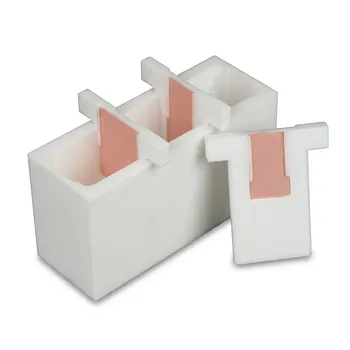
The use of high-performance fluoropolymers like PTFE and PFA ensures that the fixture itself does not participate in the electrochemical reaction. These materials offer excellent dielectric properties and chemical resistance, ensuring that the collected data is derived solely from the active materials under study.
Simulating Real-World Operating Conditions
A dedicated two-electrode testing cell simulates the internal environment of a functional supercapacitor device. This allows researchers to accurately measure coulombic efficiency and power density in a configuration that closely mirrors how the material will perform in a final commercial product.
Understanding the Trade-offs and Limitations
Pressure Sensitivity and Material Deformation
While high mechanical pressure reduces contact resistance, excessive force can damage sensitive separators or deform porous carbon structures. It is critical to find an adjustable pressure balance that minimizes resistance without compromising the physical integrity of the material layers.
Complexity Versus Reproducibility
More sophisticated fixtures offer better control but often require meticulous assembly and cleaning protocols. If the assembly process is not highly standardized, the complexity of the fixture can introduce new variables that negatively impact the reproducibility of the experimental data.
Cost and Material Compatibility
Custom-made fluoropolymer cells and specialized high-seal modules represent a significant investment compared to standard lab glassware. Furthermore, some specialized electrolytes may still interact with certain sealing gaskets, requiring careful compatibility verification before beginning long-term studies.
Making the Right Choice for Your Goal
To ensure your electrochemical data is both accurate and reproducible, select your fixture based on the specific metrics you need to validate.
- If your primary focus is high-rate performance: Utilize fixtures with the lowest possible lead resistance and optimized contact pressure to ensure that measured ESR reflects material limits rather than setup resistance.
- If your primary focus is long-term cycle stability: Prioritize high-seal fixtures made of inert materials like PTFE to prevent electrolyte leakage and secondary side reactions over thousands of cycles.
- If your primary focus is gravimetric capacitance accuracy: Choose fixtures that ensure uniform current distribution and prevent electrolyte evaporation, which can otherwise lead to false readings in material mass-specific performance.
Reliable material evaluation begins with a fixture that effectively isolates the chemistry from the environment.
Summary Table:
| Key Function | Impact on Research Performance | Recommended Feature/Material |
|---|---|---|
| ESR Reduction | Captures true rate characteristics at high current | Low-impedance electrical contacts |
| Uniform Pressure | Ensures reliable gravimetric capacitance & IR drop | Adjustable mechanical loading |
| Airtight Sealing | Prevents electrolyte loss & atmospheric interference | Swagelok-type modules |
| Chemical Inertness | Eliminates secondary reactions & contamination | High-performance PTFE / PFA |
| Contact Stability | Maintains data integrity during material cycling | Precision CNC-machined components |
Precision Engineering for Your Electrochemical Research
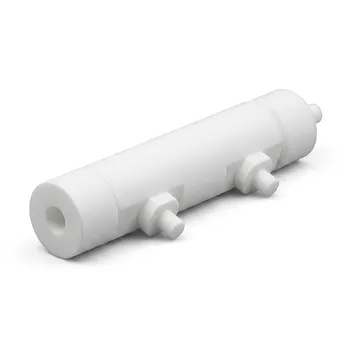
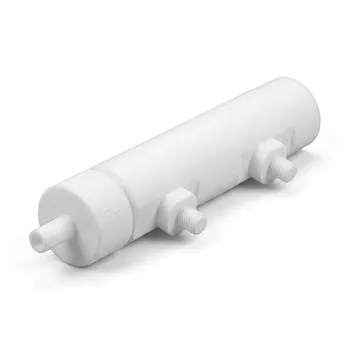
At KINTEK, we understand that the integrity of your supercapacitor research depends on the physical interface. We specialize in transforming high-performance fluoropolymers into the precision tools your lab requires. From everyday basic labware like PTFE beakers, crucibles, and reagent bottles to advanced standard or custom electrochemical cells and battery testing fixtures, KINTEK manufactures virtually all imaginable laboratory supplies crafted from PTFE and PFA.
Whether you need high-purity trace analysis instruments, comprehensive fluid transfer components (tubing, fittings, valves), or bespoke hydrothermal synthesis liners and microwave digestion vessels, our end-to-end custom CNC fabrication is ready to deliver. We maintain an exclusive focus on high-performance materials to ensure your results are driven by chemistry, not experimental noise.
Ready to elevate your material characterization? Contact KINTEK today for custom-machined parts and high-volume fluoropolymer solutions!
References
- Perseverance Dzikunu, Pedro Vilaça. Waste-to-carbon-based supercapacitors for renewable energy storage: progress and future perspectives. DOI: 10.1007/s40243-024-00285-4
This article is also based on technical information from Kintek Knowledge Base .
Related Products
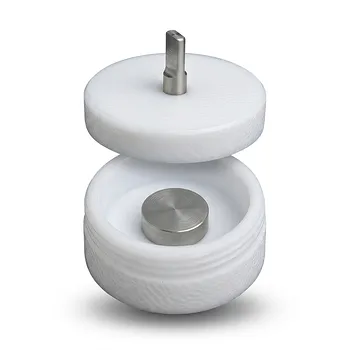
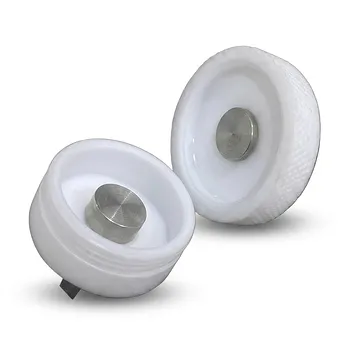
- Acid Resistant PTFE Button Cell Battery Test Fixture Customizable Machining High Purity Electrochemical Testing Clamp
- Corrosion Resistant PTFE Coin Cell Battery Testing Clamps and Acid Proof Custom Fluoropolymer Battery Fixtures
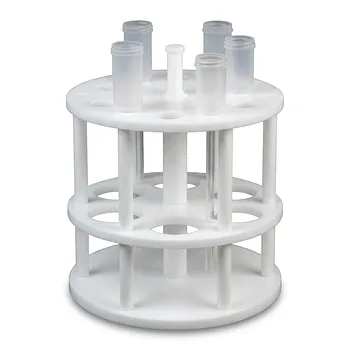
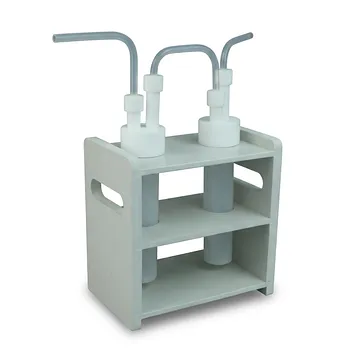
- Custom PFA Microcolumn Racks and PTFE Machined Low Background Corrosion Resistant Laboratory Fixtures
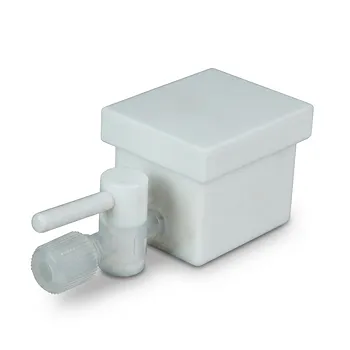
- Corrosion Resistant PTFE Electrochemical Cell for New Energy Research Inert Insulating Customizable Lab Reaction Vessel
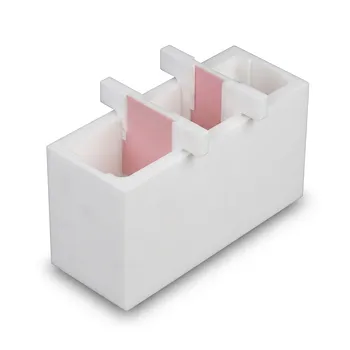
- White PTFE Electrolytic Cell with Movable Slider and Insulated Lid for Fluorine Corrosion Resistance
People Also Ask
- How does the chemical inertness of PTFE benefit laboratory-scale battery testing? Ensure high-purity research results.
- In what ways do PTFE battery testing fixtures enhance laboratory throughput and reliability? Maximize Research Efficiency
- In what industrial manufacturing contexts are PTFE battery clamps or fixtures utilized? Optimize Battery Production.
- What is the thermal operating range for PTFE battery clamps in electrochemical research? Stability from -200°C to +260°C
- What are the primary functions and material compositions of PTFE battery clamps? Ensure Precision & Chemical Resistance