The accuracy of Urea Oxidation Reaction (UOR) measurements is achieved through the synergy of high-precision electronic control and a chemically inert, geometrically optimized physical environment. Electrochemical workstations provide the necessary potential and current regulation to perform Linear Sweep Voltammetry (LSV), while specialized cells maintain the structural stability of the three-electrode system. This combination allows researchers to capture specific performance metrics for MoNiP@CeP2/NF catalysts, such as an overpotential of 0.99 V at 50 mA·cm⁻² and precise Tafel slopes, which are essential for evaluating the kinetic impact of Cerium (Ce) doping.
Accurate UOR performance evaluation requires a "system-level" approach where the workstation ensures signal integrity and the electrolytic cell provides a stable, interference-free environment for the catalyst. This integration is critical for distinguishing between the inherent activity of the MoNiP@CeP2/NF catalyst and external experimental variables.
High-Precision Signal Acquisition and Control
Executing Advanced Electrochemical Protocols
Modern workstations utilize high-precision control to perform Linear Sweep Voltammetry (LSV) and Cyclic Voltammetry (CV) in specific electrolytes, such as 3 M KOH with 0.6 M urea. These protocols are necessary to map the relationship between potential and current density, revealing the catalyst's onset potential and peak activity.
Capturing Kinetic Parameters
The workstation must be sensitive enough to detect subtle differences in Tafel slopes, which indicate the rate-determining step of the UOR process. For MoNiP@CeP2/NF, this precision is vital to quantify how Cerium (Ce) doping modifies the electronic structure and enhances reaction kinetics.
The Role of the Three-Electrode System
Eliminating Polarization Errors
The testing system physically separates the working electrode (MoNiP@CeP2/NF), the reference electrode (e.g., Ag/AgCl or Hg/HgO), and the counter electrode (e.g., graphite rod or Pt wire). This configuration ensures that the measured potential is not distorted by the current flowing through the circuit, preventing polarization errors.
Maintaining Potential Stability
Specialized cells ensure that the working electrode's potential remains constant relative to the reference electrode. This stability allows for the accurate conversion of measured potentials to the Reversible Hydrogen Electrode (RHE) scale, which is the standard for comparing UOR activity across different research papers.
Optimizing the Physical Reaction Environment
Material Integrity and Impurity Prevention
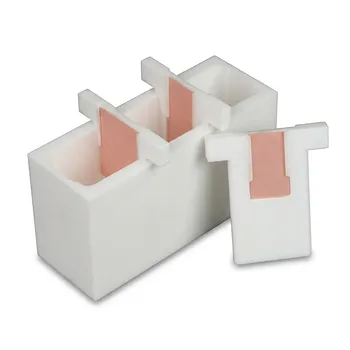
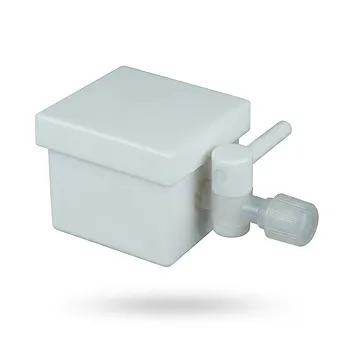
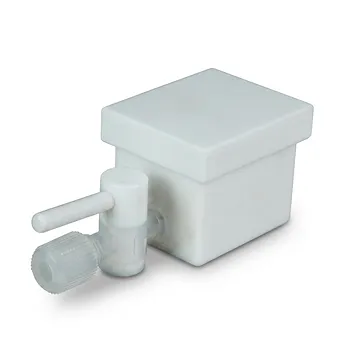
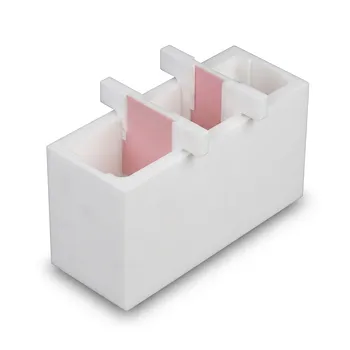
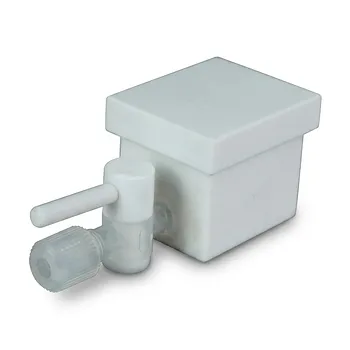
Cells crafted from high-performance fluoropolymers (PTFE/PFA) or high-purity glass prevent the infiltration of external impurity ions. This chemical resistance is crucial when working with strong alkaline electrolytes like 3 M KOH, which can degrade inferior materials and contaminate the catalyst surface.
Uniform Current and Fluid Distribution
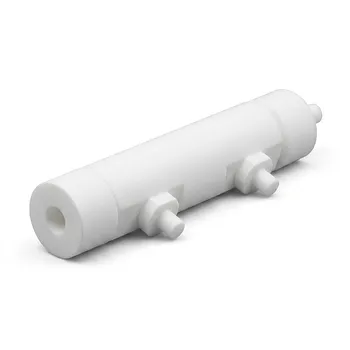
Precisely designed fluid channels and electrode spacing within the cell promote uniform electrolyte flow. This ensures a consistent current distribution across the Nickel Foam (NF) substrate, preventing localized "hot spots" that could lead to inaccurate overpotential readings.
Managing Gas Evolution
UOR involves the evolution of gases which can form bubbles on the catalyst surface. Specialized cell designs help manage these bubbles, preventing them from masking active sites and causing abnormal overpotential increases during long-term stability tests.
Understanding the Trade-offs and Limitations
The Challenge of Ohmic Resistance
Despite optimized geometry, uncompensated ohmic resistance (iR drop) between the working and reference electrodes can still occur. While workstations can compensate for this mathematically, excessive physical distance in the cell can lead to signal noise and data distortion.
Reference Electrode Drift
In highly concentrated alkaline environments (3 M KOH), reference electrodes can experience potential drift over long periods. Frequent calibration against a standard hydrogen electrode is necessary to ensure that long-term stability data (exceeding 1000 hours) remains valid.
Bubble Accumulation on Porous Substrates
While NF-based catalysts like MoNiP@CeP2/NF offer high surface area, their porous nature can trap gas bubbles more easily than flat electrodes. If the cell does not facilitate adequate electrolyte circulation, the apparent activity of the catalyst may appear lower than its true intrinsic activity.
How to Apply This to Your Research
Recommendations for Targeted Goals
- If your primary focus is Kinetic Analysis: Prioritize a workstation with high sampling rates and low-current sensitivity to accurately determine Tafel slopes and exchange current densities.
- If your primary focus is Industrial Scalability: Use a flow-cell configuration that mimics industrial conditions, ensuring that mass transport of urea does not become the limiting factor.
- If your primary focus is Long-term Durability: Utilize a PTFE-based H-type cell to prevent impurity leaching and ensure the reference electrode is physically isolated from the gas-evolving working electrode.
By meticulously balancing workstation precision with the physical design of the electrolytic cell, researchers can obtain the definitive data required to validate high-performance catalysts like MoNiP@CeP2/NF.
Summary Table:
| Feature | System Component | Impact on UOR Accuracy |
|---|---|---|
| Signal Control | Electrochemical Workstation | Ensures precise LSV protocols and accurate Tafel slope detection. |
| Material Integrity | PTFE/PFA Electrolytic Cells | Prevents impurity leaching and contamination in 3M KOH electrolytes. |
| Error Elimination | Three-Electrode Configuration | Separates potential/current paths to prevent polarization errors. |
| Fluid Dynamics | Optimized Cell Geometry | Manages gas bubble evolution and ensures uniform current distribution. |
Elevate Your Electrochemical Research with KINTEK Precision
Ensure the absolute integrity of your UOR performance data with KINTEK’s high-performance laboratory solutions. We specialize in crafting the chemically inert environments necessary for advanced catalyst evaluation, providing everything from everyday basic labware (beakers, crucibles, reagent bottles) to high-purity trace analysis instruments and comprehensive fluid transfer components (tubing, fittings, valves).
Our expertise extends to advanced reaction apparatus, including standard or custom electrochemical cells, battery testing fixtures, and electrode accessories specifically designed to withstand harsh alkaline conditions. Whether you require high-volume orders of general consumables like stirring bars and O-rings, or complex non-standard machined parts via our end-to-end custom CNC fabrication, KINTEK maintains an exclusive focus on high-performance fluoropolymer materials (PTFE/PFA).
Ready to build a stable, interference-free testing environment for your MoNiP@CeP2/NF research?
Contact our fluoropolymer experts today to discuss your bespoke laboratory setup!
References
- Zhepeng Zhao, Bo Hai. Study on the Preparation and UOR Catalytic Performance of Cerium-Doped MoNiP. DOI: 10.1051/e3sconf/202566601009
This article is also based on technical information from Kintek Knowledge Base .
Related Products
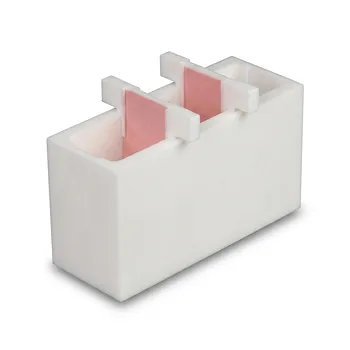
- White PTFE Electrolytic Cell with Movable Slider and Insulated Lid for Fluorine Corrosion Resistance
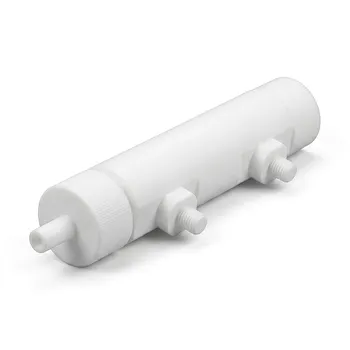
- Custom PTFE Electrolytic Cell Corrosion Resistant Low Background Reaction Vessel with Inlet Outlet Ports
- Customizable PFA Square Tray Corrosion Resistant High Temperature Large Petri Dish Electrolytic Cell
- Square PTFE Electrochemical Cell for Silicon Wafer Processing and Hydrofluoric Acid Resistance in Semiconductor and New Energy Research
- High Purity Custom PTFE Reaction Cell Electrolytic Tank for Semiconductor and Polysilicon Industrial Applications
People Also Ask
- What makes PTFE an ideal construction material for custom electrochemical cells and electronic analytical instrumentation housings? Discover superior chemical resistance and electrical insulation
- How do custom PTFE electrochemical cells improve the accuracy of stability testing for alkaline catalysts compared to glass cells?
- What parameters govern the electrochemical decomposition of perfluorooctanoic acid (PFOA) in aqueous solutions, and why are custom PTFE electrochemical cells preferred? Key factors include anode material, current density, electrolyte, and cell design.
- How does the hydrophobicity of PTFE benefit electrochemical measurements? Enhance Stability and Precision in Your Lab
- How are electrolytic cells utilized in the Hall-Héroult process? Optimizing Purity and Energy Efficiency