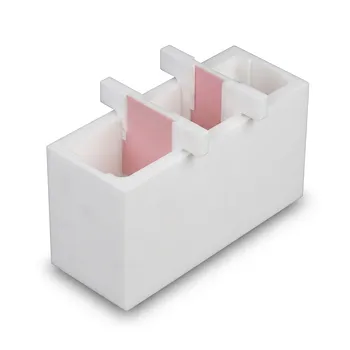
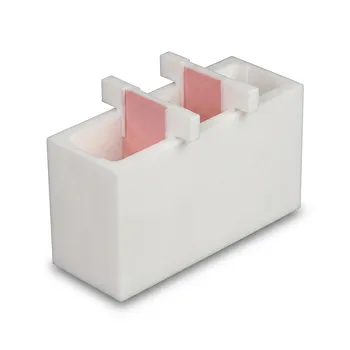
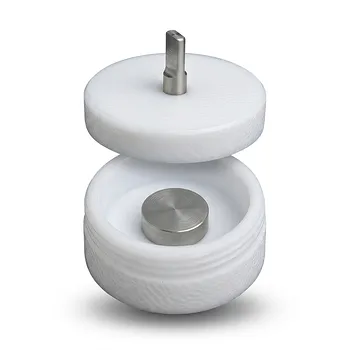
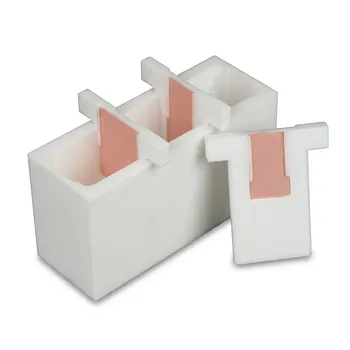
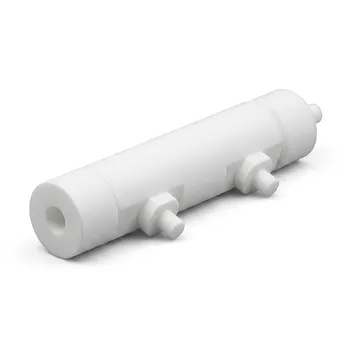
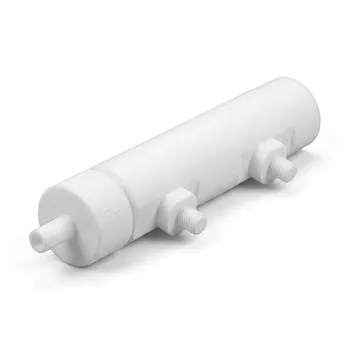
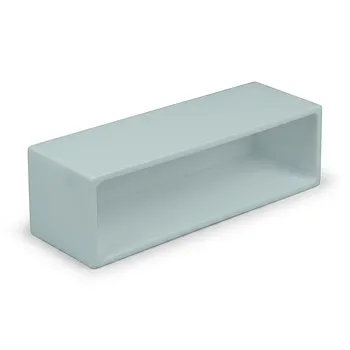
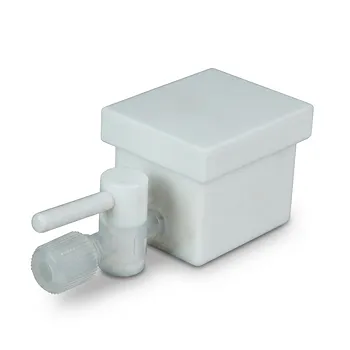
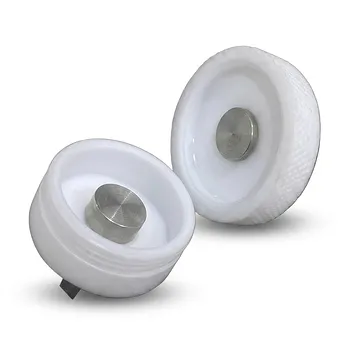
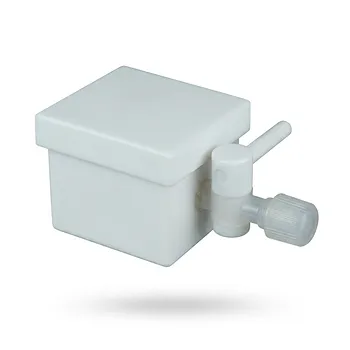
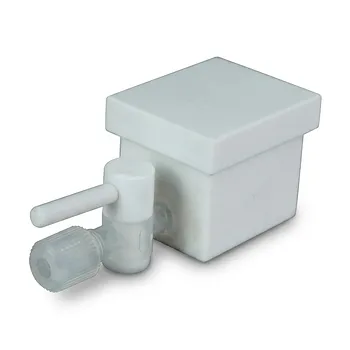
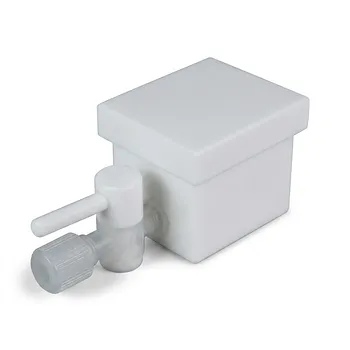
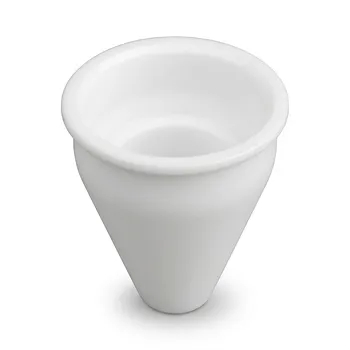
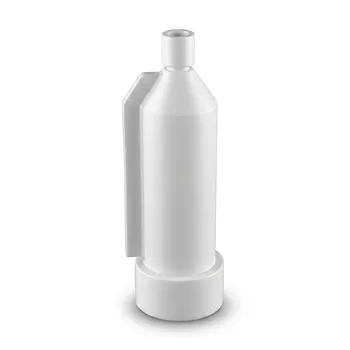
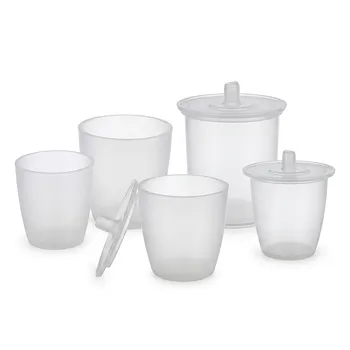
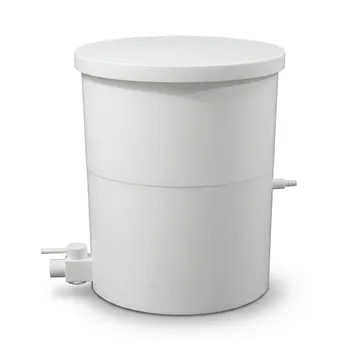
PTFE two-chamber electrochemical cells are preferred for testing 2DCP membranes because they provide the necessary chemical inertness and electrical insulation required for extreme testing conditions. These cells withstand the harsh pH environments and high-concentration salt solutions essential for evaluating osmotic power generation while ensuring that the measurements of transmembrane current and voltage remain accurate and repeatable.
Core Takeaway: PTFE is the gold standard for osmotic power testing because it creates a chemically and electrically "silent" environment, ensuring that the recorded data reflects the membrane's performance rather than interference from the test cell itself.
Superior Chemical and Thermal Stability
Resistance to Extreme pH Environments
Testing 2DCP membranes often requires exposure to highly acidic or basic solutions to determine their operational limits. PTFE is exceptionally resistant to corrosion from strong alkalis (like 1 M KOH) and concentrated acids, which would degrade standard plastic or metal containers.
Endurance in High-Concentration Salts
Osmotic power generation relies on significant concentration gradients, often using high-concentration salt solutions like 1 M KCl or NaCl. PTFE remains chemically inert in these environments, preventing the material from leaching impurities that could interfere with the catalyst's true activity or the membrane's ion selectivity.
High Thermal Resilience
Some osmotic tests are conducted at elevated temperatures to simulate real-world industrial environments. PTFE can maintain its structural integrity and chemical resistance even when exposed to heated electrolytes (up to 80 °C) for extended periods.
Precision in Electrical and Ion Transport Measurement
Wide Electrochemical Window
PTFE possesses a very wide electrochemical window, meaning it does not participate in redox reactions during testing. This ensures that the measured current is purely a result of ion transport through the 2DCP membrane rather than secondary reactions on the cell walls.
Superior Electrical Insulation
The material’s high electrical resistivity prevents leakage currents from bypassing the membrane. This insulation is critical for obtaining a high signal-to-noise ratio, which is necessary for the precise measurement of small transmembrane potentials and short-circuit currents.
Eliminating External Ion Interference
Because PTFE is non-reactive and does not leach metal ions, it ensures the purity of the electrolyte. This prevents external ions from competing with the test ions, allowing researchers to accurately assess the 2DCP membrane’s intrinsic ion-sieving capabilities.
Mechanical Reliability and Sealing
Precision Machining for Exact Geometry
Customized PTFE cells allow for high-precision machining, which ensures exact electrode spacing and fixed geometric constraints. Consistent spacing is vital for the repeatability of Electrochemical Impedance Spectroscopy (EIS) and conductivity measurements.
Leak-Proof Sealing Performance
The two-chamber design requires a perfect seal to prevent the mixing of high and low-concentration solutions. PTFE gaskets and structures provide superior leak-proof performance, ensuring that the concentration gradient—the driving force of osmotic power—remains stable throughout the experiment.
Prevention of Electrolyte Evaporation
The tight seals achievable with precision-machined PTFE prevent electrolyte evaporation. This is crucial for long-term stability tests, as changes in concentration due to evaporation would lead to inaccurate power density calculations.
Understanding the Trade-offs
Cost and Machining Complexity
While PTFE is highly effective, it is more expensive than standard polymers like acrylic or polypropylene. Additionally, its soft nature requires specialized machining techniques to ensure that threads and sealing surfaces do not deform under high pressure.
Mechanical Softness
PTFE is prone to "creep" or cold flow under heavy mechanical loads over time. If the cell is over-tightened, the sealing surfaces may permanently deform, potentially requiring the replacement of components to maintain a leak-proof environment.
How to Apply This to Your Research
Making the Right Choice for Your Goal
- If your primary focus is long-term durability: Use high-purity PTFE or PFA cells to ensure the housing survives months of exposure to corrosive 2 M KOH or acidic media.
- If your primary focus is measurement precision: Prioritize custom-machined PTFE cells with fixed electrode holders to eliminate variables caused by shifting electrode geometry.
- If your primary focus is preventing contamination: Select PTFE specifically to avoid metal ion leaching, which is essential when characterizing the fundamental ion-transport physics of new 2DCP materials.
By utilizing PTFE test cells, researchers ensure that the measured osmotic performance is a definitive reflection of the membrane's properties, free from the artifacts of chemical corrosion or electrical leakage.
Summary Table:
| Key Feature | Advantage for Research | Impact on Data Accuracy |
|---|---|---|
| Chemical Inertness | Resists 1M KOH/KCl and concentrated acids | Prevents contamination and cell degradation |
| Electrical Insulation | Wide electrochemical window; high resistivity | Eliminates leakage current and signal noise |
| Thermal Stability | Maintains integrity up to 80 °C | Allows for high-temperature osmotic simulation |
| Precision Machining | Custom geometry and leak-proof seals | Ensures stable concentration gradients and repeatability |
Elevate Your Research Precision with KINTEK Fluoropolymer Solutions
To achieve definitive results in osmotic power generation and membrane characterization, your hardware must be as advanced as your materials. KINTEK specializes in high-performance PTFE and PFA laboratory supplies designed to create a chemically and electrically "silent" environment for your most sensitive experiments.
Our extensive catalog ranges from everyday basic labware (beakers, measuring cylinders, crucibles, dishes, reagent/wash bottles, centrifuge and digestion tubes) and high-purity trace analysis instruments to comprehensive fluid transfer components (tubing, fittings, valves). We provide expert-grade sample prep and filtration tools (separatory funnels, burettes, filters, pipettes, tweezers, spatulas) and general consumables (stirring bars, O-rings, gaskets, seal tapes, caps, septa).
For researchers working on 2DCP membranes, we offer advanced derivative and reaction apparatus, including standard or custom electrochemical cells, battery testing fixtures, electrode accessories, hydrothermal synthesis liners, and microwave digestion vessels. Backed by end-to-end custom CNC fabrication, KINTEK is equipped to deliver everything from complex non-standard machined parts to high-volume orders with absolute precision.
Ensure your data reflects your membrane's true performance—not the limitations of your test cell. Contact KINTEK today to discuss your custom laboratory setup!
References
- Haoyong Yang, Tao Zhang. Synthesis of crystalline two-dimensional conjugated polymers through irreversible chemistry under mild conditions. DOI: 10.1038/s41467-025-57612-0
This article is also based on technical information from Kintek Knowledge Base .
Related Products
- Corrosion Resistant PTFE Electrochemical Cell for New Energy Research Inert Insulating Customizable Lab Reaction Vessel
- Square PTFE Electrochemical Cell for Silicon Wafer Processing and Hydrofluoric Acid Resistance in Semiconductor and New Energy Research
- Acid Resistant PTFE Button Cell Battery Test Fixture Customizable Machining High Purity Electrochemical Testing Clamp
- White PTFE Electrolytic Cell with Movable Slider and Insulated Lid for Fluorine Corrosion Resistance
- Custom PTFE Electrolytic Cell Corrosion Resistant Low Background Reaction Vessel with Inlet Outlet Ports
People Also Ask
- How do custom PTFE electrochemical cells improve the accuracy of stability testing for alkaline catalysts compared to glass cells?
- How does the hydrophobicity of PTFE benefit electrochemical measurements? Enhance Stability and Precision in Your Lab
- What makes PTFE an ideal construction material for custom electrochemical cells and electronic analytical instrumentation housings? Discover superior chemical resistance and electrical insulation
- Why must seawater electrolysis test cells have high corrosion resistance? Protect catalyst stability & data accuracy.
- What are the key steps for structural integrity in molded PTFE lab reaction vessels? Master fine powder processing.