The three-electrode configuration is the essential foundation for isolating the intrinsic performance of active materials. This setup facilitates testing by decoupling the potential measurement of the Nickel-Cobalt Carbonate Hydroxide (Ni-Co-CHH) from the current-carrying process. By utilizing a dedicated reference electrode, researchers can obtain high-fidelity data on specific capacitance and redox kinetics without interference from the counter electrode.
The primary value of a three-electrode system lies in its ability to isolate the working electrode's behavior from the rest of the cell. This ensures that the measured electrochemical response is a direct reflection of the Ni-Co-CHH material itself rather than a composite of the entire system's limitations.
The Mechanics of Isolate Performance
Decoupling Current and Potential
In a standard three-electrode system, the electrochemical workstation separates the current circuit from the potential detection circuit. Current flows between the Ni-Co-CHH working electrode and the platinum counter electrode, while the potential is measured relative to a stable reference electrode.
This separation is critical because it ensures that the electrical resistance associated with driving the current does not distort the voltage reading of the active material.
Eliminating Counter Electrode Interference
In a two-electrode setup, the measured voltage is the difference between two shifting potentials. A three-electrode configuration uses a reference electrode (such as Ag/AgCl or SCE) to provide a constant, known potential as a benchmark.
This eliminates polarization effects and potential drift from the counter electrode, ensuring that every observed peak in cyclic voltammetry (CV) relates solely to the Ni-Co-CHH reactions.
Precision in Kinetic Measurement
Mitigating Ohmic (iR) Drop
Electrolyte resistance between electrodes can cause a voltage drop, known as the iR drop, which leads to inaccuracies in measuring the actual potential at the electrode surface. The three-electrode design minimizes this interference by placing the reference electrode close to the working electrode.
Reducing these internal resistance losses is vital for obtaining precise mechanistic insights and thermodynamic data during high-rate charging and discharging.
Accurate Identification of Redox Peaks
Ni-Co-CHH relies on pseudocapacitive Faradaic reactions, which appear as specific peaks on a CV curve. Because the three-electrode system provides a stable potential environment, it allows for the exact pinpointing of these anodic and cathodic redox positions.
This precision is necessary to calculate the specific capacitance accurately and to understand the oxygen-based chemistry occurring on the cobalt-based hydroxycarbonate surface.
Understanding the Trade-offs
Material vs. Device Performance
While the three-electrode cell is superior for material characterization, it does not perfectly predict how a finished supercapacitor device will behave. It measures the half-cell potential, which ignores the complexities of matching a positive and negative electrode in a full-cell (two-electrode) commercial assembly.
Geometric and Electrolyte Limitations
The placement of the reference electrode (often using a Luggin capillary) is sensitive; improper positioning can still lead to residual $iR$ drop errors. Furthermore, the results are highly dependent on the choice of alkaline electrolyte (like KOH), which must be consistent to ensure the comparability of data across different studies.
How to Apply This to Your Research
When evaluating Ni-Co-CHH or similar pseudocapacitive materials, your choice of testing parameters should align with your specific analytical goals.
- If your primary focus is material characterization: Use a three-electrode setup to isolate the intrinsic redox peaks and calculate the theoretical specific capacitance of the Ni-Co-CHH.
- If your primary focus is kinetic analysis: Prioritize a three-electrode configuration with a high-quality reference electrode (like Hg/HgO for alkaline media) to minimize $iR$ drop during high-speed linear sweep voltammetry.
- If your primary focus is commercial viability: Transition to a two-electrode symmetric or asymmetric cell configuration after initial material testing to evaluate real-world energy density and cycle life.
By isolating the working electrode, the three-electrode configuration transforms complex electrochemical interactions into clear, actionable data for material optimization.
Summary Table:
| Feature | Benefit for Ni-Co-CHH Testing | Impact on Research |
|---|---|---|
| Reference Electrode | Eliminates counter electrode drift and polarization | High-fidelity specific capacitance data |
| Decoupled Circuits | Separates current flow from potential detection | Accurate voltage readings without distortion |
| iR Drop Mitigation | Minimizes electrolyte resistance interference | Precise redox kinetics and thermodynamic data |
| Half-Cell Focus | Isolates the behavior of the active material | Clear insights for material-level optimization |
Elevate Your Electrochemical Research with KINTEK Precision
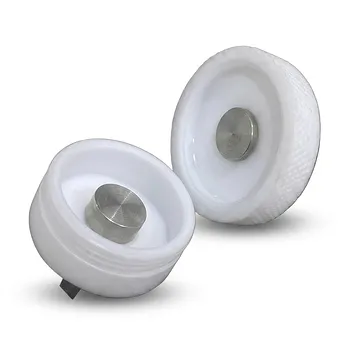
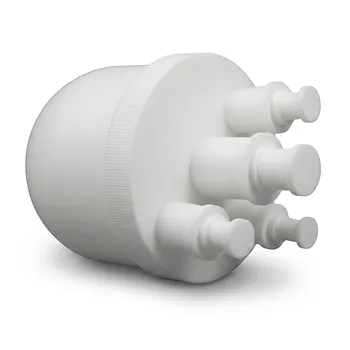
To achieve high-fidelity data in Ni-Co-CHH characterization, your hardware must be as precise as your methodology. KINTEK specializes in high-performance fluoropolymer solutions designed to withstand the aggressive alkaline electrolytes common in supercapacitor testing.
From everyday lab essentials like PTFE beakers, reagent bottles, and centrifuge tubes to specialized PFA tubing, fittings, and valves, we provide the chemical resistance and purity your lab demands. We offer a comprehensive suite of advanced research tools, including:
- Standard & Custom Electrochemical Cells and electrode accessories.
- Battery Testing Fixtures and hydrothermal synthesis liners.
- Sample Prep Tools: Filters, pipettes, tweezers, and high-purity digestion vessels.
- Custom CNC Fabrication: Bespoke non-standard parts and complex laboratory setups tailored to your specific reactor designs.
Whether you need high-volume consumables or a unique, custom-machined electrochemical setup, KINTEK’s absolute focus on high-performance materials ensures your results are never compromised by contamination or hardware failure.
Ready to optimize your lab setup? Contact our technical team today to discuss your custom project or request a quote for our standard fluoropolymer range.
References
- Mohit Bhatt, A. K. Sinha. Superior charge storage performance of optimized nickel cobalt carbonate hydroxide hydrate nanostructures for supercapacitor application. DOI: 10.1038/s41598-025-85113-z
This article is also based on technical information from Kintek Knowledge Base .
Related Products
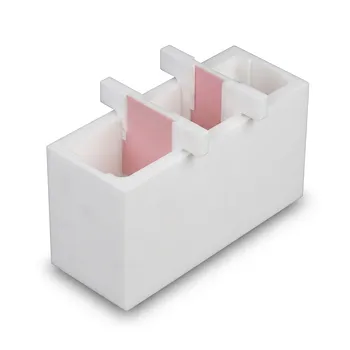
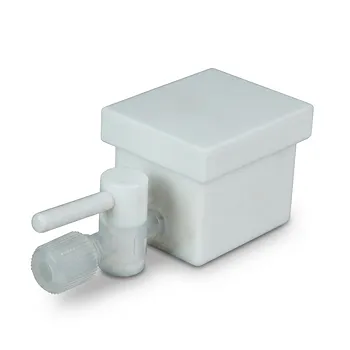
- Corrosion Resistant PTFE Electrochemical Cell for New Energy Research Inert Insulating Customizable Lab Reaction Vessel
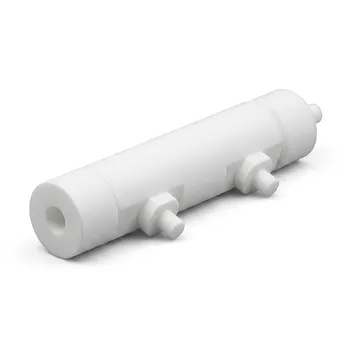
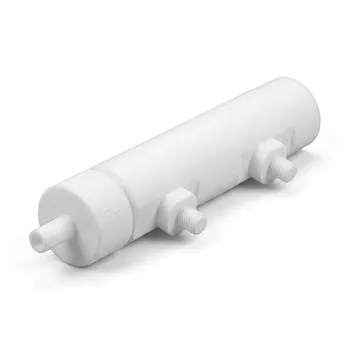
- Custom PTFE Electrolytic Cell Corrosion Resistant Low Background Reaction Vessel with Inlet Outlet Ports
- Square PTFE Electrochemical Cell for Silicon Wafer Processing and Hydrofluoric Acid Resistance in Semiconductor and New Energy Research
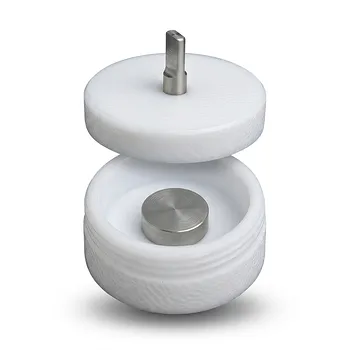
- White PTFE Electrolytic Cell with Movable Slider and Insulated Lid for Fluorine Corrosion Resistance
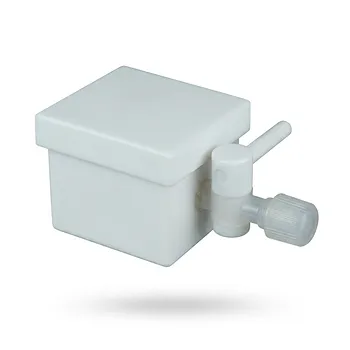
- Custom PTFE Reaction Box Opaque White Square Electrochemical Cell Tank
People Also Ask
- How do custom PTFE electrochemical cells improve the accuracy of stability testing for alkaline catalysts compared to glass cells?
- How does the hydrophobicity of PTFE benefit electrochemical measurements? Enhance Stability and Precision in Your Lab
- What makes PTFE an ideal construction material for custom electrochemical cells and electronic analytical instrumentation housings? Discover superior chemical resistance and electrical insulation
- Why must seawater electrolysis test cells have high corrosion resistance? Protect catalyst stability & data accuracy.
- What are the key steps for structural integrity in molded PTFE lab reaction vessels? Master fine powder processing.