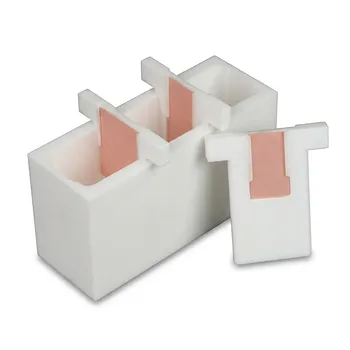
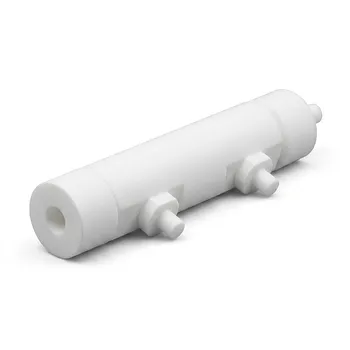
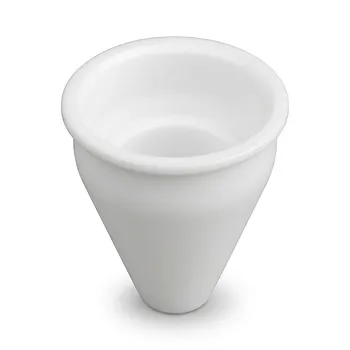
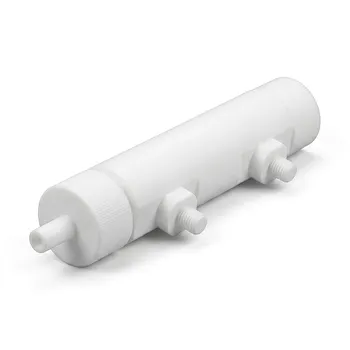
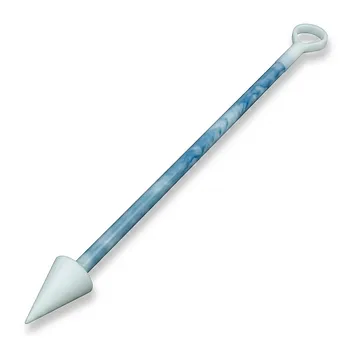
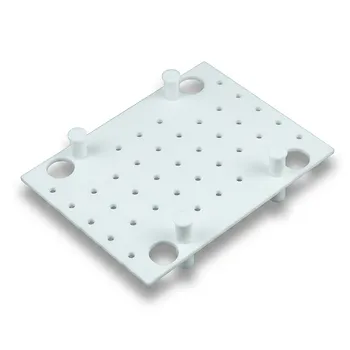
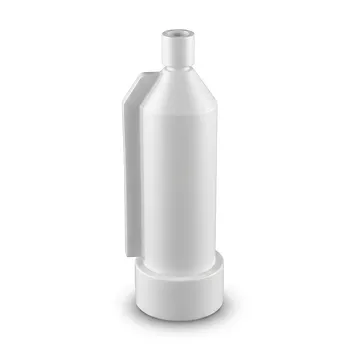
PTFE components are critical for the Hydrogen Evolution Reaction (HER) testing of Co-MoS2 because they facilitate efficient gas bubble discharge and provide unmatched chemical resistance. By minimizing gas attachment and preventing electrolyte contamination, PTFE ensures the collection of smooth, reproducible Linear Sweep Voltammetry (LSV) curves and highly accurate kinetic data.
Core Takeaway: Utilizing PTFE in electrochemical cells optimizes HER testing by leveraging its low surface energy to prevent bubble-induced current fluctuations while maintaining a high-purity environment free from ion leaching and corrosive degradation.
Managing Gas Evolution and Surface Dynamics
Minimizing Gas Bubble Attachment
During HER testing, hydrogen gas bubbles are rapidly generated at the Co-MoS2 electrode surface. PTFE has exceptionally low surface energy, which prevents these bubbles from adhering to the cell walls or the electrode-electrolyte interface.
Ensuring Smooth Polarization Curves
When bubbles block the electrode surface, they cause significant fluctuations in current density and introduce "noise" into the data. PTFE promotes smooth gas discharge, which is essential for capturing clean and reproducible LSV polarization curves.
Maintaining Interface Stability
By facilitating the immediate release of hydrogen, PTFE ensures that the active surface area of the Co-MoS2 catalyst remains consistent throughout the test. This stability is vital for determining the true overpotential and Tafel slopes of the material.
Chemical Inertness and System Purity
Resistance to Corrosive Electrolytes
HER testing often requires highly concentrated acidic or alkaline environments, such as potassium hydroxide (KOH). PTFE is chemically inert and resists erosion from these harsh reagents, whereas glass can be prone to etching and degradation in strong alkalis.
Prevention of Ion Leaching
Maintaining the purity of the electrolyte is paramount when evaluating electrocatalysts like Co-MoS2. PTFE components prevent the leaching of impurities into the system, ensuring that the observed electrochemical performance is intrinsic to the catalyst and not a result of contamination.
Stability in Organic Solvents
In cases where catalysts are prepared using solvents like isopropanol or methanol, PTFE remains unaffected. Its broad chemical compatibility ensures the long-term durability of the test cell across various experimental setups.
Precision Geometry and Electrical Integrity
Fixed Electrode Spatial Arrangement
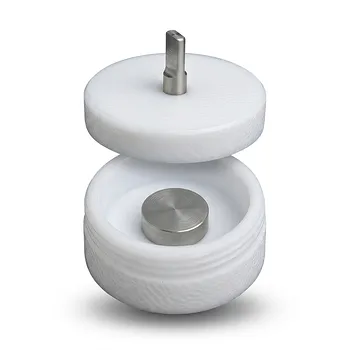
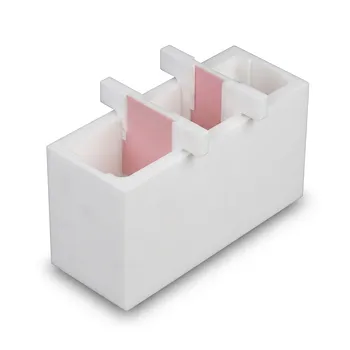
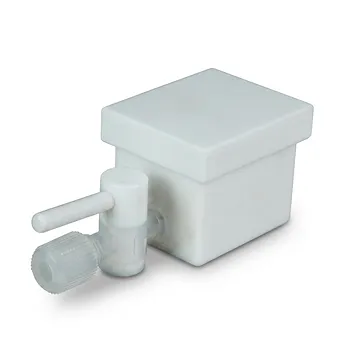
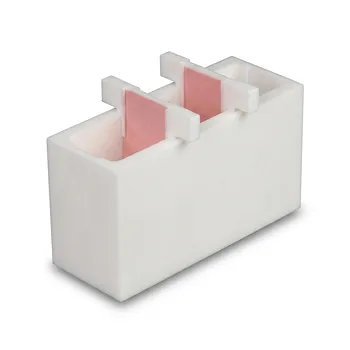
High-precision CNC-machined PTFE cells allow for the creation of fixed electrode holders. This ensures that the distance between the working, reference, and counter electrodes remains constant, providing a stable physical environment for three-electrode systems.
Reducing Ohmic Resistance Interference
Consistent electrode spacing is necessary to minimize interference from solution resistance ($R_s$). By maintaining a fixed geometry, researchers can more accurately calculate the kinetic parameters of Co-MoS2 without variables introduced by shifting components.
Electrical Insulation Properties
PTFE serves as an excellent insulating matrix, eliminating background interference currents. This ensures that the measured electrochemical behavior originates solely from the Co-MoS2 reaction under study.
Understanding the Trade-offs
Visual Limitations and Opacity
Unlike glass, PTFE is opaque, which prevents the direct visual observation of the electrode during the reaction. Researchers cannot visually confirm bubble formation patterns or the physical state of the catalyst without removing it from the cell.
Material Softness and Deformation
PTFE is a relatively soft fluoropolymer compared to metals or ceramics. Over-tightening seals or high-pressure applications can lead to mechanical deformation, potentially altering the cell's airtight seal or internal volume over long periods of use.
Thermal Conductivity Constraints
PTFE is a thermal insulator, meaning it does not dissipate heat efficiently. In high-current density experiments where the electrolyte may heat up, temperature control can be more challenging compared to cells made from more thermally conductive materials.
How to Apply This to Your Project
When selecting components for your HER testing setup, consider your specific experimental goals to maximize data quality.
- If your primary focus is high-precision kinetic data: Prioritize CNC-machined PTFE cells to maintain fixed electrode spacing and minimize $R_s$ fluctuations.
- If your primary focus is testing in strong alkaline media: Use PTFE exclusively to avoid the etching and silica leaching common with standard glassware.
- If your primary focus is long-term stability and cycling: Leverage PTFE’s chemical inertness to ensure the reaction environment remains uncontaminated over hundreds of cycles.
By choosing PTFE test cell components, you ensure that the performance metrics of your Co-MoS2 catalyst are recorded with the highest possible degree of accuracy and reliability.
Summary Table:
| Feature | Benefit for Co-MoS2 HER Testing |
|---|---|
| Low Surface Energy | Facilitates gas bubble discharge for smooth, noise-free LSV curves. |
| Chemical Inertness | Prevents ion leaching and resists etching in strong acids/alkalis (e.g., KOH). |
| CNC-Machined Precision | Ensures fixed electrode spacing and repeatable geometric surface area. |
| Electrical Insulation | Eliminates background interference, focusing data solely on the catalyst reaction. |
Elevate Your Electrochemical Research with KINTEK
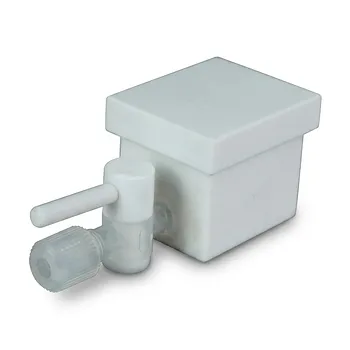
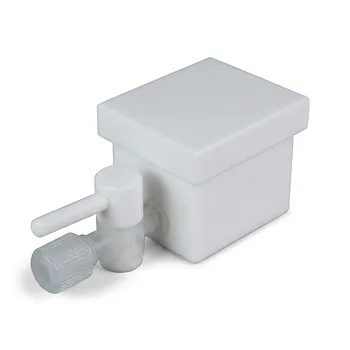
Maximize the accuracy of your Co-MoS2 HER testing with KINTEK’s high-performance fluoropolymer solutions. We specialize in an extensive range of PTFE and PFA laboratory supplies, from basic beakers and crucibles to high-purity trace analysis instruments and advanced custom-machined electrochemical cells.
Why choose KINTEK?
- Comprehensive Range: From fluid transfer components (tubing, valves) to sample prep tools (filters, pipettes) and reaction apparatus like microwave digestion vessels.
- Bespoke Fabrication: Our end-to-end custom CNC fabrication allows us to deliver complex non-standard parts and bespoke laboratory setups designed specifically for your research parameters.
- Uncompromising Purity: Our absolute focus on high-performance materials ensures zero ion leaching and maximum chemical resistance for your most sensitive experiments.
Ready to optimize your lab's performance? Contact us today to discuss your high-volume orders or custom fabrication needs!
References
- Wei Liu, Jiaqi Tang. Hydrothermal Synthesis of Co-MoS<sub>2</sub> as a Bifunctional Catalyst for Overall Water Splitting. DOI: 10.1021/acsomega.4c10747
This article is also based on technical information from Kintek Knowledge Base .
Related Products
- Acid Resistant PTFE Button Cell Battery Test Fixture Customizable Machining High Purity Electrochemical Testing Clamp
- Corrosion Resistant PTFE Electrochemical Cell for New Energy Research Inert Insulating Customizable Lab Reaction Vessel
- Custom PTFE Corrosion Resistant Insulating Electrophoresis Reaction Cell with Septum and Valves for Low Background Trace Analysis
- Square PTFE Electrochemical Cell for Silicon Wafer Processing and Hydrofluoric Acid Resistance in Semiconductor and New Energy Research
- White PTFE Electrolytic Cell with Movable Slider and Insulated Lid for Fluorine Corrosion Resistance
People Also Ask
- In what ways do PTFE battery testing fixtures enhance laboratory throughput and reliability? Maximize Research Efficiency
- How does the chemical inertness of PTFE benefit laboratory-scale battery testing? Ensure high-purity research results.
- In what industrial manufacturing contexts are PTFE battery clamps or fixtures utilized? Optimize Battery Production.
- What is the thermal operating range for PTFE battery clamps in electrochemical research? Stability from -200°C to +260°C
- What are the primary functions and material compositions of PTFE battery clamps? Ensure Precision & Chemical Resistance