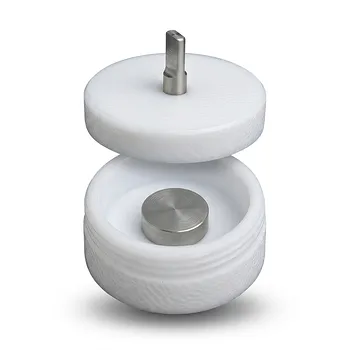
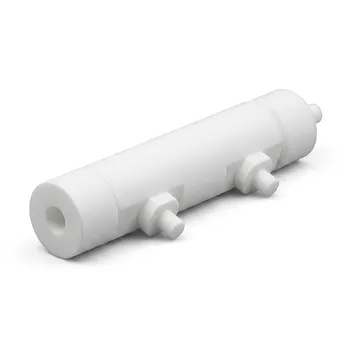
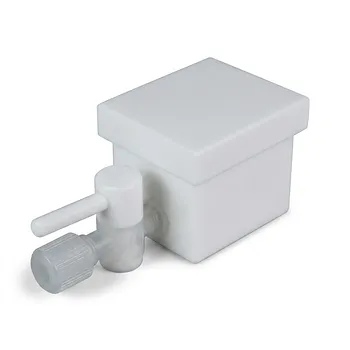
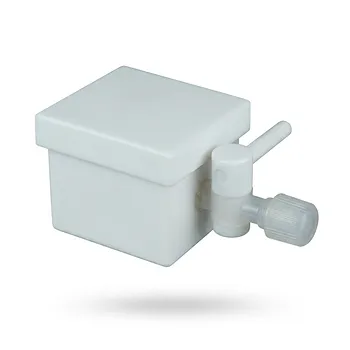
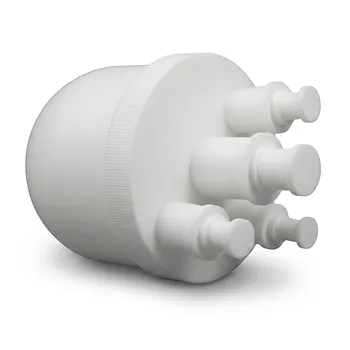
The three-electrode electrochemical testing cell is the industry standard for Mott-Schottky measurements because it isolates the semiconductor's electrical response from the rest of the system. This configuration allows researchers to precisely measure the depletion layer capacitance at the semiconductor-electrolyte interface as a function of applied potential. By decoupling these variables, you can accurately determine critical material properties, including the flat-band potential, carrier density, and conduction band energy levels.
Core Takeaway: A three-electrode setup ensures that the electrical data collected reflects the intrinsic properties of the semiconductor alone. It eliminates interference from counter-electrode polarization and voltage drops, which are common points of failure in simpler two-electrode systems.
The Role of Component Isolation
Decoupling the Working Electrode
In a Mott-Schottky measurement, the semiconductor film acts as the Working Electrode (WE). The three-electrode system ensures that the current flowing through the cell does not affect the potential measurement at this specific interface.
By using a separate path for current and potential, the system monitors the intrinsic charge transfer mechanisms of the semiconductor. This is vital for understanding how materials like ZnS-ZnO heterojunctions drive charge separation.
The Necessity of a Stable Reference
The Reference Electrode (RE), such as Ag/AgCl or a Saturated Calomel Electrode (SCE), provides a constant, known chemical potential. It acts as a "standard ruler" against which the semiconductor’s potential is measured.
Without this stable baseline, any drift in the system would be incorrectly attributed to the semiconductor. This stability is what allows for the precise calculation of the flat-band potential, a cornerstone of semiconductor physics.
The Counter Electrode as a Current Sink
The Counter Electrode (CE), typically made of an inert material like platinum, completes the electrical circuit. Its primary job is to handle the current required by the electrochemical workstation to maintain the desired potential at the working electrode.
Because the potential is not measured at the CE, its own polarization effects do not contaminate the data. This isolation is what makes the measurement of specific capacitance and impedance data reliable.
Enhancing Data Integrity through Configuration
Minimizing Internal Resistance (iR Drop)
One of the greatest enemies of precise electrochemical measurement is the iR drop, or the internal resistance of the electrolyte. The three-electrode configuration is designed to minimize this error by placing the reference electrode close to the working electrode.
By reducing the impact of resistance, the AC voltages and frequencies applied during the Mott-Schottky scan remain accurate. This leads to a much cleaner linear relationship when plotting $1/C^2$ against potential.
Eliminating Counter Electrode Interference
In a two-electrode setup, the measured voltage is shared between the semiconductor and the counter electrode. If the counter electrode polarizes or develops its own capacitance, the Mott-Schottky plot will be skewed or entirely unreadable.
The three-electrode cell physically and electrically isolates these behaviors. This ensures that the capacitance-voltage (C-V) relationship derived is a true reflection of the semiconductor's depletion layer.
Understanding the Trade-offs
Increased System Complexity
While superior in accuracy, the three-electrode setup is more complex to assemble and maintain than a two-electrode system. It requires more sophisticated instrumentation (a potentiostat) and careful maintenance of the reference electrode's internal filling solution.
Sensitivity to Electrode Placement
The physical positioning of the electrodes, particularly the distance between the reference and working electrodes, can impact the results. If the reference electrode is placed too far away, the uncompensated resistance can still introduce minor errors in high-frequency measurements.
Electrolyte Interactions
The choice of electrolyte is critical; it must be electrochemically "quiet" within the measurement window. If the electrolyte reacts with any of the three electrodes, it can introduce parasitic currents that obscure the capacitive response of the semiconductor.
How to Apply This to Your Research
Making the Right Choice for Your Goal
- If your primary focus is determining band edge positions: You must use a three-electrode setup with a calibrated reference electrode to ensure your energy level values (like the conduction band) are accurate relative to the vacuum level.
- If your primary focus is measuring carrier density: Use the three-electrode configuration to obtain a clean Mott-Schottky slope, as any interference from the counter electrode will lead to significant errors in calculating the donor or acceptor concentration.
- If your primary focus is testing a finished, packaged device: A two-electrode setup may be sufficient, as you are measuring the total system performance rather than the intrinsic material properties of a single interface.
By utilizing a three-electrode configuration, you transition from simply observing a device to fundamentally characterizing the material physics that govern its performance.
Summary Table:
| Electrode Type | Primary Function | Impact on Mott-Schottky Accuracy |
|---|---|---|
| Working (WE) | Semiconductor Sample | Measures intrinsic depletion layer capacitance without interference. |
| Reference (RE) | Potential Standard | Provides a stable baseline to precisely determine flat-band potential. |
| Counter (CE) | Current Sink | Completes the circuit while isolating polarization effects from the WE. |
Elevate Your Electrochemical Research with KINTEK
Precision in semiconductor characterization requires more than just high-level theory—it demands high-performance equipment. KINTEK specializes in manufacturing an exhaustive range of laboratory supplies crafted from premium PTFE and PFA, ensuring zero contamination and maximum chemical resistance for your Mott-Schottky measurements.
Whether you need everyday essentials like high-purity beakers, reagent bottles, and tubing, or specialized research tools like custom electrochemical cells, electrode accessories, and microwave digestion vessels, we have you covered. Our capabilities extend from standard labware to complex, non-standard machined parts via end-to-end custom CNC fabrication.
Ready to optimize your lab's data integrity? From fluid transfer components to advanced reaction apparatus, KINTEK delivers high-performance fluoropolymer solutions tailored to your specific research needs.
Contact our specialists today to discuss your custom setup!
References
- Rana Mahdizadeh, Hosein Banna Motejadded Emrooz. Surface texture dependency of photocatalytic behavior of facile synthesized mesoporous ZnS-ZnO heterostructure under LED illumination. DOI: 10.1038/s41598-025-16326-5
This article is also based on technical information from Kintek Knowledge Base .
Related Products
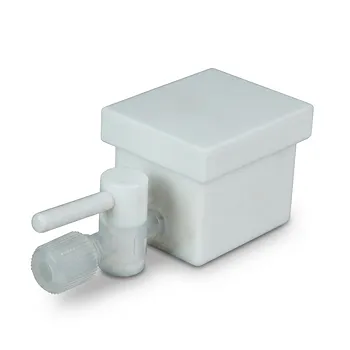
- Custom PTFE Corrosion Resistant Insulating Electrophoresis Reaction Cell with Septum and Valves for Low Background Trace Analysis
- Custom PTFE Reaction Box Opaque White Square Electrochemical Cell Tank
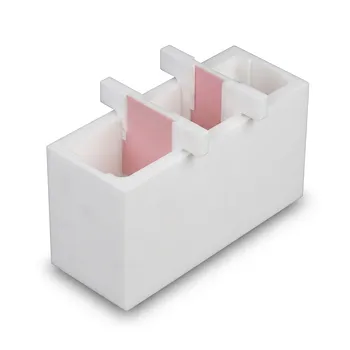
- Corrosion Resistant PTFE Electrochemical Cell for New Energy Research Inert Insulating Customizable Lab Reaction Vessel
- Custom PTFE Conical Sample Cell Fluoropolymer Triangular Container Chemical Resistant Low Background Labware
- Acid Resistant PTFE Button Cell Battery Test Fixture Customizable Machining High Purity Electrochemical Testing Clamp
People Also Ask
- What industries use custom PTFE parts and for what purposes? Solve Critical Challenges with High-Performance Materials
- What industries benefit most from custom PTFE parts? Solve Extreme Environment Challenges
- What design considerations are important for custom PTFE parts? Design for Performance & Reliability
- What advantages do custom PTFE parts offer for industrial efficiency? Boost Uptime & Cut Costs
- What are the key properties of Teflon (PTFE) used in custom parts? | Achieve Peak Performance