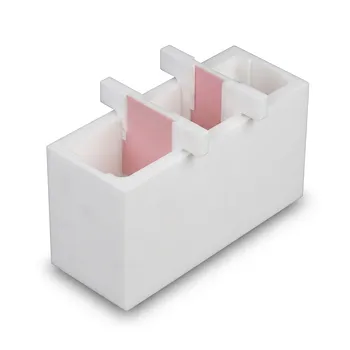
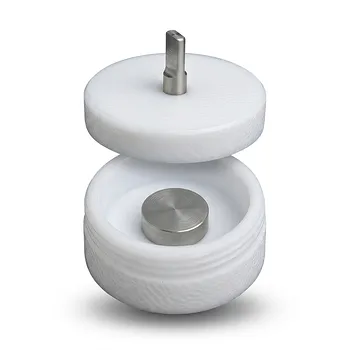
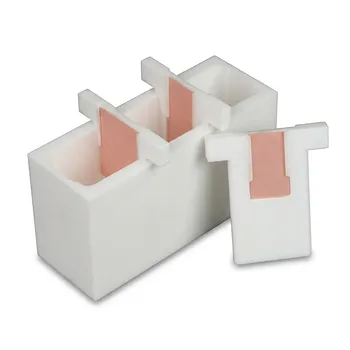
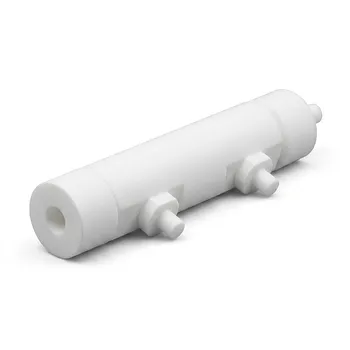
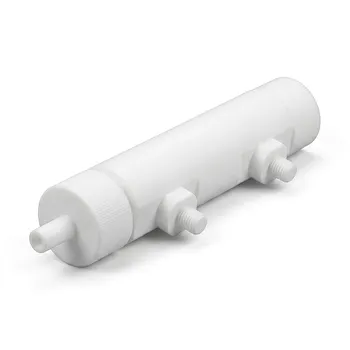
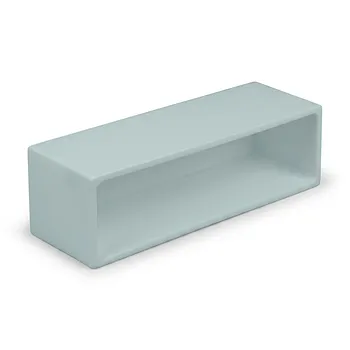
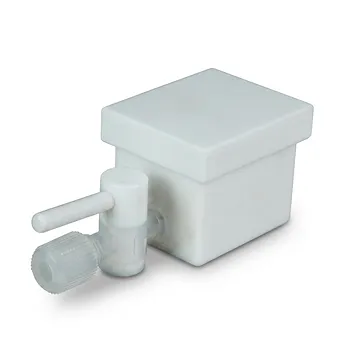
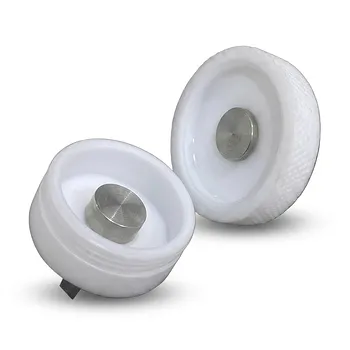
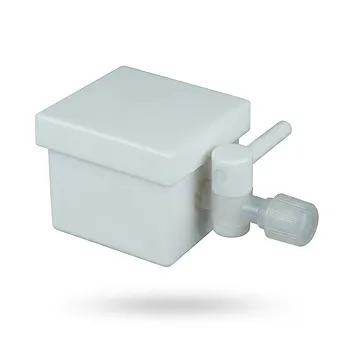
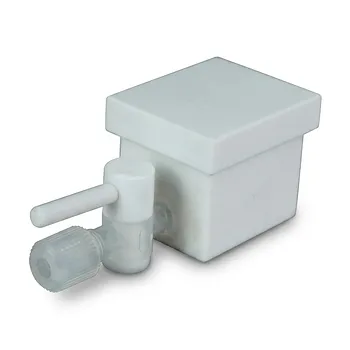
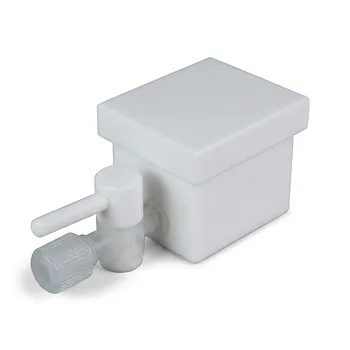
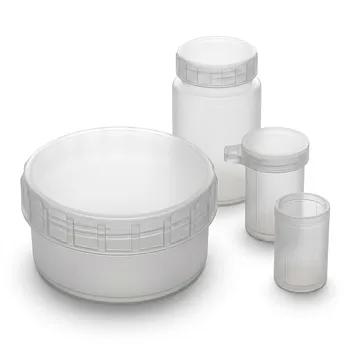
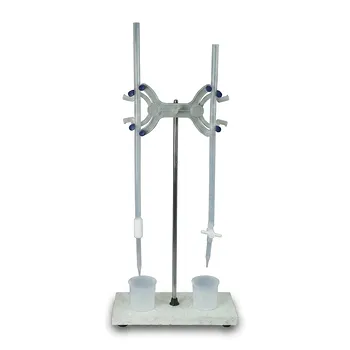
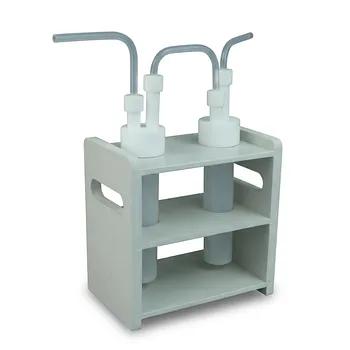
Evaluating MOF-based catalysts for the Hydrogen Evolution Reaction (HER) requires the highest level of environmental control to ensure data integrity. Specialized electrochemical test cells constructed from high-purity PTFE (Polytetrafluoroethylene) or PFA (Perfluoroalkoxy) are necessary because they provide absolute chemical inertness and prevent the leaching of impurity ions into the electrolyte. This ensures that the measured performance—including overpotential and Tafel slopes—reflects the true activity of the catalyst rather than interference from the testing environment.
Core Takeaway: High-purity fluoropolymer cells are the industry standard because they eliminate background noise caused by material degradation and ion leaching, providing a stable, non-reactive environment essential for characterizing sensitive nanocatalysts like MOFs.
Eliminating Chemical Interference and Contamination
Preventing Ion Leaching and Catalyst Poisoning
MOF-based catalysts often feature highly active surface sites and complex heterostructures that are extremely sensitive to their environment. Standard glass or low-grade plastic cells can release trace metal impurities or silica, which may poison the catalyst sites or provide false catalytic activity. High-purity PTFE and PFA are chemically "dead," ensuring that no external ions interfere with the assessment of the catalyst's true HER performance.
Resistance to Corrosive Electrolytes
HER testing frequently occurs in aggressive media, such as 1 M KOH (strong base), corrosive seawater, or strong acids used in PEM electrolysis. PTFE and PFA possess exceptional resistance to chemical attack, maintaining their structural integrity where other materials would dissolve or leach contaminants. This resistance is vital for long-term cycling stability tests, where even minor material degradation over time could skew results.
Maintaining a Clean Reaction Interface
By using materials that do not release organic leachables or inorganic impurities, researchers maintain a clean reaction interface. This is particularly critical when analyzing reaction intermediates or when the catalyst relies on delicate structural engineering. A clean interface ensures that the Faradaic efficiency and selectivity measurements are accurate and reproducible.
Ensuring Structural and Measurement Precision
Fixed Geometric Positioning
Specialized test cells utilize precision-machined electrode fixing devices to maintain constant geometric positions between the working, counter, and reference electrodes. Any shift in the distance between these electrodes can change the uncompensated resistance (i_Ru_ drop) and lead to inconsistent overpotential measurements. PTFE/PFA cells allow for tight tolerances and repeatable setups, which are essential for high-signal-to-noise ratio data.
Thermal and Electrical Stability
Electrochemical reactions often generate local heat, and some HER tests (like PEM water electrolysis) operate between 75°C and 85°C. PTFE and PFA offer superior thermal stability and excellent electrical insulation, preventing stray currents or thermal expansion from compromising the seal. These properties ensure that the cell remains a reliable pressure-tight vessel throughout the duration of the experiment.
Understanding the Trade-offs
Cost and Material Complexity
High-purity fluoropolymers are significantly more expensive than standard laboratory glassware or mass-produced plastics. The material costs, combined with the need for high-precision machining to ensure tight seals and exact electrode spacing, represent a substantial upfront investment for a laboratory.
Visibility and Assembly Challenges
Unlike glass, PTFE and PFA are opaque or translucent, which prevents researchers from visually monitoring the bubble evolution or electrode positioning during the test. Furthermore, these materials are softer than metals, meaning that over-tightening threaded components can lead to permanent deformation (creeping), potentially compromising the seal over time.
How to Apply This to Your Research
Making the Right Choice for Your Goal
To achieve the most accurate and publishable results for MOF-based catalysts, your choice of cell material must align with your specific experimental conditions.
- If your primary focus is fundamental kinetic studies: Use high-purity PTFE cells to ensure that Tafel slopes and exchange current densities are not influenced by trace leached impurities.
- If your primary focus is high-temperature PEM testing: Prioritize PFA-based cells, as they offer the thermal stability and sealing reliability required for operations between 75°C and 85°C.
- If your primary focus is alkaline HER or seawater electrolysis: Utilize fluoropolymer bodies to avoid the silica leaching that occurs when using glass cells in high-pH or high-chloride environments.
By utilizing specialized fluoropolymer cells, you transition from simply measuring a signal to capturing the definitive, uncontaminated performance of your engineered catalyst.
Summary Table:
| Key Feature | Benefit for HER/MOF Testing | Impact on Research |
|---|---|---|
| Chemical Inertness | Prevents ion leaching and catalyst poisoning | High Data Integrity |
| Corrosion Resistance | Withstands 1M KOH, seawater, and strong acids | Long-term Stability |
| Geometric Precision | Maintains fixed electrode positioning | Stable i_Ru_ Drop |
| Thermal Stability | Reliable sealing and insulation up to 85°C | Reproducible Results |
Elevate Your Research Precision with KINTEK
Don’t let material impurities compromise your catalytic data. KINTEK specializes in high-performance fluoropolymer laboratory solutions designed for the most demanding electrochemical applications. From everyday basic labware (beakers, measuring cylinders, crucibles, reagent bottles) to specialized high-purity trace analysis instruments and cleaning tanks, we provide the inert environment your MOF catalysts require.
Our expertise extends to comprehensive fluid transfer components (tubing, valves), sample prep tools (filters, pipettes, tweezers), and advanced reaction apparatus like standard or custom electrochemical cells, battery testing fixtures, and microwave digestion vessels. With end-to-end custom CNC fabrication, KINTEK delivers everything from high-volume consumables (stirring bars, O-rings, gaskets) to complex, bespoke laboratory setups.
Ensure absolute performance for your next breakthrough. Contact KINTEK today to discuss your custom fluoropolymer requirements!
References
- E. S. Sowbakkiyavathi, Subramania Angaiah. Recent advances in MOFs, MOF-derived materials and their composites as electrocatalysts for hydrogen production. DOI: 10.1039/d5su00199d
This article is also based on technical information from Kintek Knowledge Base .
Related Products
- Corrosion Resistant PTFE Electrochemical Cell for New Energy Research Inert Insulating Customizable Lab Reaction Vessel
- Acid Resistant PTFE Button Cell Battery Test Fixture Customizable Machining High Purity Electrochemical Testing Clamp
- White PTFE Electrolytic Cell with Movable Slider and Insulated Lid for Fluorine Corrosion Resistance
- Square PTFE Electrochemical Cell for Silicon Wafer Processing and Hydrofluoric Acid Resistance in Semiconductor and New Energy Research
- Custom PTFE Electrolytic Cell Corrosion Resistant Low Background Reaction Vessel with Inlet Outlet Ports
People Also Ask
- What parameters govern the electrochemical decomposition of perfluorooctanoic acid (PFOA) in aqueous solutions, and why are custom PTFE electrochemical cells preferred? Key factors include anode material, current density, electrolyte, and cell design.
- How do custom PTFE electrochemical cells improve the accuracy of stability testing for alkaline catalysts compared to glass cells?
- How does the hydrophobicity of PTFE benefit electrochemical measurements? Enhance Stability and Precision in Your Lab
- What makes PTFE an ideal construction material for custom electrochemical cells and electronic analytical instrumentation housings? Discover superior chemical resistance and electrical insulation
- Why must seawater electrolysis test cells have high corrosion resistance? Protect catalyst stability & data accuracy.