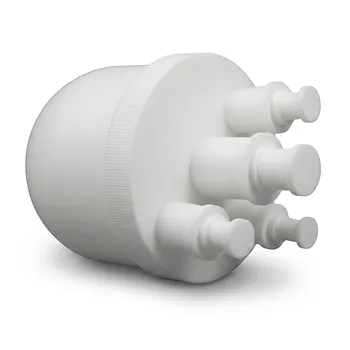
The three-electrode electrochemical cell design is the industry standard for material characterization because it physically isolates the working electrode from the counter electrode's influence. This configuration enables the precise, independent measurement of potential changes and charge transfer rates at the material's surface by eliminating errors caused by counter electrode polarization. By using a non-current-carrying reference electrode as a stable benchmark, researchers can accurately determine fundamental properties like specific capacitance, redox potentials, and cycling stability.
Core Takeaway: The design significance of a three-electrode system lies in its ability to decouple the electrochemical behavior of the material under study (the working electrode) from the rest of the circuit. This ensures that all measured data reflects the intrinsic properties of the material rather than the limitations of the testing environment.
Precision Through Functional Isolation
The three-electrode cell consists of a working electrode (WE), a counter electrode (CE), and a reference electrode (RE). Each component serves a distinct purpose that collectively ensures data integrity.
The Working Electrode as the Subject
The WE is the platform for the active material being studied, such as Cu-WO3/MXene or semiconductor films. Because the system focuses exclusively on this interface, researchers can observe specific behaviors like Faradaic redox reactions or capacitive contributions without interference.
The Reference Electrode as a Constant Benchmark
The RE, such as a Saturated Calomel Electrode (SCE) or Ag/AgCl, maintains a constant chemical potential. Because no current flows through the RE, it provides a stable "zero point" against which the WE’s potential is measured, regardless of what is happening elsewhere in the cell.
The Counter Electrode as a Current Sink
The CE (often a platinum wire or graphite rod) completes the circuit, allowing current to flow to the WE. In this design, any polarization or voltage drops occurring at the CE are ignored by the measurement hardware, preventing them from distorting the WE's data.
Enabling Advanced Material Analysis
The high fidelity of the three-electrode setup allows for the derivation of complex physical constants that are impossible to measure accurately in simpler configurations.
Mapping Electronic Energy Levels
This configuration is essential for Mott-Schottky analysis, which measures depletion layer capacitance. This data allows researchers to calculate the flat-band potential, carrier density, and conduction band energy levels of materials like ZnS-ZnO heterojunctions.
Quantifying Catalytic Performance
For technologies like fuel cells, the three-electrode cell evaluates the Oxygen Reduction Reaction (ORR). It provides precise metrics for onset potential, half-wave potential, and current density, which are the primary benchmarks for catalyst efficiency.
Controlling Electrodeposition
When synthesizing new materials, this setup allows for precise control over deposition potential. This ensures that metal precursors are deposited onto substrates under strictly controlled conditions to form specific architectures, such as bimetallic structures on carbon cloth.
Understanding the Trade-offs and Pitfalls
While superior for characterization, the three-electrode cell is more complex to set up and has specific limitations that can lead to erroneous data if ignored.
Reference Electrode Compatibility
The choice of RE must align with the electrolyte's pH. Using a standard RE in highly acidic (H2SO4) or alkaline (KOH) environments without proper protection can lead to potential shifts or electrode degradation, necessitating specialized housings like high-purity quartz or corrosion-resistant polymers (PTFE).
The "Ohmic Drop" Reality
Even with a three-electrode system, the resistance of the electrolyte between the RE and WE can cause a voltage error known as the iR drop. In high-current applications, failure to compensate for this resistance will result in an overestimation of the material's overpotential.
Scalability vs. Characterization
A three-electrode cell is a diagnostic tool, not a power-producing device. While it is perfect for understanding how a material behaves, the data may not perfectly translate to a two-electrode commercial battery or supercapacitor, where the interaction between both electrodes defines the final performance.
How to Apply This to Your Research
To maximize the value of a three-electrode setup, you must tailor the configuration to your specific characterization goals.
- If your primary focus is determining energy levels (Mott-Schottky): Ensure your setup allows for precise AC voltage application and frequency control to accurately measure the depletion layer.
- If your primary focus is catalytic activity (ORR/OER): Use a high-surface-area counter electrode (like a platinum foil) to ensure that the CE never becomes the current-limiting factor in your measurements.
- If your primary focus is trace metal detection: Utilize a "transfer cell" design to move your modified electrode from the polymerization solution to the detection buffer, eliminating background interference from monomers.
- If your primary focus is pH-universal testing: Select specialized reference electrodes, such as mercurous sulfate for acidic media or mercuric oxide for alkaline media, to maintain accuracy across the pH scale.
By effectively utilizing the three-electrode design, you transform electrochemical testing from a simple observation of current into a powerful probe of a material's fundamental physics and chemistry.
Summary Table:
| Component | Primary Function | Research Significance |
|---|---|---|
| Working Electrode (WE) | Platform for active material | Enables observation of intrinsic redox reactions and capacitance without interference. |
| Reference Electrode (RE) | Constant potential benchmark | Provides a stable "zero point" to ensure accurate potential measurement regardless of current flow. |
| Counter Electrode (CE) | Completes the electrical circuit | Acts as a current sink, preventing its own polarization from distorting the data of the material under study. |
| System Design | Functional isolation | Decouples the material's behavior from testing environment limitations for high-fidelity data. |
Elevate Your Research with KINTEK’s Precision Fluoropolymer Labware
Achieving high-fidelity material characterization requires more than just a good methodology—it demands high-performance equipment that eliminates background interference and withstands harsh chemical environments. KINTEK specializes in manufacturing virtually all imaginable laboratory supplies crafted from high-performance PTFE and PFA, ensuring your electrochemical cells and testing setups provide the absolute precision your data deserves.
From everyday labware like beakers, crucibles, and high-purity trace analysis instruments to advanced custom electrochemical cells, battery testing fixtures, and hydrothermal synthesis liners, our end-to-end CNC fabrication is equipped to deliver everything from bespoke non-standard parts to high-volume orders.
Ready to optimize your lab's performance? Contact our experts today to discuss your specific requirements and discover the KINTEK advantage in high-performance fluoropolymer solutions.
References
- T. Jaqulin Jenila, M. Khalid Hossain. Unraveling the role of MXene (Ti3C2Tx) integrated Cu-doped WO3 nanocomposites via co-precipitation technique for enhanced supercapacitor performance. DOI: 10.1038/s41598-025-10174-z
This article is also based on technical information from Kintek Knowledge Base .
Related Products
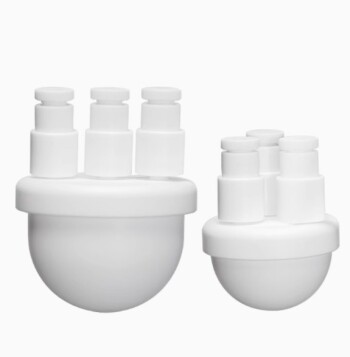
- Corrosion Resistant PTFE Electrochemical Cell for New Energy Research Inert Insulating Customizable Lab Reaction Vessel
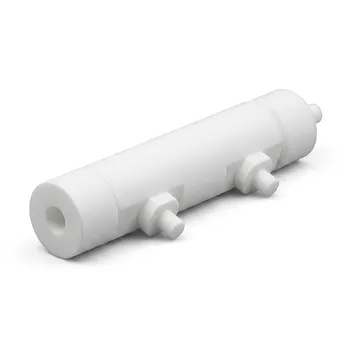
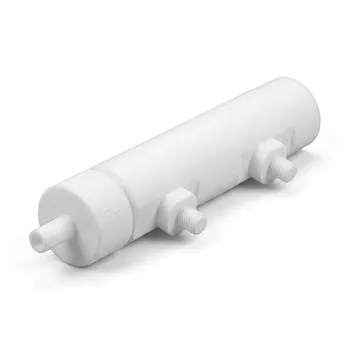
- Custom PTFE Electrolytic Cell Corrosion Resistant Low Background Reaction Vessel with Inlet Outlet Ports
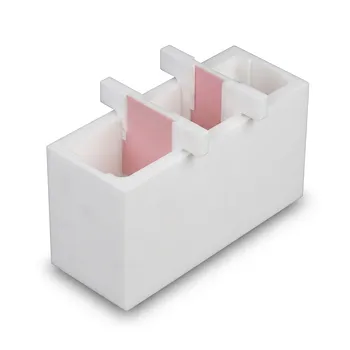
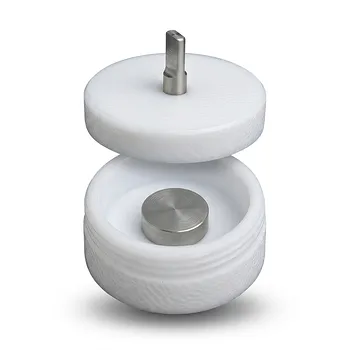
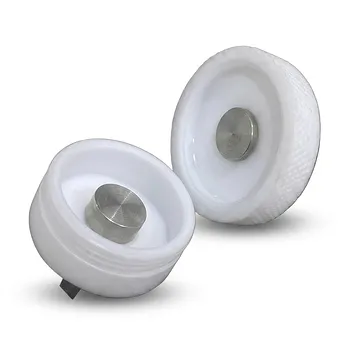
- White PTFE Electrolytic Cell with Movable Slider and Insulated Lid for Fluorine Corrosion Resistance
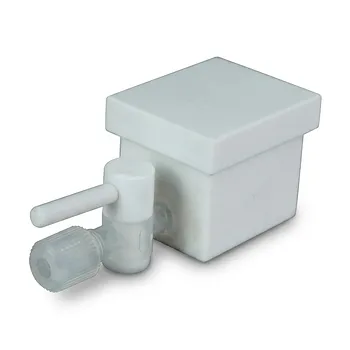
- Square PTFE Electrochemical Cell for Silicon Wafer Processing and Hydrofluoric Acid Resistance in Semiconductor and New Energy Research
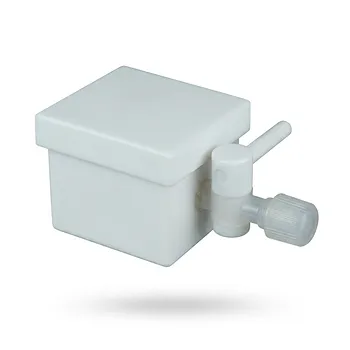
- Custom PTFE Corrosion Resistant Insulating Electrophoresis Reaction Cell with Septum and Valves for Low Background Trace Analysis
People Also Ask
- How do custom PTFE electrochemical cells improve the accuracy of stability testing for alkaline catalysts compared to glass cells?
- How does the hydrophobicity of PTFE benefit electrochemical measurements? Enhance Stability and Precision in Your Lab
- What makes PTFE an ideal construction material for custom electrochemical cells and electronic analytical instrumentation housings? Discover superior chemical resistance and electrical insulation
- Why must seawater electrolysis test cells have high corrosion resistance? Protect catalyst stability & data accuracy.
- What are the key steps for structural integrity in molded PTFE lab reaction vessels? Master fine powder processing.