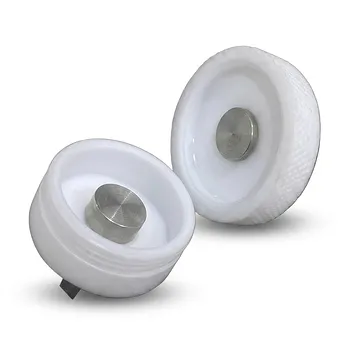
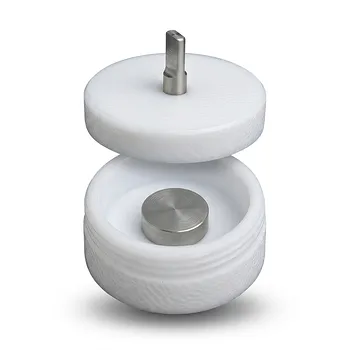
Specialized battery testing fixtures are the bridge between raw material potential and accurate data.
These fixtures are necessary because they isolate the electrochemical behavior of a material from the physical variables of the testing environment. By providing uniform contact pressure, chemical inertness, and electrical insulation, they ensure that the data collected—such as capacity, cycle life, and rate performance—reflects the material's true properties rather than artifacts of a poor experimental setup.
Specialized fixtures create a controlled, repeatable environment by minimizing contact resistance and environmental interference. This technical stability is essential for transforming raw experimental observations into reliable scientific insights.
Eliminating Physical and Electrical Variables
Minimizing Contact Resistance
Specialized fixtures utilize precisely engineered structures to apply uniform and constant contact pressure to the test samples. This pressure is critical because it minimizes voltage drops and unwanted thermal effects caused by contact resistance, ensuring that the electrical path remains stable throughout the test.
Maintaining Signal Integrity
When physical connections are unstable, the resulting electrochemical signals become distorted. High-precision fixtures establish stable electrical signal transmission channels, allowing researchers to monitor the material's energy storage characteristics without interference from fluctuating physical contacts.
Standardizing Experimental Assembly
Manual setups often introduce inconsistencies between different testing batches. Specialized hardware, such as standardized coin cell cases or dedicated electrochemical cells, eliminates human error in assembly, which is vital for achieving high repeatability across multiple experiments.
Material Compatibility and Environmental Control
Resisting Chemical Corrosion
Modern battery research often involves highly corrosive electrolytes that can degrade standard containers. Fixtures manufactured from engineering materials like PTFE (Polytetrafluoroethylene) or PFA are chemically inert, preventing side reactions that would otherwise contaminate the results.
Ensuring Electrical Insulation
High-performance fluoropolymers provide superior dielectric properties and electrical insulation. This prevents short circuits and isolates the active material from external current interference, ensuring that every electron measured is participating in the intended electrochemical reaction.
Managing Mechanical Stress
Materials like MXenes undergo significant expansion and contraction during ion intercalation. Specialized fixtures provide the mechanical constraint necessary to maintain tight electrical contact during these volume changes, which is critical for obtaining accurate charge-discharge rate data.
Understanding the Trade-offs
Cost vs. Precision
While customized PTFE or high-precision fixtures provide the most accurate data, they represent a significantly higher upfront investment compared to standard lab glassware. For high-volume screening, researchers must often balance the need for extreme precision with the practicalities of budget and throughput.
Material Limitations
Despite their chemical resistance, materials like PTFE can exhibit mechanical creep or deformation under extreme temperatures or prolonged high-pressure applications. Using the wrong fixture material for high-temperature testing can lead to seal failure or a loss of contact pressure over time.
Complexity of Maintenance
Specialized fixtures often require meticulous cleaning and assembly protocols to prevent cross-contamination between different material batches. The complexity of these systems means that improper handling can lead to leaks or electrical shorts, potentially damaging sensitive testing equipment.
Selecting the Right Fixture for Your Research
Choosing the appropriate testing hardware depends entirely on the specific requirements of your material and the goals of your study.
- If your primary focus is material expansion (e.g., MXenes or Silicon): Use fixtures that provide constant, adjustable mechanical pressure to maintain contact during volume changes.
- If your primary focus is high-rate performance: Prioritize fixtures with optimized electrical connection structures to minimize contact resistance and heat generation.
- If your primary focus is novel electrolyte stability: Select customized PTFE or PFA cells to ensure a chemically inert environment that prevents side reactions with the vessel.
- If your primary focus is long-term cycle life: Opt for standardized, high-quality seal structures to prevent electrolyte evaporation or contamination over hundreds of hours.
By matching the precision of your hardware to the sensitivity of your material, you ensure that your findings are both technically sound and scientifically reproducible.
Summary Table:
| Key Feature | Benefit to Electrochemical Testing | Recommended Materials |
|---|---|---|
| Uniform Pressure | Minimizes contact resistance and voltage drops | Precision-machined alloys |
| Chemical Inertness | Prevents electrolyte contamination and side reactions | PTFE, PFA |
| Electrical Insulation | Eliminates short circuits and signal interference | High-performance fluoropolymers |
| Mechanical Constraint | Manages volume expansion in materials like MXenes | Custom CNC-fabricated housings |
| Standardized Assembly | Eliminates human error for high repeatability | Standardized cell components |
Elevate Your Research Precision with KINTEK
High-performance battery research demands equipment that eliminates every possible variable. KINTEK specializes in manufacturing virtually all imaginable laboratory supplies crafted from PTFE and PFA, ensuring your electrochemical testing is backed by absolute chemical inertness and electrical integrity.
Our extensive range covers everything your lab needs:
- Everyday Basic Labware: Beakers, measuring cylinders, crucibles, and reagent bottles.
- Advanced Fluid & Sample Prep: Tubing, fittings, valves, filters, and high-purity trace analysis instruments.
- Specialized Testing Hardware: Standard and custom electrochemical cells, battery testing fixtures, and hydrothermal synthesis liners.
- Bespoke Fabrication: End-to-end custom CNC machining for non-standard parts and complex laboratory setups.
Whether you are scaling up high-volume orders or require a one-of-a-kind reaction apparatus, KINTEK’s exclusive focus on high-performance fluoropolymers ensures your data is a true reflection of material potential.
Ready to standardize your experimental environment? Contact KINTEK Today to discuss your custom laboratory requirements.
References
- T. Divya, P.B. Sreeja. Catalytic Conversion of 2‐ Methyl Phenol to Salicylaldehyde Using Manganese‐Oxide Doped Cellulose‐Derived Carbon Spheres. DOI: 10.1002/slct.202403366
This article is also based on technical information from Kintek Knowledge Base .
Related Products
- Corrosion Resistant PTFE Coin Cell Battery Testing Clamps and Acid Proof Custom Fluoropolymer Battery Fixtures
- Acid Resistant PTFE Button Cell Battery Test Fixture Customizable Machining High Purity Electrochemical Testing Clamp
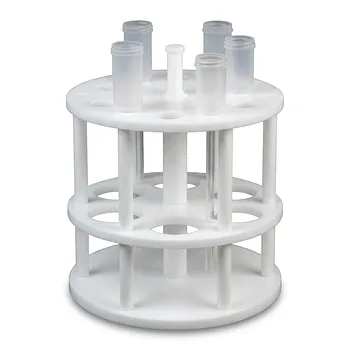
- Custom PFA Microcolumn Racks and PTFE Machined Low Background Corrosion Resistant Laboratory Fixtures
People Also Ask
- What is the thermal operating range for PTFE battery clamps in electrochemical research? Stability from -200°C to +260°C
- What are the primary functions and material compositions of PTFE battery clamps? Ensure Precision & Chemical Resistance
- How do coin cell testing fixtures evaluate ZIF-derived LCO cycling stability? Ensure Battery Research Precision
- What are the electrical insulation and signal integrity advantages of using PTFE battery clamps? Ensure Data Accuracy
- How does the chemical inertness of PTFE benefit laboratory-scale battery testing? Ensure high-purity research results.