The central design challenge is to conduct lithium ions without allowing water to reach moisture-sensitive lithium metal. Amphiphilic polymer electrolyte membranes address this by combining hydrophilic groups, such as methoxyethoxyethoxy units, with hydrophobic fluorinated groups, such as trifluoroethoxy or fluoroalkoxy side chains. The hydrophilic phase supports lithium-ion transport, while the fluorinated phase limits water ingress; careful control of their ratio can produce ionic conductivity around 10⁻⁵ S/cm while preserving a meaningful water barrier.
The membrane must provide enough connected hydrophilic character for lithium-ion movement, but enough fluorinated hydrophobic character to prevent water penetration. Fluoropolymer electrochemical testing supplies make this balance measurable by providing chemically inert, low-contamination test environments.
Why These Membranes Require Amphiphilic Design
Hydrophilic Units Enable Ion Transport
Hydrophilic polymer segments interact with the electrolyte and lithium salts, creating environments through which lithium ions can move. Increasing the amount or connectivity of these units generally improves ionic transport because the membrane contains more favorable pathways for ion conduction.
Methoxyethoxyethoxy groups are an example of functionality used to promote this behavior. Their ether-rich structure can coordinate with lithium ions and support movement through the polymer electrolyte.
Fluorinated Units Restrict Water Entry
Hydrophobic fluorinated side groups reduce the membrane's affinity for water. Trifluoroethoxy and fluoroalkoxy groups can therefore help form a barrier between an aqueous environment and a metallic lithium electrode.
This function is especially important for seawater-battery concepts, where water exposure is intrinsic to the operating environment. Preventing water transport is also important because metallic lithium is highly moisture-sensitive and can experience parasitic reactions when exposed to water.
The Membrane Is a Compromise, Not Two Separate Materials
The useful membrane architecture depends on combining both behaviors within one material. Hydrophilic and hydrophobic domains must be balanced so that ion-conducting regions remain sufficiently connected without creating continuous pathways for water.
The practical target is therefore not maximum hydrophilicity or maximum fluorination. It is an optimized composition that reaches the required conductivity, potentially in the 10⁻⁵ S/cm range, while maintaining adequate water resistance.
How Ionic Conductivity and Water Barrier Properties Are Balanced
Adjust the Functional-Group Ratio
The primary formulation variable is the relative amount of hydrophilic and hydrophobic functionality. More hydrophilic units can increase lithium-ion conductivity, but excessive hydrophilicity may increase water uptake or make water transport easier.
More fluorinated character can strengthen water resistance, but excessive hydrophobic content may interrupt ion-conducting pathways and reduce the membrane's ability to transport lithium ions.
Preserve Connected Ion-Conducting Pathways
A membrane can contain a substantial amount of hydrophilic chemistry yet perform poorly if those regions are isolated. The hydrophilic units must be distributed and organized so lithium ions can travel across the membrane rather than encountering disconnected pockets.
This is why composition alone is not enough. Researchers must evaluate the resulting membrane structure and its electrochemical behavior under conditions relevant to the intended battery.
Evaluate Both Properties Under Realistic Conditions
Ionic conductivity should be measured alongside water uptake, water permeation, dimensional stability, and compatibility with lithium salts and electrode materials. A membrane that performs well in a dry conductivity test may not retain its barrier function in a humid or aqueous environment.
For rechargeable systems, testing must also examine whether the membrane maintains its properties during repeated electrochemical cycling. The relevant material is the one that preserves both transport and protection over time.
Why Testing Conditions Matter
Moisture Can Distort Electrochemical Results
Trace water can react with moisture-sensitive lithium or alter the behavior of lithium salts and electrolyte solvents. If the test apparatus introduces contamination, measured impedance, conductivity, or battery performance may reflect the test setup rather than the membrane itself.
This is particularly problematic when comparing small composition changes. A minor difference in measured conductivity could originate from uncontrolled moisture or contamination instead of the hydrophilic-to-fluorinated balance.
Chemical Inertness Protects the Measurement
Electrochemical cells and fixtures must resist aggressive electrolyte solvents, lithium salts, and the applied electrochemical conditions. Corrosion or chemical attack can change the cell geometry, contaminate the electrolyte, and compromise the membrane test.
High-purity, corrosion-resistant laboratory apparatus helps isolate the membrane's intrinsic performance. Structural stability is also important during impedance measurements and battery tests, where pressure, contact, and alignment must remain consistent.
The Role of Fluoropolymer Electrochemical Testing Supplies
PTFE and PFA Provide an Inert Test Environment
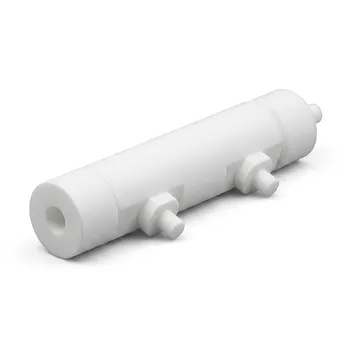
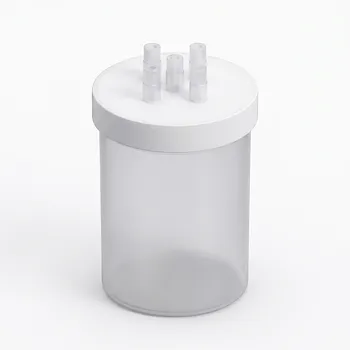
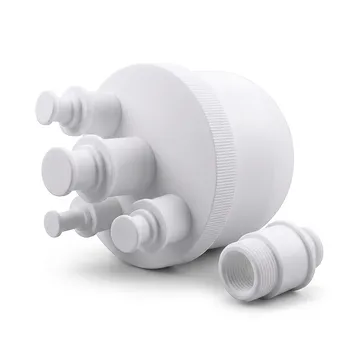
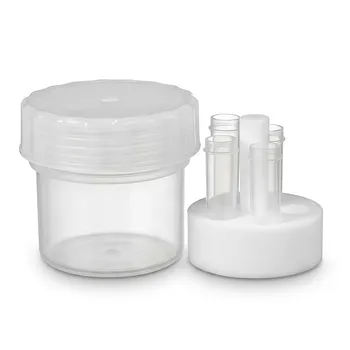
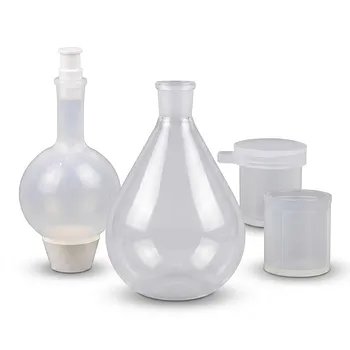
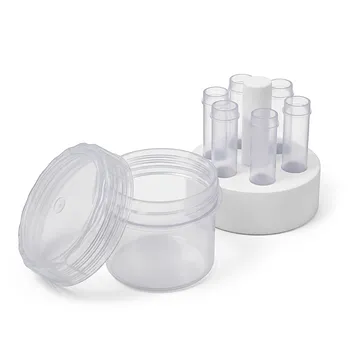
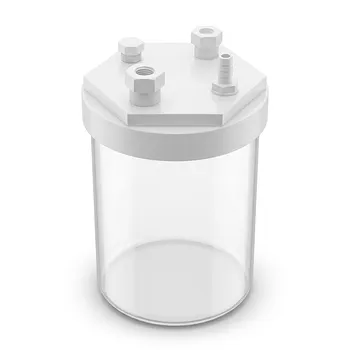
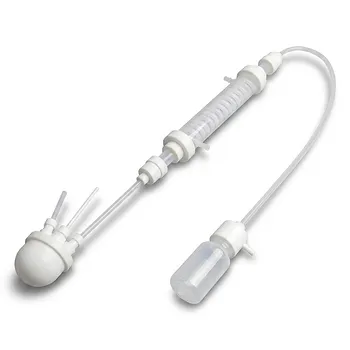
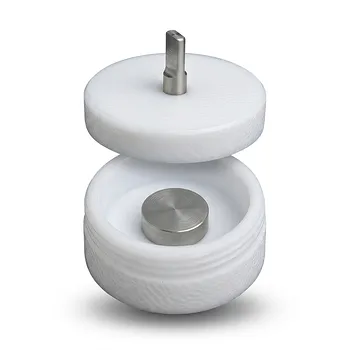
Fluoropolymer components such as PTFE and PFA electrochemical cells are used because they offer strong chemical resistance against the solvents and lithium salts found in polymer-electrolyte testing. Their inertness reduces the likelihood that the apparatus will react with the electrolyte or membrane.
This makes them suitable for controlled measurements of ionic conductivity, impedance, water-barrier behavior, and rechargeable battery performance.
Custom Fixtures Improve Reproducibility
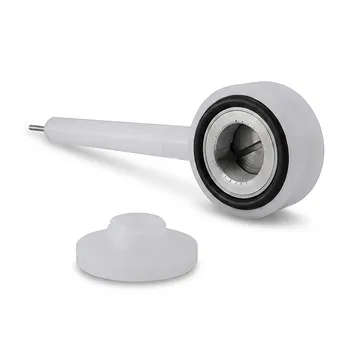
Custom-machined cell fixtures can maintain consistent sample positioning, electrode contact, compression, and exposed area. These factors directly affect impedance and battery measurements, so fixture geometry is part of measurement quality rather than a minor convenience.
A stable fixture also helps researchers compare membrane formulations fairly. Without consistent mechanical and electrical conditions, it becomes difficult to determine whether a performance change comes from chemistry or from the test assembly.
High Purity Reduces Trace Contamination
High-purity fluoropolymer supplies help prevent trace metallic or chemical contamination from entering the electrolyte. This is valuable when studying lithium systems, where small amounts of contamination can influence interfacial reactions and apparent cycling behavior.
The supplies do not create the membrane's ionic conductivity or water barrier. Their role is to preserve the integrity of the experiment so those properties can be measured accurately.
Understanding the Trade-offs
Higher Conductivity Can Weaken Water Resistance
Increasing hydrophilic content may improve lithium-ion transport but can also increase water affinity. If water begins to pass through the membrane, the material may no longer protect the metallic lithium electrode adequately.
The correct response is not to maximize conductivity in isolation. Conductivity must be judged against the membrane's required barrier performance and the battery's operating environment.
Stronger Hydrophobicity Can Limit Ion Movement
Increasing fluorinated side-group content can improve water rejection, but too much hydrophobic character may reduce the volume or continuity of the ion-conducting phase. The result can be higher impedance and poorer battery performance.
A fluorinated membrane is therefore not automatically an effective electrolyte membrane. Its fluorination must be integrated with enough hydrophilic functionality to support lithium-ion transport.
Apparatus Compatibility Is Not Optional
Using an ordinary cell that reacts with the electrolyte can undermine both properties being evaluated. Corrosion, swelling, leaching, or contamination may produce misleading conductivity and barrier measurements.
PTFE/PFA cells and compatible custom fixtures reduce these sources of error, but they do not replace careful control of sample preparation, moisture exposure, and test conditions.
Making the Right Choice for Your Goal
The appropriate development strategy depends on which failure mode matters most in the intended battery.
- If your primary focus is lithium-ion conductivity: Increase and organize hydrophilic ether-containing units enough to form continuous ion-transport pathways, then verify that water uptake remains acceptable.
- If your primary focus is metallic-lithium protection: Increase the effectiveness and continuity of fluorinated hydrophobic groups while confirming that ionic conductivity remains within the required operating range.
- If your primary focus is seawater-battery durability: Evaluate conductivity and water permeation together under aqueous or humid exposure and repeated cycling conditions.
- If your primary focus is reliable materials comparison: Use high-purity PTFE/PFA electrochemical cells and custom fixtures to minimize contamination, corrosion, and geometric variation during testing.
The most effective membrane is the one whose hydrophilic transport network and fluorinated water barrier remain balanced throughout actual electrochemical operation.
Summary Table:
| Aspect | Hydrophilic Units (Ion Transport) | Fluorinated Units (Water Barrier) |
|---|---|---|
| Function | Facilitate lithium-ion movement | Repel water, protect Li metal |
| Examples | Methoxyethoxyethoxy groups | Trifluoroethoxy, fluoroalkoxy groups |
| Trade-off | More can increase conductivity but raise water uptake | More can improve water resistance but reduce ionic pathways |
| Goal | Maintain connected pathways | Limit water ingress |
| Testing | Measure ionic conductivity (target ~10⁻⁵ S/cm) | Evaluate water uptake, permeation, dimensional stability |
| Role of PTFE/PFA supplies | Provide inert, low-contamination test cells | Ensure accurate, reproducible electrochemical measurements |
Optimize your amphiphilic membrane development with high-purity PTFE/PFA electrochemical cells and custom fixtures from KINTEK. Our chemically inert, low-contamination supplies are designed for accurate ionic conductivity and water barrier testing. Whether you need standard labware, custom electrochemical cells, or high-volume components, our PTFE/PFA expertise ensures reliable results. Contact us today to discuss your requirements and enhance your battery research!
Related Products
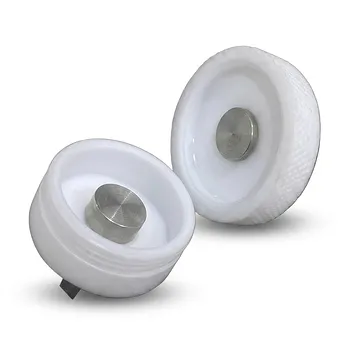
- Corrosion Resistant PTFE Coin Cell Battery Testing Clamps and Acid Proof Custom Fluoropolymer Battery Fixtures
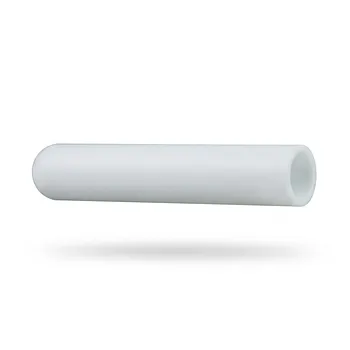
- Custom PTFE Test Tubes Corrosion Resistant Low Background Fluoropolymer Labware 50ml 30ml
- Corrosion Resistant PTFE Electrochemical Cell for New Energy Research Inert Insulating Customizable Lab Reaction Vessel
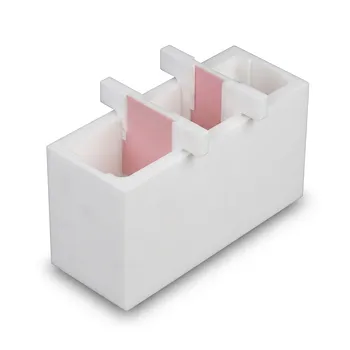
- Customizable PFA Square Tray Corrosion Resistant High Temperature Large Petri Dish Electrolytic Cell
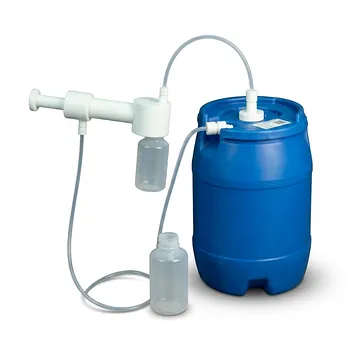
- PTFE Ultrapure Liquid Sampler Corrosion Resistant Acid Sampling Tool for 200L Reactors Custom Fluoropolymer Sampling Device
People Also Ask
- What is the thermal operating range for PTFE battery clamps in electrochemical research? Stability from -200°C to +260°C
- What are the primary functions and material compositions of PTFE battery clamps? Ensure Precision & Chemical Resistance
- How do coin cell testing fixtures evaluate ZIF-derived LCO cycling stability? Ensure Battery Research Precision
- What are the electrical insulation and signal integrity advantages of using PTFE battery clamps? Ensure Data Accuracy
- How does the chemical inertness of PTFE benefit laboratory-scale battery testing? Ensure high-purity research results.