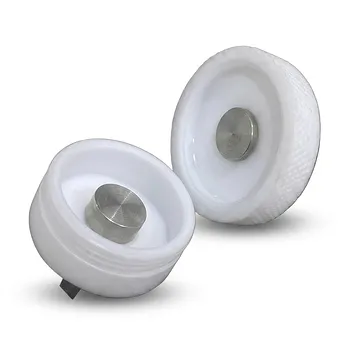
A three-electrode electrochemical cell is fundamental to BiVO4 testing because it enables the precise control and measurement of the potential at the interface between the photoelectrode and the electrolyte. By decoupling the potential measurement from the current-carrying circuit, this configuration ensures that the recorded data reflects the intrinsic photoelectric conversion and oxygen evolution reaction (OER) activity of the Bismuth Vanadate itself, rather than interference from the experimental setup.
The core necessity of a three-electrode system lies in its ability to isolate the working electrode’s behavior from external variables. This setup eliminates the influence of counter electrode polarization and ohmic drops, providing an accurate representation of the material's kinetic and thermodynamic properties.
Isolating the Working Electrode Potential
The Role of the Reference Electrode
In a two-electrode system, the potential is measured between the working electrode and the counter electrode. This is problematic because the counter electrode’s potential changes as current flows through it, making it impossible to know the exact potential at the BiVO4 surface.
A three-electrode system introduces a reference electrode (such as Ag/AgCl or SCE) that carries no current. This provides a stable, constant reference point against which the working electrode (WE) potential is measured with extreme precision.
Decoupling Current and Potential
The system separates the circuit into two distinct paths: one for current flow and one for potential measurement. The current flows between the working electrode and the counter electrode (CE), while the potential is monitored between the WE and the RE.
This separation ensures that the electrical potential applied to the BiVO4 is not affected by polarization occurring at the counter electrode. It allows the electrochemical workstation to maintain a stable environment for the photoelectrode.
Eliminating Measurement Interference
Overcoming Counter Electrode Polarization
During photoelectrochemical (PEC) testing, reactions at the counter electrode (typically a platinum wire) can create a "back-pressure" or polarization. This polarization adds an unknown voltage to the measurement in a two-electrode setup.
By using a three-electrode configuration, this polarization is effectively ignored. The resulting photocurrent-voltage (I-V) curves are therefore an authentic map of how the BiVO4 responds to light and bias, free from the CE's performance limitations.
Minimizing Ohmic Drop and Resistance
Every electrolyte has an internal resistance that causes a voltage drop (iR drop) when current flows. A three-electrode system allows for the compensation of this uncompensated resistance.
Because the reference electrode is placed close to the working electrode and draws negligible current, it accurately captures the potential at the electrode-electrolyte interface. This is critical for determining the true onset potential of the BiVO4 material.
Characterizing Intrinsic Material Properties
Accuracy in OER Activity Analysis
BiVO4 is primarily studied for its ability to drive the oxygen evolution reaction (OER). To evaluate its efficiency, researchers must know the exact potential at which water oxidation begins.
Without the precision of a three-electrode system, the measured onset potential could be shifted by several hundred millivolts. Such inaccuracies would lead to a false assessment of the material’s catalytic effectiveness.
Defining Saturation Current and Kinetics
To understand the charge carrier dynamics and recombination rates in BiVO4, researchers need to observe the saturation current. This requires a stable potential sweep that only a three-electrode setup can provide.
This configuration allows for the calculation of specific mass capacitance and other kinetic characteristics. These metrics are essential for comparing different synthesis methods or doping strategies for Bismuth Vanadate.
Understanding the Trade-offs
Complexity vs. Accuracy
While a three-electrode system provides superior data, it is more complex to set up than a simple two-electrode cell. It requires a potentiostat (electrochemical workstation) and careful placement of the reference electrode to avoid shielding the light path.
Research vs. Practical Application
Three-electrode cells are the standard for fundamental research and material characterization. However, they do not reflect the total energy efficiency of a final device, such as a complete solar-to-hydrogen cell, where the losses at both electrodes must be considered.
How to Apply This to Your Project
When designing your photoelectrochemical experiments for BiVO4, your choice of setup should align with your specific analytical goals:
- If your primary focus is material discovery or doping analysis: You must use a three-electrode system to ensure the changes you see are due to the material properties and not experimental artifacts.
- If your primary focus is determining the intrinsic onset potential: Utilize a stable reference electrode (like Ag/AgCl) and ensure the three-electrode setup is properly compensated for iR drop.
- If your primary focus is evaluating a final, commercial-ready device: Use a two-electrode system to measure the actual "wall-plug" efficiency, as this accounts for the losses at both the photoanode and the cathode.
Precision in potential control is the only way to transform raw photocurrent data into a definitive understanding of BiVO4 performance.
Summary Table:
| Feature | Advantage in BiVO4 Testing | Role of Three-Electrode System |
|---|---|---|
| Potential Control | Precise measurement of electrode-electrolyte interface | Uses a Reference Electrode (RE) to provide a stable constant point |
| Interference | Eliminates counter electrode polarization | Decouples current flow from the potential measurement circuit |
| Data Integrity | Accurate onset potential and I-V curves | Minimizes Ohmic drop (iR) for intrinsic material characterization |
| Analysis Scope | Focuses on material kinetic and thermodynamic properties | Isolates Bismuth Vanadate behavior from setup variables |
Elevate Your Photoelectrochemical Research with KINTEK
Precision in BiVO4 characterization demands high-performance equipment. KINTEK specializes in high-performance fluoropolymer laboratory supplies, offering everything you need for advanced electrochemical setups. From custom-machined PTFE and PFA electrochemical cells and battery testing fixtures to essential consumables like high-purity tubes, fittings, and stirring bars, we provide the tools necessary for zero-interference testing.
Whether you require standard labware (beakers, crucibles, reagent bottles) or bespoke laboratory setups crafted via end-to-end custom CNC fabrication, KINTEK delivers the durability and chemical resistance your research requires. Let us support your next breakthrough with high-performance materials tailored to your specific needs.
Ready to optimize your lab setup? Contact us today to discuss your custom requirements!
References
- Jakob Praxmair, Simone Pokrant. Hydrothermally Synthesized BiVO <sub>4</sub> : The Role of KCl as Additive for Improved Photoelectrochemical and Photocatalytic Oxygen Evolution Activity. DOI: 10.1002/celc.202500280
This article is also based on technical information from Kintek Knowledge Base .
Related Products
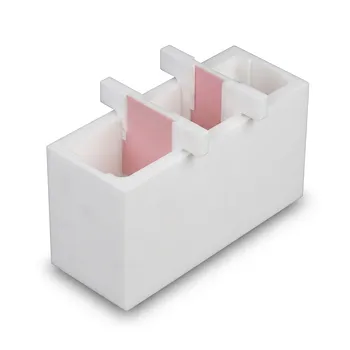
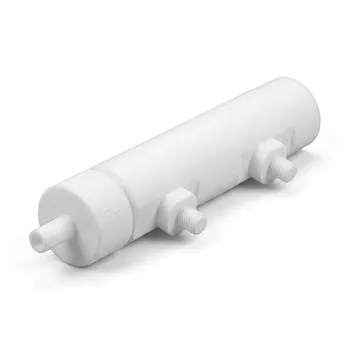
- Corrosion Resistant PTFE Electrochemical Cell for New Energy Research Inert Insulating Customizable Lab Reaction Vessel
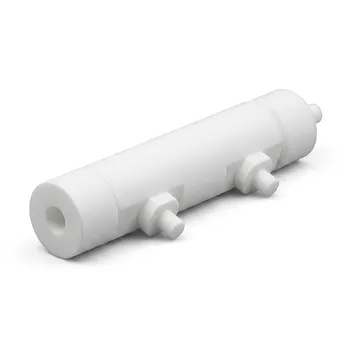
- Custom PTFE Electrolytic Cell Corrosion Resistant Low Background Reaction Vessel with Inlet Outlet Ports
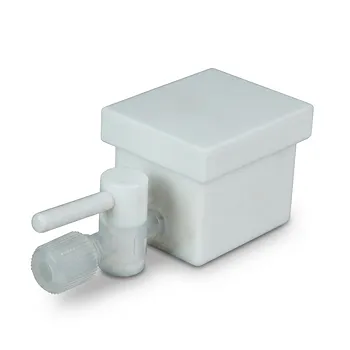
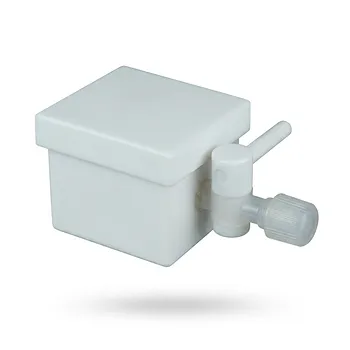
- Square PTFE Electrochemical Cell for Silicon Wafer Processing and Hydrofluoric Acid Resistance in Semiconductor and New Energy Research
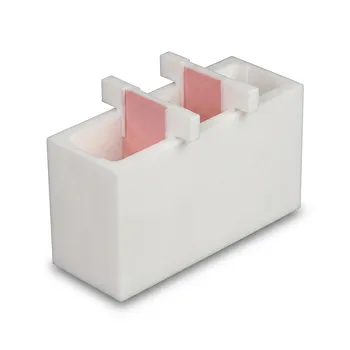
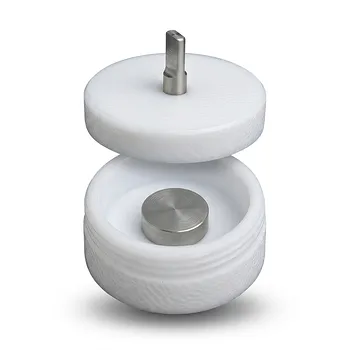
- White PTFE Electrolytic Cell with Movable Slider and Insulated Lid for Fluorine Corrosion Resistance
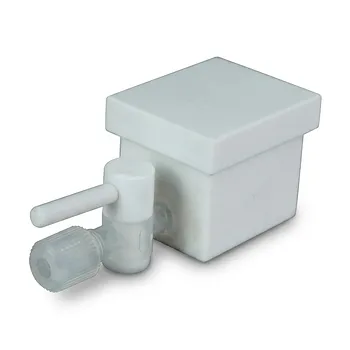
- Custom PTFE Corrosion Resistant Insulating Electrophoresis Reaction Cell with Septum and Valves for Low Background Trace Analysis
People Also Ask
- How do custom PTFE electrochemical cells improve the accuracy of stability testing for alkaline catalysts compared to glass cells?
- How does the hydrophobicity of PTFE benefit electrochemical measurements? Enhance Stability and Precision in Your Lab
- What makes PTFE an ideal construction material for custom electrochemical cells and electronic analytical instrumentation housings? Discover superior chemical resistance and electrical insulation
- Why must seawater electrolysis test cells have high corrosion resistance? Protect catalyst stability & data accuracy.
- What are the key steps for structural integrity in molded PTFE lab reaction vessels? Master fine powder processing.