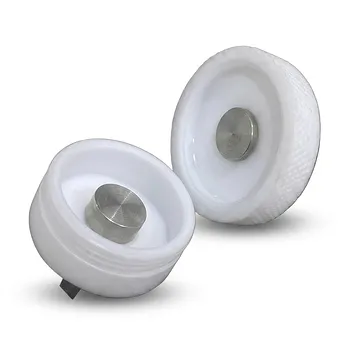
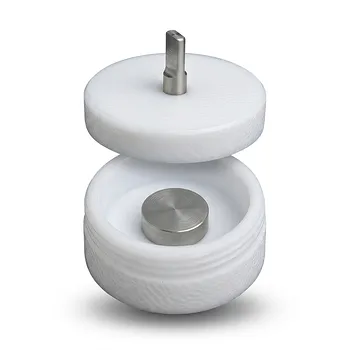
Battery testing fixtures are the essential hardware interface that allows researchers to isolate and quantify the electrochemical performance of Graphitic Carbon Nitride (g-C3N4) anodes. By providing a standardized environment with consistent mechanical pressure and hermetic sealing, these fixtures ensure that measurements of specific capacity, rate performance, and cycling stability reflect the inherent properties of the g-C3N4 material rather than experimental variables.
Core Takeaway: High-precision battery fixtures provide the controlled mechanical and electrical environment necessary to transform raw g-C3N4 materials into measurable electrode systems, ensuring data reliability by minimizing contact resistance and stabilizing physical interfaces.
Standardizing the Electrochemical Environment
Establishing Uniform Current Distribution
Fixtures such as coin cell molds and specialized test boxes ensure that the electrode, separator, and electrolyte are in optimal contact. This uniform distribution prevents "hot spots" of high current density that could lead to localized material degradation or inaccurate capacity readings.
Minimizing Contact Resistance
By utilizing stainless steel spacers and calibrated springs, these fixtures apply constant mechanical pressure across the electrode surface. This pressure minimizes voltage drops and thermal effects that occur when electrical contact is unstable, allowing for a cleaner signal during high-rate testing.
Maintaining a Hermetic Seal
Evaluating g-C3N4 in lithium-ion or sodium-ion systems requires an environment free from moisture and oxygen. Specialized casings provide a securely sealed environment that prevents electrolyte evaporation and contamination, which is vital for long-term cycling stability studies.
Quantifying Material Dynamics of g-C3N4
Monitoring Structural Stability and Expansion
Like many anode materials, g-C3N4 may experience volume changes during the intercalation and deintercalation of lithium or sodium ions. The stable physical constraint provided by the fixture allows researchers to observe how the material handles these stresses without the electrode assembly falling apart.
Facilitating Precision Characterization
High-quality fixtures are designed to support sensitive diagnostic tests like Electrochemical Impedance Spectroscopy (EIS) and Cyclic Voltammetry (CV). These tests provide insight into lithium-ion diffusion rates and the internal resistance of the g-C3N4 composite, which are core parameters for evaluating its viability as a commercial anode.
Simulating Real-World Operational Stress
By controlling the internal pressure, fixtures can simulate the actual mechanical stress states a battery might face in a consumer device or electric vehicle. This simulation is critical for identifying capacity decay mechanisms and refining the structural design of the g-C3N4 electrode.
Understanding the Trade-offs and Pitfalls
The Risk of Pressure Inconsistency
If a fixture does not apply uniform pressure, the resulting data may show artificial capacity decay. Researchers must ensure that springs and spacers are correctly calibrated, as excessive pressure can damage the separator, while insufficient pressure leads to high internal resistance.
Material Compatibility and Corrosion
Not all fixture materials are compatible with every electrolyte used in sodium-ion or lithium-ion research. Using a fixture with low-grade stainless steel can lead to chemical interference or corrosion, which introduces "noise" into the electrochemical signals and invalidates the test results.
Scaling from Lab to Production
While coin cells are excellent for material screening, they do not perfectly replicate the thermal and ionic flow dynamics of large-scale pouch or prismatic cells. Relying solely on small-scale fixture data without considering geometric scaling factors can lead to overestimating the rate performance of g-C3N4 in real-world applications.
How to Apply This to Your Research
Implementing the Right Testing Strategy
- If your primary focus is initial material screening: Utilize standard coin cell fixtures (CR2032 or similar) to rapidly iterate on g-C3N4 synthesis methods and baseline capacity.
- If your primary focus is understanding ion kinetics: Invest in high-precision three-electrode fixtures that allow for a reference electrode, enabling the separation of anode and cathode contributions to impedance.
- If your primary focus is long-term durability: Use specialized charge-discharge test boxes with integrated thermal management to ensure environmental consistency over hundreds of cycles.
By standardizing the physical environment, battery testing fixtures turn g-C3N4 from a theoretical powder into a quantifiable and comparable electrochemical component.
Summary Table:
| Key Fixture Function | Benefit to g-C3N4 Research | Data Outcome |
|---|---|---|
| Uniform Pressure | Minimizes contact resistance and voltage drops | Accurate high-rate performance |
| Hermetic Sealing | Prevents electrolyte evaporation and contamination | Reliable long-term cycling stability |
| Physical Constraint | Manages material volume expansion during cycling | Clearer structural stability insights |
| Signal Stabilization | Facilitates clean EIS and CV measurements | Precise ion diffusion and kinetics data |
Elevate Your Battery Research with KINTEK Precision
Unlock the full potential of your g-C3N4 anode studies with high-performance laboratory solutions from KINTEK. We specialize in high-performance fluoropolymer materials (PTFE and PFA), providing everything from everyday basics—beakers, crucibles, and reagent bottles—to specialized battery testing fixtures, electrochemical cells, and hydrothermal synthesis liners.
Whether you need standard filtration tools and fluid transfer components or complex, bespoke CNC-machined parts designed for your unique experimental setup, KINTEK delivers the reliability and chemical resistance your research demands.
Ready to optimize your lab's performance? Contact us today to discuss your custom requirements!
References
- Muhammad Nabeel, Zulfiqar Ahmad Rehan. Tailoring Graphitic Carbon Nitride (g‐C <sub>3</sub> N <sub>4</sub> ) for Multifunctional Applications: Strategies for Overcoming Challenges in Catalysis and Energy Conversion. DOI: 10.1155/er/5599894
This article is also based on technical information from Kintek Knowledge Base .
Related Products
- Corrosion Resistant PTFE Coin Cell Battery Testing Clamps and Acid Proof Custom Fluoropolymer Battery Fixtures
- Acid Resistant PTFE Button Cell Battery Test Fixture Customizable Machining High Purity Electrochemical Testing Clamp
People Also Ask
- What is the thermal operating range for PTFE battery clamps in electrochemical research? Stability from -200°C to +260°C
- What are the primary functions and material compositions of PTFE battery clamps? Ensure Precision & Chemical Resistance
- How do coin cell testing fixtures evaluate ZIF-derived LCO cycling stability? Ensure Battery Research Precision
- What are the electrical insulation and signal integrity advantages of using PTFE battery clamps? Ensure Data Accuracy
- How does the chemical inertness of PTFE benefit laboratory-scale battery testing? Ensure high-purity research results.