The selection of a high-porosity glass fiber separator for V-NbOPO4@rGO sodium-ion cells is driven by the need for rapid ion transport and chemical compatibility. These separators provide superior electrolyte wettability and retention, specifically for systems using NaPF6/diglyme electrolytes. This architecture minimizes internal resistance, enabling the electrode to maintain stable performance even at extreme current densities of up to 50 A g⁻¹.
Core Takeaway: High-porosity glass fiber separators act as an efficient electrolyte reservoir that ensures fast, uniform sodium-ion migration, which is critical for supporting the ultra-high rate capabilities of V-NbOPO4@rGO electrodes.
Facilitating Rapid Ion Transport
The Role of Electrolyte Wettability
Glass fiber separators possess excellent wettability, allowing them to be fully permeated by the NaPF6/diglyme electrolyte almost instantly. This rapid wetting ensures that the entire surface area of the V-NbOPO4@rGO electrode is active and accessible for ion exchange.
Managing High Current Densities
The high porosity of these separators allows them to absorb and retain large quantities of electrolyte. This is essential for maintaining uniform sodium-ion migration across the separator, preventing localized ion depletion during high-rate operations.
Reducing Internal Resistance
By facilitating a dense and continuous path for ion flow, high-porosity separators significantly lower the internal resistance of the button cell. This reduction in resistance is a prerequisite for achieving the ultra-high rate performance required by advanced vanadium-based phosphate electrodes.
Chemical and Structural Stability
Compatibility with Diglyme Electrolytes
The glass fiber material exhibits high chemical stability when in contact with NaPF6/diglyme solutions. It does not degrade or react unfavorably, ensuring that the chemical environment remains consistent over many cycles.
Supporting Electrode Kinetics
The V-NbOPO4@rGO electrode is designed for extreme speeds, reaching current densities as high as 50 A g⁻¹. The separator must be able to support these kinetics without becoming a bottleneck for the system's overall power density.
Understanding the Trade-offs
Mechanical Fragility and Thickness
While glass fiber offers superior porosity, it is generally thicker and more fragile than traditional polymer separators like Celgard. This increased thickness can lead to a lower volumetric energy density at the full-cell level.
Risk of Internal Short Circuits
The large pore size of glass fiber separators can sometimes allow dendrite growth or small particles to bridge the gap between electrodes. While effective for laboratory-scale button cells, this factor requires careful management in larger-scale applications.
How to Apply This to Your Project
Making the Selection Based on Your Goal
To optimize your sodium-ion battery assembly, consider these strategic priorities:
- If your primary focus is high-rate performance: Utilize high-porosity glass fiber to ensure that ion transport can keep pace with current densities up to 50 A g⁻¹.
- If your primary focus is electrolyte retention: Select glass fiber over polymer films to ensure the V-NbOPO4@rGO electrode remains fully saturated during long-term cycling.
- If your primary focus is minimizing cell resistance: Prioritize separators with the highest available porosity to facilitate the fastest possible sodium-ion migration.
By prioritizing electrolyte wettability and ion flux, you can fully leverage the ultra-high-rate potential of vanadium-based phosphate anodes in sodium-ion systems.
Summary Table:
| Selection Factor | Role in V-NbOPO4@rGO Cells | Performance Benefit |
|---|---|---|
| High Porosity | Creates an efficient electrolyte reservoir | Supports ultra-high current densities (50 A g⁻¹) |
| Wettability | Rapid absorption of NaPF6/diglyme | Minimizes internal resistance for faster kinetics |
| Ion Migration | Facilitates a dense, continuous flow path | Ensures uniform sodium-ion flux across electrodes |
| Chemical Stability | Resists degradation in diglyme systems | Maintains consistent chemical environment over cycles |
Elevate Your Battery Research with KINTEK Precision
To achieve the extreme performance required by advanced electrodes like V-NbOPO4@rGO, every component in your lab must meet the highest standards of chemical purity and structural integrity. KINTEK specializes in providing high-performance fluoropolymer solutions tailored for the most demanding electrochemical environments.
From essential PTFE and PFA labware (beakers, digestion tubes, and reagent bottles) to custom-engineered electrochemical cells and battery testing fixtures, we offer the tools you need for precise results. Whether you require standard consumables like stirring bars and O-rings or bespoke CNC-fabricated components and microchannel reactors, KINTEK delivers end-to-end solutions with an absolute focus on high-performance materials.
Ready to optimize your sodium-ion battery assembly? Contact KINTEK today to discuss your custom fabrication needs or high-volume lab supply orders!
References
- Zhongteng Chen, Zhipeng Sun. Tuning the Electronic Structure of Niobium Oxyphosphate/Reduced Graphene Oxide Composites by Vanadium‐Doping for High‐Performance Na<sup>+</sup> Storage Application. DOI: 10.1002/cnl2.70010
This article is also based on technical information from Kintek Knowledge Base .
Related Products
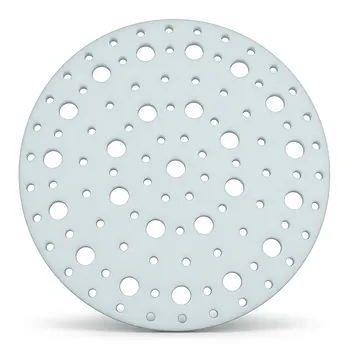
- High Temperature Resistant Insulating TFM Separator and Ultra Clean Laboratory PTFE Baffle Plate with Customizable Pore Size and Hole Configuration
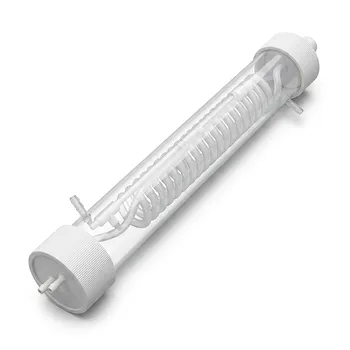
- High Purity PFA Condenser Serpentine Straight HF Resistant Reaction Apparatus Custom Circulation Column
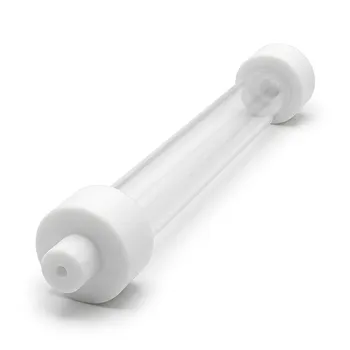
- High Purity PFA Ion Exchange Column Corrosion Resistant High Purity Chromatography Glass Alternative Customizable Vessel
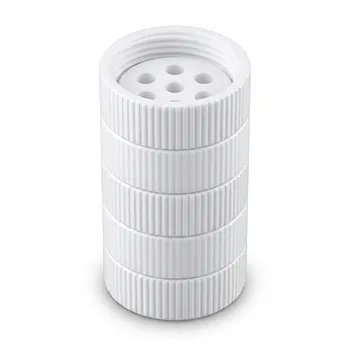
- High Temperature PTFE Reaction Sieve with Customizable Layers and Precision Pore Sizes for Threaded Sample Separation Devices
- High Purity PTFE PM2.5 Filter Sample Splitter for Environmental Monitoring Customizable Square Filter Divider for CDC Analysis
People Also Ask
- What are the limitations of pure PTFE in high temperature applications? Understanding the 200°C Ceiling
- Are Teflon parts capable of withstanding high temperatures? Understanding the 260°C Limit for Performance
- What future advancements are expected in temperature-resistant PTFE seals? Discover Smarter, Tougher Sealing Solutions
- What is porous PTFE used for? Advanced Filtration for Harsh Chemical & High-Temp Environments
- What are the benefits of porous PTFE? Unlock Superior Filtration and Chemical Resistance