The primary reason for pretreating an electrochemical cell with high-purity nitrogen is to eliminate dissolved oxygen from the electrolyte. This process ensures that the measured current density is a true reflection of the Hydrogen Evolution Reaction (HER) rather than a combination of multiple electrochemical processes. By removing oxygen, researchers can isolate the catalyst's performance and obtain high-fidelity data regarding overpotential and reaction kinetics.
Core Takeaway: Nitrogen purging acts as a "chemical reset," stripping the system of dissolved oxygen and carbon dioxide to prevent parasitic reactions. This step is non-negotiable for obtaining accurate polarization curves and identifying the true structural evolution of a catalyst.
The Impact of Dissolved Oxygen on HER Accuracy
Competition from the Oxygen Reduction Reaction (ORR)
Oxygen naturally dissolves in aqueous electrolytes and undergoes an Oxygen Reduction Reaction (ORR) when a negative potential is applied. Because the ORR occurs in a similar potential range to the Hydrogen Evolution Reaction, it creates a "parasitic" background current.
Distorting Polarization Curves and Overpotentials
If oxygen remains in the cell, the monitored current density will be artificially inflated by the ORR. This leads to inaccurate polarization curves and deceptive overpotential data, making a mediocre catalyst appear more active than it truly is.
Ensuring Data Repeatability
Consistent nitrogen bubbling—typically for at least 30 minutes—standardizes the testing environment across different trials. This rigor allows for meaningful comparisons between different catalytic materials by ensuring a near-zero oxygen baseline.
Maintaining Environmental Integrity for Spectroscopy
Eliminating Atmospheric Interference
In advanced setups like in-situ Raman spectroscopy, nitrogen purging is used to displace both oxygen and carbon dioxide from the air. Carbon dioxide can alter the local pH of the electrolyte, which significantly impacts the thermodynamics of the hydrogen evolution process.
Detecting Surface Active Species
A controlled, nitrogen-saturated environment allows sensitive spectroscopic tools to focus on the catalyst's surface without noise from dissolved gases. This is critical for identifying transient species, such as active oxyhydroxide (M-OOH) layers, that form under working potentials.
Sealing the Electrochemical Environment
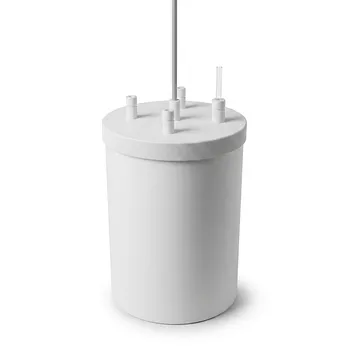
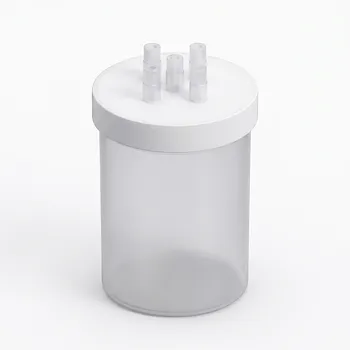
To maintain the purity achieved by nitrogen pretreatment, the electrochemical cell must remain sealed during testing. This prevents the re-entry of atmospheric gases, ensuring the "clean" background remains stable throughout the duration of the experiment.
Understanding the Trade-offs and Limitations
The Time-Efficiency Balance
While extended purging (30+ minutes) ensures higher purity, it increases the total time required for each experiment. Researchers must balance the need for absolute gas removal with the practical throughput of their testing schedule.
Potential for Electrolyte Evaporation
Vigorous nitrogen bubbling over long periods can lead to slight evaporation of the solvent, which may marginally change the concentration of the electrolyte. Using a gas humidifier or controlling the flow rate can mitigate this effect.
Impact of Nitrogen Flow on Mass Transport
If nitrogen bubbling continues during the actual electrochemical measurement, it can cause physical turbulence in the electrolyte. This turbulence may interfere with the diffusion layer at the electrode surface, potentially leading to fluctuations in the recorded current.
How to Apply This to Your Research
Effective pretreatment is a cornerstone of electrochemistry that varies based on your specific analytical goals.
- If your primary focus is precise kinetic modeling: Ensure a minimum 30-minute nitrogen purge at a steady flow to reach a complete oxygen-free steady state before recording polarization curves.
- If your primary focus is in-situ characterization (e.g., Raman): Use a sealed cell and maintain a light nitrogen blanket over the electrolyte to prevent $CO_2$ and $O_2$ ingress from affecting spectral peaks.
- If your primary focus is high-throughput screening: Standardize a shorter, high-intensity purge duration to maintain consistency while increasing the number of samples processed per day.
By rigorously removing dissolved gases, you transform your electrochemical cell from a noisy environment into a precise instrument for discovery.
Summary Table:
| Key Factor | Impact of Dissolved Gases | Benefit of Nitrogen Purging |
|---|---|---|
| Current Density | Artificially inflated by ORR interference | Isolates true HER performance |
| Data Accuracy | Deceptive overpotential and polarization curves | Ensures high-fidelity kinetic modeling |
| Environmental pH | CO2 ingress alters local thermodynamics | Maintains electrolyte stability |
| Spectroscopy | Background noise masks surface active species | Enhances signal for in-situ analysis |
Maximize Research Fidelity with KINTEK
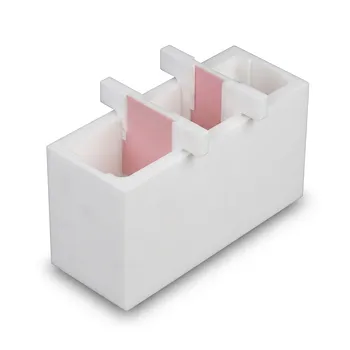
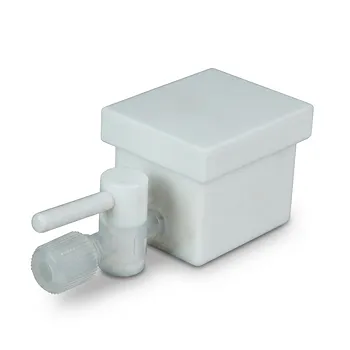
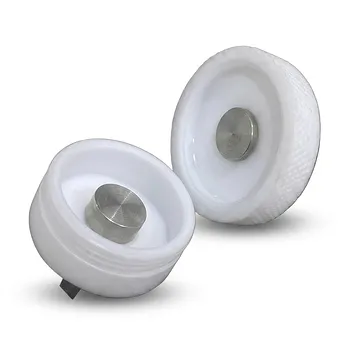
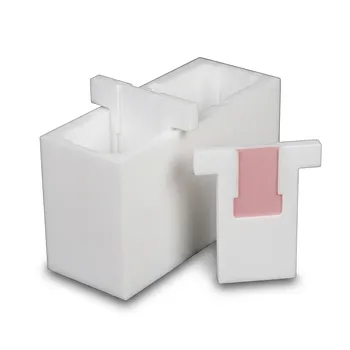
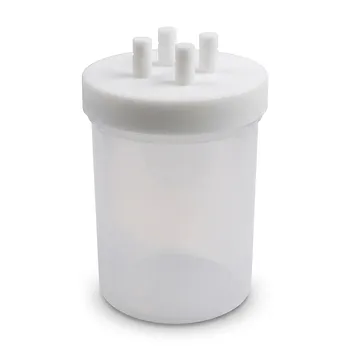
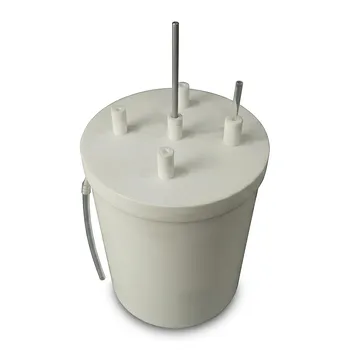
Precision in Hydrogen Evolution Reaction (HER) evaluation starts with a high-purity, stable environment. At KINTEK, we specialize in high-performance fluoropolymer laboratory supplies that eliminate contamination risks. From standard PTFE/PFA beakers, reaction vessels, and digestion tubes to custom-machined electrochemical cells, electrode accessories, and battery testing fixtures, our products are designed for the most demanding analytical environments.
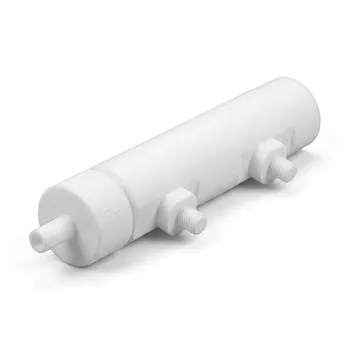
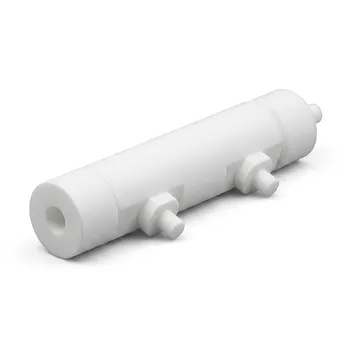
Whether you require fluid transfer components (tubing, fittings, valves), filtration tools, or advanced reaction apparatus like microchannel reactors, our end-to-end CNC fabrication ensures bespoke solutions tailored to your unique research needs. Contact us today to upgrade your lab setup with KINTEK’s expert fluoropolymer solutions!
References
- Peng Du, Xilong Wang. MoS <sub>2</sub> Nanosheets/3D Graphene on a Porous Nickel Tube as an Efficient Electrocatalyst for Hydrogen Evolution. DOI: 10.1002/cbh2.70041
This article is also based on technical information from Kintek Knowledge Base .
Related Products
- Corrosion Resistant PTFE Electrochemical Cell for New Energy Research Inert Insulating Customizable Lab Reaction Vessel
- High Purity Custom PTFE Reaction Cell Electrolytic Tank for Semiconductor and Polysilicon Industrial Applications
- Custom PTFE Reaction Box Opaque White Square Electrochemical Cell Tank
- Custom PTFE Electrolytic Cell Corrosion Resistant Low Background Reaction Vessel with Inlet Outlet Ports
- Custom PTFE Corrosion Resistant Insulating Electrophoresis Reaction Cell with Septum and Valves for Low Background Trace Analysis
People Also Ask
- How do custom PTFE electrochemical cells improve the accuracy of stability testing for alkaline catalysts compared to glass cells?
- How does the hydrophobicity of PTFE benefit electrochemical measurements? Enhance Stability and Precision in Your Lab
- What makes PTFE an ideal construction material for custom electrochemical cells and electronic analytical instrumentation housings? Discover superior chemical resistance and electrical insulation
- Why must seawater electrolysis test cells have high corrosion resistance? Protect catalyst stability & data accuracy.
- What are the key steps for structural integrity in molded PTFE lab reaction vessels? Master fine powder processing.