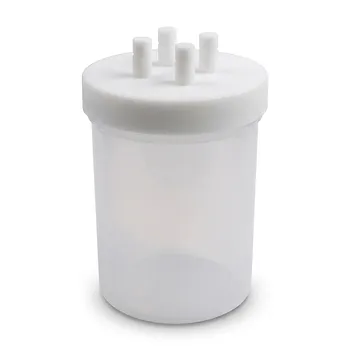
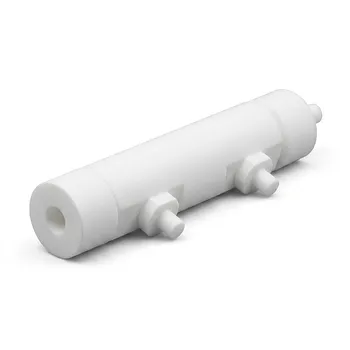
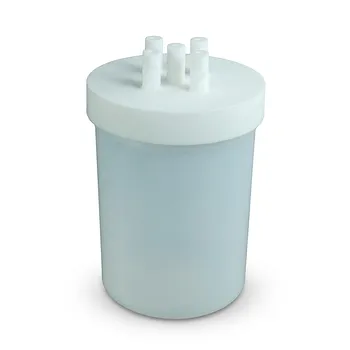
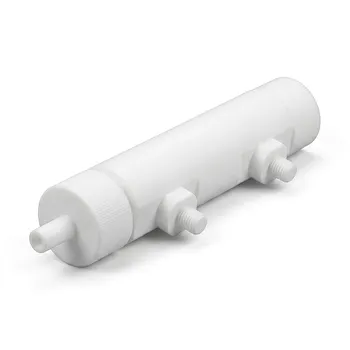
High-performance electrolyzer test fixtures provide the critical bridge between lab-scale discovery and industrial application. These specialized tools optimize the evaluation of Metal-Organic Framework (MOF) catalysts by utilizing advanced internal flow channels and precision sealing to ensure complete catalyst wetting. By accelerating bubble detachment and reducing mass transfer resistance, these fixtures allow researchers to measure the true kinetic potential of MOF-based bifunctional catalysts under realistic operating conditions.
High-performance test fixtures eliminate the physical bottlenecks of traditional lab setups, such as bubble accumulation and poor electrolyte contact. This ensures that the performance data for MOF-based catalysts reflects their actual potential in industrial water-splitting applications.
The Mechanics of Enhanced Catalyst Evaluation
Optimizing Catalyst-Electrolyte Contact
MOF-based catalysts often feature high porosity and complex surface structures that can be difficult to fully saturate. Precision-engineered sealing structures and advanced flow designs ensure the electrolyte is forced into contact with the entire active surface area. This prevents "dead zones" where the catalyst remains dry and underutilized during the reaction.
Reducing Mass Transfer Resistance
During water splitting, hydrogen and oxygen bubbles can cling to the electrode surface, effectively "blinding" the catalyst and stopping the reaction. High-performance fixtures utilize optimized internal flow channels to facilitate the rapid detachment and removal of these bubbles. This reduction in mass transfer resistance allows for a more accurate measurement of the catalyst's intrinsic activity at high current densities.
Assessing Bifunctional Performance
MOF-derived materials are frequently evaluated as bifunctional catalysts, meaning they must facilitate both the Hydrogen Evolution Reaction (HER) and the Oxygen Evolution Reaction (OER). Advanced fixtures provide the stability and control necessary to test these materials in both roles within a single, consistent environment. This consistency is vital for determining the overall efficiency of a full-cell water-splitting system.
Simulating Industrial Realities
Mimicking Commercial Flow Dynamics
Standard laboratory glassware often fails to replicate the high-velocity fluid dynamics found in industrial electrolyzer stacks. High-performance fixtures are designed to simulate industrial operating conditions, providing data that is more predictive of how a MOF catalyst will behave in a commercial product. This reduces the risk of performance "drops" when scaling up from the lab to the plant.
Objective Potential Assessment
By removing the variables of poor wetting and gas stagnation, these fixtures provide a highly objective assessment of a material’s practical application potential. Researchers can determine whether a MOF-derived catalyst is genuinely superior or if its perceived performance is merely an artifact of specific lab conditions. This clarity is essential for directing research funding toward the most promising materials.
Understanding the Trade-offs
Complexity and Setup Time
The primary downside of high-performance fixtures is their increased complexity compared to basic three-electrode electrochemical cells. Setting up these fixtures requires more precise assembly and careful attention to torque and sealing, which can slow down initial screening phases.
Maintenance and Contamination Risks
Intricate flow channels are highly effective but can be difficult to clean thoroughly between tests. If not maintained with rigorous protocols, residual materials from previous tests can lead to cross-contamination, potentially skewing the results of sensitive MOF-based material evaluations.
How to Apply This to Your Project
Recommendations for Research and Development
- If your primary focus is rapid material discovery: Use simplified electrochemical cells for initial "hit" screening, then transition to high-performance fixtures only for your top-performing candidates.
- If your primary focus is commercial scale-up: Prioritize fixtures that allow for variable flow rates and pressures to map the performance envelope of your MOF catalyst under industrial-like stress.
Transitioning to high-performance fixtures is a necessary step for any team looking to transform MOF-based catalyst research into a viable, market-ready solution for green hydrogen production.
Summary Table:
| Feature | Traditional Lab Setups | High-Performance Fixtures |
|---|---|---|
| Catalyst Wetting | Incomplete / Potential dead zones | Full saturation via precision sealing |
| Bubble Management | Accumulation (surface blinding) | Rapid detachment via optimized channels |
| Mass Transfer | High resistance levels | Significantly reduced resistance |
| Flow Dynamics | Static or low-velocity | Simulated industrial flow dynamics |
| Data Accuracy | Reflects setup limitations | Reflects true catalyst kinetic potential |
Elevate Your Catalyst Research with KINTEK Precision
Transition your MOF-based research from lab discovery to industrial reality with KINTEK’s high-performance laboratory solutions. We offer an exhaustive range of laboratory supplies crafted from premium PTFE and PFA, ensuring unmatched chemical resistance and purity for your most sensitive applications.
- Essential Labware: From everyday beakers, crucibles, and reagent bottles to high-purity trace analysis instruments and cleaning tanks.
- Fluid & Sample Handling: Comprehensive fluid transfer components (tubing, valves, fittings), filtration tools, and precision pipettes/tweezers.
- Advanced Apparatus: Standard and bespoke electrochemical cells, battery testing fixtures, microwave digestion vessels, and microchannel reactors.
Backed by end-to-end custom CNC fabrication, KINTEK is uniquely equipped to deliver everything from complex, non-standard machined parts to high-volume consumable orders. Focus on your breakthrough while we handle the performance-grade hardware.
Contact KINTEK Today to Optimize Your Lab Setup
References
- E. S. Sowbakkiyavathi, Subramania Angaiah. Recent advances in MOFs, MOF-derived materials and their composites as electrocatalysts for hydrogen production. DOI: 10.1039/d5su00199d
This article is also based on technical information from Kintek Knowledge Base .
Related Products
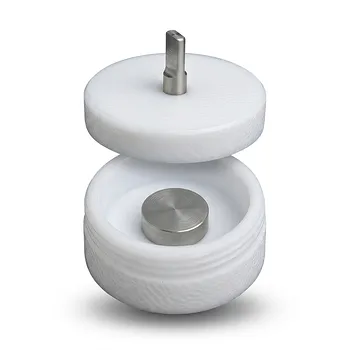
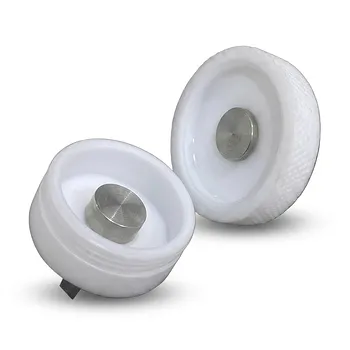
- Acid Resistant PTFE Button Cell Battery Test Fixture Customizable Machining High Purity Electrochemical Testing Clamp
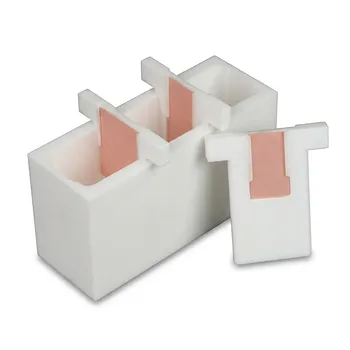
- Customizable PFA Square Tray Corrosion Resistant High Temperature Large Petri Dish Electrolytic Cell
- Corrosion Resistant PTFE Coin Cell Battery Testing Clamps and Acid Proof Custom Fluoropolymer Battery Fixtures
- White PTFE Electrolytic Cell with Movable Slider and Insulated Lid for Fluorine Corrosion Resistance
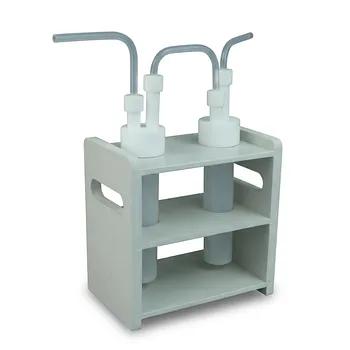
- Custom PTFE Acid Resistant Support Rack Multi Hole PFA Hydrogen Absorption System Bracket
People Also Ask
- In what ways do PTFE battery testing fixtures enhance laboratory throughput and reliability? Maximize Research Efficiency
- How does the chemical inertness of PTFE benefit laboratory-scale battery testing? Ensure high-purity research results.
- Why are customized PTFE testing fixtures required for electrochemical testing and battery research? Boost Data Accuracy
- In what industrial manufacturing contexts are PTFE battery clamps or fixtures utilized? Optimize Battery Production.
- What is the thermal operating range for PTFE battery clamps in electrochemical research? Stability from -200°C to +260°C